


According to a Lithuanian saying, the deeper you go into the forest, the more trees you find. It means that the closer you examine something, the more questions and complexity you’ll uncover.
History works the same way. What first appears straightforward on the surface branches into much greater detail, contradictions, and unexpected connections once you spend time with it.
Just take a look at the posts by the Instagram account ‘Historica Leaks.’ Whether it’s the intricacy of ancient Greek sculpture or local life in a quiet corner of Norway, it captures both the grand and the ordinary in equal measure.
More info: Instagram
#21
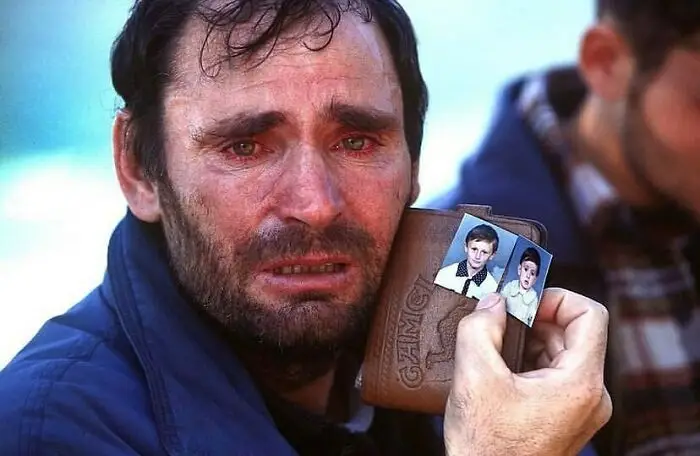
Mustafa Xaja, a Kosovar-Albanian, shows pictures of his children he fears have been k****d during the war in Kosovo. He had just been released as a prisoner of the Serbs and forced to cross the border, becoming a refugee in Albania. Only after the the war did he discover that his family was alive and safe. 1999 Photo by Peter Turnley
Report
49points
#22
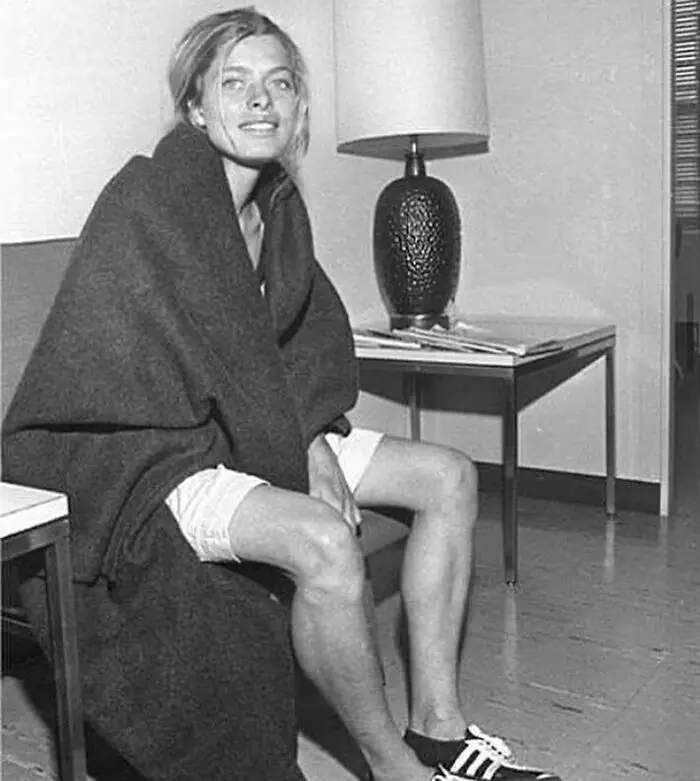
Bobbi Gibb, first woman to run the Boston marathon in 1966, she ran without a number because women were not allowed into the race.
Report
48points
#23
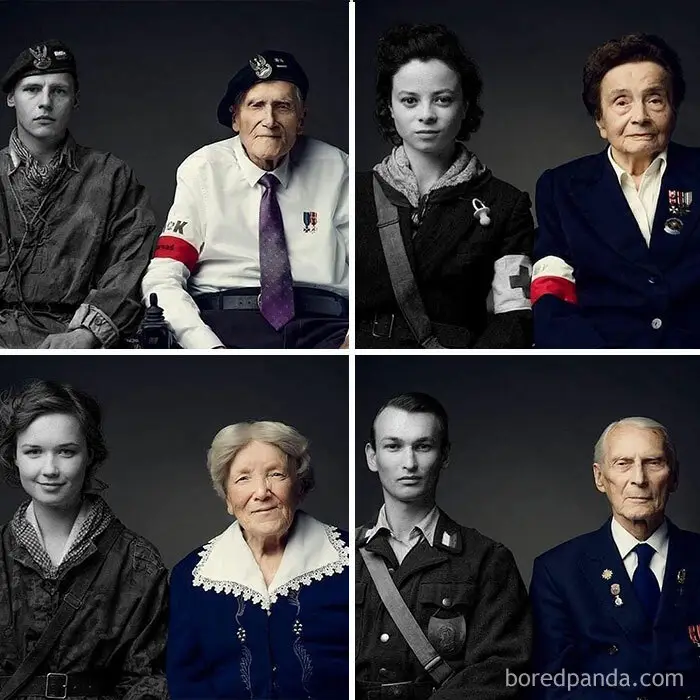
Polish Resistance veterans of the Warsaw Uprising (1944), pictures then and now. The Warsaw Uprising (Polish: powstanie warszawskie; German: Warschauer Aufstand) was a major World War II operation, in the summer of 1944, by the Polish underground resistance, led by the Polish resistance Home Army (Polish: Armia Krajowa), to liberate Warsaw from German occupation. The uprising was timed to coincide with the retreat of the German forces from Poland ahead of the Soviet advance. The operation failed. In the end, German troops destroyed the majority of Warsaw during and immediately after the uprising. Among the demolished buildings was the Royal Castle. The Warsaw Uprising failed because of lack of support from the Soviets and British and American unwillingness to demand that Stalin extend assistance to their Polish ally. The Soviet advance in Poland stopped on the Vistula River, within sight of fighting Warsaw. Stalin had broken off diplomatic relations with the Polish government in exile when, in the spring of 1943, it asked the International Red Cross to investigate the k*****g of thousands of Polish officers at Katyn. The Polish officers were prisoners of the Soviets following its 1939 invasion of Poland in collaboration with Hitler. The Soviets tried to pin the blame on the Germans and did not admit the April 1940 summary executions of at least 21,000 Polish prisoners until some 50 years after the fact.
Report
46points
#24
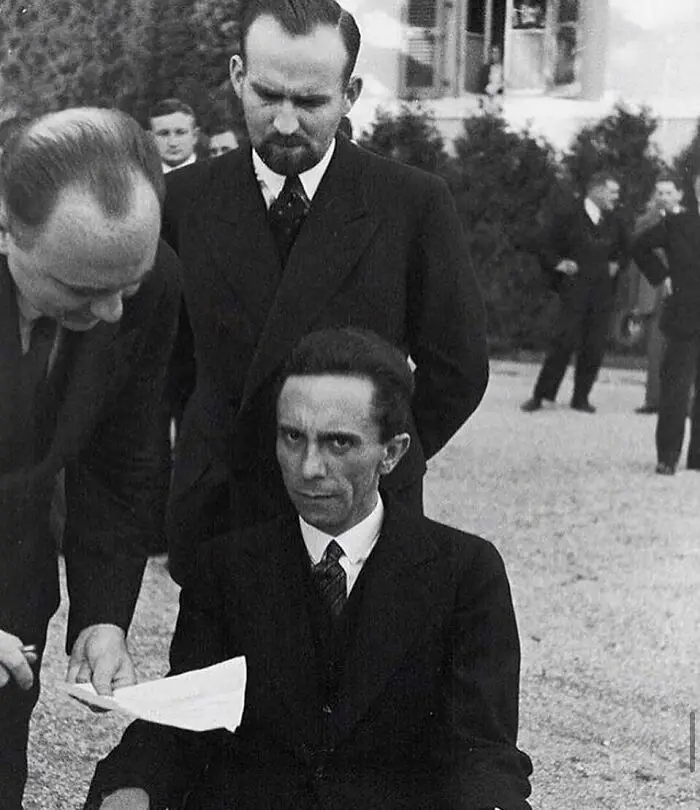
The moment Goebbels (Minister of N**i propaganda) found out his photographer Eisenstaedt was Jewish, 1933. This photo is known as "Eyes of Hate". In September 1933, LIFE magazine photographer Alfred Eisenstaedt traveled to Geneva to document a meeting of the League of Nations. Eisenstaedt was a German-born Jew. Not knowing this at first, Goebbels was initially friendly toward Eisenstaedt, who was able to capture a number of photos showing the N**i politician in a good and cheerful mood. However, Goebbels soon learned of the Jewish blood flowing through Eisenstaedt's veins. Subsequently, when Eisenstaedt approached Goebbels for a candid portrait, the politician's expression was very, very different. Here's what Eisenstaedt later shared regarding experience: "I found him sitting alone at a folding table on the lawn of the hotel. I photographed him from a distance without him being aware of it. As documentary reportage, the picture may have some value: it suggests his aloofness. Later found him at the same table surrounded by aides and bodyguards. Goebbels seemed so small, while his bodyguards were huge. I walked up close and photographed Goebbels. It was horrible. He looked up at me with an expression full of hate. The result, however, was a much stronger photograph. There is no substitute for close personal contact and involvement with a subject, no matter how unpleasant it may be. He looked at me with hateful eyes and waited for me to wither. But I didn't wither. If I have a camera in my hand, I don't know fear." On August 14, 1945, Eisenstaedt photographed a sailor celebrating Japan's surrender by kissing a random nurse in New York City. The photo came to be known as “V-J Day in Times Square.”
Report
46points
#27
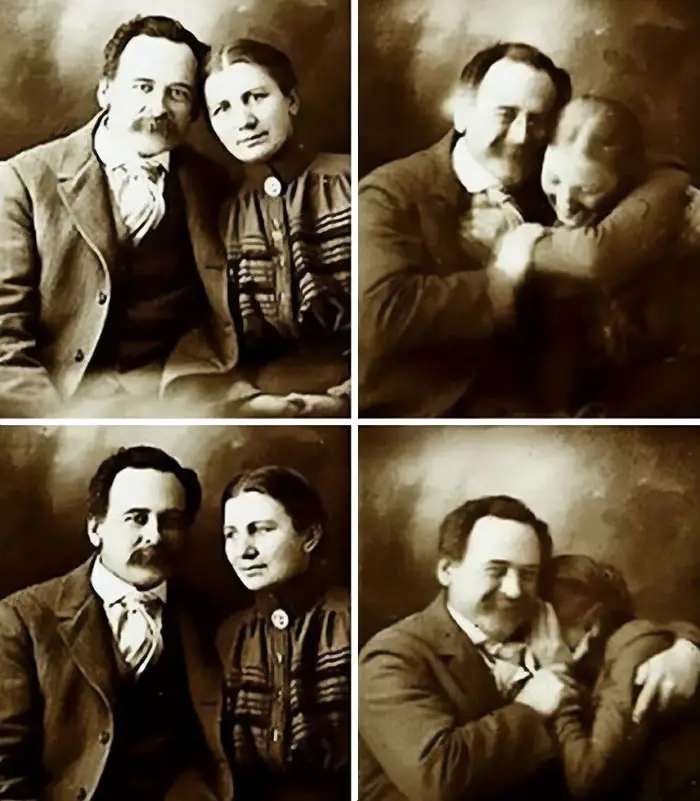
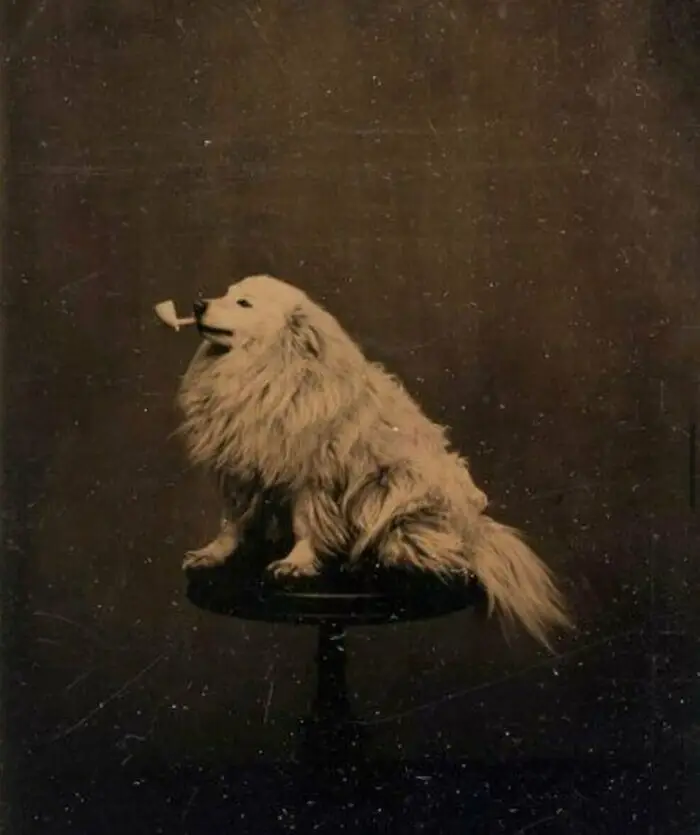
A Victorian couple try not to laugh while getting their portraits done, 1890
Report
43points
#28
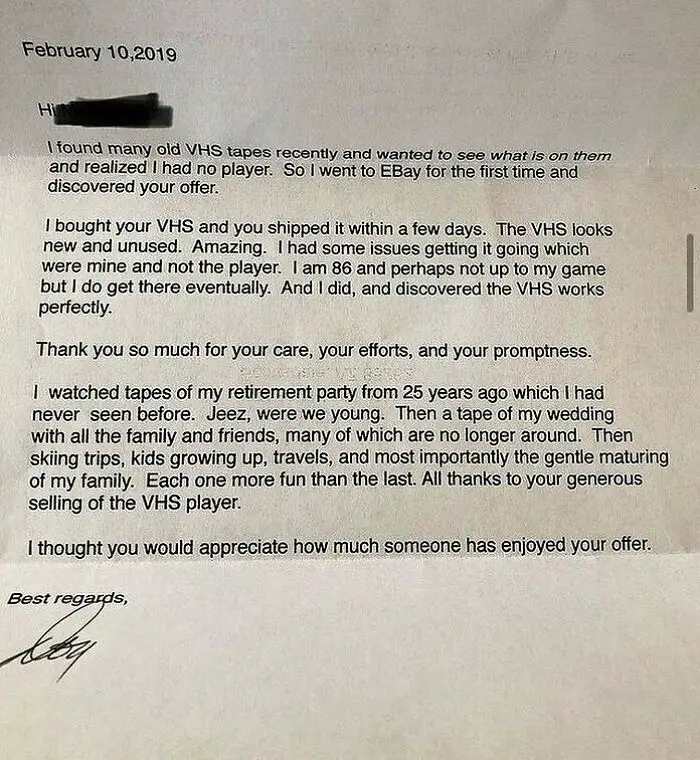
86-year-old man sends a heartfelt letter to eBay seller after buying VHS player.
Report
43points
#29
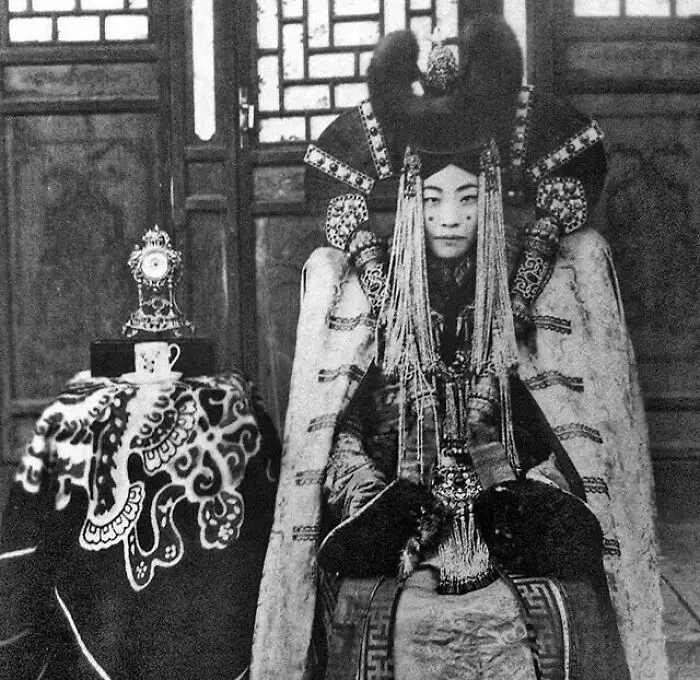
Pictured above is Queen Genepil (1905-1938), the last queen of Mongolia. Queen Genepil was the last wife of the last Mongol Khan, is a woman shrouded in mystery yet one whose story has endured. She was executed in May, 1938, shot as part of the systematic Stalinist destruction of Mongolian culture, in which a vast amount of the population were k****d (between 20000 and 35000 people), including almost all the shamans and Buddhist lamas. Her daughter, Tserenkhand, who managed to survive said: “They took her away at night. She did not wake us, only left a piece of sugar on our pillows. I still remember the joy of a sudden discovery of that rare delicacy in the morning.”
Report
43points
#30
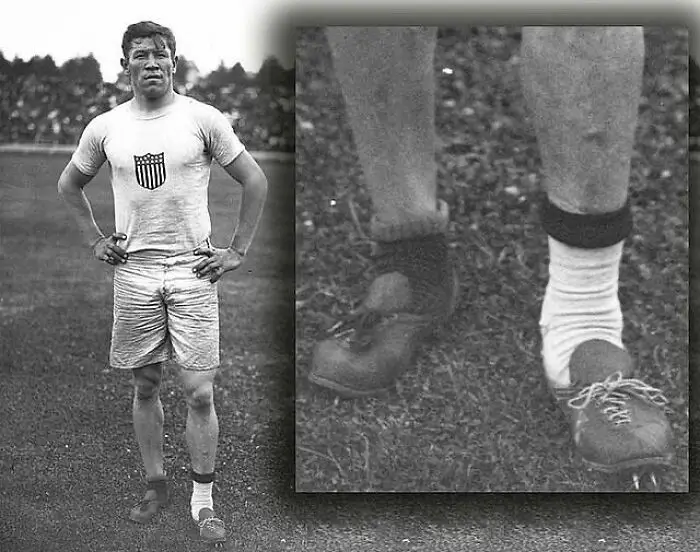
In 1912, Jim Thorpe, a Native American, had his running shoes stolen on the morning of his Olympic track and field event. He founded this mismatched pair of shoes in the garbage and ran in them to win two Olympic gold medals that day. Thorpe was the first Native American to win a gold medal for the United States in the Olympics. Considered one of the most versatile athletes of modern sports, he won two Olympic gold medals in the 1912 Summer Olympics (one in classic pentathlon and the other in decathlon). He also played American football (collegiate and professional), professional baseball, and basketball.
Report
43points
#31
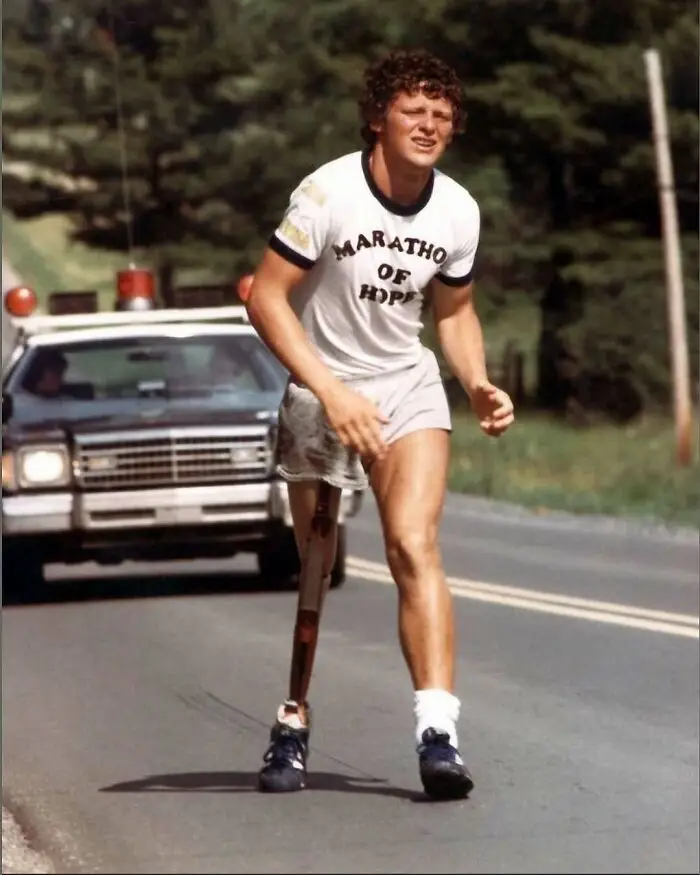
Terry Fox, a 21 year old Canadian athlete who lost a leg to cancer, began a cross-Canada run to raise money for cancer research on December 4, 1980. He ran the equivalent of a full marathon a day. Although the spread of his cancer eventually forced him to end his quest after 143 days and 5,373 kilometres (3,339 mi), and ultimately cost him his life, his efforts resulted in a lasting, worldwide legacy. The annual Terry Fox Run, first held in 1981, has grown to involve millions of participants in over 60 countries and is now the world's largest one-day fundraiser for cancer research; over C$750 million has been raised in his name, as of January 2018. Fox was a distance runner and basketball player, and he also played wheelchair basketball in Vancouver, winning three national championships. His right leg was amputated in 1977 after he was diagnosed with osteosarcoma. He died June 1981 and he was considered a national hero, he has had many buildings, statues, roads, and parks named in his honour across the country.
Report
43points
#32
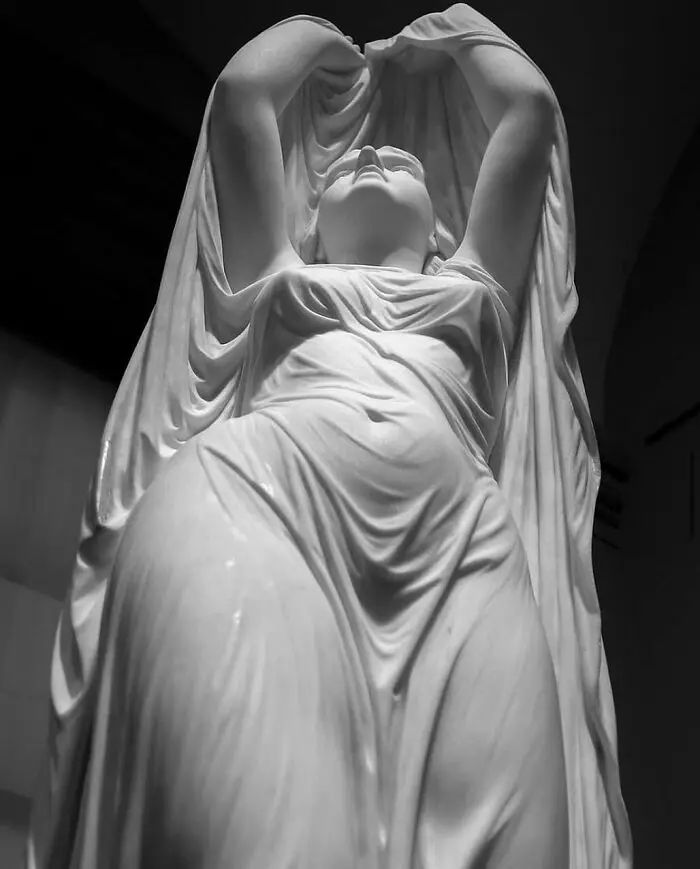
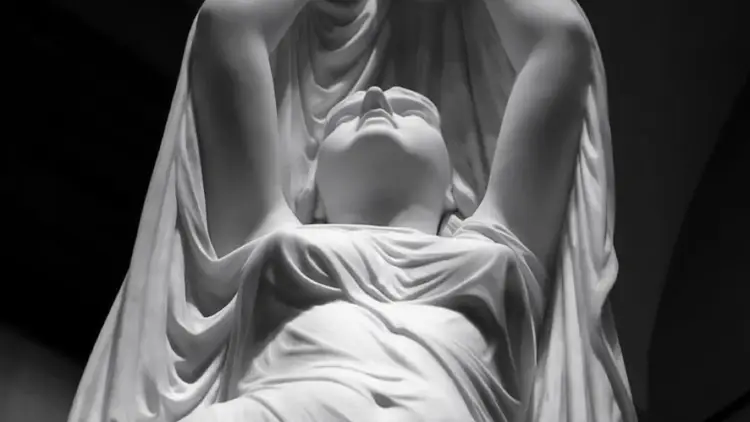
Undine Rising from the Waters (1880) by Chauncey Bradley Ives "According to medieval lore, undines were Mediterranean sea spirits who lived as soulless mortals. In the nineteenth century, this story gained prominence through Baron Heinrich Karl de la Motte Fouqué's popular novel Undine, in which a water spirit gains a human form and soul by marrying the mortal knight she loves. When her husband proves unfaithful, the laws of the water spirits force her to k**l him. Chauncey Bradley Ives depicts the moment when the mournful Undine, cloaked in a white veil, rises like a fountain to claim her husband's life. Exquisitely rendered, the diaphanous wet drapery is a masterful example of illusionistic carving." - Yale University Art Gallery
Report
42points
#37
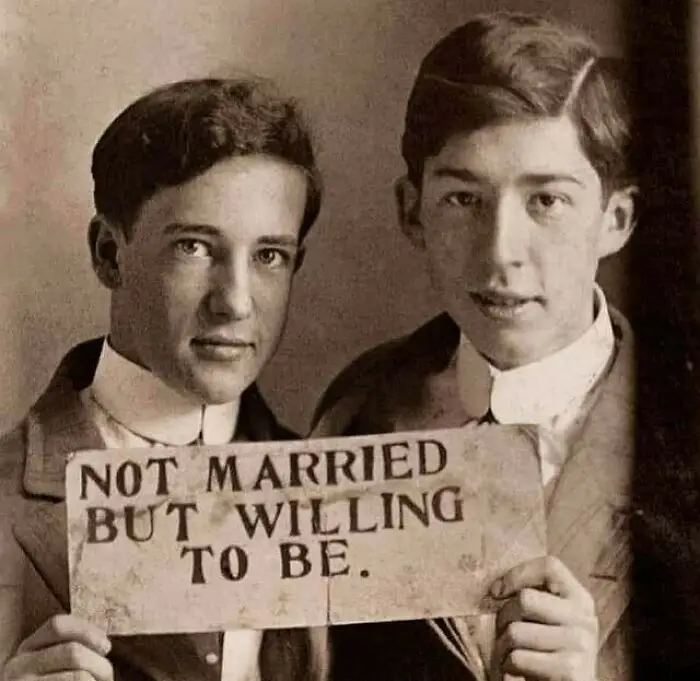
Two young men hold a pre-printed sign proclaiming their bond and willingness to be legally wed to one another, circa 1900.
Report
38points
#38
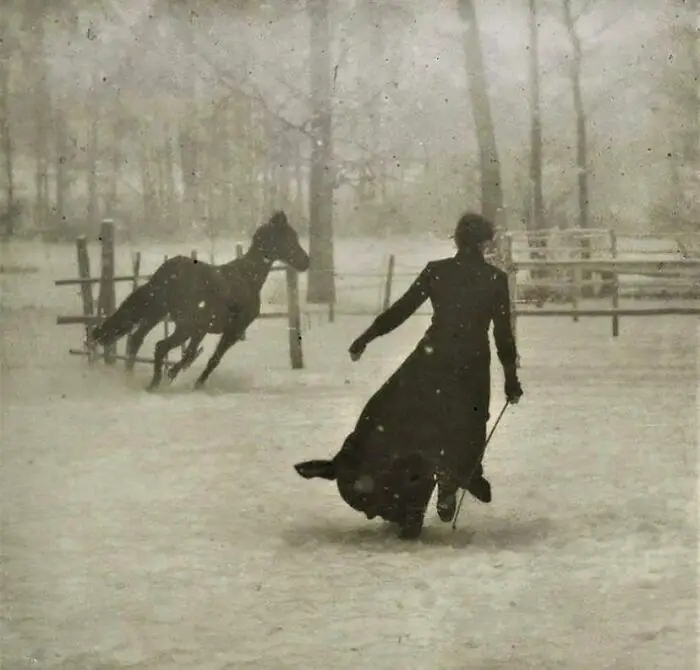
Lady and her horse on a snowy day in 1899. Photograph by Félix Thiollier
Report
37points