




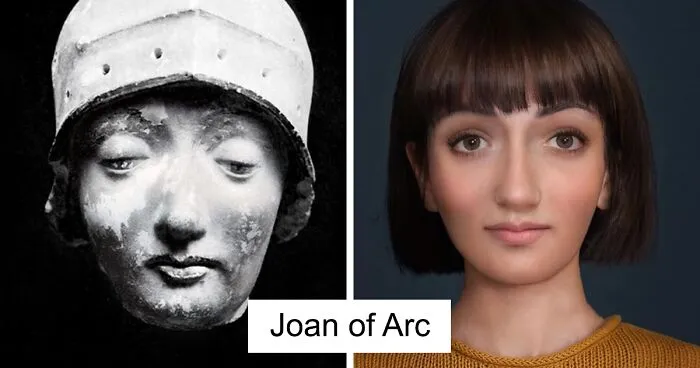

If you've ever looked at the bust of Nefertiti or Julius Caesar, you may have wondered what they’d look like in today’s world. Well, the Dallas-based artist and graphic designer Becca Saladin has always been fascinated by historical facts and archaeology. “Yet, I always felt separated from the figures. I always thought of history more like a movie than a series of real events,” she explained earlier.
So in order to see historical events and the famous people the way they actually happened and the way they actually looked, Becca created her Royalty Now series that instantly went viral. By combining photography, editing and digital drawing, Becca comes up with incredibly modern and realistic versions of people we only see in movies and history books.
This post may include affiliate links.
#21 Charlotte Brontë
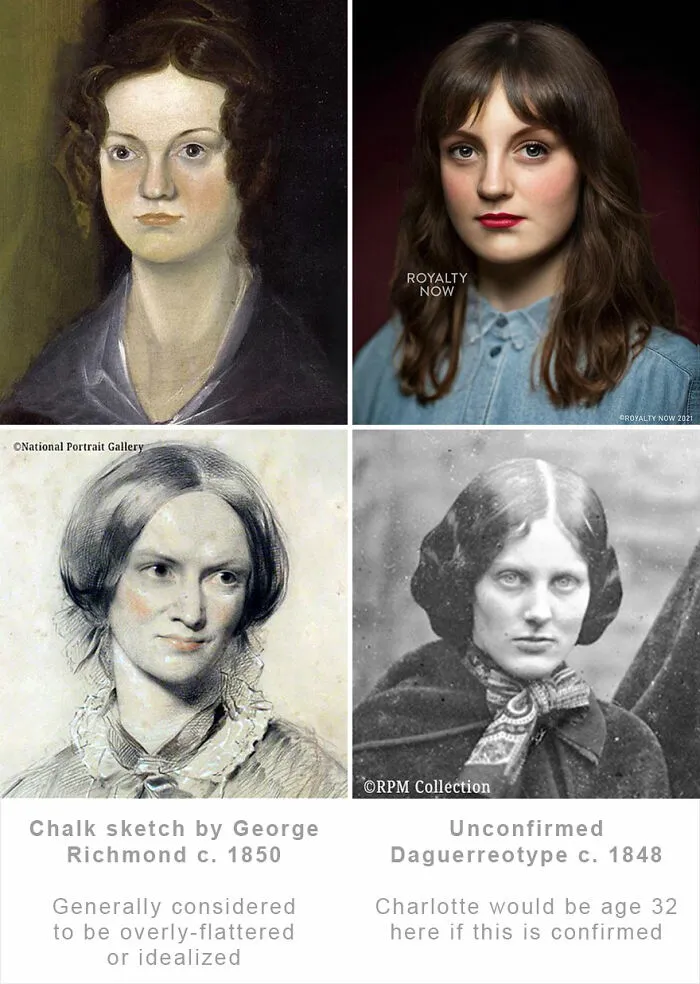
Charlotte Brontë (1816 – 1855) was an English novelist and poet, the eldest of the three Brontë sisters whose novels became classics of English literature. Charlotte is most famous for her novel Jane Eyre. I greatly enjoyed learning about Charlotte and her strong personality through my research into her looks. She was said to be less than five feet tall with indiscriminate yet enchanting eyes. She was strong-minded, clever, shy (but ready to argue her beliefs), and apparently hated teaching young children.
.
I struggled a bit with which portrait to use here. I found a great source about her looks that talks about the confirmed images we have of her. I’ve used this painting by her brother Branwell as my main reference, but pulled in some visual references from others as well (see next slides). Only three undisputed images of Charlotte exist - this painting by Branwell is one of them and was painted when she was probably 18 years old. It is generally considered an “unflattered” portrait - meaning it doesn’t try to beautify her and the skill of the painter is questionable. The other is a chalk drawing from later in her life by George Richmond, but this is considered to be overly flattering by elongating her face and forehead. The third is a possible photo of Charlotte, although this is unconfirmed. The face shape looks correct, but the eyes look far too blue to be her based on other accounts.
.
I struggled a bit with which portrait to use here. I found a great source about her looks that talks about the confirmed images we have of her. I’ve used this painting by her brother Branwell as my main reference, but pulled in some visual references from others as well (see next slides). Only three undisputed images of Charlotte exist - this painting by Branwell is one of them and was painted when she was probably 18 years old. It is generally considered an “unflattered” portrait - meaning it doesn’t try to beautify her and the skill of the painter is questionable. The other is a chalk drawing from later in her life by George Richmond, but this is considered to be overly flattering by elongating her face and forehead. The third is a possible photo of Charlotte, although this is unconfirmed. The face shape looks correct, but the eyes look far too blue to be her based on other accounts.
Report
36points
#22 Frederick Douglass
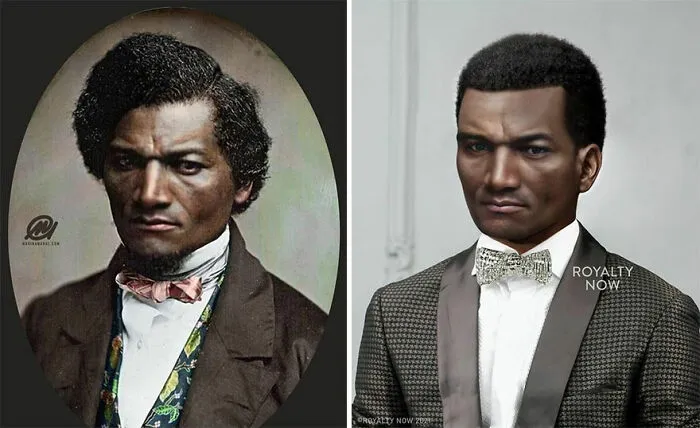
"Frederick Douglass was one of the most eminent human rights leaders of the 19th century. Born as a slave in Maryland with a slave mother and a white father, the mistress of the house he grew up in defied the law by teaching him to read. He eventually escaped slavery at the approximate age of 20. Douglass soon became renowned for his oratory skills, intelligence, and literary fervor. He was a living counter-example to slave-owner’s claims that slaves lacked the intelligence to function as citizens. Douglass wrote several autobiographies, notably describing his experiences as a slave in his Narrative of the Life of Frederick Douglass, an American Slave, which became a bestseller. Frederick supported the equality of all people, including women, Native Americans, Chinese Immigrants, and white people. Douglass became the first black citizen to hold a high public office in the United States. His legacy continues through to this day, and he is one of the most important black figures in United States history."
Report
33points
#23 Catherine The Great
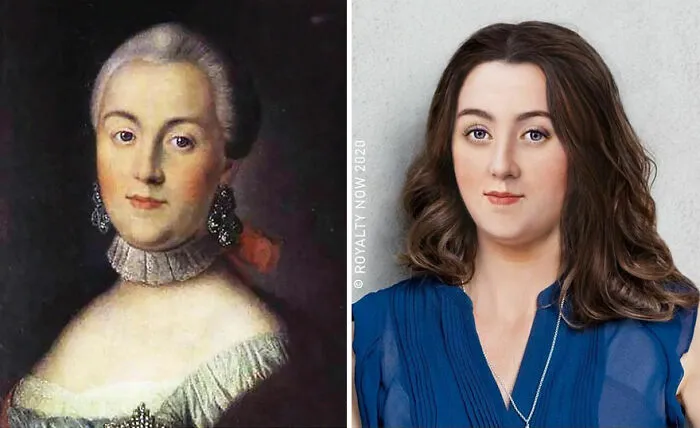
"One thing I wasn’t expecting was how difficult researching her hair color would be. Sources and portraits show Catherine with beautiful blue eyes, but they differ sometimes on her hair. In the show and in one or two sources she is depicted as a blonde, but many more sources and portraits show her with rich dark hair - so that’s what I went with here.
.
Catherine II (born Sophie of Anhalt-Zerbst) was born in 1729 - this portrait was dated to the mid 1760s, so it puts her approximately in her mid 30s. Known as Catherine the Great, she was Empress of Russia from 1762 until 1796 - the country's longest-ruling female leader. She was married to the inept Tsar Peter III upon arriving in Russia, and came to power in a coup that she organized herself. Under her rule, Russia thrived, growing larger and stronger until it became one of the main powers of Eurasia. Catherine was an admirer of Peter the Great, and embarked on a modernization campaign of Russia. Despite her efforts, Russia still had its shortcomings - Russia was still using serf labor while Catherine ruled - causing several rebellions and uprisings.
Catherine was a supporter of the arts, humanities, and a supporter of the Enlightenment. Many historians agree that Russia was in its “Golden Age” while Catherine ruled."
.
Catherine II (born Sophie of Anhalt-Zerbst) was born in 1729 - this portrait was dated to the mid 1760s, so it puts her approximately in her mid 30s. Known as Catherine the Great, she was Empress of Russia from 1762 until 1796 - the country's longest-ruling female leader. She was married to the inept Tsar Peter III upon arriving in Russia, and came to power in a coup that she organized herself. Under her rule, Russia thrived, growing larger and stronger until it became one of the main powers of Eurasia. Catherine was an admirer of Peter the Great, and embarked on a modernization campaign of Russia. Despite her efforts, Russia still had its shortcomings - Russia was still using serf labor while Catherine ruled - causing several rebellions and uprisings.
Catherine was a supporter of the arts, humanities, and a supporter of the Enlightenment. Many historians agree that Russia was in its “Golden Age” while Catherine ruled."
Report
23points
#24 José De San Martín
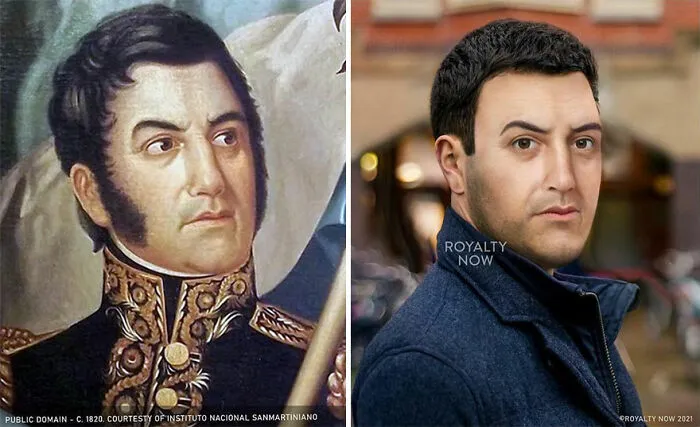
"José de San Martín (1778 - 1850, pictured here in his 40s) is known as "El Libertador” of Argentina, Chile and Peru. He was an Argentine general and the foremost leader of the struggle for independence from the Spanish Empire in the southern and central parts of South America. Born to a Spanish soldier while stationed in Argentina, Jose spent only 6 years in South America before returning to Spain. After returning to Spain as a boy, he spent a large part of his adult life serving the King of Spain.
.
There seemed to be a change in San Martin’s loyalties in 1812 when he offered his services to the United Provinces of the Rio de la Plata in Argentina. Despite serving Spain faithfully for many years, he saw the difficulties the provinces were having with the colonial rule of Spain, and chose loyalty to his native-born region over the Spanish Empire. San Martin quickly distinguished himself as a great trainer and leader of soldiers. He began raising armies and strategizing the takedown of Royalist strongholds like Lima.
.
After seizing control of Lima in 1821, San Martín was appointed Protector of Peru. Peruvian independence was officially declared on 28 July. You may remember the former Royalty Now subject Simon Bolivar. After a closed-door meeting between the two men in 1822, Bolivar took over the task of fully liberating Peru. Historians feverishly debate what happened here, because it was after that meeting that San Martín unexpectedly left the country and resigned the command of his army, excluding himself from politics and the military, and moved to France in 1824. San Martín is regarded as a national hero of Argentina and Peru, and one of the Liberators of Spanish South America. The Order of the Liberator General San Martín, created in his honor, is the highest decoration conferred by the Argentine government."
.
There seemed to be a change in San Martin’s loyalties in 1812 when he offered his services to the United Provinces of the Rio de la Plata in Argentina. Despite serving Spain faithfully for many years, he saw the difficulties the provinces were having with the colonial rule of Spain, and chose loyalty to his native-born region over the Spanish Empire. San Martin quickly distinguished himself as a great trainer and leader of soldiers. He began raising armies and strategizing the takedown of Royalist strongholds like Lima.
.
After seizing control of Lima in 1821, San Martín was appointed Protector of Peru. Peruvian independence was officially declared on 28 July. You may remember the former Royalty Now subject Simon Bolivar. After a closed-door meeting between the two men in 1822, Bolivar took over the task of fully liberating Peru. Historians feverishly debate what happened here, because it was after that meeting that San Martín unexpectedly left the country and resigned the command of his army, excluding himself from politics and the military, and moved to France in 1824. San Martín is regarded as a national hero of Argentina and Peru, and one of the Liberators of Spanish South America. The Order of the Liberator General San Martín, created in his honor, is the highest decoration conferred by the Argentine government."
Report
21points