





Every once in a while, we all stumble into a question that won’t stop bothering us. It might hit you in the shower, taking out the trash, or halfway through a completely unrelated conversation, but suddenly, you just have to know what people used before toilet paper existed.
The internet is full of answers, sure. But it’s also full of confidently wrong guesses and disinformation. Especially now that AI is generating so much content. We need professionals.
Over the years, r/AskHistorians has helped countless curious people separate facts from fiction with detailed responses grounded in actual research and expertise. Here are some of the most interesting examples we found on the subreddit.
#21 The Chemical Weapons Convention (1993) Has Prohibited The Use Of Tear Gas In Warfare, But Explicitly Allows Its Use In Riot Control. What Is The Logic Behind It Being Too Bad For War, But Perfectly Acceptable For Use Against Civilians?

This is a question of obvious contemporary political importance so I will endeavor to answer it cautiously and with respect to the emotions it no doubt raises.
The logic here is best found in some of the signatory nations’ legal interpretations and internal Law of Armed Conflict manuals,neatly summarized by the Red Cross here. . The Dutch manual of 2005, for instance, tells us the following:
Riot control agents such as tear gas may not be used as a method of warfare (Chemical Weapons Convention Article 1). Use as a means of maintaining order, including the control of internal unrest, is not prohibited. Military use must be distinguished from this. This conceals the danger that the use of a relatively harmless chemical may unleash the use of some other, more lethal one by the adversary...[M]ilitary use of a non-lethal weapon may pose the danger that the adversary perceives it as a forbidden means, which may induce the adversary to use other, more lethal means. One example is the use of tear gas, mentioned above.
Chemical weapons pose particular problems on the battlefield as weapons of mass destruction. In the case of tear gas and other riot control agents, which do not pose major concerns in terms of environmental persistence, excessive painfulness, persistence of pain after the victim is removed from exposure to the gas, and potential for permanent injury, the problem posed is one of escalation. Consider two armies locked in combat, let’s call them Red and Blue. Each side is a signatory to the same chemical weapons treaties, each side has a robust no-first-use policy, but each side has a stockpile of lethal chemical weapons including nerve agents as a deterrent to the enemy’s use of chemical weapons. Neither side adheres to the 1993 rule on riot agents. A low-level Blue commander, Major Indigo, is having a h**l of a time getting a Red battalion off an important hill. Major Indigo requests permission to fire tear gas onto the hill to dislodge the Red forces. It’s an important hill, taking it could turn the tide of battle, and so his boss Colonel Cyan authorizes it. Meanwhile, the Red forces under Major Crimson are taking no chances. They’ve been sweating in their gas masks and chemical suits all day, just in case. The call comes down the line - gas, gas, gas! - and Red’s soldiers hunker down nervously, safe but uneasy in their protective gear. None of them are exposed, so it’s hard to tell immediately just what chemical they got hit with. Major Crimson calls his boss, General Ruby. General Ruby knows one thing: when weapons of mass destruction are in play, you have to maintain the credibility of your deterrence. Blue has to be shown immediately that use of chemical weapons will not go unpunished. With staff academy lectures on “escalation dominance” echoing in the back of his mind, General Ruby signs the paperwork authorizing a limited but punishing chemical weapon retaliation. Three short-ranged ballistic missiles loaded with nerve gas are fired at Blue’s position. Colonel Cyan, Major Indigo and their subalterns die a horrific, gasping death. An hour later, as Blue’s own bombers and missiles loaded with mustard and VX begin to launch, the battlefield lab analysis lands on General Ruby’s desk. Just tear gas.
The above scenario seems perhaps melodramatic or overwrought, but it highlights the stakes involved with weapons of mass destruction and the extreme consequences of incomplete information. The presence of nonlethal chemical agents on the battlefield creates a risk far out of proportion to the actual severity of the weapons themselves.
As for sourcing, in addition to the link given above, my perspective on deterrence, escalation risks, and the consequences for uncautious behavior with WMDs is heavily informed by Larsen and Karchtner’s On Limited Nuclear War in the 21st Century and the opinions on so-called “battlefield” nuclear weapons expressed by Michael Kofman in several of his CSIS presentations. These both do not directly connect to chemical weapons, but many of the concepts of deterrence are similar across categories of WMD; there is simply more literature on nuclear weapons than chemical.
Report
5points
#22 Can Someone Please Recommend What To Start Reading So I Can Finally Learn The Truth About The USA?

That's great that you want to learn more about U.S. history! I focus on indigenous history, as well as the indigenous slave trade, and in the list below highlight some of my favorite books, with a little nod to Texas/Western U.S. history.
I'm going to recommend some of my favorites below, in a rough order of increasing difficulty for an absolute newbie, and detail why they are my favorites. However, please let me know if there is a specific place/time/people of interest, and I can make more targeted recommendations. Good luck on your reading journey, and feel free keep asking questions here! We love that!
Charles Mann 1491: New Revelations of the Americas Before Columbus is a great place to start your journey. Mann is a journalist, not a historian, so he oversimplified some complex topics, but he crafted an engaging introduction to the history of the New World. Most newbies cite this book as sparking their love of New World history.
The Rediscovery of America: Native Peoples and the Unmaking of U.S. History by Ned Blackhawk is a very approachable survey of Native North American history from one of the best indigenous historians out there.
The Heartbeat of Wounded Knee: Native America from 1890 to the Present by David Treuer is another great book from an indigenous historian, and as the title indicates, explores more recent history. Again, a good general introduction if you, like most people, kinda lose the thread of Native American history after 1890.
Matthew Restall Seven Myths of the Spanish Conquest is a mind-blowing book. He establishes seven persistent myths of the conquest, then breaks those myths down in one brief volume. Forget what you think you know about the early colonial period, and be prepared for a deeper, richer story than you could ever imagine.
Daniel Richter Facing East from Indian Country: A Native History of Early America is a great introduction to eastern North American history, and like Restall's book above helps to shift your understanding of the narrative of contact away from the European perspective, and instead anchoring the story in Indian Country.
Andrés Reséndez The Other Slavery: The Uncovered Story of Indian Enslavement in America is the single best introduction to understand the temporal, geographic, and cultural magnitude of the native slave trade in the Spanish Empire. Absolutely vital for understanding the history of the Americas, and almost no one outside of history nerds has heard about the impact of indigenous slavery on the history of the New World.
Jeffrey Ostler Surviving Genocide: Native Nations and the United States from the American Revolution to Bleeding Kansas is an amazing book that details the violence of early U.S. Indian policy, and the creation of an unhealthy world for Native Americans. Ostler details how Native nations fought for sovereignty in the face of an aggressive, expansive neighbor bent on their removal. This is part one, a forthcoming part two will focus more on the western experience, and I really can't wait.
Colin Calloway One Vast Winter Count: The Native American West Before Lewis and Clark is the best introduction and overview of the American West. I absolutely adore this book. I recommend it all the time because it blew my mind the first time I read it.
Report
5points
#23 In 1950s America Was It Common For The Boss And His Wife To Have Dinner An An Employees Home, Or Is That Purely A Sitcom Plot?

There's an adage in education that is basically, "we measure what matters." Which is to say, we can get a sense of what a community or society values based on the knowledge, skills, or dispositions that are assessed in schools. (There's often a disconnect between the things adults claim to value and the things we ask children to learn but that's a different conversation for a different subreddit.)
So, given that rule of thumb and an understanding of American education history, I feel comfortable saying that yes, "dinner with the boss" was a thing that actually happened - or teachers thought might happen - and the main reason is that the New York State Regents Examinations in Comprehensive Vocational Homemaking routinely asked the young women taking the exam about entertaining, including for their husband's boss.
First, some quick context setting. NYS has the oldest formal system of education in the United States, dating back to the 1780s. This headstart meant NY policymakers and educators were experimenting with different structures long before some other states were even considering the possibility of public education. After a few different approaches to funding and curriculum, the structure that NYS fell into, and stuck with to the present day, was based on the idea that in order to ensure consistency across the state, there needed to a common measure of student learning. This measure, which was first given in the mid-1800s is colloquially known as The Regents Exams. I won't subject you to a history of the exams (as fascinating as I think it is) but basically, they're a series of exams given to high school students across the state as a way to document their mastery of content the state deems necessary before they'll award a high school diploma with a Regents endorsement.
For the purpose of your question, the most important feature was the feedback loop between NYS teachers and the exams. (At one point in the early 1900s, there were upwards of 90 different Regents exams. Schools/students could pick and choose which ones to take.) Teachers across the state determined the content for the exams and then went back to their classrooms and taught students the content that would appear on the exams. Teachers who did not participate in the writing process were given guides on what would appear (AKA standards.) They didn't know the exact questions on the exams but, for example, the teachers who taught bookkeeping knew there would be several questions where students had to solve long arithmetic problems by hand and show their work. So they taught their students how to solve complicated arithmetic problems by hand and show their work. Etc.
This doesn't mean Homemaking was offered at every NYS high school or that all girls had to take the course, but rather, there were NYS HS teachers who wanted to offer the course and felt their course content was worthy of inclusion in the pool of knowledge students learned as part of obtaining a diploma. At some point in the early 1930s, a group of NYS educators proposed courses and a corresponding exam called Comprehensive Vocational Homemaking. Their rationale and the exact year is several hundred miles away from me in the state's archive, but I know from other research that the time between proposal and exam administration was typically 1-3 years. Students then needed 3 years of courses to sit for the exam (hence "Comprehensive.")
It's my understanding that the first administration was in June 1937 and included the note:
The minimum time requirement [for taking this exam] is 10 periods a week for three school years with outside preparation and home project work. These three years of work must include homemaking B and D.
The exam was broken into multiple parts and the first question on Part I, section III of the 1937 exam question read:
Suppose that you intend to invite five friends for supper, and the evening on Sunday, July 7.
a. Write your part of a telephone conversation inviting one of these friends. [3 points] .
b You have decided to serve a buffet supper. Write the menu for it. [5 points]
c State your plan for the entertainment of the guests. [2 points]
So we know that from the beginning, Homemaking teachers thought teaching young women how to entertain was important. However, the exams weren't just about entertaining - there were questions about taxes (T/F: Assessments for taxation purposes are divided equally among all the houses in a locality.) child safety (T/F: Instinct teaches a mother how to care for her baby. False. FYI.), food safety (The growth of bacteria, yeasts, and molds cause the ___ of food.), etc.
I don't have access to any of the exams from the 1940s but questions about entertaining appear on the 1950 exam:
Part II, Question 1: Part of a home experience might be assuming responsibility for preparing dinner for a family of four and two guests. A girl might choose the following menu:
tomato juice
broiled steak
mashed potatoes
buttered peas
molded fruit salad
baking-powder biscuits
butter
chocolate cake
coffee
milk
A. Consider all duties involved in preparing this meal. List four duties which might be done the night before, showing good management of time.
While I cannot confidently speak to what happened in other states (there's a book coming out in May on the topic that I'm very much looking forward to) but it's safe to say that the heteronormative idea that a husband would go off in the morning to an office job (more on the history of "9-5" if you're so inclined) while the wife stayed home as a homemaker and at some point, "dinner with the boss" would happen.
Which is to say: if the calendar in the kitchen is to be believed, Mr. Hart, Vision's boss was coming for dinner on Wednesday, August 23, 1950, 1961, or 1967. I can't say it's common - hopefully, someone familiar with the history of workplace etiquette from the era will chime in - and I'm not sure when Wanda would have graduated high school or if she went to school in NYS but odds are good that if she attended a suburban white high school and was interested in obtaining a Regents diploma, she likely took a high school course that prepared her to expect the homemaking responsibility of hosting her husband's boss (or conversely be the boss' wife.) She would have been taught the content needed to answer questions like (all from Homemaker exams between 1950 and 1961):
A homemaker on a limited budget, with only one hour to prepare dinner ... could include in the menu (1) rib roast of beef (2) stuffed onions (3) angel food cake (4) gingerbread with applesauce
~~
Which indicates formal balance in a living room? (1) candlesticks placed at one end of a mantle and a clock near the center (2) similar chairs placed on either side of a window (3) a grouping of a desk, a chair and a wastebasket (4) a grouping of a reading lamp, a few books and a bowl of flowers on an end table
~~
A girl's appearance is affected by her ability to choose clothes wisely and to keep them attractive.
A. For each of the following, give two characteristics which would indicate good workmanship, (1) a hem (2) a dart (3) a zipper
B. Explain two ways in which the construction of a garment can affect its durability.
C. For each of the following undesirable characteristics of a dress, suggest one type of alteration or remodeling to make the dress wearable. (1) neckline too low (2) bustline too tight (3) stained underarm area
~~
A person is developing emotional maturity when he (1) controls his reactions (2) requires frequent praise (3) forms many intimate friendships (4) laughs at awkward social situations
~~
A father's change in jobs makes it necessary for his family to move to a different locality. In this family, there are the father, the mother, a sixteen-year-old girl, a thirteen-year-old girl, a seven-year-old boy and a two-year-old boy.
A. The family must first decide whether to live in the large city where the father will be working or in one of the small surrounding communities. Suggest four questions the family will need to consider in making this choice. [4]
~~
The following is a dinner menu for a married couple entertaining the husband's supervisor. Dinner is to be served at 6 PM. Roast beef, mashed potatoes, fresh spinach, bread, gravy, (canned) buttered beets, butter, chocolate cornstarch pudding, coffee, or milk.
List four items from the following plan which indicate good timing in preparing the meal described above. Give reason for each answer.
Night before - make chocolate pudding and place in serving dishes.
2 PM: Wash and peel potatoes and place in cold water.
3:15: Place 5 lb. roast in oven at 325 °.
3:30: Wash spinach and place in cool water
3:40: Set table and fill water glasses
5:00: Put potatoes, spinach, and beets on stove to cook
5:30: Drain and mash potatoes and place on top of a double boiler
5:45: Measure coffee into pot and set water on to boil
5:50: Get serving dishes from cupboard.
5:55: Place meat and vegetables on serving dishes.
Make a seating chart and diagram of one place setting for this dinner.
(Postscript: It's fairly easy for us in 2021 to read such questions and pass judgment on the teachers who wrote the exams and the young women who took the courses. However, it's worth stressing again that the exams also included questions about negotiating a lease, first aid, disaster management, pursuing professional goals, and pulling together a sharp outfit. Also, question 48 on the 1957 exam read: The ideal family pattern toward which most young couples strive today is (1) autocratic (2) matriarchal (3) patriarchal (4) democratic. The correct answer was 4.)
Report
5points
#24 The Statue Of Liberty Is Now Green, But It Used To Be Copper. While The Statue Was Forming Its Patina, Were There People Calling For Its Restoration To The Natural Copper? How Did People Come To Accept It As Green?
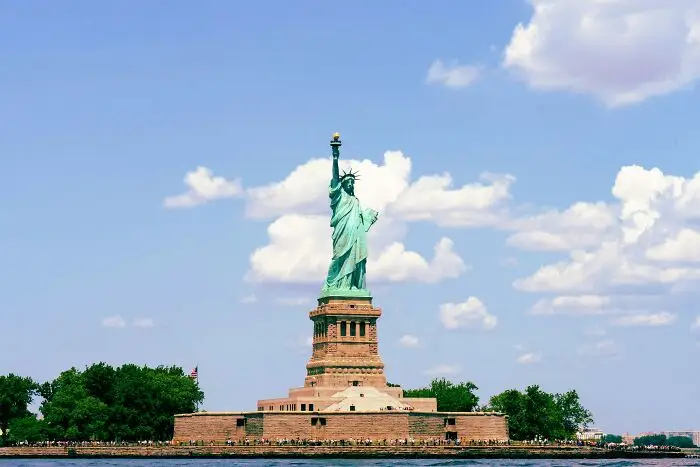
Best that I can find, there wasn't much call for this. A little, which I'll touch on, but it seems to have been quite muted. Even by the time that the statue had arrived in the US, it had shifted from the red-brown copper it had shown off in Paris to a pure brown as the patination had begun (Thanks to u/ducatimechanic here, this is a guide to visualize the change). It was fully expected that patination would occur, and for that matter, important that it would. Although Bartholdi apparently had hoped it would end up in a bronzed color, the statue staying its natural copper would be awful for it, structurally, and in restoration work that has happened, it has been important not to disturb the patina, because it is a layer of protection against the elements, which helps prevent further corrosion. Removing it, or worse, maintaining a continual cleaning schedule to prevent it at all, would just mean the copper would just continue to deteriorate away! This was of great concern in the '80s when a massive restoration effort was underway, especially when a cleaner being used on the interior seeped out and started to dissolve the patina in places, which workers had to quickly work to stop.
Checking through what literature I can find, the real issue concerning restoration has always been focused around who pays for it. The Statue of Liberty proved to be a somewhat awkward gift that left the US Government in a quandary, unsure quite what to do with it, and as such it fell into an administrative quagmire of competing jurisdictions. The National Lighthouse Board, the US Army, and the American Committee (the group which had fund-raised for the pedestal and operated ferries to visit), for various reasons, all had some level of responsibility, but also all insisted that the other groups were the ones who should be maintaining it. A 1890 bill was defeated in Congress that would have made is a public park maintained by the Federal government, and it wasn't until another decade had passed that Congress agreed to a small one time expenditure of $62,800, which was enough to do some interior painting and install the elevator, but hardly enough to anything more substantial, or long-lasting.
Now, to be sure, there was a good deal of public concern about this, and a number of newspapers, starting within a few years of the statue's arrival, decried this, but it doesn't seem to be about the color. As already noted, the patina plays an important role in preservation, and the only articles I could find from the time which makes reference to any calls to strip the patina are focused on explaining why it would be a bad idea! There were some people saying it should happen, but one author, writing in 1910, makes it fairly clear it was a proposal that was ignored:
The patina is the rust on bronze, which, however, does not, like the rust on iron, corrode the metal. It is green in color, the exact shade depending on the amount of alloy used with the copper to form the bronze. It is formed by the statue gathering from the atmosphere carbon and sulpher, and in the formation of nitrate copper crystals on the surface.
"In the case of the Statue of Liberty on Bedloe's Island" said Mr. [Gutzon] Borglum, "the continuous washing of the wain and the spray keeps it clean. I should have gone to Washington, if necessary, if the proposal to take away its patina had been likely to be adopted a year or so ago. People said then that it was eating into the metal, and that in certain placed the bronze was rent away. All I can say is, if there are any thin places they are the result of flaws in the original casting."
So again, as this suggests, there was clearly some people calling for the patina to be stripped, but from the start, experts were making clear that it was not needed, and a bad idea. An earlier article, from 1903, is even further in praise of the green, noting that of burgeoning hue at that point:
Kindly nature has been spinning for her a fine cobwebby outer raiment or verdanlique, deeper in one place, lighter in another. Snows and stinging hail, fogs and rainstorms have been gently removing the repulsive newness of her bronze and streaking cheek and uplifted arm, draperies and crown with tender shades or green such as the cleverest bronze rounders try to produce with chemicals on their new 'castings, but never quite succeed in simulating.
The author further warns against any voices which might "shriek wildly for scrubbing brush and Putz-powder", not just for the writer's aesthetic tastes, but also again for the protective covering the patina offers. The editorial also calls for the appointment of a 'keeper of public monuments', specifically to ensure ignorance doesn't result in the destruction of monuments, not just 'Lady Liberty', a position which seems to have at least somewhat come about by 1910, as that seems to be the role Gutzon Borglum was assisting in by then. Additionally, as before, this suggests the existence of those who desired a de-greening, but again that despite their existence, it was a call which experts pushed back against.
One related thing I did find, which I would also make mention of, was a call not for a stripping down to the natural copper color, but instead to paint it! An article in 1906 makes mention of such a proposal, and again the author instead favors the "marvelous harmony of blended colors" from the "varying shades of light green, delicate white, and a subtle dash of yellow" which by that point have almost entirely overtaken the bronzed hues. The proposal had been written up in several papers, but at least as presented in this article, but was clearly not in an advanced stage of planning. Capt. George Burnell, in command on the island for the War Department, mentioned to the author the "bushels of letters", almost all of which were aghast at the proposal - which additionally helps to point to the acceptance of the green quite quickly - and additionally talks to copper experts who find the idea not only unnecessary, but quite ludicrous. Unfortunately I was unable to find the original announcement, but it is certainly clear enough that it all came to naught.
Anyways though, to continue with this more general over view of restoration, during the Wilson Administration, a Public-Private partnership with the World newspaper saw another $30,000 from the government, but again, it was a one time expenditure, and this time for installing flood-lights. Lights which, lacking maintenance funds, had mostly ceased working by 1930.
This funding morass continued through the 1930s, when it finally was moved to the jurisdiction of the National Park Service, as part of a larger push under the FDR administration, in step with the New Deal, to give 'Lady Liberty' her due as a symbol of the country. Unable to get the funds solely on its own, between 1937 and 1941 the NPS worked in conjunction with the PWA and WPA to give the statue its first real overhaul, a $1.5 million dollar makeover which involved clearing the entire island of buildings to start fresh, building a seawall, a new dock, walkways, and most importantly much needed maintenance of the internal iron structure - although not quite extensive enough - which was becoming quite rusted at points, thanks to the salty seawater surrounding it. Much was done, but of course the outbreak of war in late 1941 brought it to a halt. Work would resume again in 1946 to wrap up work unfinished in '41, but over the next decade or so, the real focus with funding was on the creation of an American Museum of Immigration, which would eventually open in 1972 after a long and fraught 'battle'.
By 1981, even the work done by the NPS decades earlier was showing its age, and spurred by an analysis by French architects, a renewed focus on a thorough overhaul of the statue, especially in light of the upcoming centennial, began to be planned, perhaps most famously with American Express donating a penny for every purchase made with their card to the endeavor, resulting in $1.7 million dollars. Closed to the public in 1984 for the work - and as noted above, careful not to disturb the green! - the work was completed in time for the "Liberty Weekend" centennial celebration in 1986, with President Reagan turning on the floodlights the night of July 3rd, and the statue officially reopened on the 5th.
Report
4points
#25 Michael Phelps Beat A 2000 Year Old Olympic Record Set By Leonidas Of Rhodes In 152 B.c For The Most Olympic Wins Ever. Are There Any Other Ancient Olympic Records That Have Remained Unbroken?

I wouldn't be surprised if there are more swimming events that Phelps competes in than ancient events as a whole. There were three fighting events: boxing, wrestling, and pankration (a combination of the two, maybe a bit like MMA). Two riding events: chariot and horeseracing. Four different running events (including the race in armor), and the pentathalon. So I think it is a bit unfair to Leonidas.
The one that comes to mind is Phayllos of Kroton, who leapt so far he cleared the pit and broke his leg. As the pit was about fifteen meters long, this is well beyond the 8.9 Mike Powell managed in Barcelona. That being said, the sheer size of this leap has made plenty of people a bit leery, and it does seem to be straining against the limits of the possible, and so there is a bit of a debate over what the long jump was actually like. One possibility is that the weighted [halteres](https://en.wikipedia.org/wiki/Halteres_(ancient_Greece)) that the athletes apparently held while jumping was used in some way to add lift or effect the center of gravity, but modern testing hasn't really provided a comparable effect. The simpler explanation is that it was just a triple jump, which makes 15 meters extremely impressive but well within the 18.3 meters that is the current record.
If you want to read more, Leuven has a great little site about the Olympics, I linked Phyllos' page.
EDIT: it is worth noting that event athletics became proffessionalized to an extent during the Hellenistic and Roman periods. There were enough places hosting games that it was possible for a talented athlete to make a comfortable living going from Games to Games and surviving off of the prize money. By contrast the competitors of the classical games were young aristocratic amateurs, so I find it pretty likely that the quality of competition was much higher in the Hellenistic and Roman periods, but authors primarily primarily talked about the classical games.
Report
3points
#26 Why Do Boomers Hate Their Wives?
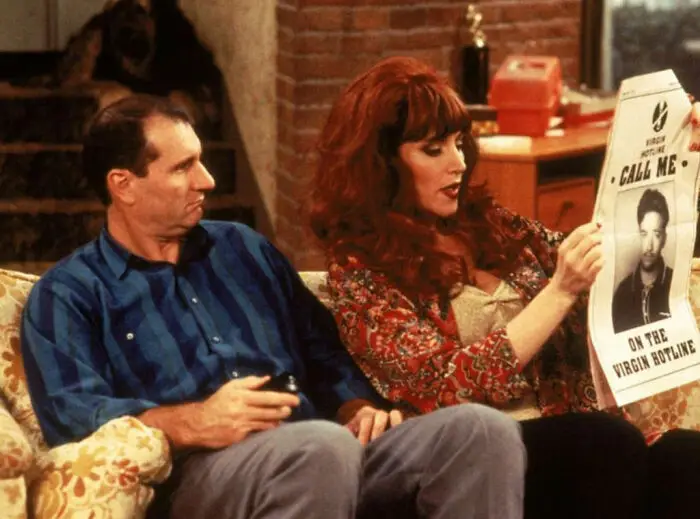
Question: There used to be a lot of shows in the 80s and 70s in which the butt of the joke was often the husband and the wife hating each other
This contrasts with earlier comedies like I love Lucy or Bewitched where the couple loved each other dearly, and with more current shows which also tend to have healthier relationships, even in Malcom in the Middle the parents loved each other despite how disfunctional they were in other senses
The "I hate my wife" comedies seem to have been made for and by baby boomers
Did baby boomers have worse marriage lives than other generations?, did they just find the idea specially funny for some reason?
---
Answer:
First off, I'm not sure if your exact premise based on sitcoms quite pans out. There is some noticeable change in family dynamics in sitcoms starting in 1970 and going through 1990, but it's not as simple as mutual spousal animosity. I trudged through a number of lists and came up with prominent 80s sitcoms with married couples:
The Cosby Show (84-92)
Family Ties (82-89)
Diff'rent Strokes (78-86)
Webster (83-89)
ALF (86-90)
Small Wonder (85-89)
Out of This World (87-91)
None of these seem to be premised around parents that loathe each other. Two of them involve aliens (ALF and Out of This World) and one involves a robot (Small Wonder).
Maybe you're thinking of Married... with Children, which ran from 1987 to 1997, so perhaps counts as 80s? Or The Simpsons which started in 1989 so just touched the 80s, but I don't think anyone would describe as a 1980s show? (We'll get back to both of those.) Or if you're shooting for deep cuts, Unhappily Ever After, which Ron Leavitt (who co-created Married... with Children) worked on, but that's not way out until 1995 to 1999? Or Family Guy, which started in 1999, so starting a year before Malcolm and the Middle?
If you're going back in time, maybe you mean All in the Family (1971-1979), featuring bigoted father Archie Bunker. In one of the most famous episodes, Edith's Problem, Edith goes through menopause.
Mike Stivic [son-in-law of Archie]: What did the doctor say?
Archie Bunker: He just said that menopause is a pretty tough time to be going through; especially for nervous types.
Mike Stivic: So?
Archie Bunker: So he prescribed these here pills.
Mike Stivic: Oh, good.
Archie Bunker: I gotta take three of 'em a day.
Archie is certainly insensitive (and can't handle Edith's problem interfering with a trip to Florida) but it still doesn't quite match the "boomers hate their wife" thing you're going for. (And menopause in 1972 would likely indicate someone from the "Greatest Generation" -- boomers are two generations away.) While All in the Family's massive success (Archie was called "the most expensive racist on television") led to something of a television revolution, it was more in the framing of complex themes (like Maude, an All in the Family spinoff) as opposed to simply including more aggressive characters.
So, let's reformulate the question to something that might give a satisfying answer:
Did the family dynamics depicted in sitcoms deteriorate between 1950 and 1990, and does this reflect what happened to US culture at large?
This ends up hitting close to what I think the original question meant, and there's a fair amount of literature about it. Of course, one argument is what "deteriorate" means. On the more "conservative" end, Popenoe wrote in length during the 1990s about how
Recent family decline is more serious than any decline in the past because what is breaking up is the nuclear family and traced this same decline across various sitcoms. Other media theorists in the "deteriorate" camp are Buck, Fields, and Hoffman. However, some from the 1990s simply argued that there was a simple change in family structure and diversity, like Cantor and Moore.
The "diversity" part certainly is true -- while the 1950s families were nearly all "intact" (the "nuclear" form Popenoe wanted) that's not the case by the late 80s; here's a list of "intact" vs. "non-intact" vs. "mixed" families for television shows shown the week of March 9-15 in 1987:
Intact: Cosby Show, Family Ties, Growing Pains, 227, Newhart, Webster, Jack & Mike
Nonintact: Who's the Boss, Kate & Allie, Carvanaughs, My Sister Sam, Sidekicks, Nothing Easy, Rags to Riches, Our House, Starman
Mixed: Dallas, Dynasty, Falcon Crest, Knot's Landing, Colby's
(Incidentally, The first time a divorced woman was on television was 1962 -- The Lucy Show, with Lucy Carmichael -- a widow -- sharing a house with Vivian Bagley, a divorced mother. Lucy Carmichael was played by Lucielle Ball of I Love Lucy and Vivian Bagley was played by Vivian Vance, who was Ethel Mertz on I Love Lucy. This doesn't mean every single family was "nuclear"; the show Bachelor Father, with a premise right in the title, ran from 1957-1962.)
What the question is really asking about, though, is negative interaction between spouses. To make the question easier I'll consider family interactions in general. A mammoth 1980 study analyzed three seasons of television (75-76, 76-77, 77-78) and counted interactions that
"go against" (attack, oppose, ignore)
"go away" (evade, withdraw)
"go toward" (offer information, seek information, contribute, support, show concern, petition, direct, accept support, accept direction)
The first two categories (essentially, what I'll call the "negative" ones) had 13% to 16% of interactions, while the remainder fell into the "go toward" category, the majority being in "offers information" (35% to 37%).
A 1992 study used the exact same categories, with the 1989-1990 season. This time things were broken down by show; the negative percentages again:
Cosby Show: 16%
Full House: 10%
Growing Pains: 33%
Married with Children: 37%
Simpsons: 20.7%
Note that the fairly "traditional" shows were in line with the mid-1970s, but Growing Pains and Married with Children raise the conflict significantly. However, this can simply indicate more drama and variation. Notably, the sitcoms still followed the "everything resolves" model -- as Cantor concludes in a paper:
If we watch the news, the game shows, and adventure programs on television, we know there is a greedy, hostile, violent world out there. But the domestic dramas present a different message. Here human virtues prevail. While we may not be able to have an impact on political or economic conditions, in the family, through love and sensitivity solutions of conflicts are still possible, and the world is still manageable.
Report
3points
#27 Kids These Days Like To Pretend Sticks Are Guns By Repeatedly Going "Pew, Pew, Pew" Like Modern Day Automatic Firearms. But Did Kids In The 1700's Do The Same Thing Except They Would Pretend To Do The Loading Procedure For A Musket Every Time They "Shoot?"

Children's culture in history can be difficult to study. Adult observers tend to reflect more formal types of play and practice; memoirs reflect the haze of memory and desired memory; it's sometimes difficult to tell whether schoolbook exercises represent an individual experience or a standard trope. In this case, fortunately, a look at the broader culture of children's wargaming in early modern Europe can help answer the question.
Children's play often imitates the adult world for two reasons: first, children mirror what they see; second, adults encourage it to help prepare children for the future. The encouragement of martial play among boys (only boys) in the late Middle Ages and early modern era is a good illustration of these. We have stories from hagiography of the future saint who stepped aside from the mock swordfighting to play at being a priest dispensing the Eucharist, and proverbs observing that when children play at swords, war is in the air. From the adult encouragement angle, with the rise of a visible toymaking industry from the fourteenth century, hobby-horses and swords were among the most popular items.
Although toy guns start to appear from the later half of the sixteenth century, it's really in the seventeenth that guns displace the swords of knighthood as boys' wargame toy of choice. This is in conjunction with the encouraged realism of militaristic play. Memoirs of noblemen raised at a royal court, like Louis Henri with Louis XIV, stress the popularity of fully organized "armies" of boys marching and drilling under their "commander," the king. And this was in no way limited to the elite of the elite. Army-style drills were not just a major component of the all-around education of boys at grammar and secondary school--school sponsorship of these types of exercise actually served as a marketing appeal. The Lincoln Grammar School stressed the realism of its schoolyard play in opposition to "childish games": its students "exercised in all their military postures, and in assaults and defenses." And from the 17th century, assaults and defenses meant guns.
With princes and high nobles, it seems that the guns and cannons would be smaller, boy-sized versions, but real. Louis Henri describes learning how to shoot with a harquebus that then-Prince Louis gave him, and mentions how he and the other boys (which is to say, their fathers) lavished the future king with many and diverse shooting weapons.
But moving down the social ladder to the urban middle classes (presumably), actual toy guns were exceedingly popular among boys. Actual records are scanty, of course, but archaeological digs and trawls of the Thames (where worn out or unneeded toys might be disposed of, or make their way there through a sewer or settlement) turn up toy guns and cannons as among the most numerous survivals. And for the most part, these toys appear to have been designed for mock shooting, including packing with powder and pellets to fire.
But children playing with toy guns in the manner they were designed to be used by adults is not yet the same as children making the leap themselves. For that, we turn to disciplinary and legal records of situations where boys improvised. One student of the Bodwin School participated in wargaming exercises not just by carrying a dummy gun. He actually got a candle, hollowed it out, and packed it with powder. This isn't a mock stick, but it's pretty close.
There are plenty of tragic events where children did not realize a gun was loaded, went to play with it, and killed a playmate or bystander by accident. But one case from turn of the 18th century London demonstrates the realism that permeates surviving accounts of boys' wargaming. A twelve-year-old apprentice came across his master's gun and wanted to play with it. But he wasn't content to point and cock and click, like plenty of boys did in the cases where the gun proved to be loaded. No, for this boy, playing with guns started with inserting the ststick and packing it with powder.
Some caution is of course warranted. These aren't cases of boys pointing sticks at each other and making exploding noises with their mouths. And surviving sources, as I've discussed, are going to be biased towards more realistic types of games. Nevertheless, the combination of being so steeped in militaristic "play" and the general tendency to learn adulting by observation led our two improvisers to want "toy guns" that mirrored the real thing at every step except the very last. It seems likely, therefore, that just like we can all remember a range of ways we "played pretend" with "guns" when we were little, 17th and 18th century boys also scaled up towards imitating the real thing with whatever they had.
Report
3points
#28 Why Do American High Schools And Universities Use The Nomenclature "Freshman, Sophomore, Junior, Senior" Instead Of, E.g., 1st-Year, 2nd-Year, Etc.? How Did That Develop?

A reasonable trawl through the Internet will inform you that American universities borrowed the terminology from Oxford and Cambridge, where they had come to describe different levels of "sophester" or sophist--someone who thinks they are wise. (Sophomore adds on either a simple Latin -or 'operator' ending, or possibly Greek moros/fool--either way, the meaning is clear; the adjective "sophomoric" means immature). In the sixteenth century, sophister sometimes had an additional connotation of someone who takes money for teaching wisdom instead of being an exploited adjunct living a pure life of the mind or something--basically, a philosopher who sold out. This would track with the use of more advanced students employed to tutor earlier ones.
What the OED and blog posts won't tell you, on the other hand, is why the labels for students are inherently insults.
Medieval universities incubated a tradition that early modern ones would carry on with pride: periodically awful student behavior. (Also, you know, excellent academics & drool-worthy libraries & the foundation for modern scientific research &c &c.) Most infamous is student violence, of course--right along with universities' determination to shelter their own from charges of murder and rape.
But more to the point with the classifications is that university students also had a reputation for living up to a somewhat lower standard than what Robert Lowth wanted to see in Oxford:
[A place] where a liberal pursuit of knowledge, and a genuine freedom of thought was raised encouraged and pushed forward by example, by commendation, and by authority
and somewhat more along the lines of what Edward Gibbon (yes, our Edward Gibbon!) remembered:
To the university of Oxford I acknowledge no obligation; and she will as cheerfully renounce me for a son, as I am willing to disclaim her for a mother. I spent fourteen months at Magdalen College; they proved the fourteen months the most idle and unprofitable of my whole life...
In the university of Oxford, the greater part of the public professors have for these many years given up altogether even the pretence of teaching.
As a gentleman commoner, I was admitted to the society of the fellows, and fondly expected that some questions of literature would be the amusing and instructive topics of their discourse. Their conversation stagnated in a round of college business, Tory politics, personal anecdotes, and private scandal...The names of Wenman and Dashwood were more frequently pronounced, than those of Cicero and Chrysostom.
The point isn't that there were no deeply studious students making serious academic gains of their own and scientific progress overall, it's the reputation they had for being--well, sophists: more concerned with the social life of debate and politics and looking/acting smart to each other, than living up to some lofty ideal. Oxford opened its first coffeehouse in 1650. And by early modern coffeehouse, we should mean something like a literary salon--a place where the literati would gather to discuss intellectual topics and current events.
Of course, to contemporary eyes, this was a great deficit from what it should be. A 1901 investigation of Oxford in the 18th century summed up its findings in this description of freshman, freshly-minted college men:
We see the public schoolman, just freed from the rod of Busby’s successors, strutting about town for a week or so before entrance, courting his schoolfellows’ envy...swaggering at coffee-houses, and giving himself a scholar’s airs at the bookshops.
and things did not improve over the years:
A month or two sees them metamorphosed into complete smarts...The "smart's" breakfast is scarcely over by ten.
It's important to keep in mind that these attitudes were not only external in the sense of town-gown relations or alumni making a point about the quality of English universities compared to continental ones. Student university hazing could be absolutely brutal. Internal university hierarchy, built upon the idea that students with less experience were complete no-nothing fools, reigned supreme.
Most infamously, there's a late medieval sort of "Latin textbook" for university students that consists of a series of dialogues we think were meant to teach students useful Latin vocabulary for surviving uni daily life. One of the settings is a violent and humiliating initiation ritual in which the freshman or beanus is made into an animal that must be tamed. Well, scholars will continue to dispute whether in the 15th century this was a literary fantasy that drew on a solid tradition of hazing. On the other hand, there seems to be fairly solid evidence that early modern students at some universities took the description as prescription--and performed the hazing ceremony.
The straightforward etymologies of sophomore, junior (sophister), and senior (sophister) from Greek sophia and Greek/Latin sophister, in other words, aren't really the interesting part of the story--and a much funnier one for those of us who never attended college or have already graduated.
Report
3points
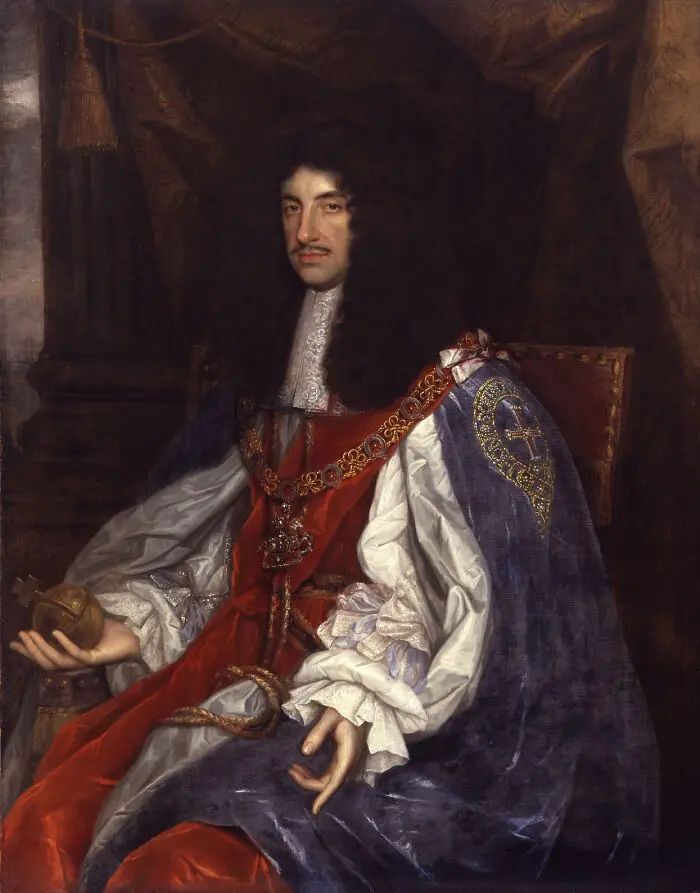
#29 The Physician In The Autopsy Of Charles II Gave Some Very... Colorful (If Not Medically Impossible) Descriptions Like "Heart The Size Of A Peppercorn" And "Did Not Contain A Single Drop Of Blood." What Was Going On In These Autopsies?
EDIT: Okay -- the FOUR part answer is all done. I might have done a little bit crazy. A couple people messaged me about Foucault -- I wrote a response in Part 4 below (and about how, despite finding him influential, I largely agree with the mods policy on him).
What a wonderful question! I'm going to answer this in three parts -- the first talking about autopsies and medical perception, the second about Charles II, and the third to generally talk about my approach to paleopathology and medical history.
So here is my "mod alert" -- I am going to talk about the ever-controversial Michel Foucault (though very early Foucault). Foucault, of course, is always a controversial reference on r/AskHistorians (and in history in general). If you want to rustle some jimmies, try citing "Discipline and Punish" in this forum. That being said, it's more or less impossible to talk about pathological anatomy and the Paris Clinical School before referencing a very early Foucault book "The Birth of the Clinic: An Archaeology of Medical Perception". As far as I'm aware, this is the first serious study of medical perception and the postmodern concept of "the gaze" (Foucault used the French phase "le regard", which is usually translated as "clinical gaze," but the term "medical perception" used most commonly in his title I think fits bette). Foucault is interested in the dawning of the Paris Clinical School, starting in the waning days of the Ancien Regime and lasting through the Revolution and the next several decades. I'll actually defend Foucault's historiography in this case (of course, the man himself would hate that I used the word history of describe anything he did) -- the work is very well referenced, and mostly concerned with the discourse of physicians themselves. That being said, while he's been very influential, his historiography is overly reliant on these physicians' own interpretations, and modern historiography (Erwin Ackerknecht, and more recently La Berge and Hannaway) has unsurprisingly revealed a far subtler picture. For example, where Foucault sees a sharp break between the classical and hypothetical curriculum of the Ancien Regime faculty and new hands-on "hospital medicine," scholars have actually looked at notes from students studying in both these regimes, and notes a more gradual shift.
That was quite a caveat -- but I actually take Foucault's philosophy of science quite seriously. So one of Foucault's central theses in Birth of the Clinic (expounded more in The Order of Things) is that medical perception is largely driven by unconscious assumptions about what constitutes disease and man's relationship to it. This is in contrast to the traditional scientific narrative that medical understanding happens gradually as more knowledge is slowly added. He would argue that these collections of unconscious assumptions (he would later label this an "episteme") in fact are not additive but replace one another.
So I want to talk about three different epistemes before I get to Charles II. The first is what I would call traditional Western medicine, dating back to the ancients. Simplifying quite a bit, this is the idea that human health and disease is caused by balances and imbalances in the four constituent body fluids -- blood, black bile, yellow bile, and phlegm. These body fluids are directly affected by the natural environment. Food, weather, altitude, close contacts, the alignment of the stars and planets -- all could cause changes in humors, and therefore cause disease. These has some important underlying assumptions. For example, a human organism cannot be separated from its environment. Diseases are not unique entities, but have similar causes. Treatments need to be focused on "rebalance". The psychological and the physical are fundamentally interlinked. This is the context in which the tradition of anatomy emerged -- spreading from Vesalius to become an important part of both medical education and Western art. However, there's no sense that DISEASE can be determined from autopsy (or even variants within humans, which is very common). Disease, after all, lies in the four humors, and the life-bringing pneuma, both of which are obscured by death.
Starting in roughly the late 17th century, and dominating the 18th, you have the episteme of nosology. Think Sydenham, Cullen, Pinel. They rejected humoral explanations, which didn't line up with the observations they were making. Instead they reclassified human disease based on symptomology and similarity to one another. The big comparison is botany -- just like Linnaeus attempted to classify all life within a hierarchy, doctors did the same, carving out orders, classes, genus, and species (and they carved out a LOT of them). Anatomy by this time was widespread, both in medical education, and after death. The biggest example would be Morgagni, who started to notice that there were different changes after death in oragans associated with different disease states (Auenbrugger is in this tradition too, though he's most often associated with the next episteme).
Which takes us to the third episteme -- that of pathological anatomy. I could go on forever about this, but essentially doctors started to realize that certain diseases had specific changes associated with tissue types -- and that what had been thought to be multiple diseases, might be just a single disease with multi-system effects. Think Bayle, Laennec (and Auenbrugger, even though he's writing in the 1760s -- an example of how this is more of a framework rather than a hard and fast rule). This episteme has largely survived to the present day, though with considerable modification -- Virchow readjusted to show that the CELL, rather than tissues, was the fundamental unit of disease, and germ theory gave an incredibly important etiologic factor, and the 20th and 21st century has revealed even smaller units, such as CML, caused by the BCR-ABL translocation.
However, for the most part, our modern noslogy outside of psychiatry (these days the ICD-10) largely operates on these assumptions. And there are important assumptions. For example, close examination of the patient, in ways they cannot access, are now of extreme importance (back then this meant percussion and a stethoscope; now it means MRIs, PET scans, biopsies, &c). These has had important implications in removing patients from their own state of health. Disease is also now freed from the metaphysical (France no longer employs astrologers and meteorologists to track outbreaks, like in the Ancien Regime). It turns out that it's also a fairly effective way to target treatments, hence its dominance.
1point
#30 Would It Have Been Possible For A Roman Citizen Around 1 A.d. To Obtain Everything Needed To Make A Cheeseburger, Assuming They Had The Knowledge Of How To Make One?

Well, the answer is unfortunately not that satisfying, but I expect that you came into this question realizing it was a somewhat vain hope given the use of "disappeared from history". To provide a little background, Sally Hemmings had a number of children, some of whom died in infancy, which are generally accepted as being fathered by Thomas Jefferson (I would direct to here for more discussion, broadly, of the sexual relationships between masters and slaves in the antebellum South). Whether or not this was fact has been debated since before Jefferson himself died, and scholarly opinion has swayed about, but it is pretty much now the consensus.
Anyways though. Harriet, described as "nearly as white as anybody and very beautiful" had no trouble passing for white, and as you already are aware, made use of this. She was freed in 1822 at the age of 21, apparently on a promise Jefferson had made to Sally Hemings to do so when the children reached that age. The documentation of Harriet's liberation is almost next to nothing. Edmund Bacon, who worked as an overseer at Monticello, described her departure, being the one who gave her the $50 that you mention, and stating she had been headed for Philadelphia. And as for her life after she headed north, we only have one account which we can give any real credence to, that from her brother Madison, who wrote in 1873:
Harriet married a white man in good standing in Washington City, whose name I could give, but will not, for prudential reason. She raised a family of children, and so far as I know they were never suspected of being tainted with African blood in the community where she lived or lives. I have not heard from her for ten years, and do not know whether she is dead or alive. She thought it to her interest, on going to Washington, to assume the role of a white woman, and but her dress and conduct as such I am not aware that her identity as Harriet Hemings of Monticello has ever been discovered.
Washington City in this case refers to the District of Columbia as it was then known, and it would appear that while she kept a low profile, she did not choose to cut all ties with her family, at least immediately, as Madison claims to have remained in contact with her through the 1860s (he was writing in 1873). He also gives us reason to believe it quite possible that she has living descendants, but of course was much to guarded to allow any information to get out which could give much of a thread to follow. What the end of communications even meant is up in the air - perhaps she decided to cut her final tie to non-white society, or perhaps she simply died. We can only speculate. But in any case, Madison's account is the lone source we can rely on to reconstruct any sense of her post-emancipation life.
She was not the only child of Jefferson and Hemmings to follow such a route. While Madison and Eston both left records, writings, and known descendants, their brother Beverley was similarly allowed to leave Monticello for the North, and even less seems sure about his fate then his sister, doing a similar disappearing act but without, it seems, even the record of correspondence that Harriet left He was briefly in contact, long enough to communicate back that he had married a white woman and that they had a daughter, living in Washington City, but that seems to be the end of it. In both the case of Beverley and Harriet, it should be noted, Jefferson officially recorded them as being escaped slaves, as their departure was recorded in the 'farm book', but it was quite clearly allowed with his approval as a means of sending them North in technical compliance with the aforementioned agreement he had made with Sally. The backhanded means of liberation is thought to have been a means of following through without providing ammunition for those looking to prove the parentage.
Now, as to the second part of your question, you might perhaps want to x-post to r/AskScience as it is less a history question that one for a geneticist. What I do understand of these things would imply that it is possible to find genetic matches that show relations by various degrees, but it isn't like those genes are signed "T.J." Establishing who that common ancestor is takes a lot more leg work. To compare to the famous claim about Genghis Khan's widespread DNA, this is based on finding the the same Y-chromosome (which records patrilineal descent) in millions of people that shows they share a common male ancestor a certain period back in time. Genghis Khan is then assumed to be the one based on historical circumstances. But I would hesitate to say more, as again, this is getting into the territory for a scientist to discuss.
Report
0points


