








#1
He points at something on a shelf at the back, a stuffed toy or something, and asks “how much is that?”. The lady behind the counter replies that it's just decoration and not for sale.
“Right, but how much is it?” he asks again. And gets the same answer. This conversation is repeated another couple of times as the tourist can't comprehend that its not for sale.
Eventually one of our group pipes up. She's a New Yorker, and used her best New York loud voice.
“For gods sake. She's told you in English it's not for sale, what are you not understanding? Now get out of the way, you're giving us all a bad name”. And tourist guy did just that, he scuttled out of the shop and went on his way.
#2

I wish I were joking.
#3

The US ranks 3rd as the most visited country in the world by tourists, but its outbound flights are also plentiful. According to Pew Research, roughly three-quarters of Americans (76%) have visited at least one other country, including 26% who have been to five or more. About a quarter (23%) have not traveled internationally, though most in this group say they would if they had the opportunity.
But there’s no denying the fact that stereotypes follow them everywhere they go. Locals believe that they can easily spot an American tourist abroad, and you can understand why from an old list we had made.
#4

#5

But then, one of them started whining about how they *really* wanted a window seat "so they could see all the fishes."
#6

"England."
They both laughed and she said "well, that explains it!"
Not a case of American tourists being daft, but they were nice people and its good to share a positive story.
When I was young, we were on a family holiday in Scotland and we were queuing up at a wee cafe to get an ice cream. The lady in front introduced herself to us and told us she was from New York and how much she was enjoying England!
Bloke behind the counter looked really unimpressed.
In all honesty, these generalizations are actually pretty unfair, as not every American tourist is the same. Personally, even I have met many of them during my travels, and not all of them were “too noisy” or “filled with wonder,” as many locals believe.
Sadly, though, the prejudice against them runs so deep that there’s even a term for them called the “Ugly Tourist.” It comes from a book intended to expose America’s failing foreign policies towards Southeast Asian countries.
Since then, however, the term has come to refer to Americans who travel or live abroad and are insensitive to the culture of the country they are in. They view everything through the lens of American values and standards. But it doesn’t really do justice to every US citizen who travels abroad.
#7
So I explained how to get the Bakerloo line to Paddington, then a main line train to Oxford, but they'd need to buy a separate train ticket. I walked to the station with them.
They started looking a bit overwhelmed, and eventually one said "How long will that take?"
"The train is a about an hour."
"They said in the hotel it was only a quarter hour walk!"
At which point I realised they meant Oxford Street...
In Cambridge I had some very rude Americans ask where the cathedral was, usually while standing right in front of Kings College Chapel. I only told one lot how to get a train to Ely (nearest actual cathedral).
In Florence an old guy was selling paintings, I wanted to buy one. I managed to say hello and how much in Italian, but struggled with the numbers. He said 30 Euros in English, and I couldn't afford it. Started haggling and making polite.comments about the paintings, and got down to 12 Euros. I said "why didn't you say that in the first place?"
At which point two stereotype Americans in sweatpants from a cruise ship barge in and bark "How much?"
Thirty Euros, Madame.
You waat? How much in real money?
Is eighty dollars, lady. (nearly 3x the euro price) Two for one hundred and fifty.
They take two pictures, throw $150 at him, and walk off.
Guy says to me, "That is why. For you, five Euros. Enjoy!".
#8
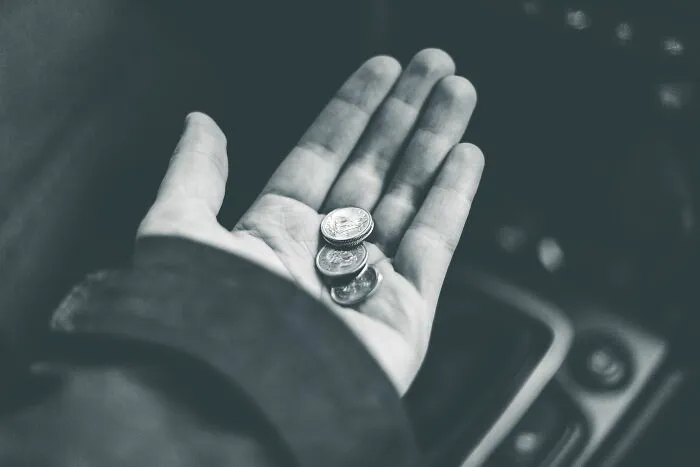
Hadn’t had the currency long enough to know easily what to pay with, so when we ordered (from the bartender who looked very much like a football hooligan) I just sort of held my palm open with all the coins on it and looked at him like, “Please help me?” He laughed and grabbed the coins he needed out of my hand and that was it.
We learned after that but it was a funny/sweet exchange.
#9

I met an American guy in Laos and he had just learned that 'knickers' meant underwear but didn't realise it meant female underwear so he announced to a room full of people that before we all went out he was just going to go and put some knickers on.
American travel writer Rick Steves states, “Europe sees two kinds of American travelers: Those who view Europe through air-conditioned bus windows, socializing with their noisy American friends, and those who are taking a vacation from the US, immersing themselves in different cultures, experiencing different people and lifestyles, and broadening their perspectives.”
However, if you really think about it, this theory can apply to tourists from all over the world, yet US citizens bear the brunt. But in all honesty, there have been some pretty wild instances in history that have actually sparked these rumors about Americans.
#10

When we got to the top there were a bunch of Americans who had BOUGHT A 10ft FLAPOLE AND FLAG with them. They pitched it in the rim and all chest bumped and shouted and whooped and high fived each other. It was excruciatingly embarrassing.

#12

Here are a few
Do you speak English over here?
London is a great country
Why did they build Windsor Castle near the airport.
They have electricity over here (yes I really heard this)
The amount of ignorance I've heard over the years has been astonishing.
One thing that holds true for these travelers is that they stand out for their views and knowledge of foreign affairs compared to the rest of Americans. Experts believe that apart from their views, people can also start to act and sound like someone else after a trip.
Dr Charlotte Russell, a clinical psychologist and the founder of The Travel Psychologist, offers a very interesting perspective on why this happens.
She believes that the most obvious motivation for why some people incorporate foreign customs or speech is that someone has really connected with a part of their experience in a particular place and wants to hold onto their experiences and their sense of connection.
#13

Me: “York”
American: “You don’t sound like you’re from New York, have you lived in the UK a long time?”
Me: “Just York, not New York. It’s the place in England that New York was named after.”
American: “That’s interesting! I’ve never heard of there! * pulls out London Underground map * Can you show me which station it’s nearest to?”
He did seem genuinely interested and was friendly, he was just a bit clueless about the UK in general.
#14

#15

Moreover, there are numerous benefits to tourists who travel with an open mind to truly explore a place’s culture. Psychiatrist Karen Ann Cooper explains, “Our brains are like muscles, and we can give them a workout by breaking out of our comfort zones.” And isn’t that exactly what travel does?
One study even found that people who see more changes in scenery day-to-day tend to be happier than those who don’t. It could be beneficial for Americans to really immerse themselves in other cultures while traveling. After all, in the 2025 World Happiness Report, the US slipped to #24, its lowest ranking ever in the report’s 13-year history.
#16

One of the performers did quite a lot of audience participation, and he picked on
a pair of women a few seats along from me - they were a mother and daughter from Louisiana. It was their first day in Scotland (although they thought they were in England), and they had never heard of the Fringe before, and were completely baffled by what was going on and had ended up wandering into this random uni revue, where most of the audience were in some way connected to the uni.
Another performer went up, and picked me as his mark, and we were chatting away when one of the other performers blurted out something like "Wait, aren't you /u/Irmuhlay? The girl who did X?", so I told her that I was and the guy on stage said something sarcastic along the lines of "We've got royalty in the audience tonight!"
The American women kept whispering to each other and looking at me for the rest of the show, and at the end of the show, they came up to me, bubbling with excitement about how they "couldn't believe they met a real-life princess on their first day in England". I tried to correct them and it didn't seem to go through, so eventually agreed to give them an autograph.
#17
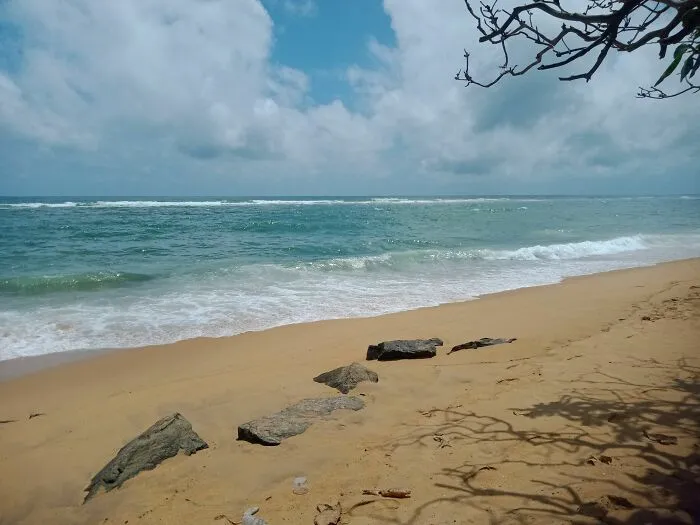
This American guy steps into the middle of the beach, looks around for 30 seconds then says really loud but to himself,
"There's too much sand on this beach!"
He then walked back to the car.
#18

Surprisingly, though, Americans have a much harsher view of themselves as tourists, as opposed to the local residents of other countries. “Europeans in general, and all the European businesses that I’ve made contact with during my years in the industry, say they’re always welcoming to Americans,” Justin Albertynas, a travel industry expert based in Lithuania, told CNN.
“Especially when they are from New York or LA, everybody is kind of putting them on a pedestal. So, actually, on the contrary to the ugly American fad, everybody loves Americans,” he adds.
#19

Pointing to the Sydney Opera House, during the 2000 Olympics: "That's a fancy building! Did they build it specially for the Olympics?"
#20

Some personal run ins
One girl kept asking how long the train is to “Glass cow” from Carlisle and literally the woman behind the counter was like I have no idea what you mean.
One gave me money in a shop once like I was the perfume counter girl and he asked where something was and i told him. He gave me a fiver and I thought maybe he was “paying” and was like “Can I scan the item?” but he’d already walked off. We didn’t accept tips so I was every confused. I had to get my manager to go after him and give him his many back. I know the like tipping in the US but I wasn’t expecting it as a perfume counter girl at the time.
One did keep asking people in Liverpool were they were from and when they said “Im from here” they would get really confused.
One I met when i was a barmaid bought me a shot. He asked how old I was (like 19-20 at the time) and he asked was I not underage and had he just bought my first ever shot and was genuinely worried he’d get in trouble and i was like “no mate, it’s 18 legally, although hardly anyone waits to then, you’re fine, thanks for he drink”
When i was in America, one of them told my Irish dad that he was Irish too and that his great great great great grandfather left in 1654 or something really specific and asked if my dad could tell he was Irish.