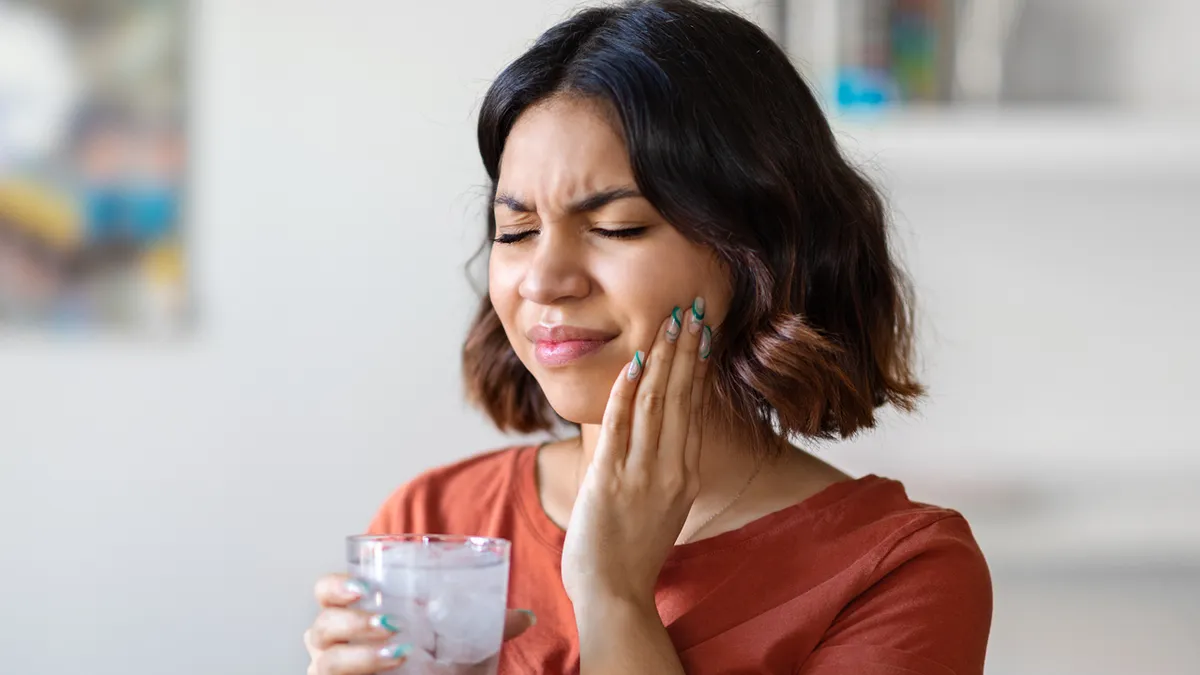
Lately, the world seems to be obsessed with perfection. Perfect lives, perfect bodies, perfect hair, or perfect teeth, everything has to be “Instagrammable.” Not that chasing perfection is a big NO-NO, but should it really come at the cost of damaging our health and well-being? It’s strange how people preach about treating our bodies like a temple, yet they don’t hesitate to go to extremes just to get that “perfect” appearance. But I am nobody to judge them or call them out. Instead, I’ll let science do the talking. From extreme dieting to “maxxing” everything, the “glow up” TikTok trends are sparking concern worldwide. In this article, however, we won’t focus on all these obsessions with perfection; instead, we’ll look at one thing only: teeth whitening. Now you might wonder why that’s a bad thing. Well, it’s not always. However, researchers warn against the potential harm whitening strips can cause to our teeth. Enter Dr. Kelly Keenan, PhD, a professor of chemistry at Stockton University in New Jersey. She and her team of researchers found that hydrogen peroxide in over-the-counter whitening strips could harm our teeth. The article details the potential risks this study found. Moreover, Bored Panda received exclusive insights from Dr. Keenan about her research. We also spoke with an associate dentist, Dr. Sahil Mane, BDS. He shared his thoughts about these potential risks and discussed the misconceptions about such over-the-counter products. But you will have to scroll down and read the article to find out. sergio_pulp / Magnific (not the actual photo) Before we jump into the research, let’s get familiar with the jargon. Not everyone is a dental expert, so some of these terms might not make sense. Basically, a tooth has 3 layers: the protective outer enamel, the dentin layer with protein like enamel, and the pulp, along with surrounding tissues that connect the root to the gum. Now, let’s talk about the main character of the article: hydrogen peroxide, an active ingredient in teeth-whitening products. It can oxidize the protein present in the dentin. Whitening products used by dental professionals can contain up to 30% hydrogen peroxide. Meanwhile, over-the-counter whitening strips contain around 14%-15%, and you can also find lower concentrations. These whitening products are immensely popular and only growing by the day. maksymiv_yura / Magnific (not the actual photo) Reports show that about 90% of people who whiten their teeth choose at-home methods (strips, gels, or whitening toothpaste), while only about 10% undergo professional in-office procedures. An estimated 37 million Americans used some form of tooth-whitening product in a single year. Younger adults show the highest engagement, with nearly 48% of those aged 18 to 34 using whitening products or treatments. Unfortunately, the real issue is their constant use, and the study highlights this effectively. Dr. Kelly Keenan and her team presented their findings at the American Society for Biochemistry and Molecular Biology (ASBMB) during the 2019 Experimental Biology annual meeting. Their research was titled: Teeth whitening products can harm protein-rich tooth layer: Researchers show active ingredient in whitening strips damages dentin. prostock-studio / Magnific (not the actual photo) Previous research showed that hydrogen peroxide can penetrate the enamel and dentin. Researchers found that when teeth were treated with whitening strips, the collagen in that inner layer started to break down. But Dr. Keenan’s team sought to understand hydrogen peroxide’s further impact on collagen, and they used entire teeth in their studies. They examined how the ingredient in question gradually breaks down dentin into tiny fragments. They noticed that hydrogen peroxide irritates the dentin fibers, making teeth sensitive for a while. And with more exposure, the collagen protein inside the dentin gradually disappears. The team also tested what happens when pure collagen meets hydrogen peroxide. They mixed the two and used a lab method called gel electrophoresis to watch the proteins break down over time. Anna Shvets / Pexels (not the actual photo) From their experiment, Dr. Keenan concluded that constant use of these teeth-whitening strips can damage dentin. She wanted to study whether dentin can repair itself over time and if hydrogen peroxide affects other proteins in the same way. When we reached out to her for an interview, Dr. Keenan informed us that although she’s not currently continuing her research on teeth-whitening, it did go on for a few more years beyond 2019. They looked at the growing number of over-the-counter whitening options in the US, including higher concentrations of hydrogen peroxide than previously available, as well as carbamide peroxide, which degrades to hydrogen peroxide. She explained, “A new wrinkle in teeth whitening was also combining these products with a light. When we first started, the highest percentage of peroxide available to the consumer outside a dentist’s office was 6.5%. But a few years later, products with 44% hydrogen peroxide or carbamide peroxide became available. Another chemical agent (PAP) also emerged for short.” Epic_Horizon / Magnific (not the actual photo) Dr. Keenan has published two papers based on her research: Release of Collagen and Protein from Teeth Treated with Over-the-Counter Whitening Strips and Release of Protein from Teeth During and in Between Treatments with 44% Carbamide Peroxide, 35% Carbamide Peroxide with LED Light, 14% Hydrogen Peroxide and Phthalimidoperoxycaproic Acid. She and her team found that hydrogen peroxide and carbamide peroxide decrease two types of proteins: collagen, which is found in the dentin, and other non-collagen proteins. Also, the collagen protein size actually decreased after treatment. SoyBreno / Unsplash (not the actual photo) When we spoke with Dr. Sahil Mane, he said peroxide-based whitening is not inherently dangerous when used correctly, but the risk depends on the frequency. He mentioned that concentration, exposure time, and the patient’s dental condition are the other factors that might also pose a risk. While speaking about why the damage could be caused and how permeability plays a role in it, he explained, “Dentin is much more permeable than enamel; it contains less mineral and more organic material, particularly collagen, along with numerous microscopic dentinal tubules that extend toward the pulp. These tubules allow fluids and dissolved substances to move through dentin more readily.” “Hydrogen peroxide is a small, reactive molecule that can diffuse through enamel and reach the underlying dentin. Because dentin is more permeable and contains a substantial protein matrix, hydrogen peroxide and the reactive oxygen species it generates can interact with dentinal proteins, including collagen,” Dr. Mane added. Getty Images / Unsplash (not the actual photo) We keep talking about dentin damage in the article, so we asked our expert about its impact. He explained that when dentin is damaged, particularly through oxidative stress, it can lead to persistent tooth sensitivity as the protective layer is compromised. This allows external stimuli to reach the nerve-rich pulp more easily. Over time, he continued, structural degradation can occur, potentially weakening the tooth and making it more susceptible to decay or fractures. Getty Images / Unsplash (not the actual photo) Since people are always looking for a shortcut or a quick fix, misconceptions are never far behind. Dr. Mane stressed that the biggest misconception is that “over-the-counter” means “risk-free”. Apparently, people are under the impression that if it’s on a shelf, it must be harmless. But Dr. Keenan’s study proved that’s not true. When we asked our expert what he would advise patients about this, he replied, “I would recommend a dental assessment first, followed by dentist-supervised whitening or professional cleaning when needed. As I mentioned before, peroxide-based whitening isn’t inherently dangerous, as the risk depends on frequency, concentration, exposure time, and the patient’s dental condition.” Ketut Subiyanto / Pexels (not the actual photo) However, he pointed out that following product instructions, avoiding prolonged use, and allowing recovery between treatments might reduce risks. Having said that, Dr. Mane couldn’t help but stress again that repeated whitening without proper assessment is where cosmetic goals can start compromising dental health. He also had a clear warning for specific patient profiles who he would strictly advise against using at-home whitening strips. “Patients with pre-existing conditions like thin enamel, severe gum recession (which exposes dentin at the root surface), or chronic tooth sensitivity should generally avoid these products. I would also caution those with active dental decay, periodontal disease, or previous dental restorations, as whitening agents might adversely affect them,” he commented. Getty Images / Unsplash (not the actual photo) Lastly, we spoke to our expert about advancements in whitening technology. He believes that it is moving toward selective whitening formulations that remove stains effectively while protecting dentin and reducing sensitivity. He said researchers are exploring lower-concentration peroxide systems, calcium- and phosphate-based remineralizing agents, and light-activated or enzyme-based alternatives to achieve this balance. Dr. Mane noted that the most promising approach combines effective stain removal with mineral-protective additives, controlled peroxide delivery, and desensitizing agents. However, he also mentioned that most evidence for direct dentin protection is still limited, and long-term clinical studies are needed to establish it. “Additionally, food for thought: Whitening may brighten a smile, but it shouldn’t leave the dentin paying the price. After all, a beautiful smile is only worth it when it’s a healthy one!” he concluded. Well, that definitely gave me a lot to think about. Not that I have used whitening strips yet, but if I ever try them in the future, at least I will know what the safe frequency is. I firmly believe there’s no harm in trying something new, but nothing beats a healthier body. And what’s the whole point of having a “bright” smile when it only looks good but harms your teeth?