

Family relationships can be complicated, especially when difficult decisions are made during times of grief. Sometimes, parents believe they are doing what is best for everyone, only to discover years later that their choices have left someone feeling overlooked or betrayed. And while families may expect time to heal old wounds, not every disagreement disappears simply because the years have passed.
This can become particularly awkward when the holidays roll around, and relatives start pushing for a reunion. One 23-year-old man found himself in exactly that position when his estranged father, who was facing a divorce and struggling with loneliness, invited him to spend Christmas together. However, their strained relationship had a long history, including a decision that cost the young man his college fund.
When a person's college fund suddenly gets redirected toward something else, the disappointment can go far beyond the financial loss

After his mother passed away, the 23-year-old man grew distant from his father, who had used his college fund to pay for his stepbrother's surgeries
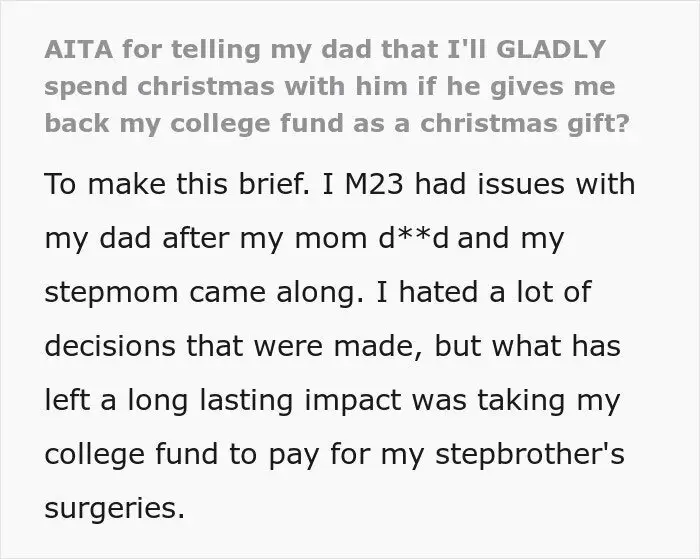



Years later, his father reached out ahead of Christmas, asking him to visit because he was lonely and going through a divorce



The son agreed only if his father returned the college fund, sparking a family argument and leaving him questioning whether he had been too harsh
Family estrangement rarely happens because of one disagreement. Psychology Today highlights that distance can develop after years of disappointment, unresolved conflicts, and unsuccessful attempts to address problems. Parents may see an adult child's decision to withdraw as sudden, while the child may feel they've been struggling with the relationship for a long time. This difference in perspective can make reconciliation particularly difficult.
This difference in perspective can then make reconciliation difficult. A 2015 study that examined the experiences of 898 estranged parents and adult children found that both groups often had very different explanations for why their relationships had broken down. Adult children frequently described feeling unsupported or unaccepted, while parents were more likely to point to their children's behavior.
Blended families also bring their own set of challenges, particularly when children have to adjust to a parent's new relationship. The American Psychological Association explains in its guide that remarriage can bring up unresolved feelings about previous family arrangements and create uncertainty about new parenting roles. Children may struggle with changes in attention, household expectations, and their place in the family.
Even seemingly ordinary decisions can become sensitive when everyone is still adjusting. Therefore, it is important for parents to consider children's perspectives when forming a stepfamily.
Of course, adjusting to these changes is not immediate, and establishing comfortable relationships between stepparents and stepchildren can take years. Still, maintaining individual parent-child relationships matters, even as a new family unit takes shape.

Just as it shows in this story between the man and his father, financial disagreements between parents and adult children can carry emotional weight long after the money has been spent. Verywell Mind identifies economic entanglements as one possible source of family estrangement. Money can become tied to expectations, control, independence, and trust, particularly when family members disagree about what financial support was supposed to mean.
These disagreements are not always about the amount involved. A parent might see financial help as something they have the right to redirect when circumstances change, while a child may see it as a broken promise. The disagreement becomes even more complicated when the money was intended for something important, such as education or housing, as in this case.
In these situations, the financial loss can represent a much bigger feeling, which is that someone's needs or future were not given the same consideration as another family member's. And grief can make family conflicts particularly difficult because different relatives may be dealing with their loss while carrying very different expectations of one another.
Reconciliation, meanwhile, requires more than simply wanting someone back in your life. The BBC explains that attempts to repair relationships often struggle when one person cannot listen to the other's experience without becoming defensive. Rebuilding trust means being willing to acknowledge past hurt and consider what needs to change. An invitation to reconnect may open the conversation, but meaningful reconciliation depends on what happens after that.
What do you think about this situation? Do you think the father's circumstances justify his past decision, or does his son have every right to remain resentful? We would love to know your thoughts!
Some netizens wanted more insight into the situation, wondering whether the son really had any right to demand for his college fund back
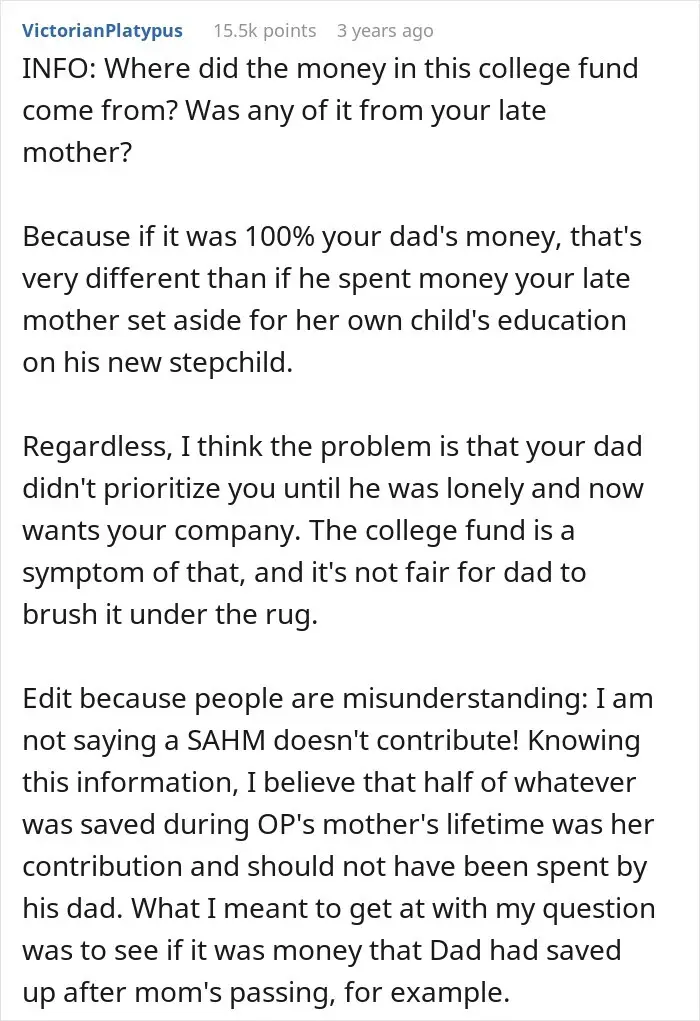
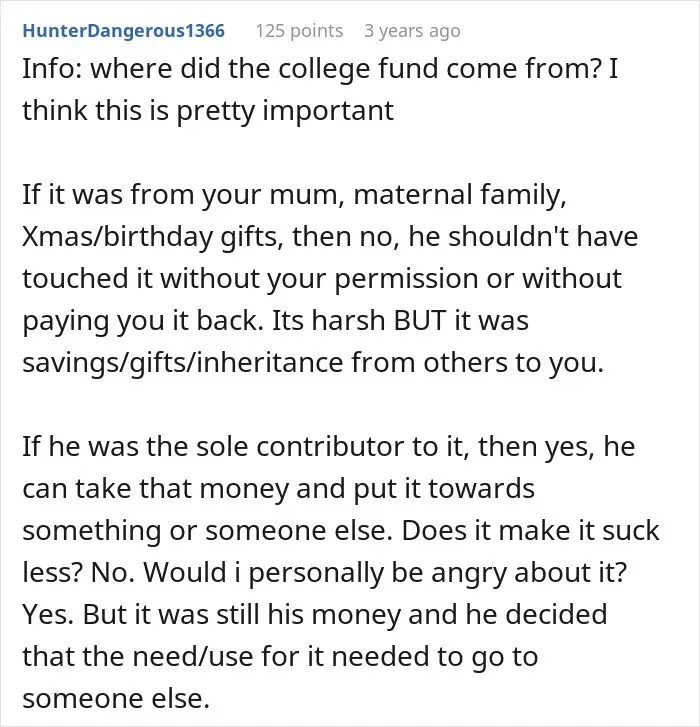
Some netizens insisted that neither the guy nor his father was wrong, rather blaming the American healthcare system


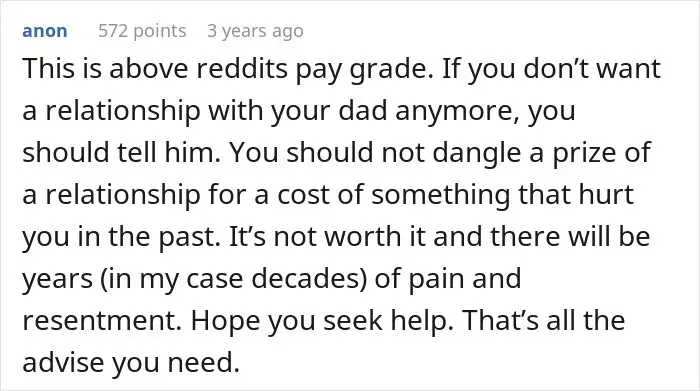


Some netizens believed that the guy in particular wasn't wrong, insisting that he had every right to be upset that his college fund wasn't used for his education

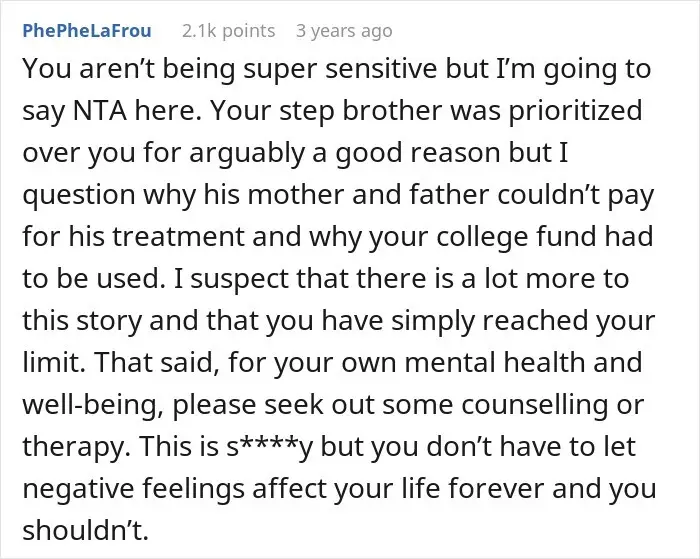
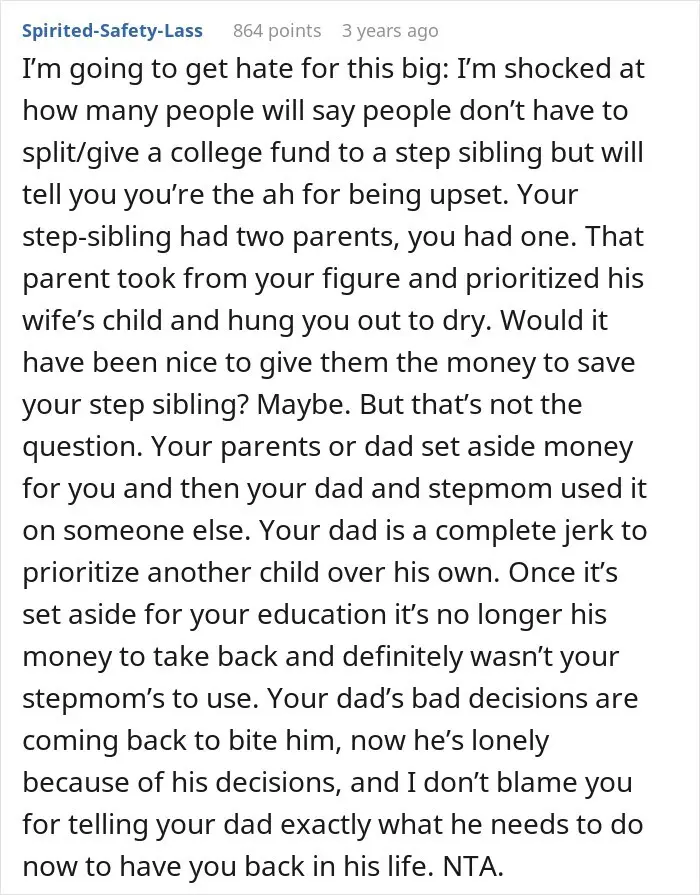

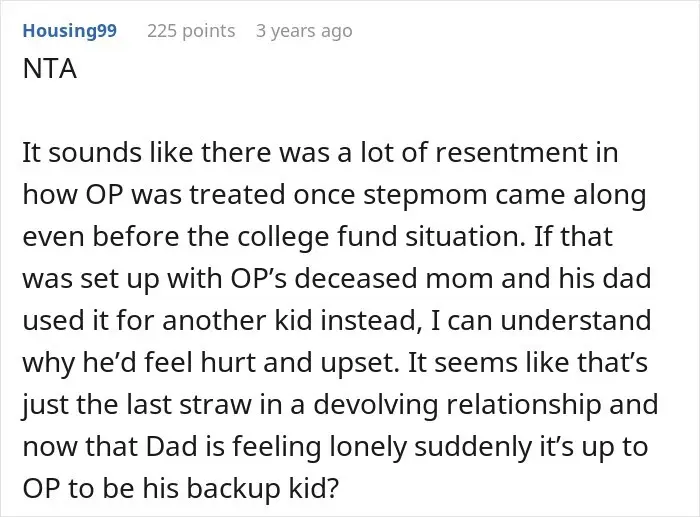


Others believed that the guy could have been less harsh, and the relatives could have been way more empathetic



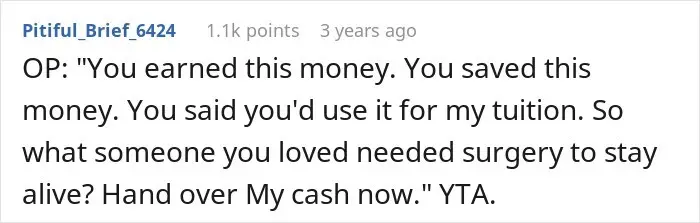
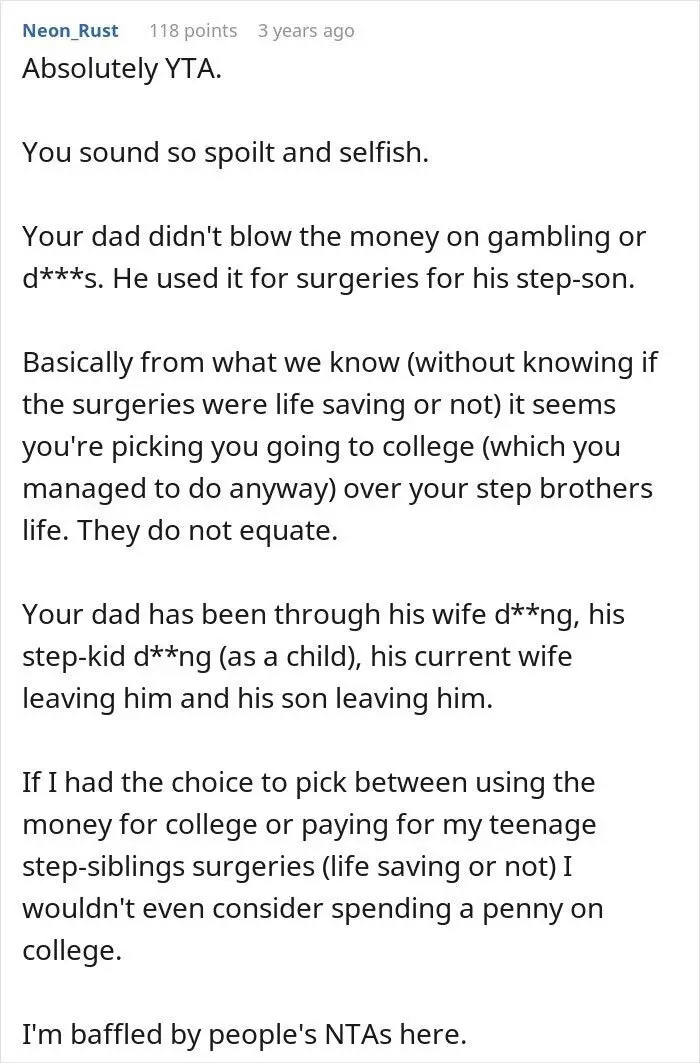
Some netizens insisted that the guy was wrong, accusing him of being spoilt, selfish, and lacking empathy



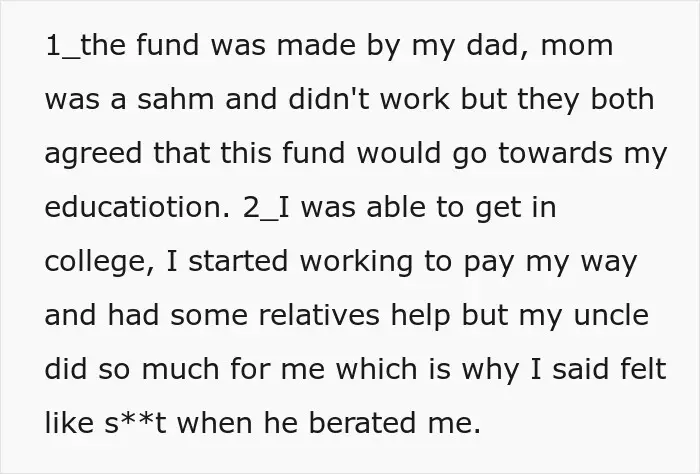
The guy reacted to the comments of netizens, insisting that it was his college fund therefore, he had every right to be upset about it