

Good neighbors are honestly worth their weight in gold. Whether it’s someone you occasionally grab a coffee with, chat to over the fence, or trust enough to hold a spare key, that kind of relationship can make a huge difference. You never really know when an emergency is going to hit, and it can be a total lifesaver to have someone close by who’s willing to help.
This post may include affiliate links.
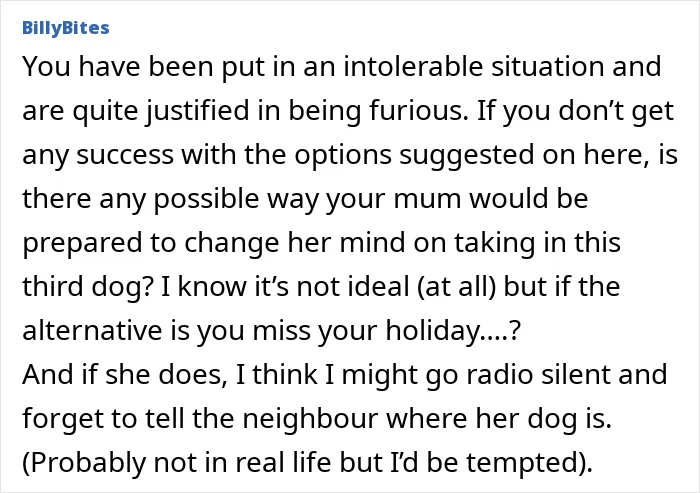
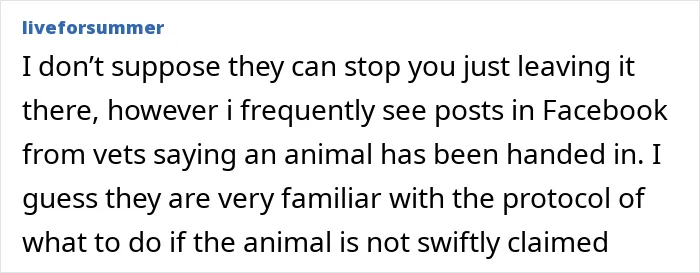
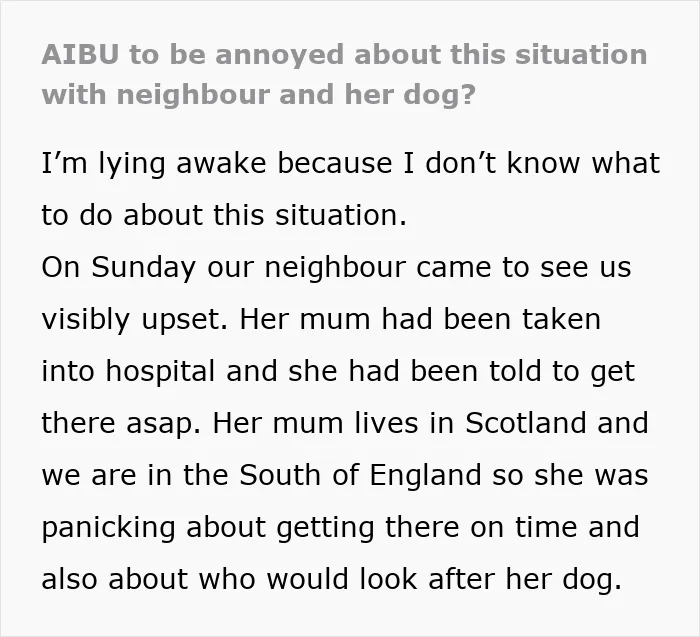
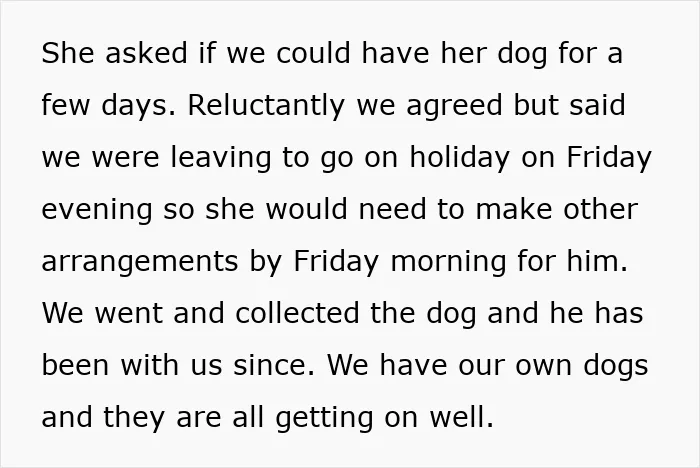
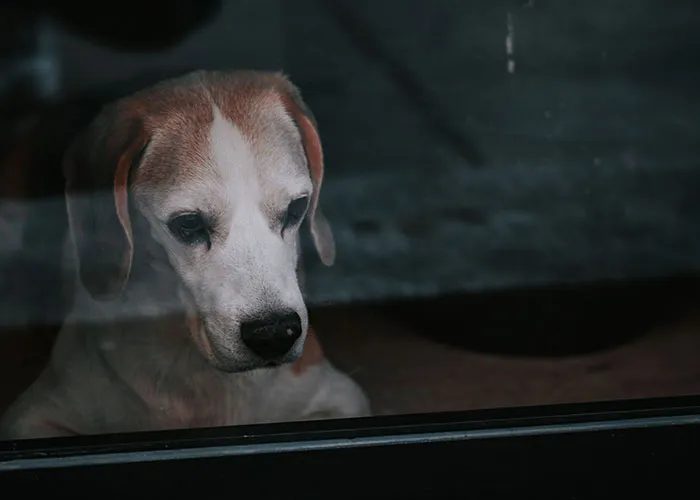
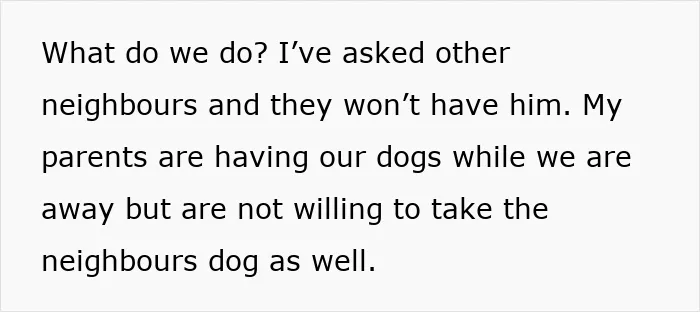
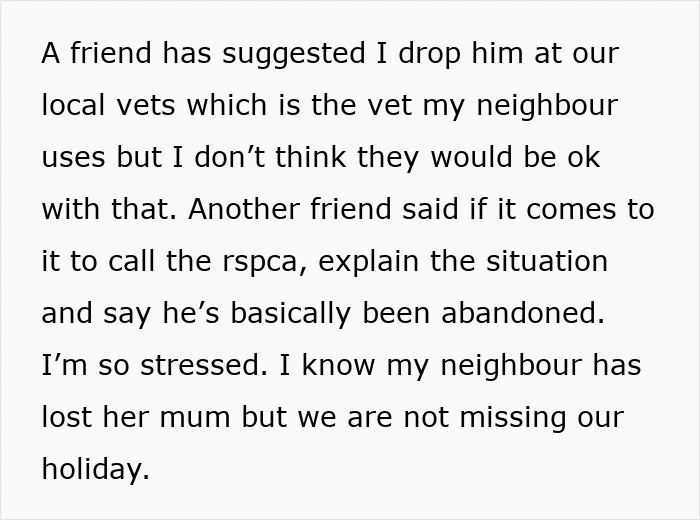
That’s exactly why one couple didn’t hesitate to step in when their neighbor’s mom was suddenly rushed to the hospital and she had to fly out at a moment’s notice. They took in her dog and agreed to look after him for a few days. But now she’s stopped answering their calls and messages, the dog is still with them, and they have no idea what they’re supposed to do next.
One couple stepped up to help their neighbor during an emergency and agreed to watch her dog for a few days

But now she’s nowhere to be found, leaving them stuck with her pet and no idea what to do next
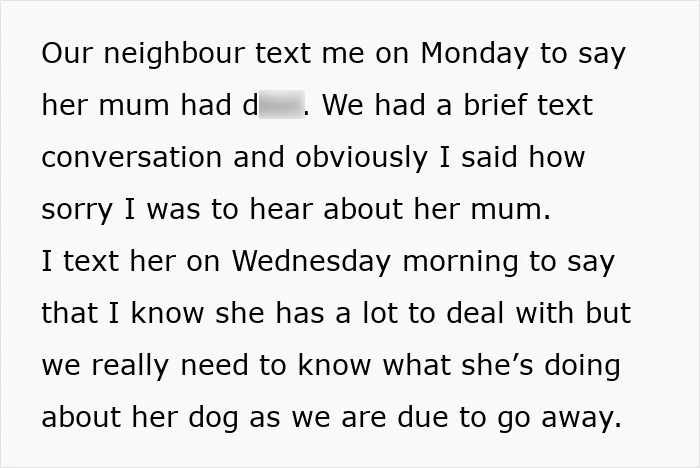
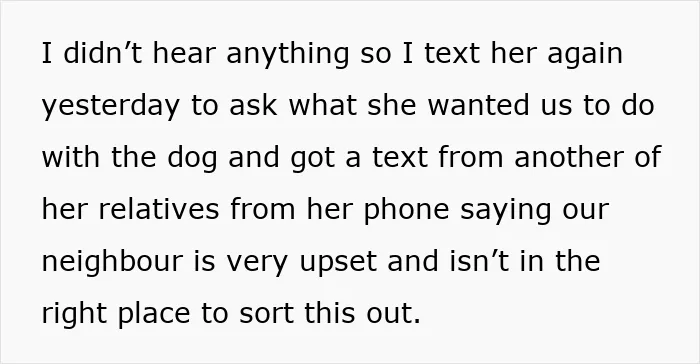
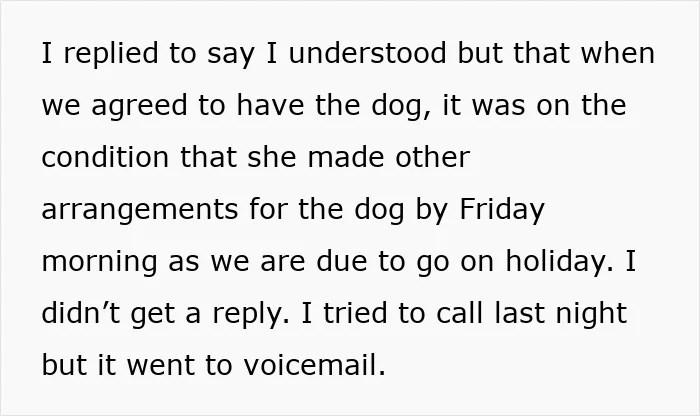

Grief can make people act in ways they normally wouldn’t
It’s a really tough spot for the couple to be in. They agreed to help their neighbor during an emergency and take care of her dog for a few days. Now she’s gone silent, and they’re left trying to figure out what to do with an animal that was never supposed to stay with them this long.
Sadly, grief has a way of making people act completely unlike themselves. When someone has just lost a person they love, even the smallest things like eating a meal or replying to a text can suddenly feel impossible. Looking after a dog on top of all that? It can feel like way too much when your mind is already drowning in everything else.
Neurologist Lisa M. Shulman, MD, professor of neurology at the University of Maryland and author of Before and After Loss: A Neurologist’s Perspective on Loss, Grief, and Our Brain, points out that the brain can treat a traumatic loss almost like a serious danger.
“Traumatic loss is perceived as a threat to survival and defaults to protective survival and defense mechanisms,” she told the American Brain Foundation.
And that reaction can affect way more than just someone’s emotions. Grief can mess with your memory, your behavior, your sleep, and even leave you stuck in a heavy brain fog for a while.
In other words, someone in mourning may genuinely have a harder time focusing or keeping up with everyday responsibilities. Shulman describes grief as “a normal protective process” that helps us cope with emotional trauma.
Part of what makes loss so hard for the brain to process is how deeply our relationships become built into everyday life.
On the APA’s Speaking of Psychology podcast, Mary-Frances O’Connor, PhD, an associate professor of clinical psychology and psychiatry at the University of Arizona, explained that the brain learns to expect the people closest to us to be there. When someone suddenly passes away, it has to adjust to a reality that goes against years of those expectations.
That doesn’t happen instantly. The brain needs time to get used to a world that suddenly looks very different from the one it knew before. During that period, a person may feel really distracted or overwhelmed.
But if intense grief and stress go on for too long, the opposite can start to happen. Instead of adjusting back, the brain can get used to being in that stressed state. As Shulman puts it, “When a circuit fires repeatedly, it’s reinforced and becomes a default setting.”
Over time, that can affect attention, decision-making, memory, and how quickly someone processes information. As a result, grief can leave a person feeling completely disconnected from everything around them. But it can also mean that other people are left picking up the pieces.
The couple in this story are neighbors who agreed to help for a limited amount of time, and they have their own plans and responsibilities to think about. They cannot simply keep someone else’s dog indefinitely without knowing what is happening.
So what would be the most appropriate way to handle the dog in a situation like this? Should the couple keep trying to reach the woman or her relatives, or would arranging temporary care elsewhere be fair? Share your thoughts in the comments below.
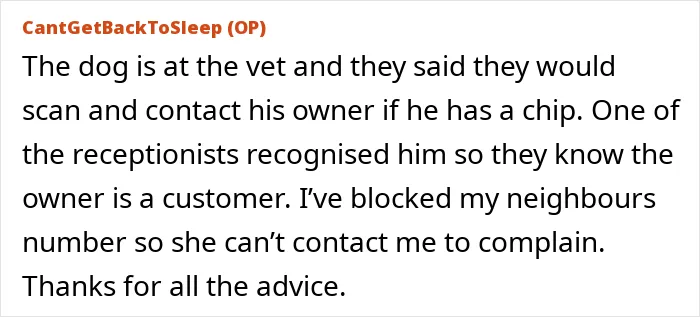
The woman shared a few more details about the situation in the comments





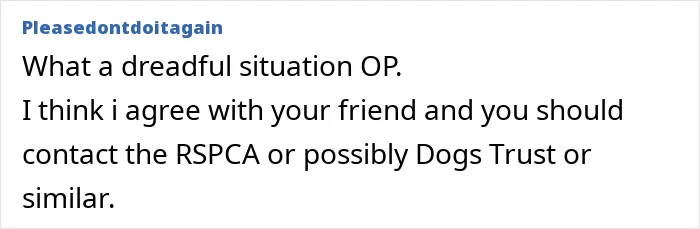
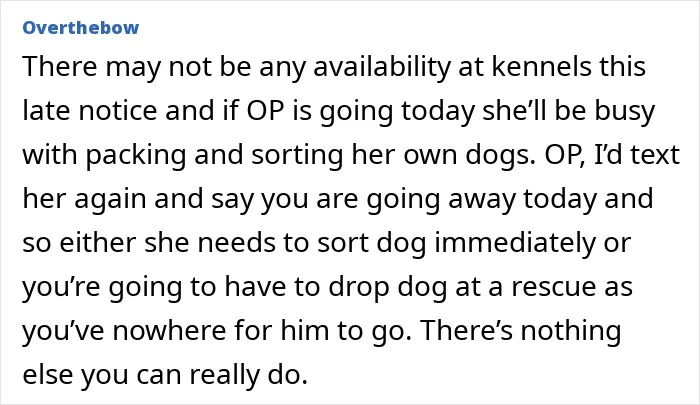
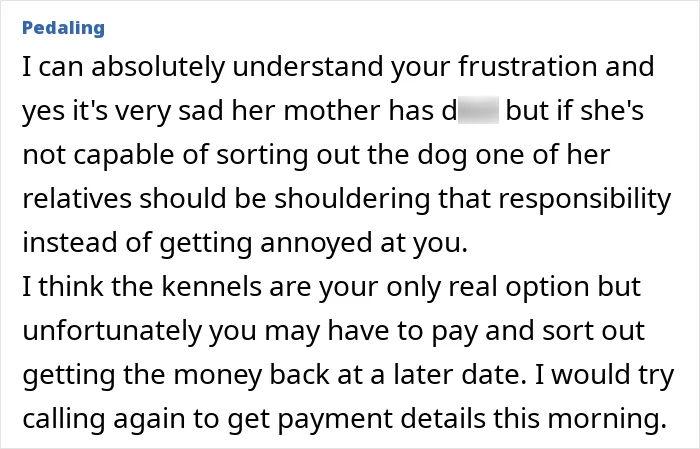
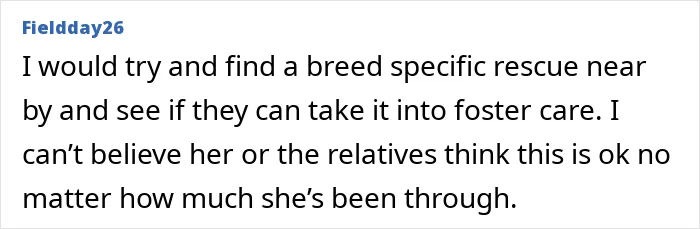
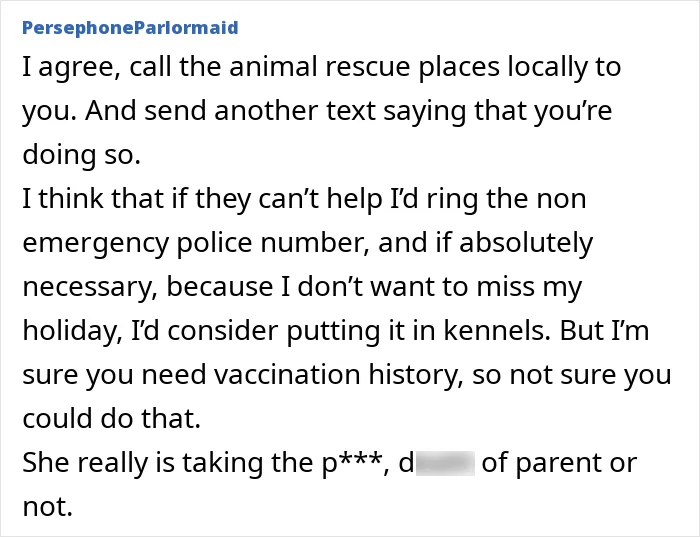
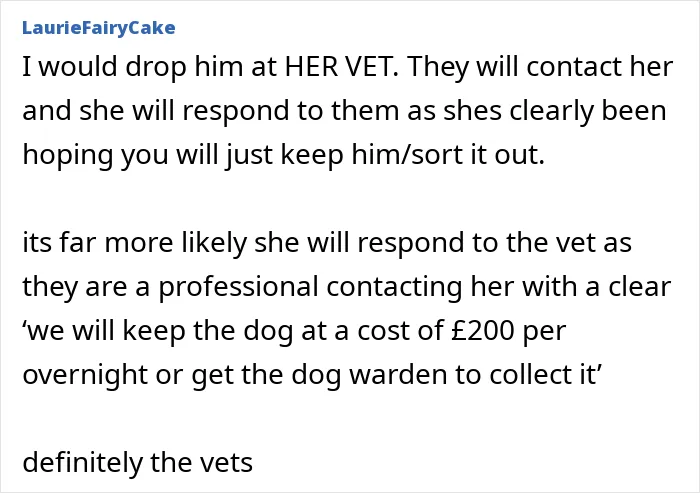
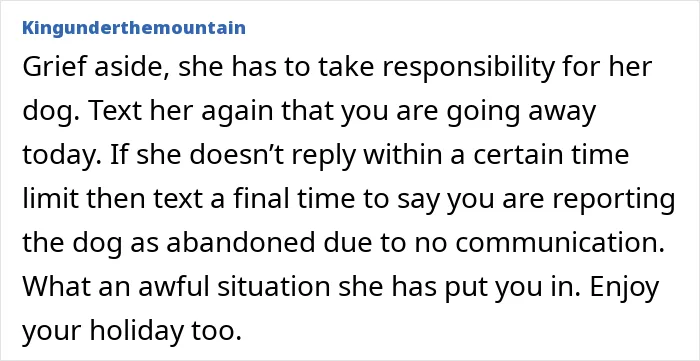
Readers agreed that it was a really difficult position to be in and offered some advice on how she could handle it