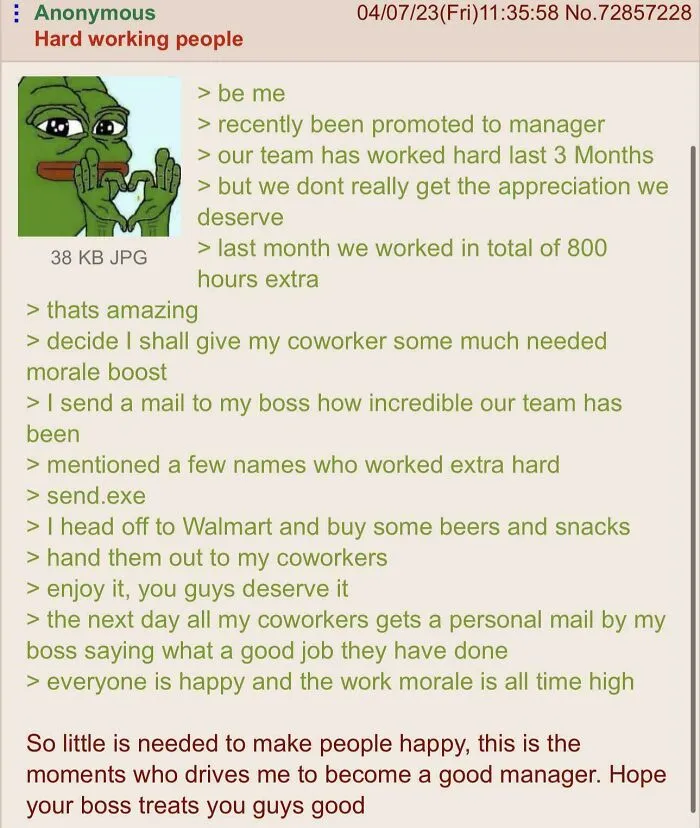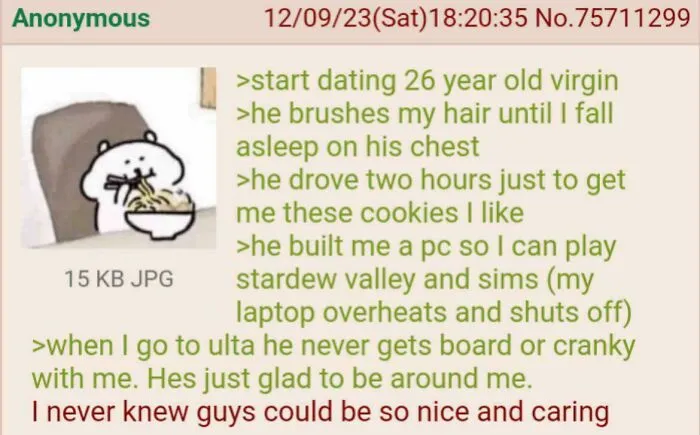


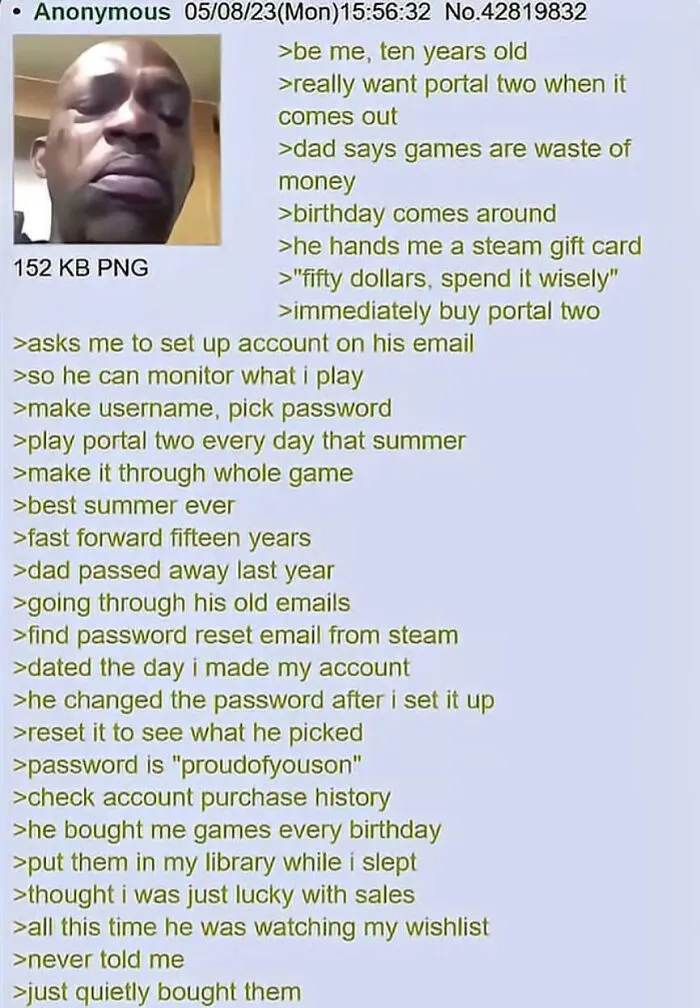
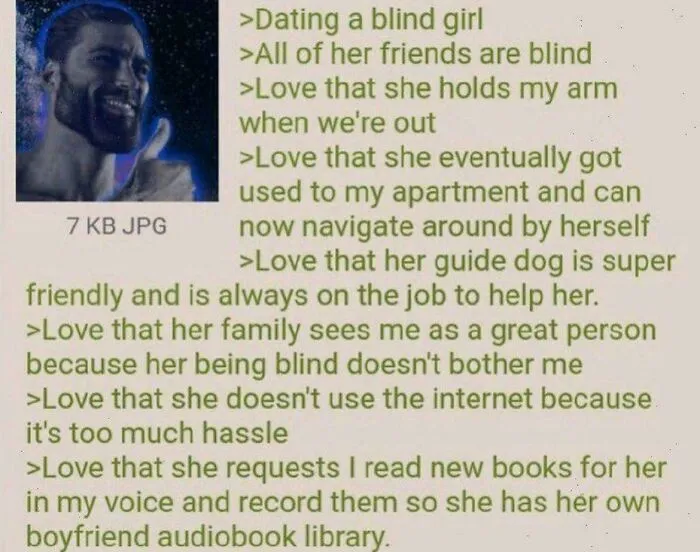
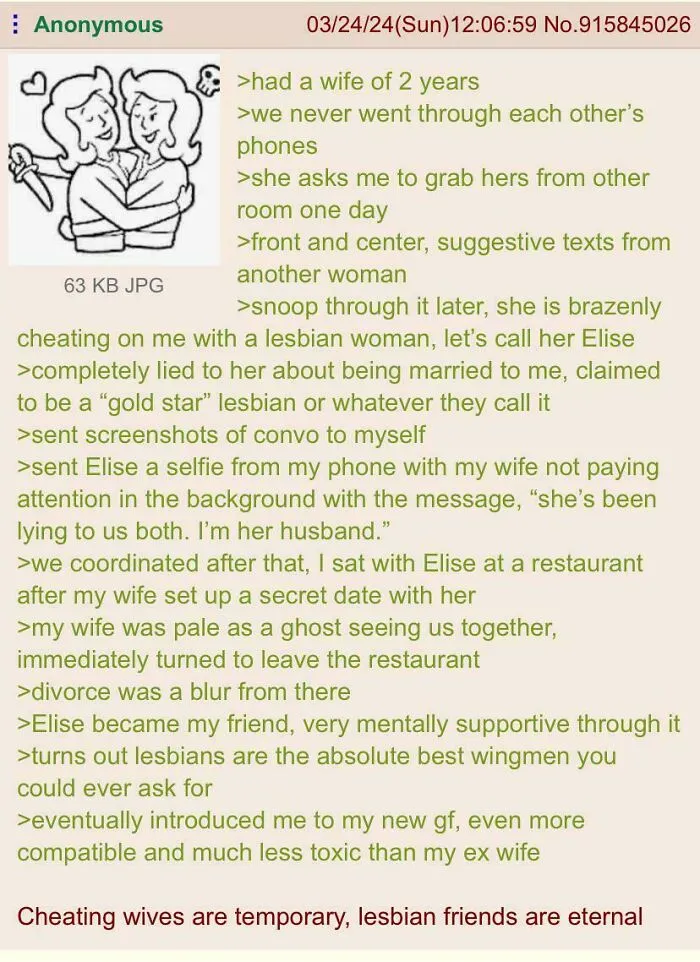
Collecting “greentexts that hit your heart,” the r/wholesomegreentexts subreddit is almost a decade old. But if you’re a little “green” on what exactly a greentext is, don’t worry. I’ve got you. Greentexts are basically a unique form of storytelling that originated on the image board site 4chan in around March 2010.
The name comes from the platform’s formatting, where starting a post with a greater-than sign (>) causes the text, normally maroon, to appear in green when the post is published. Apart from the font color, what makes these posts distinctive is the style they’re typically written in.
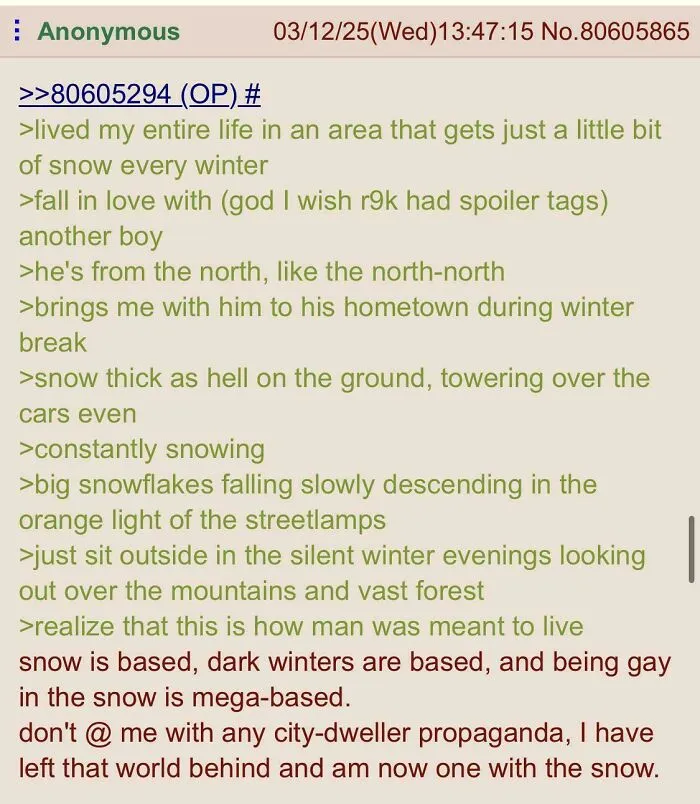
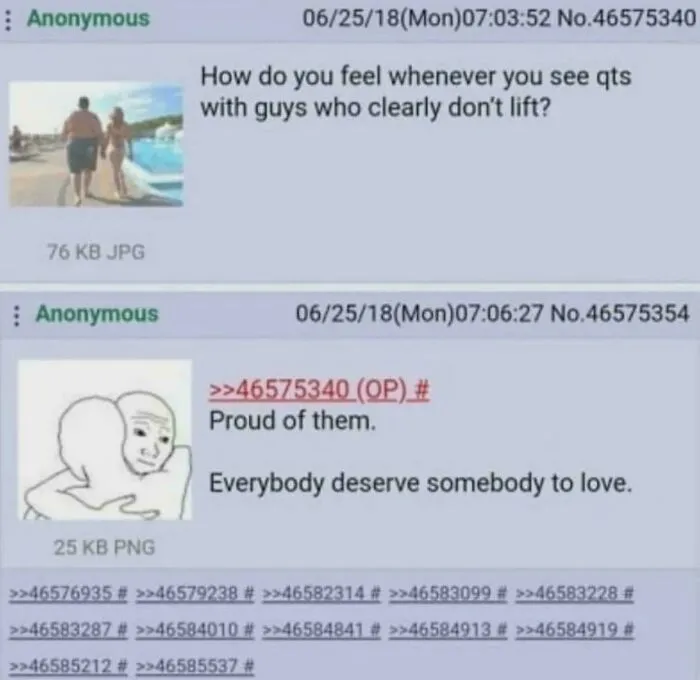
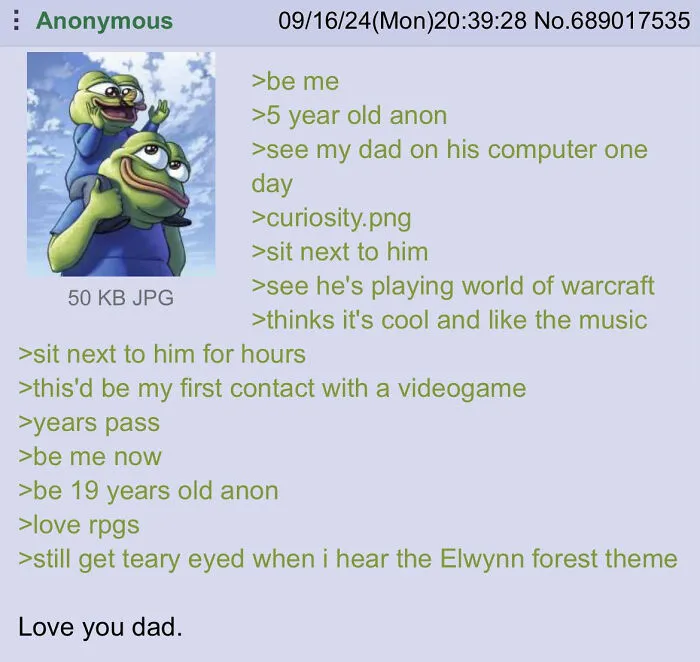
You’ll notice there are no long paragraphs here. Usually, these posts contain stories told through a series of concise, bullet-style lines, with each short line building toward a punchline, unexpected revelation, or memorable moment. These narratives “are often confessional in nature, dealing with the authors’ triumphs and tragedies alike,” as researcher Agustin IV Morado explains in his 2016 thesis.
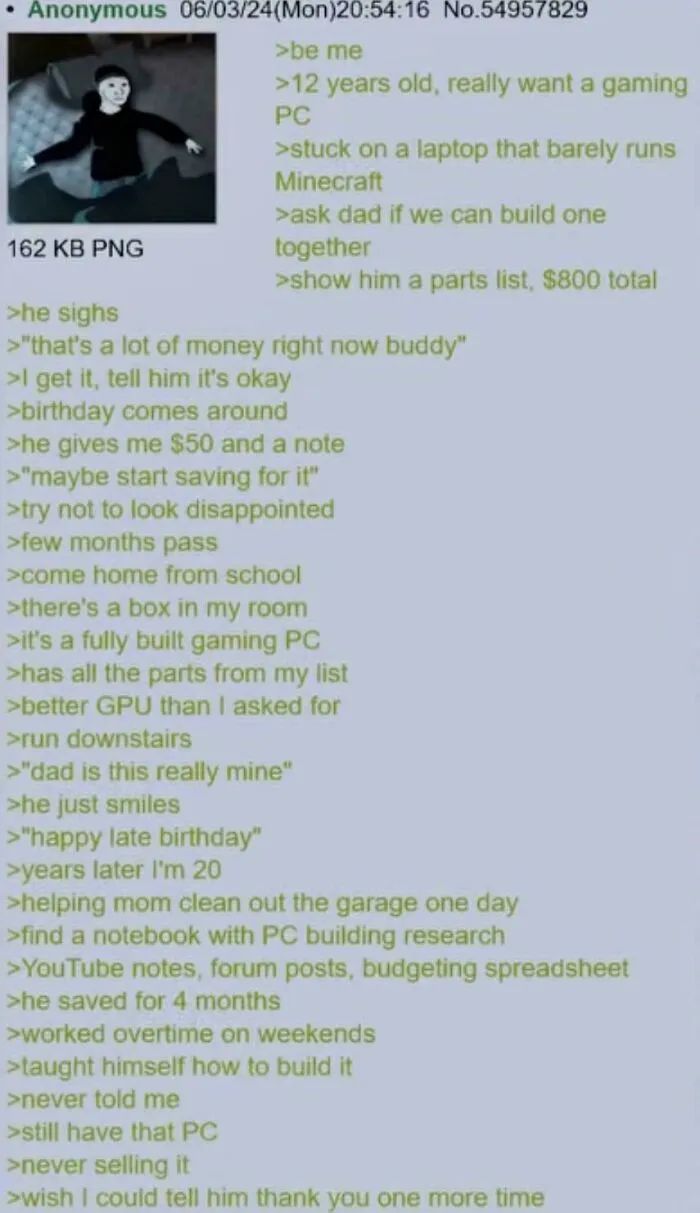
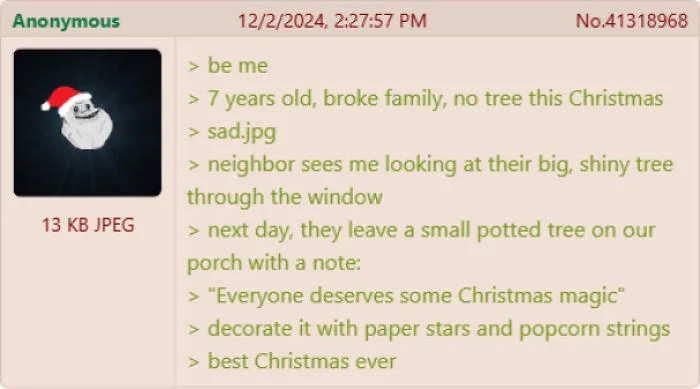
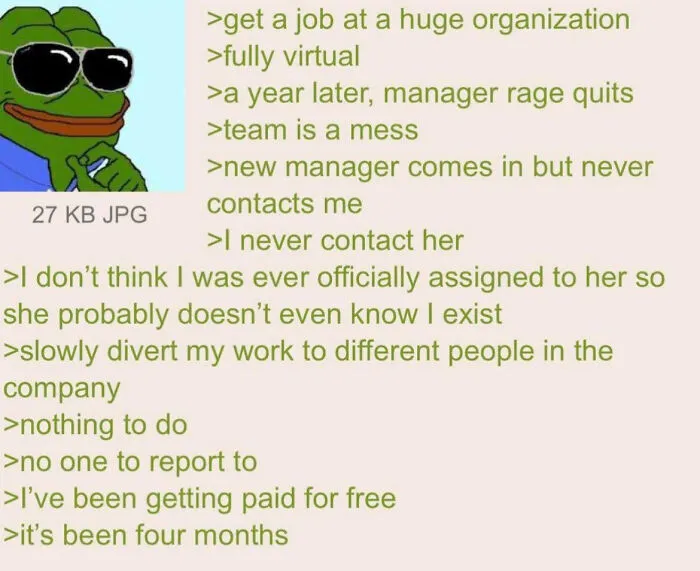
In other words, these stories can cover just about anything, from awkward social encounters to personal struggles and unexpected victories. As Morado explains, “Given the anonymity that 4chan offers, the site offers a perfect medium for people to tell stories in which they may have done things that are unethical or perhaps illegal. Other greentext stories may be humorous, perhaps even silly, and thus not meant to be taken seriously.”
That anonymity can also help users find common ground. Morado argues that greentexts allow “anonymous 4chan users, who tend to be outsiders from mainstream society, a way to identify with each other through shared stories.”
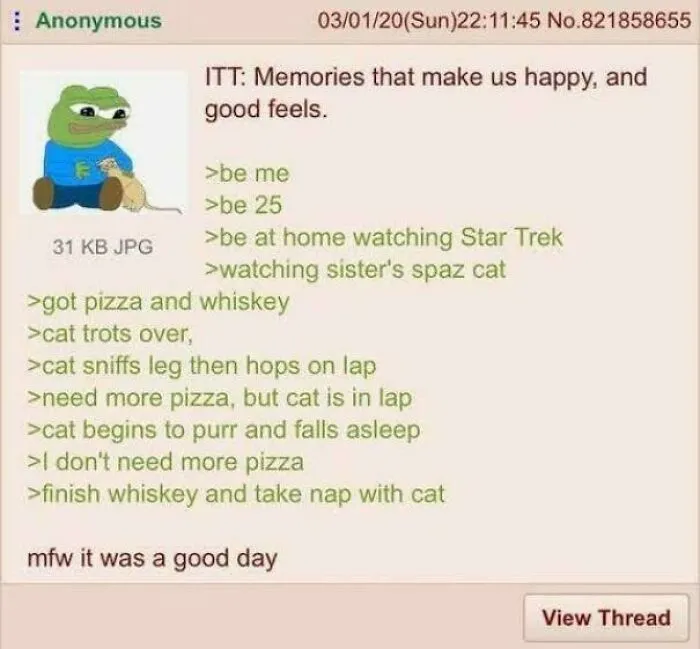
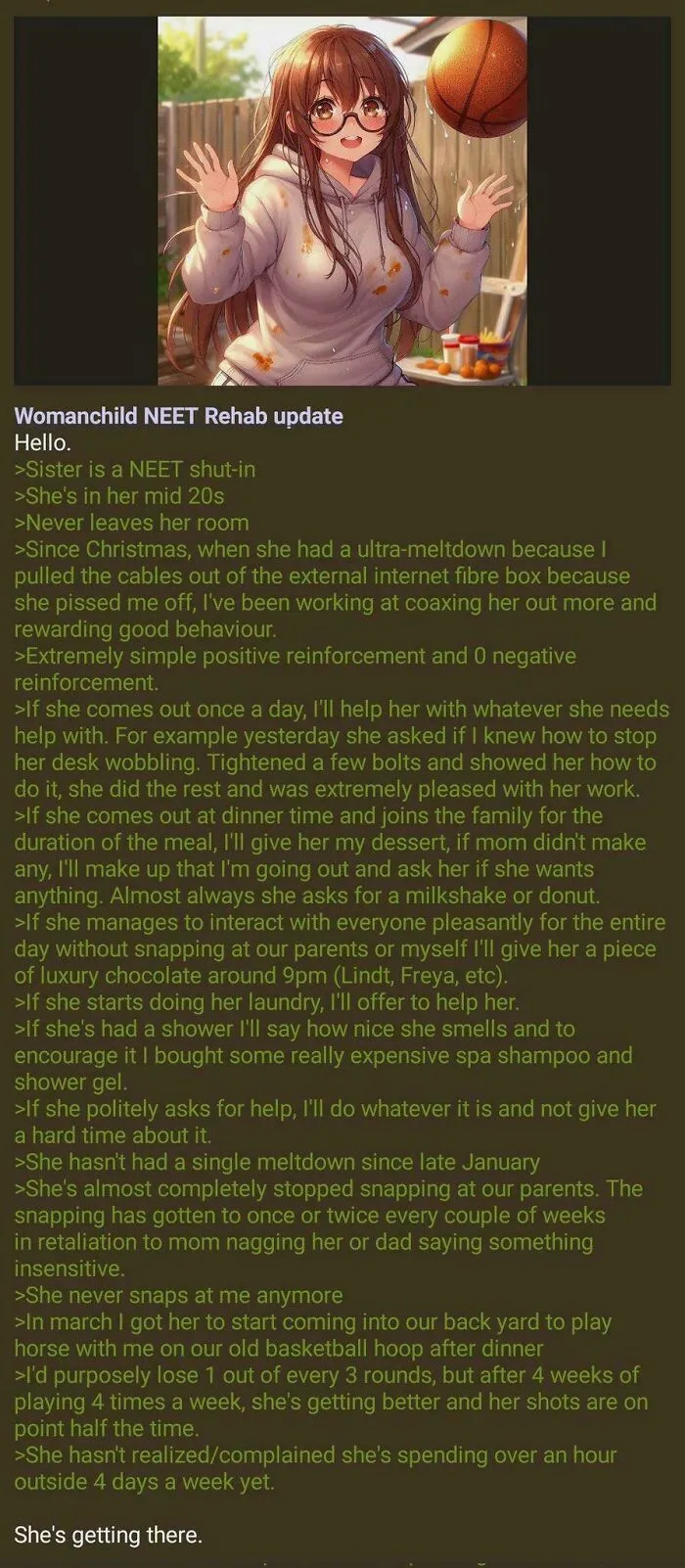
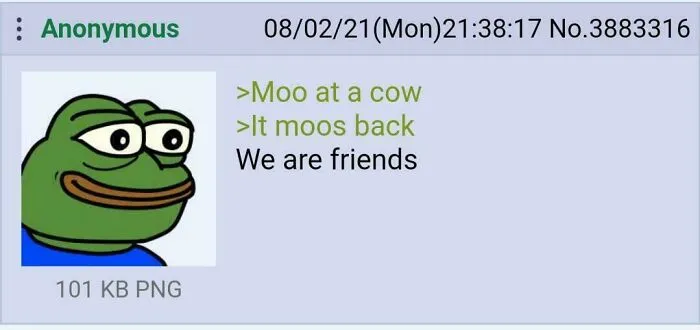
Wholesome greentext stories are especially interesting given 4chan’s reputation for largely being anything but. It helped shape today’s online culture in numerous ways, but as The New Yorker’s Kyle Chayka expressed, “4chan was where I learned that the internet could be bad.” Some have even called it “one of the Internet’s most controversial websites.” Morado, however, put it more mildly, noting its “off-color, offensive humor.”
Yet even in a corner of the internet known for its darker side, people have found stories worth sharing for an entirely different reason: they make us feel good.
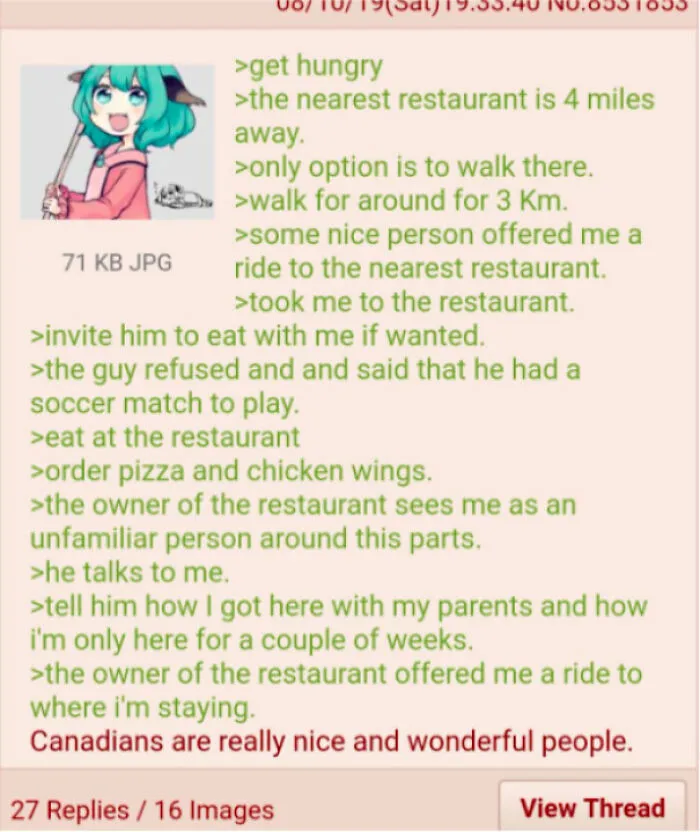
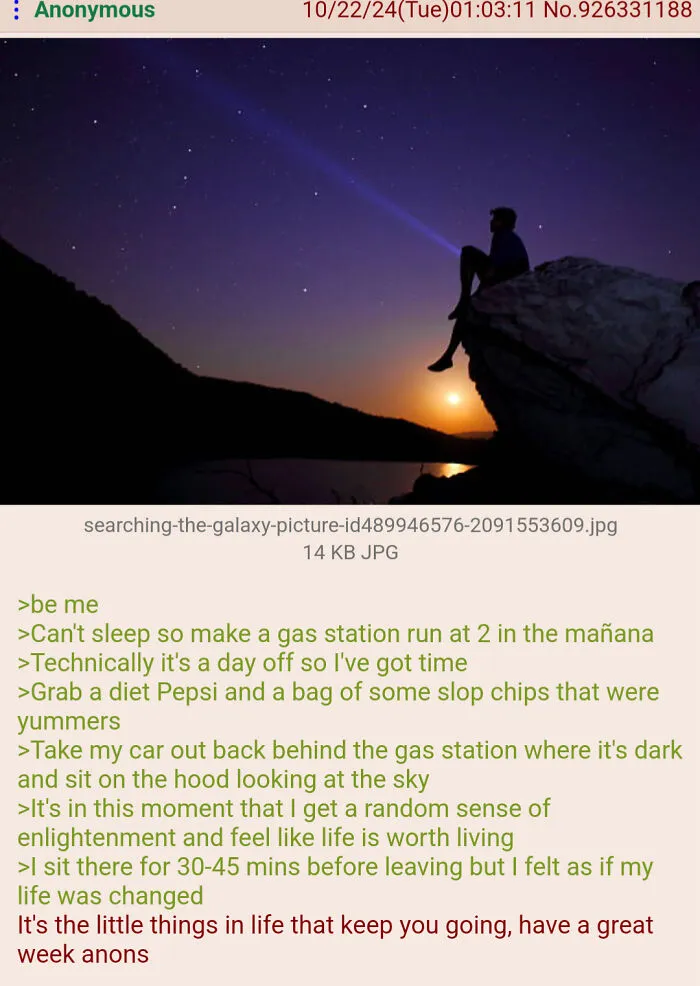
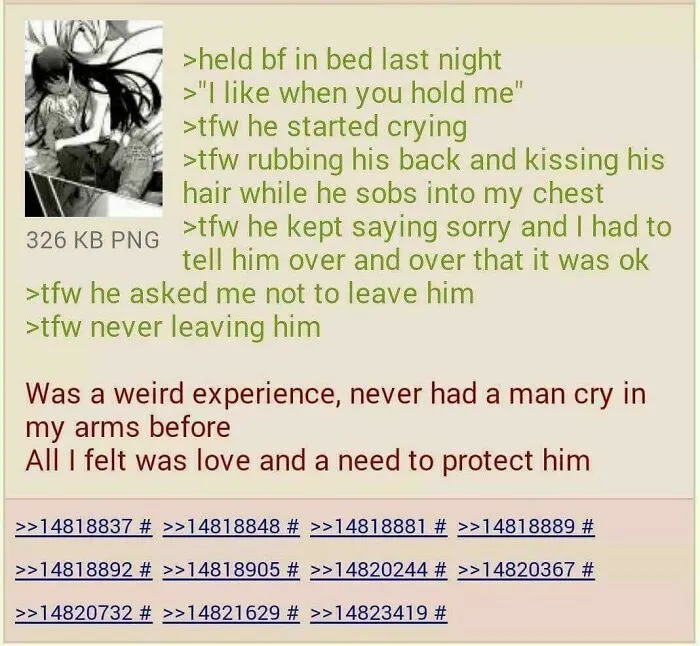
Perhaps that reflects something about us more broadly. As Amy Francombe wrote for The Standard, “The internet can be a hostile place. Trolls rule the comment sections, hot takes might as well be called mean takes, and we’re all one wrong post away from being cancelled.” But her 2023 article also explored a growing Gen Z appetite for wholesomeness, something she described as the “new Gen Z aspirational #mood.”
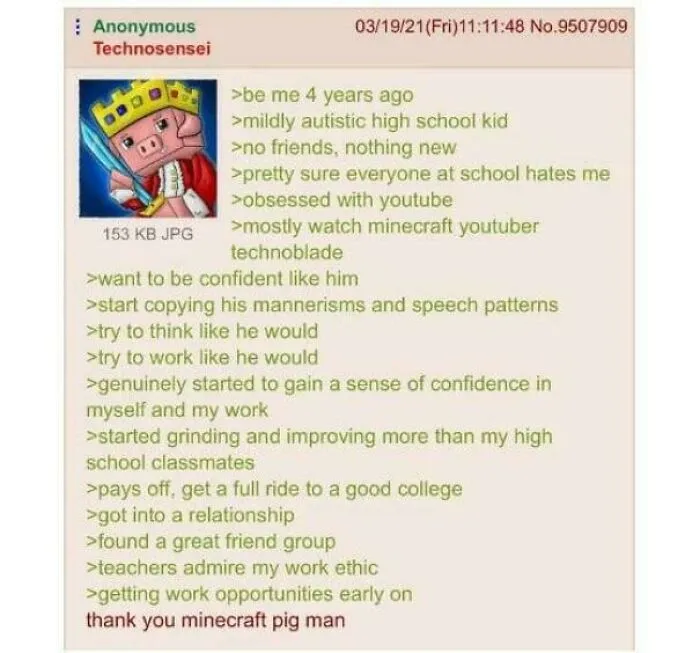
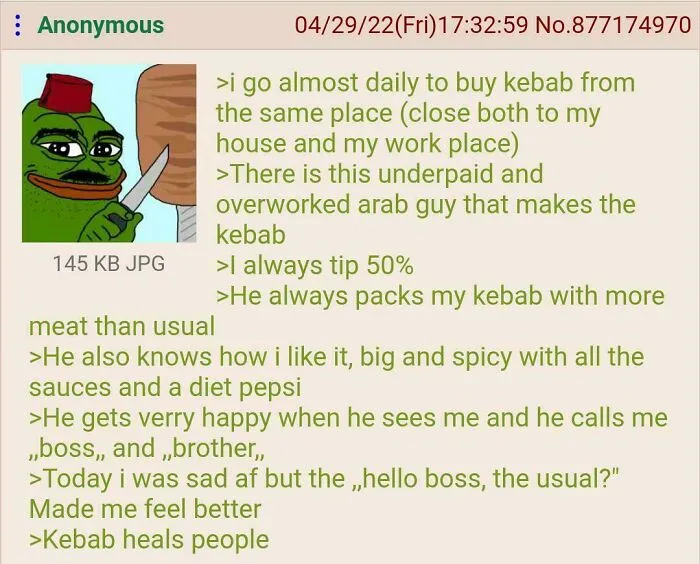
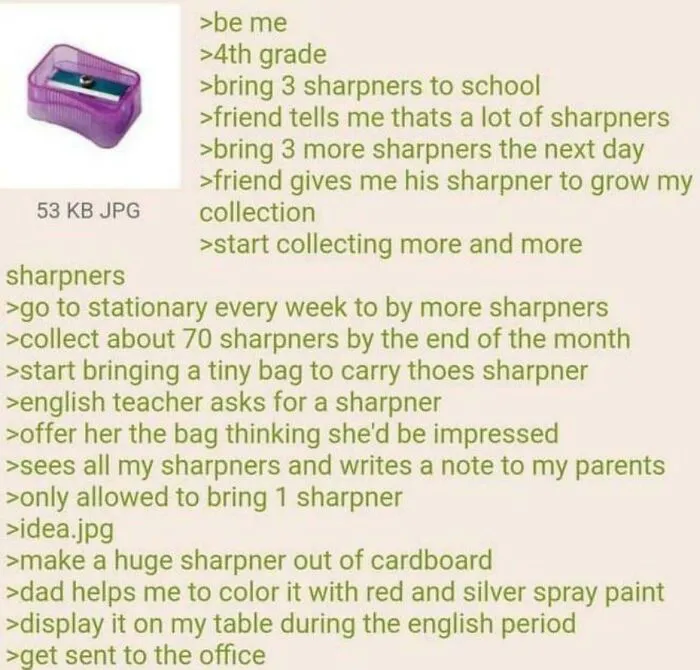
One explanation may be the uncertainty many young people face. As Letty Cole, a creative strategist at MØRNING and editor of Burn After Reading, told The Standard, “Gen Z are grappling with political uncertainty, a climate emergency, and the loneliness and burnout caused by late-stage capitalism: wholesomeness is just one way to cope.” Against that backdrop, she sees the appetite for the wholesome less as a passing “mood,” and more as a “quiet form of resistance.”