




History is... well, not necessarily notorious, but definitely oddly characterized as having weird moments. To some extent, that’s quite normal.
Just think about it: in terms of innovation, product design, and overall style, things tend to be weird, even more so when they are just starting out. Heck, if you google medical equipment from the early to mid 20th century, you’re going to see some science fiction madness. Because that’s just how it was.
Now, though, everything is different, and these early iterations were weird. For lack of a better word, but it was definitely a different time. A time documented in this dedicated Instagram page called Got Weird.
#21 “Glass” Tops For Convertibles, Similar To The “Blisters” And “Bubbles” Made By The Same Company For War Planes, Have Been Introduced In Los Angeles
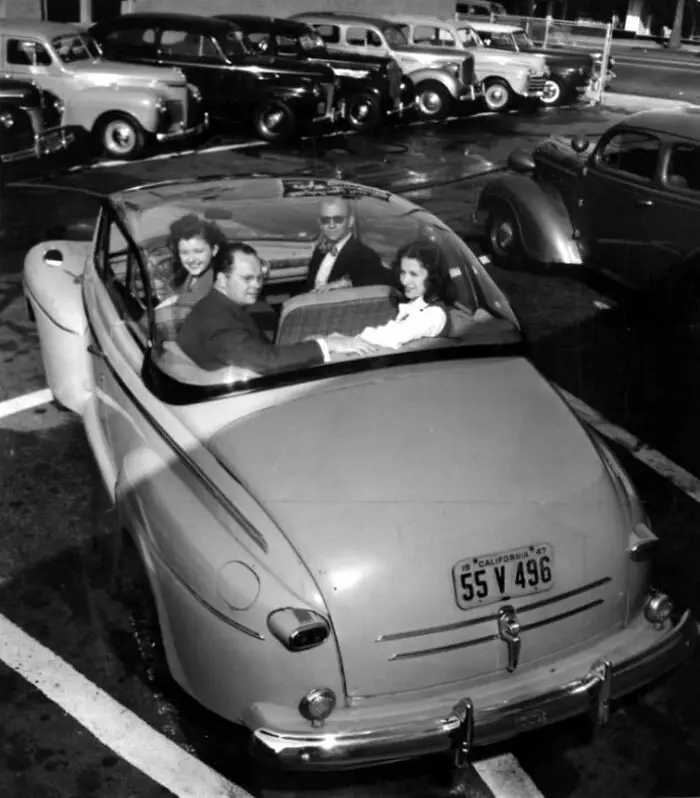
The tops fasten at the same points as regular canvas tops, and are easily removed for storage in the family garage. Although colorless at this time, a choice of ‘tints’ is planned for the future. The tops are said to be easy to clean and that scratches on the surface of the quarter-inch Plexiglas can be removed by polishing with auto polish or wax. Made by Fabriform Corporation, of Bayseville, Ohio, they are being distributed by a local Ford agency. Shown here in a convertible equipped with a ‘full view’ top are:” Wilda Eggert (left) and Val Eckolt, in front seat; and Jim Dypuy (left) and Sally Hamblin, rear seat, all of the auto agency
Report
0points
#22 Chetak Helicopters Used By Indian Air Force For Ceremonial Flyovers In The 1970s
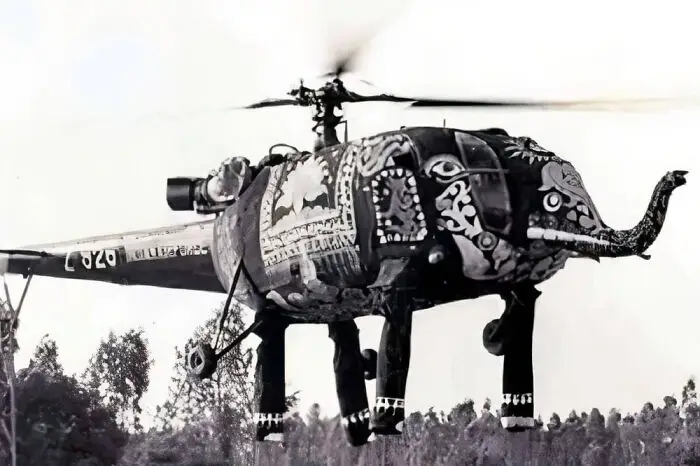
The exact date is difficult to pinpoint. Some claim that the legend of India’s ‘dancing elephant helicopters’ started in 1977 when the first one of its kind took to the air. Others say that it began earlier. Whatever the case, these colorful adaptations, designed to display military might, industrial strength and the country’s cultural diversity, have entered popular folklore. But to find the origins of these so-called ‘flying elephants’, it is necessary to go back to 1969. In that year, India started building a licensed version of the popular French Aérospatiale Alouette III. It was manufactured by HAL and named Chetak – after a warhorse belonging to the 16th century King Maharana Pratap. The name meant devotion, bravery and resistance to occupation. By modern standards, the Chetak is a light utility helicopter at best. But at the time it was an impressive machine. More than 300 of them were built – not including the original French Alouette IIIs purchased by India – mostly serving with the Indian Air Force (IAF), and it was only in the 2010s that the service began to consider replacing them. A participant in many local conflicts, the aircraft became something of an icon in India, akin to the Vietnam War-era Bell UH-1 in the US or the Mil Mi-8 in the post-Soviet countries. However, it wasn’t until the annual Republic Day parade, held in New Delhi at some point in the 1970s, that the Chetak was lifted into stardom
Report
0points
#23 In 1954, The Traveler Could Install A Relief Bunk In His Car – An Aluminum Cot That Extends Above The Seats From Front To Rear
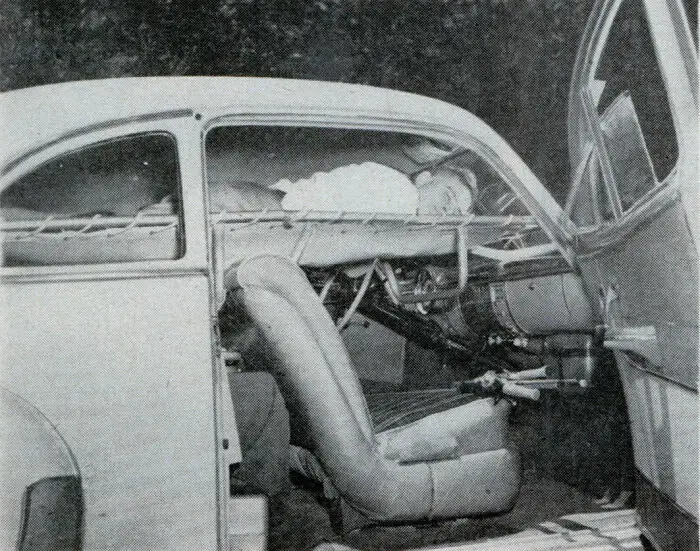
While one person drives the other can sleep in full-length comfort. Made of lightweight tubing, the cot was supported by legs resting above the instrument panel, on top of the two seats, and on the rear-window ledge. It was quickly removed or installed and could be folded for storage. When folded, it was easily packed into place along with any reasonable amount of luggage. The bed could be adjusted for use as a regular cot.
Report
0points
#24 A Stunt Car Drives Off The Parking Garage At Marina City Towers During The Filming Of The Hunter, Starring Steve Mcqueen On Sept. 21, 1979, In Chicago
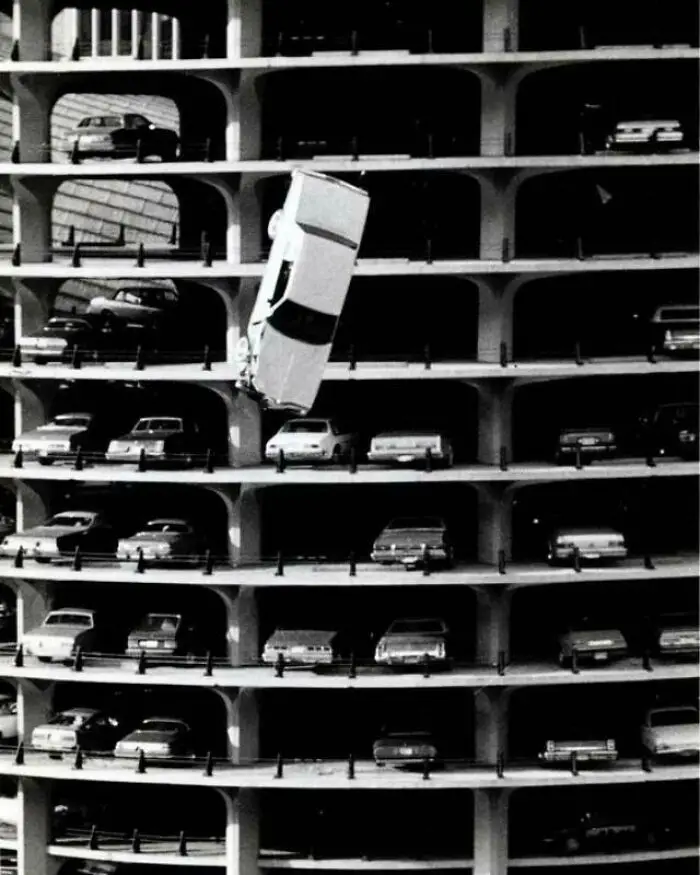
The car crashed into the Chicago River below. This would be McQueen's last movie before his death in 1980
Report
0points
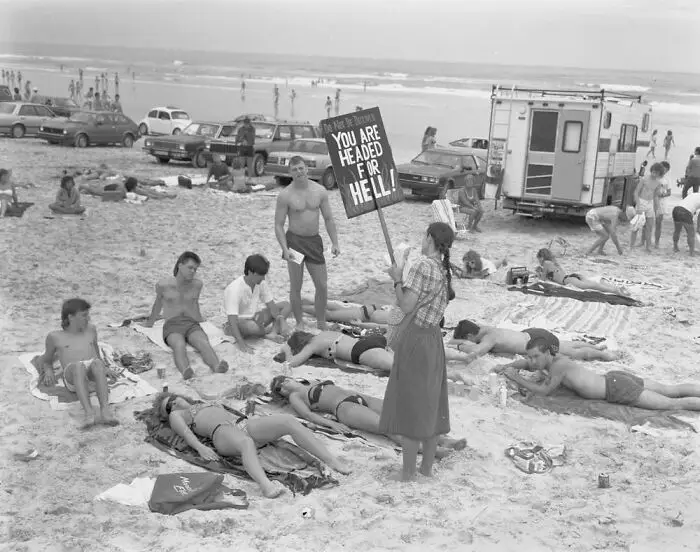
#25 Puritan Against Too Revealing Swimwear On Daytona Beach, Ca. 1982-83. (Photo By Keith Mcmanus)
Report
0points
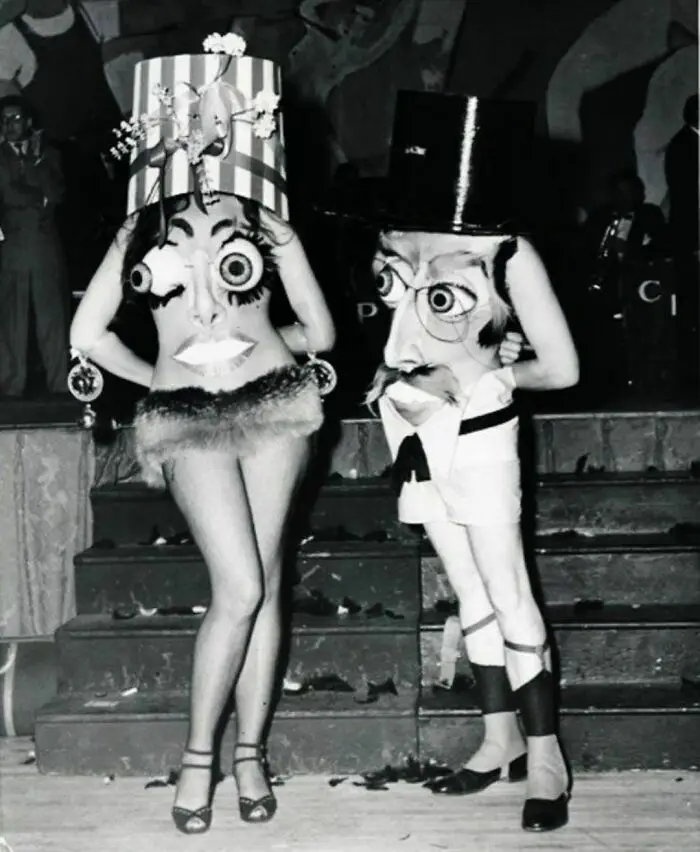
#26 Two People Are Wearing Painted-On Eyes At A 1955 Art Student League Ball In NYC
Report
0points
#27 In 1928, A Figure Known As The Ice Man Could Be Seen Delivering A 25-Pound Ice Block In Houston, Texas
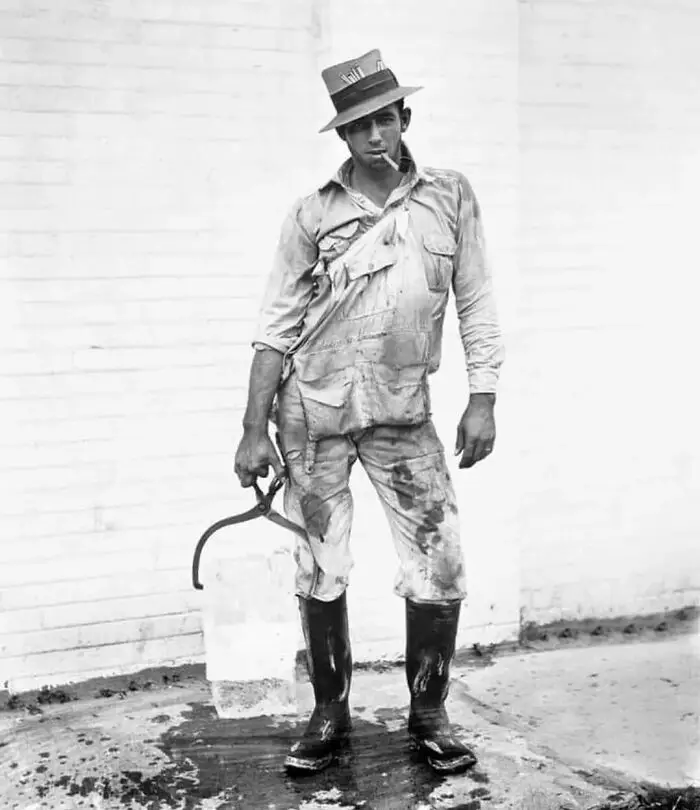
This snapshot reflects a time when the ice trade was a highly profitable industry, primarily during the 19th and early 20th centuries. Ice was harvested from natural sources such as ponds and streams and then transported via railroads or ships to various destinations worldwide. An intricate network of ice wagons was responsible for the final distribution of this valuable commodity. The roots of this industry can be traced back to 1806 when Frederic Tudor, also known as the Ice King, initiated the ice trade in New England by shipping ice to his affluent clientele in the Caribbean. Over the years, his enterprise expanded to encompass regions like Cuba and the southern United States. Eventually, ice was being shipped to destinations as far-flung as India, Australia, China, and South America. At the zenith of the ice trade, this sector in the United States employed a staggering 90,000 individuals and relied on the labor of 25,000 horses. The demand for ice experienced a notable upswing during World War I. However, once the war concluded, the ice trade saw a precipitous decline due to the advent of refrigeration cooling systems. By the 1930s, modern refrigerators began to gain prevalence in households, and by the 1950s, they had become nearly ubiquitous in both the United States and Europe. This technological advancement rendered the ice trade largely obsolete
Report
0points
#28 Vintage Studio Photos Of Victorian Baby With Their Half-Face Hidden Mother
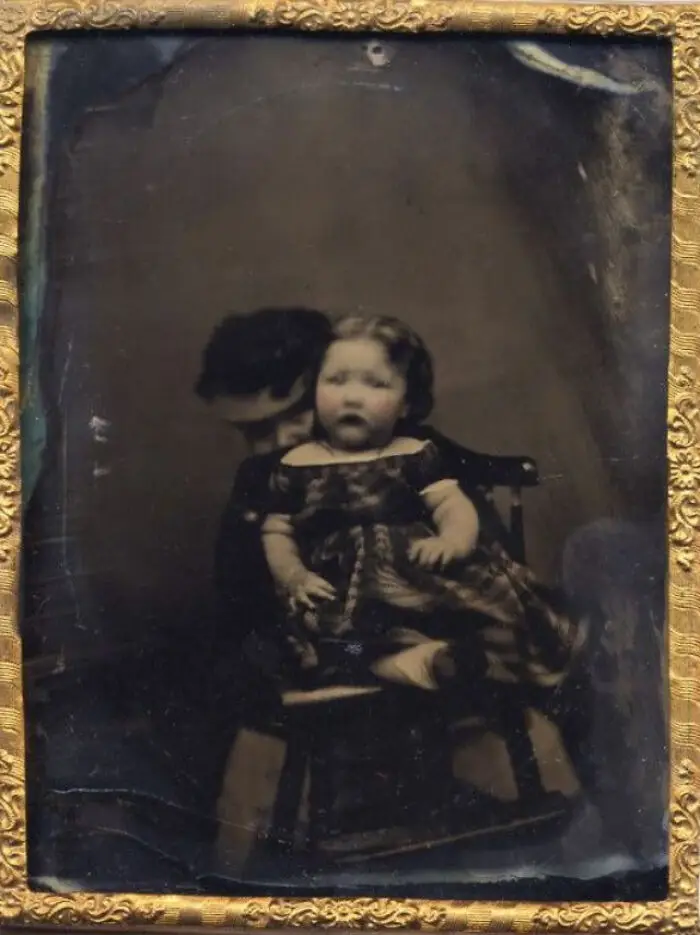
Have you ever had difficulties trying to get a baby to sit down and pose for a picture? It’s a massive headache now, but it was even harder for mothers in the Victorian era when vintage photography technology made posing very difficult. To understand these photographs, you first need to understand the technical realities of early photography. Unlike the quick snap of picture-taking today, the subject of a portrait in the 19th century needed to sit still for a lot longer. If you wanted a daguerrotype of your baby, you needed to keep the sucker still for between 60 and 90 seconds. Because of this, mothers were frequently enlisted to keep their children still during the shot. But instead of posing with the children, mothers instead opted to obscure themselves, resulting in photographs in which a mother is holding a child while completely covered in a brocade
Report
0points