



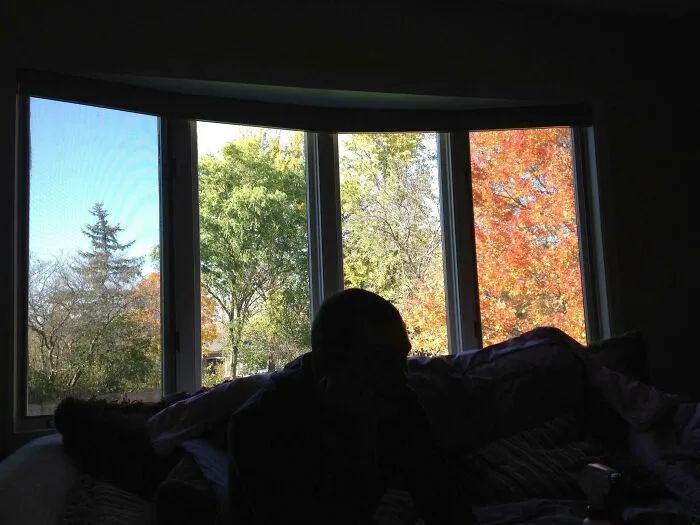
#3 This Window That Makes My Back Yard Look Like It’s In 4 Different Seasons
The simulation theory is not just the ramblings of a madman on Reddit. It is a legitimate philosophical argument that has been taken seriously by some of the most credentialed minds in the world. Nick Bostrom, a philosopher at Oxford University, published a paper in 2003 arguing that at least one of three things must be true: civilizations go extinct before developing the computing power to run simulations, advanced civilizations choose not to run them, or we are almost certainly living inside one right now.
Elon Musk has stated publicly that the odds we are living in base reality are "one in billions." Even Neil deGrasse Tyson put the probability at fifty-fifty. These are not people who usually agree on things, so the fact that the simulation Venn diagram overlaps so much makes you wonder...
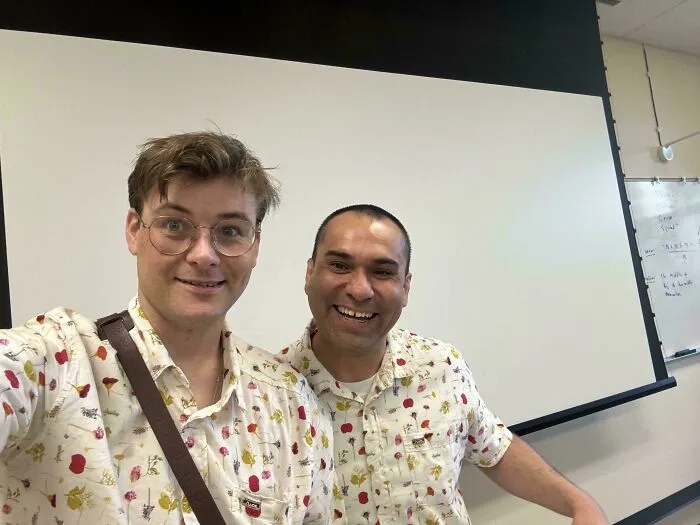
#5 I Wore The Same Shirt As My Statistics Professor The First Day Of Class

Déjà vu might be the most universal glitch of all, and neuroscience has finally caught up with an explanation. The experience occurs when the brain's familiarity recognition system fires out of sequence, producing the feeling of having lived a moment before it has finished processing it as new.
A 2012 study from St. Andrews University found it happens most frequently between the ages of 15 and 25, when the brain is still calibrating, and decreases significantly with age. So the Matrix glitches less as you get older, which is either comforting or suggests the simulation stops bothering to hide its seams once it decides you are not paying close enough attention.



Doppelgangers are even freakier, and they are way more common than anyone is comfortable with. A 2022 study published in Cell Reports found that unrelated people who look virtually identical share not just facial features but also significant genetic similarities, including DNA markers related to behaviour and lifestyle.
The researchers analyzed 32 pairs of human lookalikes and found that 25 of them shared remarkably similar genomes. The simulation, it appears, is reusing character models, which is exactly what you would do if you were working with finite resources and hoped nobody would notice.
#10 The Fire Wanted To Join Our Peace Sign (Taken At A Wedding Over A Decade Ago)

#11 This Fog Made A Digital Windows 98 Billboard Look Like It Was Floating In The Air


Identical twins separated at birth and raised in completely different environments have a well-documented habit of developing eerily similar lives without any contact. The Minnesota Twin Study, which ran for decades starting in 1979, followed twins separated at birth and found pairs who had married women with the same name, named their children the same things, owned the same model of car, and developed the same hobbies independently of each other.
The study concluded that genetics accounts for roughly 50% of personality traits, which is fascinating, and also raises questions about free will that most people prefer not to get involved with before their first coffee hits.
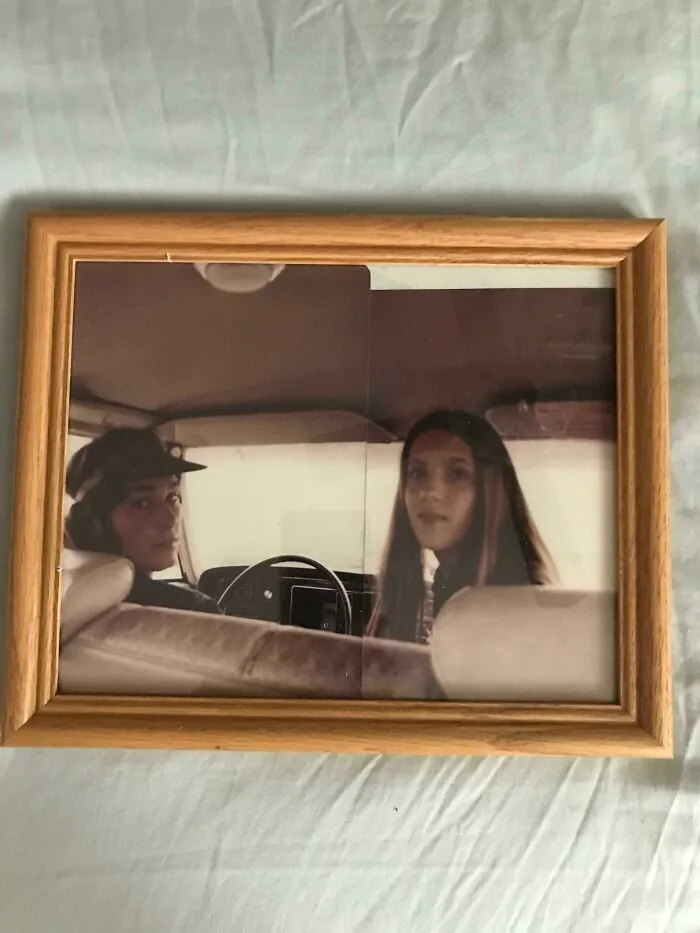
#13 This Picture Of My Parents Never Actually Happened, But Two Separate Photos That Fit Perfectly Together

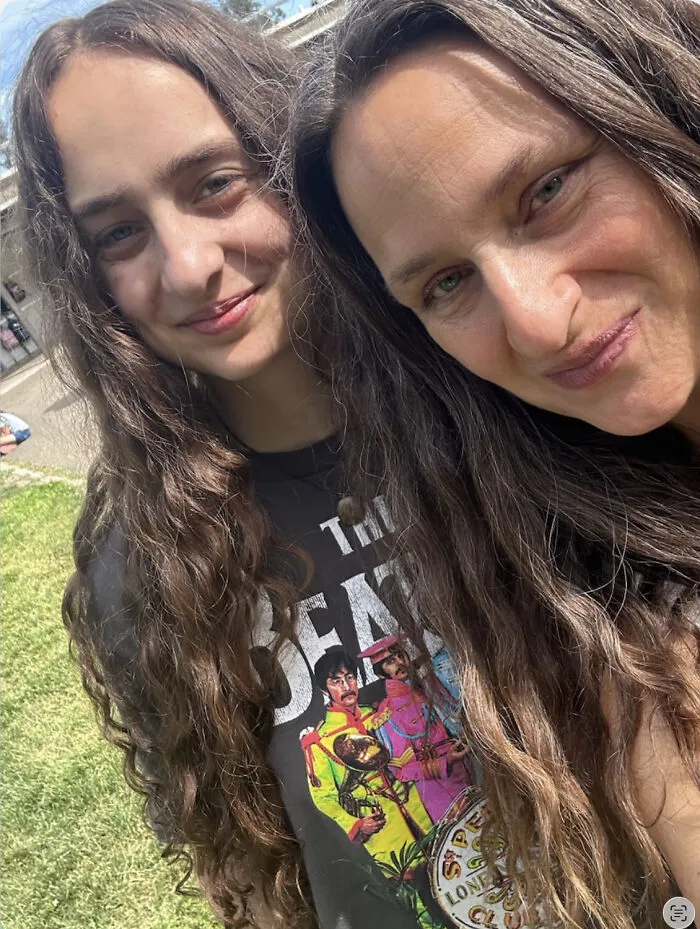
#15 (Not Related) My Kindergarten Teacher And I Who Hadn't Seen Each Other In Years
The double-slit experiment is the point at which quantum physics becomes a philosophical emergency. When individual particles are fired at a barrier with two slits, they behave like waves and create an interference pattern, as if each particle passes through both slits simultaneously. When a detector is added to observe which slit the particle uses, the interference pattern disappears, and the particles behave like particles.
The act of observation changes the outcome. Basically, just because we are watching, the particles change their behaviour. Physicists have been arguing about what this means since 1927, and the most honest answer currently available is that reality at the quantum level does not behave the way reality is supposed to behave, and nobody fully knows why. Sus, very sus...



Synchronicity is another world-bending phenomenon, and it is the experience of two completely unrelated events occurring together in a way that feels meaningful. It was named and studied by Carl Jung, who spent years documenting cases that conventional probability struggled to account for. One of his most cited examples involved a patient describing a dream about a golden scarab beetle at the exact moment a real scarab beetle flew into his office window.
This was an event he described as statistically extraordinary given that scarab beetles almost never appear in that part of Switzerland. Jung believed these moments pointed to a deeper connective structure underlying reality. Physicists have not confirmed this, but they have also not entirely ruled it out.