









#2 A Few Weeks Ago I Adopted A 12-Year-Old Cat. She Buries Her Face In My Hand When She Wants More Love


Professor of Biology, Director of the Living Earth Collaborative, and author of The Cat’s Meow: How Cats Evolved from the Savanna to Your Sofa, Jonathan Losos told Bored Panda that cat behavior is strongly influenced by three main factors, the first of them being how hungry they are.
“They’ll definitely let you know when they want food. Also, contrary to popular belief, cats are very trainable because they are so food-motivated. You can even train them to use a toilet,” he said.
The second factor is how secure they are, as cats are very place-oriented—they might become very nervous if you take them to an unfamiliar environment. Lastly, their behavior can also be influenced by how sleepy they are: “Everyone knows how much cats like to sleep,” the professor pointed out.
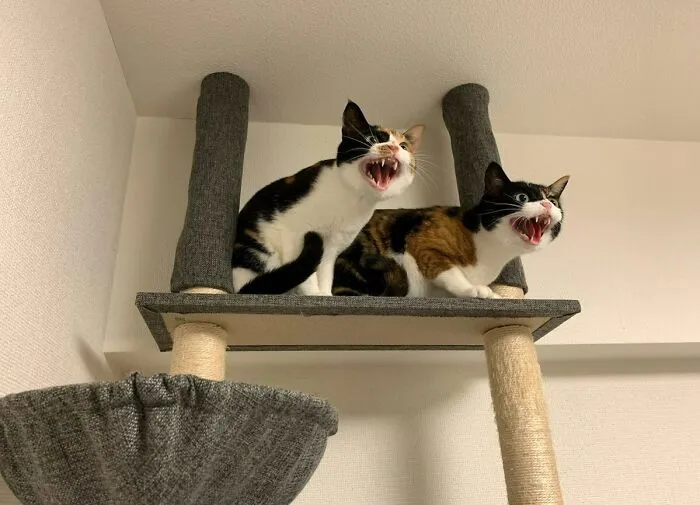
#5 Theo Hasn’t Quite Mastered The Loaf, But He’s Got The Spirit And Looks Cute Trying

The level of hunger, security, and sleepiness can affect each individual cat differently (though, even these factors can’t really explain the actions of some felines on this list) but some things they do are pretty universal and familiar to most cat owners out there; kneading, for instance.
“Kneading is a behavior that kittens of all feline species use when they’re nursing from mama cat,” Evolutionary biologist J. Losos told Bored Panda. “The rhythmic pushing on the mother’s abdomen probably helps keep the milk flowing. As anyone who lives with a cat knows, adult cats use the same behavior on a blanket or your belly. It clearly is a sign of contentment as the cat seems to go into a trance, making biscuits sometimes for several minutes before curling up and going to sleep.
“As far as we know, the domestic cat is the only feline that continues to knead as an adult; though some reports on the internet suggest that other species do so as well, but they are not well documented,” Losos added.

#7 My Cat Is Unbothered By Everything And Adores New Places And People. Today At The Vet’s Office She Was Purring So Loud The Doctor Couldn’t Hear Her Heartbeat

#8 My Mom Didn’t Believe Me When I Tried To Explain How Odd Our Newest Rescue Is

Another activity favored by cats and witnessed by every single person who’s ever owned one is their inexplicable love for sleeping in boxes and other random places. Well, inexplicable until you start delving deeper into their evolution from a predator to a If I fits, I sits kind of ‘beast’.
“We need to think about what life is like for the ancestor of the domestic cat, the African wildcat,” Prof. Losos suggested. “This is a species that lives out on the African plains with a lot of larger predators, like lions, leopards, and hyenas. Bigger predators are notorious for killing smaller predators, so even though African wildcats are supreme predators, they are also prey and must always be on the lookout for danger.
“These behavioral tendencies are still present in housecats and that’s why they like to sleep in places that give them a sense of security. It’s also the reason cats like to get up on high places, so they can keep an eye out for danger and be away from ground-based trouble, like dogs and toddlers.”
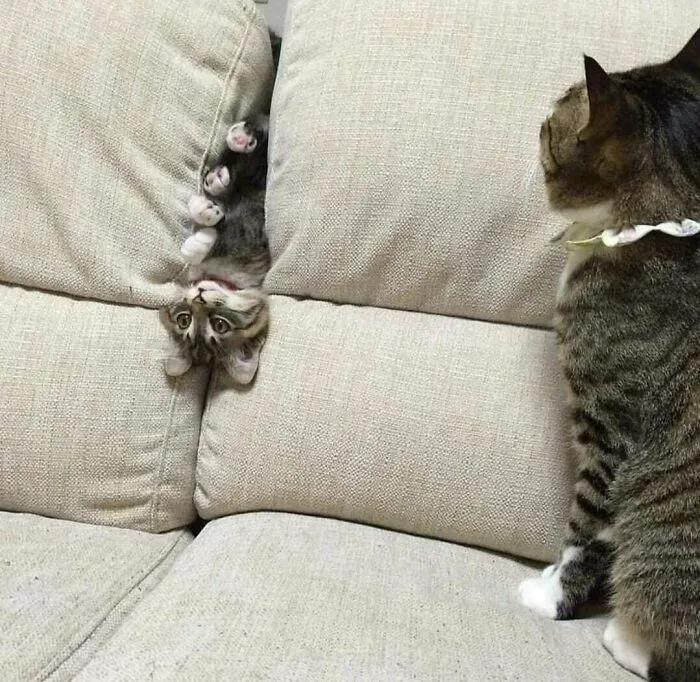

#11 This Is Biscuit. We Moved Our Couch Today. Something Rattled Inside The Couch, So We Flipped It Over And Now I Know Why I’ve Had To Buy So Many Mice In The Past 3 Years

The switch from sleeping in strategically located places in the wild to a cushion on the sofa was far from the only thing that changed as the feline evolved from an African wildcat to something resembling Garfield. Jonathan Losos suggested that even their way of meowing was adjusted to their new lifestyle.
“Everyone who lives with a cat knows they meow to us to communicate. I always assumed that cats meow to each other, and by meowing to us they were treating us as fellow cats. But that’s not correct. Researchers have shown that cats rarely meow to each other—they make many other sounds to communicate (hisses, growls, chirps), but not meows.
“Meowing to us is a trait that evolved during domestication to allow them to communicate their needs and desires to us. In fact, the meow has changed from that of the African wildcat—it is shorter and higher-pitched and people rate it as more pleasing. Presumably, this change evolved to make us more receptive to what they have to say,” he explained.

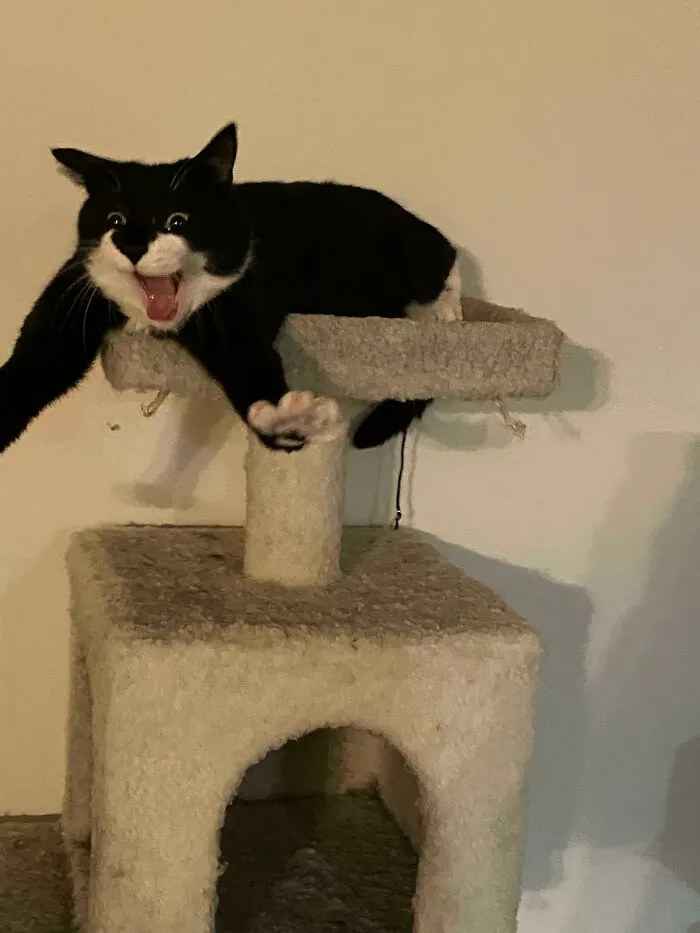
#13 This Last-Second Photo I Just Took Of My Cat Stretching Her Arms And Sneezing. I’ve Been Uncontrollably Laughing For The Past 5 Minutes Now

Even though some things, such as kneading, meowing or sleeping in boxes, are typical to most domesticated cats, no two felines are the same, as they might have very different characters. The expert told Bored Panda that their character traits typically depend on their genetics and upbringing.
“Cats have different personalities that are the results of their genes: some breeds are very friendly or docile, others are very bold and outgoing. Just as with dogs, breeders have selected for different traits in different breeds,” he suggested.
“At the same time, how a cat is raised is critically important. Kittens have a key window of socialization from about 4-8 weeks in age. Kittens that spend a lot of time with people during this phase and are handled gently will tend to be friendly, well-adjusted pets. But kittens that aren’t handled by people in their first eight weeks often end up being more reserved, and those not handled until ten weeks of age will rarely become friendly to people, no matter how kindly they are subsequently treated. Puppies, too, have a critical window of socialization, but it is later, when they are seven to fourteen weeks old.”
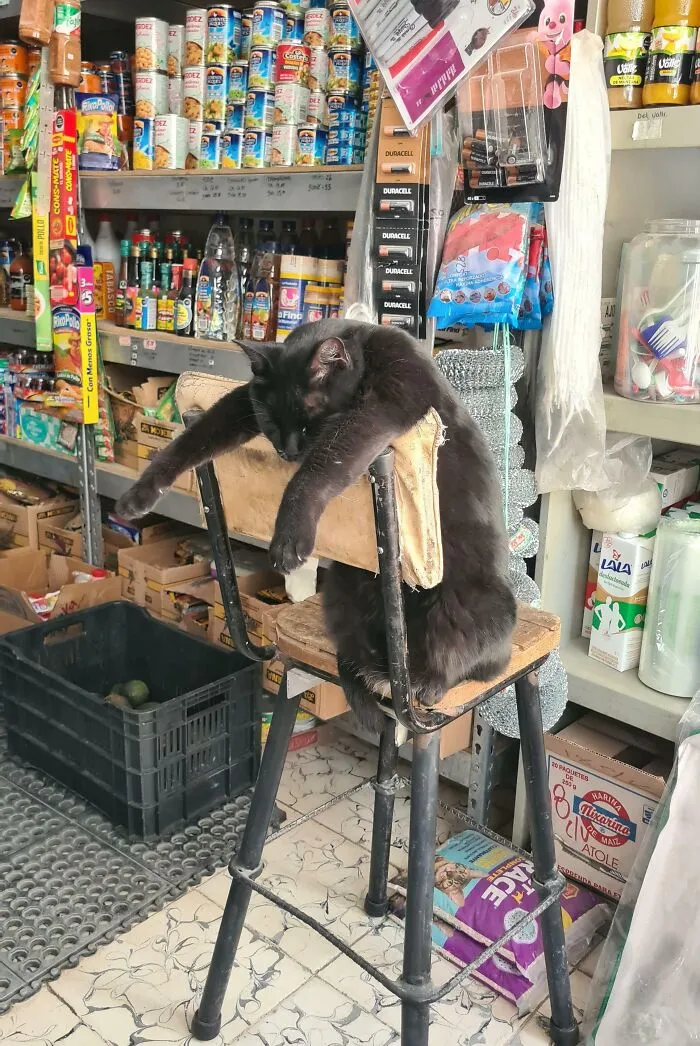
#15 My Dad Bought A Cactus To Discourage Mingus From Getting On The Counter. Here's Mingus With The Cactus


“This is the old ‘nature vs. nurture’ distinction and both are important,” Losos continued. “Even cats from extremely friendly breeds will not be very good pets if they aren’t handled as kittens, whereas offspring of unfriendly feral cats can grow up to be well-adjusted if handled frequently during the socialization window.”

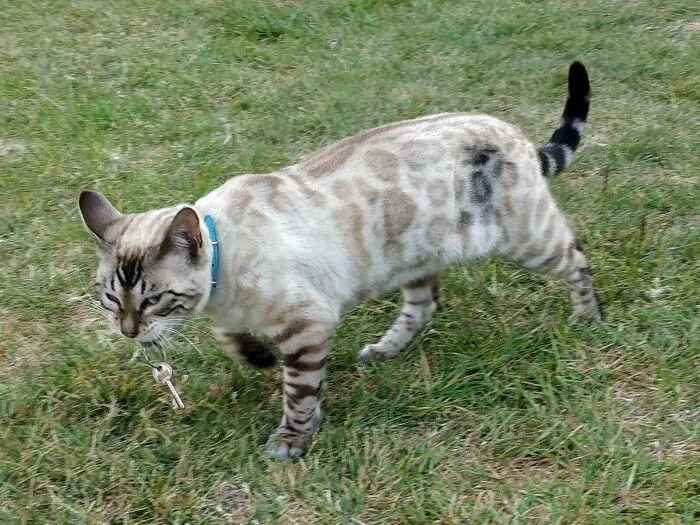
#20 My Cat Just Came Back From One Of Her Evening Strolls With Someone Else's Keys In Her Mouth
It might seem that some domestic cats tend to be highly independent and enjoy their own company more than anyone else’s. However, according to Losos, cats are in no way aloof loners. “When they live in areas with lots of cats—as happens when there is a lot of food available—cats form into social groups composed of related females,” he told Bored Panda.
“These females are very friendly to other members of their group, lying together, grooming, playing, even nursing each other’s kittens and serving as midwives during birth. In this way, the social behavior of domestic cats is similar to that of lions, another species that occurs where food can be very abundant.”

