



#2


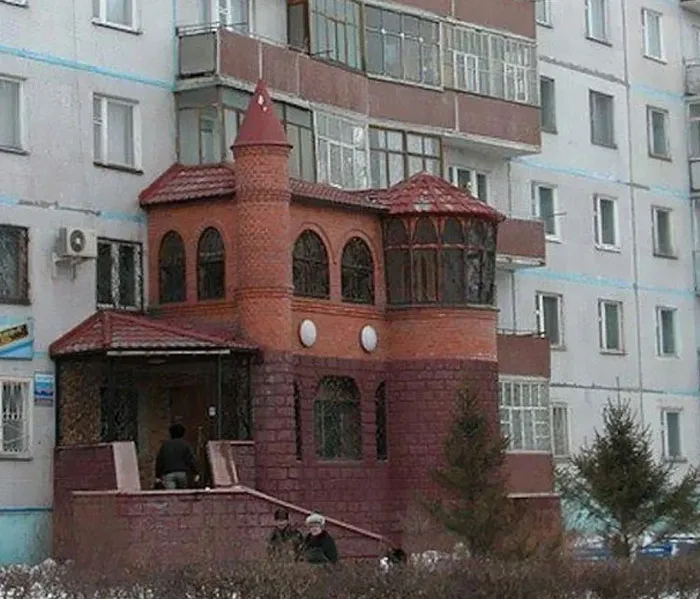
The resourcefulness on display in these images did not come from nowhere. It came directly from the Soviet era, when goods were scarce, stores were unreliable, and waiting for the right part to become available was simply not a viable life strategy. Soviet citizens developed a cultural philosophy of making do with whatever was at hand, known informally as "sdelat iz govna i palok," which translates roughly to "making something out of sticks and whatever else you have," except the original Russian is way more colourful with it's language. The ingenuity was survival, and it produced a generations-deep habit of looking at a broken thing and asking what else in the immediate vicinity could fix it.



The engineers and scientists this part of the world has produced are, objectively, some of the most significant in history. Marie Curie was Polish, Nikola Tesla was Serbian, and Dmitri Mendeleev, the man who gave the world the periodic table, was Russian. The Soviet Union launched Sputnik in 1957, the first artificial satellite in space, beating every other nation on Earth to the achievement. Yuri Gagarin, the first human in space, was from a small village in western Russia. The people in these photos are working in a tradition that put humanity in orbit. They are currently just applying it to a garden hose and a car engine.



The dacha is the institution that explains more about Slavic domestic life than almost anything else. A dacha is a small country cottage, often with a plot of land, where families grow vegetables, perform amateur construction projects, and spend weekends in a state of productive chaos. Russia alone has an estimated 17 million of them. The dacha is where a significant amount of Slavic engineering happens, away from city regulations and neighborly judgment.



The babushka, the Slavic grandmother, deserves her own section and frankly, her own documentary series. She is the original life hacker, the person who has been fixing, preserving, repurposing, and generally refusing to throw anything away since long before sustainability became a trend. She has jars of things in the cellar that predate several governments. She will fix your broken chair, feed you until you cannot move, and send you home with vegetables she grew herself. She did not need a YouTube tutorial. She learned from her mother, who learned from hers, in an unbroken chain of practical knowledge stretching back further than anyone has thought to document.


Slavic superstitions are their own elaborate system that runs parallel to engineering logic and is taken just as seriously. You do not whistle indoors because it attracts poverty, and do not shake hands across a threshold because it causes arguments. And always remember to sit down for a moment before leaving on a long journey for good luck. And when attending a celebration, bring an even number of flowers, and throw one away to make it odd for a funeral. The engineering may be flexible, but the superstitions are absolutely not.



The Adidas tracksuit became one of the most globally recognized symbols of post-Soviet style, and the story behind it is more interesting than it looks. After the fall of the Soviet Union, counterfeit Adidas flooded Eastern European markets at prices ordinary people could actually afford, making the three-stripe silhouette ubiquitous across the region. It eventually evolved into a full aesthetic, complete with the Slavic squat, which became a global meme around 2015 and introduced the rest of the internet to a resting position that is apparently completely natural if you grew up doing it and physically impossible if you did not. The squat has since been studied, celebrated, and attempted by people worldwide with varying degrees of success.