


Steven Kapica regards physical pain-based comedy the lowest: “Think Ow! My Balls! from Mike Judge's brilliant and prophetic Idiocracy.” Though he agrees that sarcasm is near the bottom of the barrel. “It doesn't take much skill to inflect a phrase with sarcasm in response to an authority's power move, or to use sarcasm to point out what is already obvious to everyone; the jokester who feels inclined to perform what everyone else is thinking isn't [a] comic genius.”



He gives another example from cinema: “The scene from Raising Arizona (1987) where Glen (Sam McMurray) tries to explain what a ‘way-home-er’ joke is to Nick Cage's H.I. The scene is funny because it's broadly acted (slapstick; visually funny); the scene is witty because it layers H.I.'s reaction to Glen with the film audience's reaction to Glen and H.I.'s reaction to Glen. It's meta-comedy. That's wit.”


Kapica doesn’t see much sense in ranking forms of wit and comedy. “I think sarcasm plays an important role in human interaction, in humor,” he admits. “Sarcasm can be an effective means of gauging, guiding, and winning one's audience ‘in the moment.’ But that's ‘live’ sarcasm. Internet-based sarcasm is... oof.”
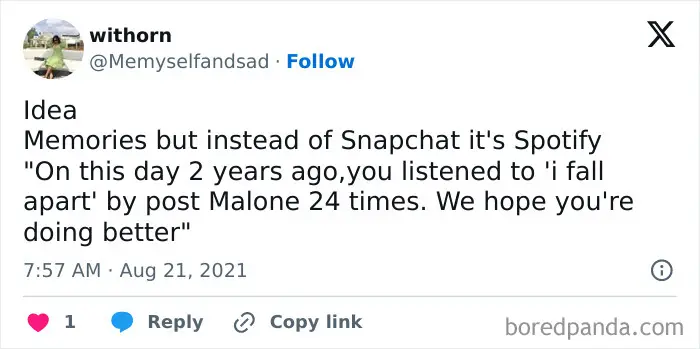


That’s a pretty big “oof”. Internet-based sarcasm is one of Kapica’s academic interests at the moment. He says sarcasm online works best when used in closed groups. “Sarcasm used within a specific internet-based community can (does) land because its audience is a given, a known quantity. Everyone is speaking the same language.”
“The problem (and it's a BIG problem) is when that sarcasm (think ‘inside jokes’) gets taken out of its original context. It is for this reason that so much internet-based humor is hit-or-miss.” His final advice for online jokesters is: “1) Know your audience and 2) Never forget that everything on the internet stays on the internet.”