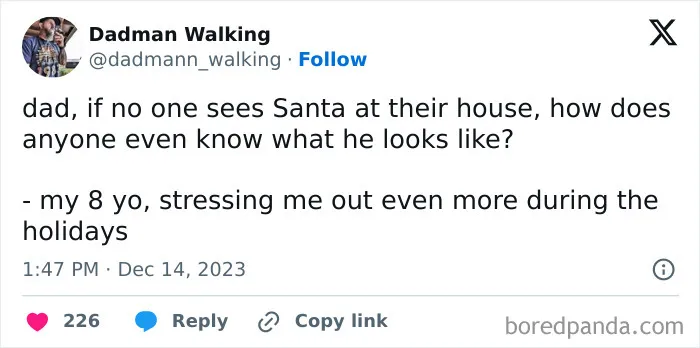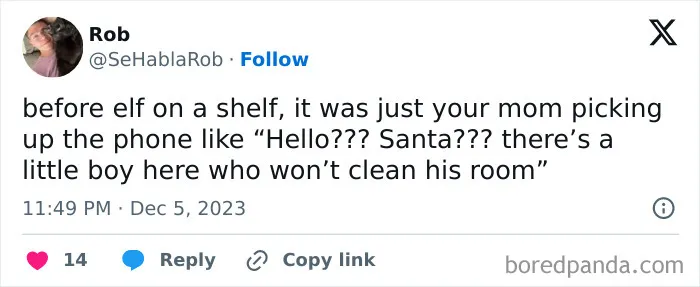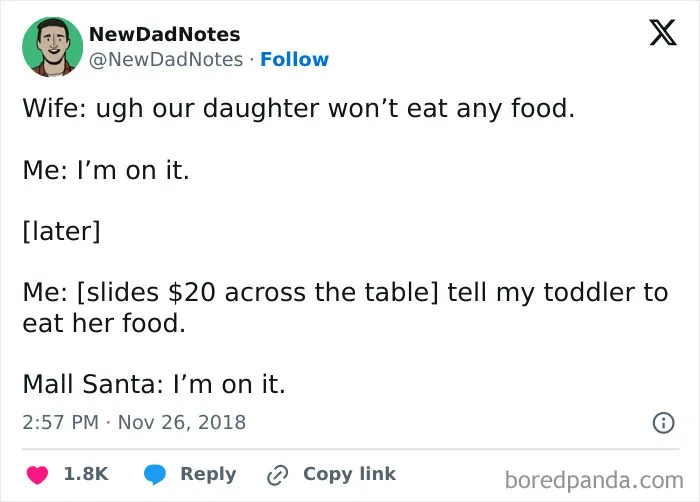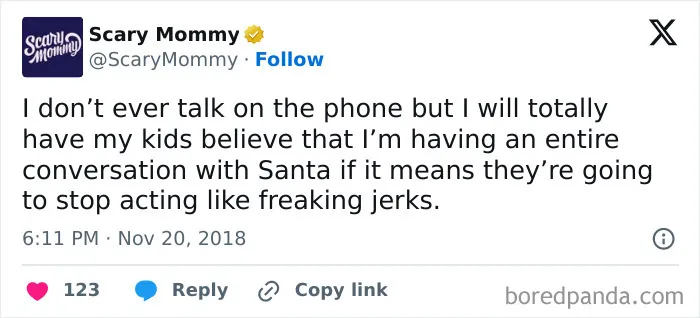


Many of the posts in this list tackle quite a serious task the parents face: how and if at all to tell their kids Santa is not real. Luckily, psychology professors Candice Mills and Thalia R. Goldstein did two studies about debunking the Santa myth.
In the first study, Mills and Goldstein spoke to children aged 6-15. They asked them how they felt about recently learning that Santa is, in fact, not real. The second study involved conversations with adults ages 18-76. They had to reflect on their childhood experiences upon learning the Santa myth.
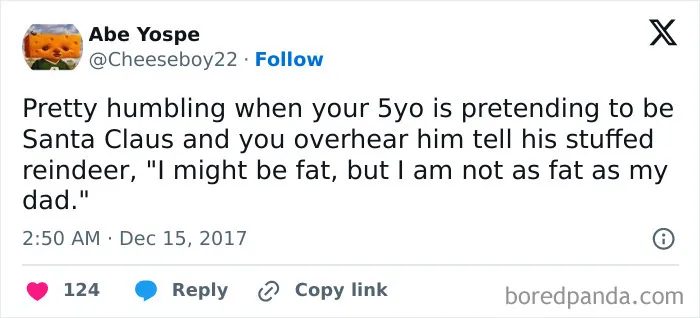
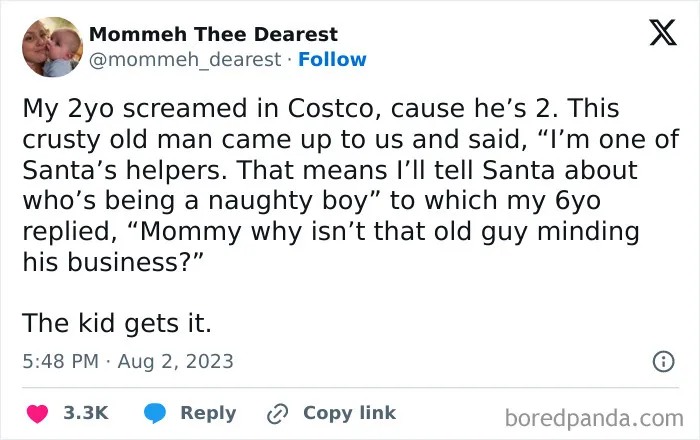
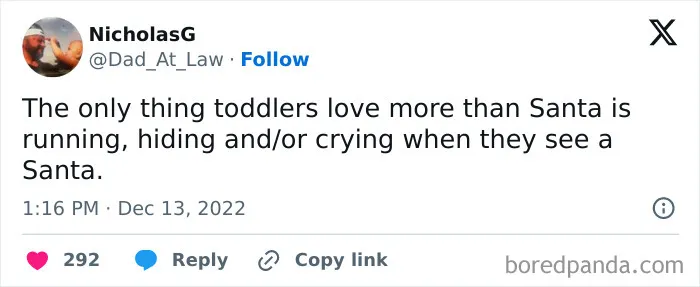
The major finding in both studies pertained to both children and adults. They expressed sadness and disappointment upon learning Santa isn't real, but the feeling was short-lived. "Children often shifted their focus to other aspects of the holiday season that they enjoyed, like gift-giving and family traditions," Mills and Goldstein write.
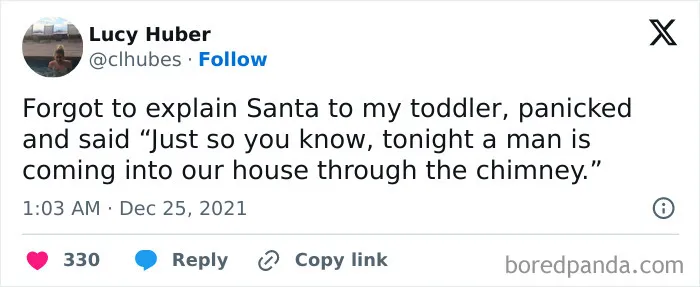

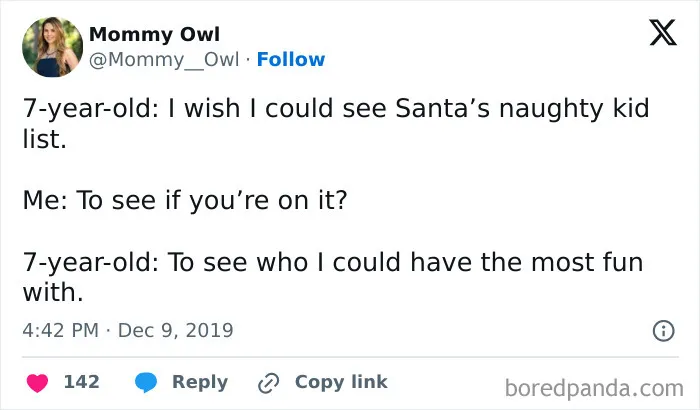
Mills and Goldstein have some advice for parents on how to tell their kids the truth about Santa. First, be mindful of their age. 7 or 8 is the usual age when they might stop believing it. Keep in mind that the older the child gets, the more negatively they might feel upon finding out the truth.
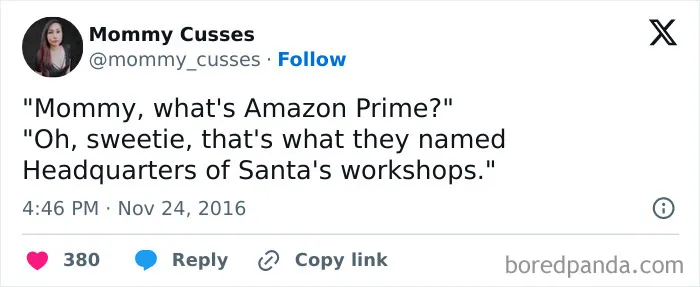
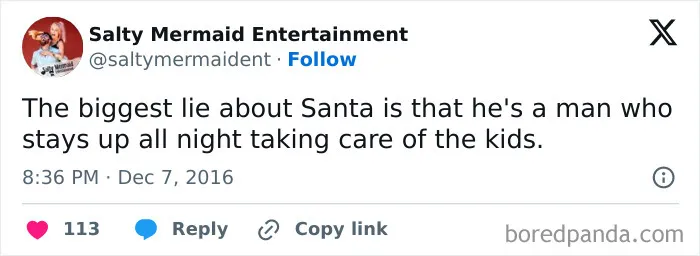
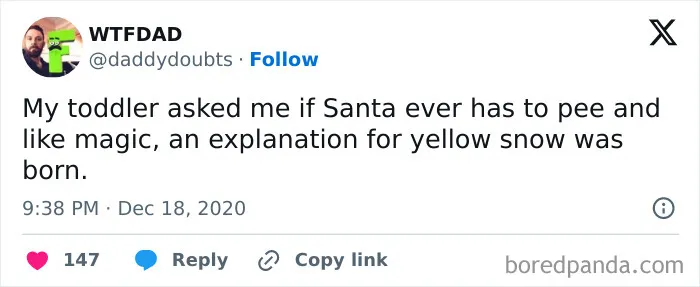
They might be angry at the hypocrisy that their parents lied for so long while telling them that lying is bad. The psychologists recommend telling children why they have included Santa in their holiday traditions.
"Blurring the line between fantasy and reality is a normal part of being a young kid," the psychologists write. So as long as the children know their parents just wanted to inject some magic into their lives, there shouldn't be much bitterness.