







Heather Rucker, an associate language teacher with the government’s Japan Exchange and Teaching Program in Nagoya, said that when she initially followed the official lesson plans, a lot of her students tuned out and avoided participating.
“There are definitely kids who want to learn English and do things abroad in the future. But the others try to avoid taking part in class as much as possible,” she explained. “I try to make activities as fun as possible, so it won’t drag for them at least.”
Also, while the numbers might be different now, Ryuko Kubota, a professor of language literacy and education at the University of British Columbia, conducted a study in 2011 that showed English-language skills do not contribute to upward career mobility in Japan.
#22 At The Security Checkpoint At Sakashita-Mon Gate (Entrance To The Imperial Palace)




"The most continually active [members of the group]," the creator or 'Engrish in Japan' said, "are, understandably, long-term residents of Japan."
Of those, they assume, about 85% are non-Japanese and 15% are Japanese.
"There are also lots of people who just visit Japan once or twice and like to see and comment on the photos," they added. "And there are some Japanese members who get the joke and enjoy interacting with the others in the group."
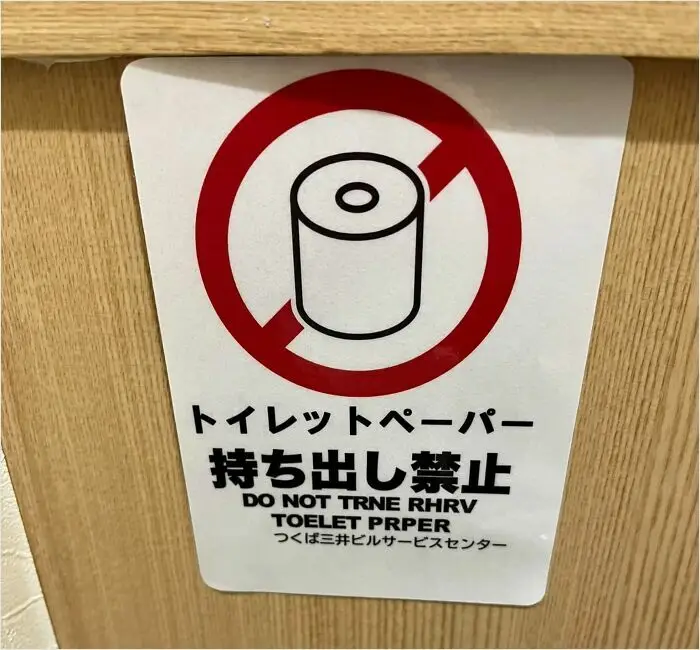
#26 It Says In Japanese Do Not Take The Toilet Paper Home/Away. The English Is Very Understandable
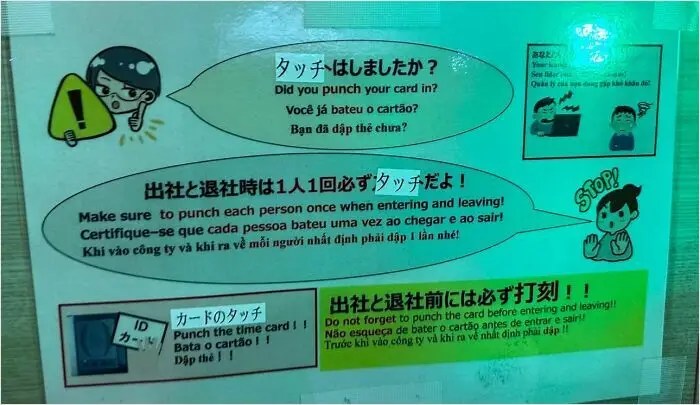

"Most (like 95% of) members are great," the group's creator said. "But the common and unwelcome personas are the 'it's not Engrish!' types — the foreigners who want to show off their big brains and explain why it's not funny, and the Japanese who, despite [the group approaching the 180K member count], seem to think it's their job to explain what the sign actually intended."
"Like, they really think it's a big group of foreigners who are confused and can't read a lick of Japanese. In fact, we have thousands of Japanese members and many of our members speak Japanese well and understand what the writer intended when they made the Engrish."

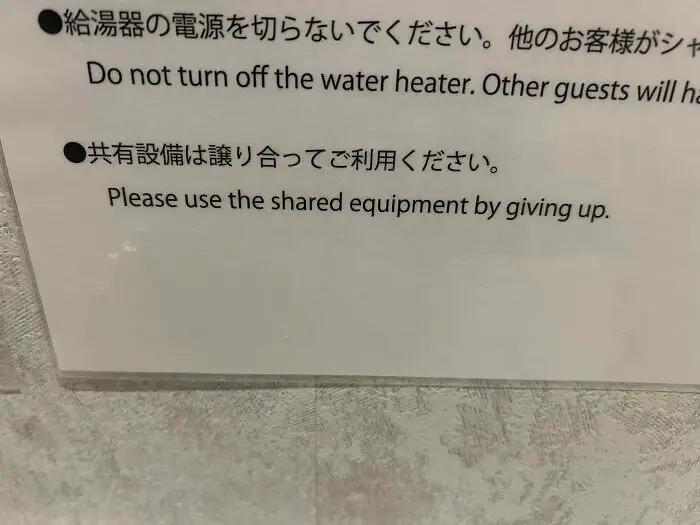
The fascination surrounding the imperfect translations or 'Engrish' resonates well with the phenomenon of humorous slogans on t-shirts.
Just like the Engrish in Japan Facebook group, the Twitter account dedicated to these tops brings a lighthearted touch to language mishaps. With a shared theme of laughter through linguistic blunders, both platforms emphasize cultural differences in a way that brings joy rather than confusion.
