



If you’re more of a visual thinker, guided imagery or visualization might work better. Imagine yourself on a calm beach or a quiet forest walk, anything that isn’t your brain yelling, “Remember that email you forgot to send?”
The Sleep Foundation notes that immersing yourself in peaceful mental images can trick your body into relaxing, and relaxation is half the battle when it comes to sleep.


Then there’s the famous military method, designed to help soldiers sleep in chaotic environments. It involves relaxing your face, releasing tension in your shoulders, and imagining a calm scene.
If your mind wanders, you repeat a simple phrase like “be still.” Supposedly, with practice, you can fall asleep in under two minutes. And if it works in a noisy barracks, maybe it can work in your quiet apartment too.
#26



Of course, sleep hygiene matters too. That means sticking to a regular schedule, soaking up natural light during the day, staying active with regular exercise, and keeping your bedroom dark and quiet.
But if you’re making all the right changes but still find yourself wide awake after about 15 minutes in bed, it helps to get up and move to another room to do something calming until sleep finally catches up with you.

The bottom line is that insomnia is exhausting and can sometimes feel impossible to beat. But according to the Sleep Foundation, even small steps, like trying a breathing exercise or making a few lifestyle tweaks, can bring noticeable improvements.
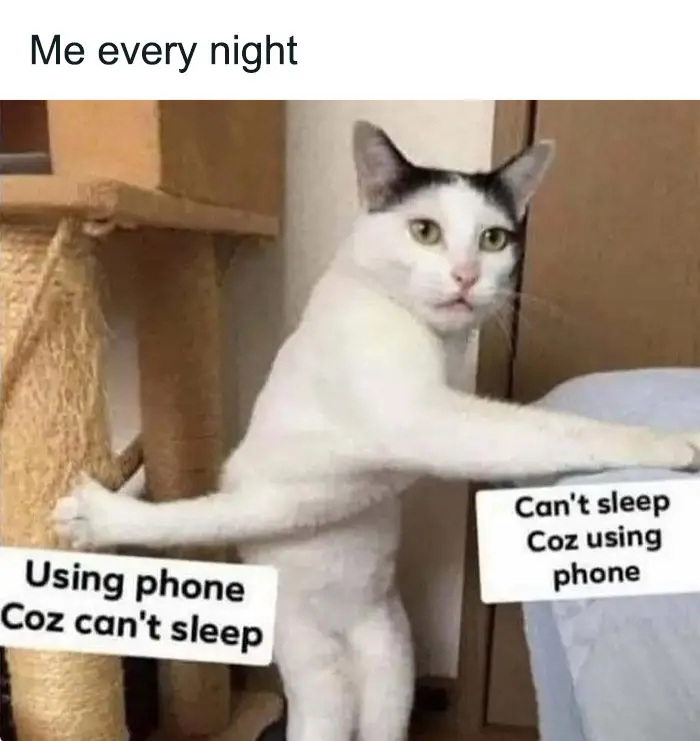
And if sleep still takes its sweet time, at least there’s a whole bunch of memes to keep you company until you finally drift off.
#34

#38