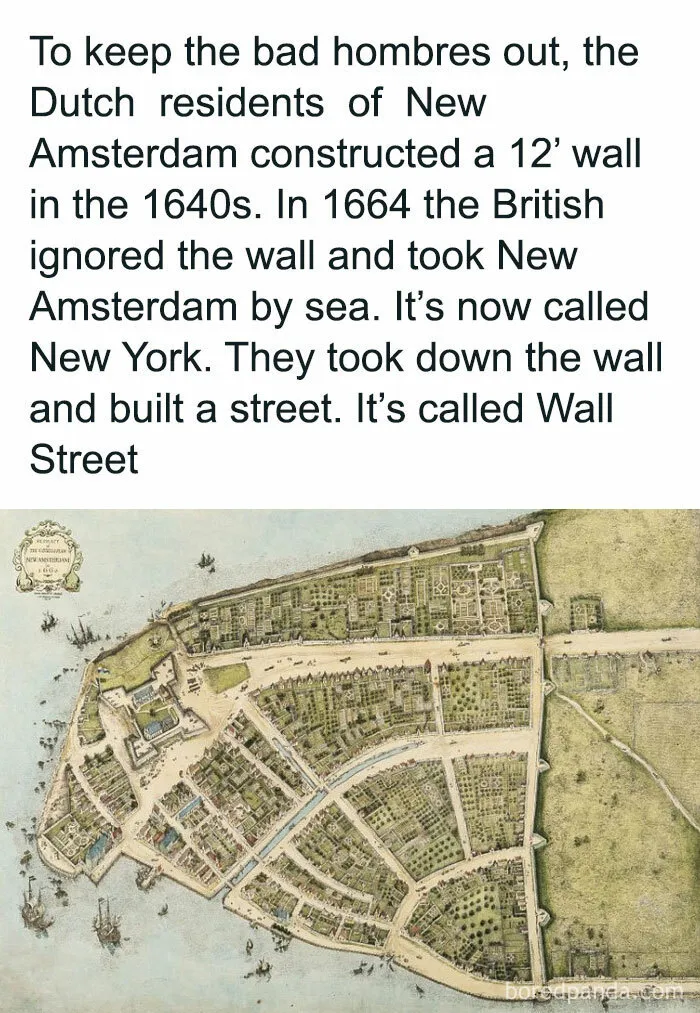




History also helps people to find their identity, and this is actually one of the reasons why modern nations continue to encourage its teaching in some form.
"Historical data include evidence about how families, groups, institutions, and whole countries were formed and about how they have evolved while retaining cohesion. For many Americans, studying the history of one's own family is the most obvious use of history, for it provides facts about genealogy and (at a slightly more complex level) a basis for understanding how the family has interacted with larger historical change," Stearns said.


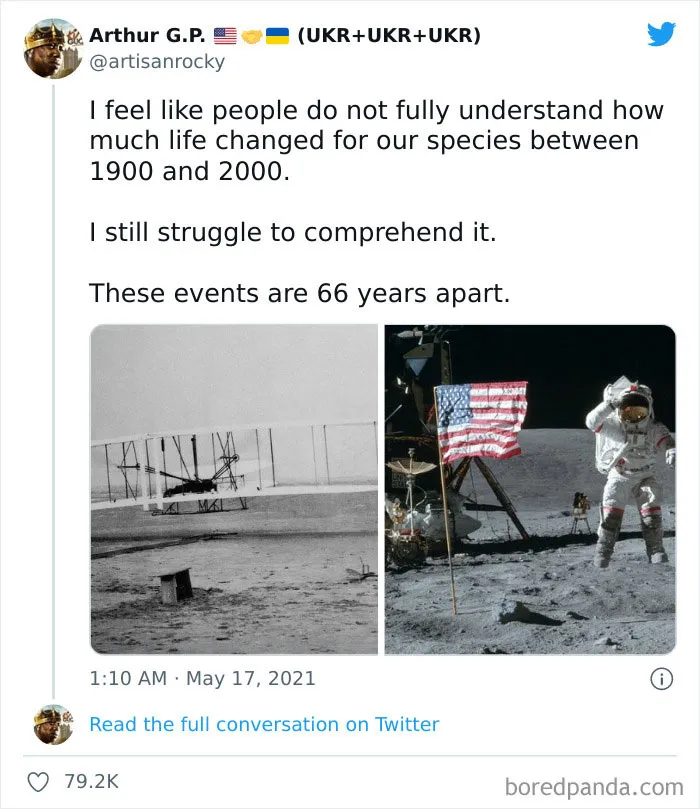

Even if we take a step back and look at institutions, businesses, and other social units, such as ethnic groups, we can see that they also use history for similar purposes.
"Merely defining the group in the present pales against the possibility of forming an identity based on a rich past," Stearns explained. "And of course, nations use identity history as well ... Histories that tell the national story, emphasizing distinctive features of the national experience, are meant to drive home an understanding of national values and a commitment to national loyalty."
So if you find yourself unable to stop scrolling through this list, relax. You're not wasting your time. On the contrary, you might be growing in more ways than you might imagine.




But with that being said, there are fewer people studying the subject. According to the National Center for Education Statistics, we had 34,642 history majors in 2008. Fast forward to 2017, and the count was just 24,266. Most of that decline occurred after 2012, with a notable single-year drop of more than 1,500 between 2016 and 2017.
However, that might just be temporary. Writing for the American Historical Association's blog Perspectives on History, Northeastern University's Benjamin M. Schmidt pointed out that the history major has had low points before. The discipline weathered a significant decline between 1969 and 1985, when the major dropped by 66 percent.
(At the time, those numbers were linked to higher education’s boom in the '60s that saw the discipline's rapid expansion and subsequent bust when higher education growth slowed in the '70s.)




Schmidt also said that the anxiety over career prospects for history majors is probably misguided, since we know that students with history BAs disperse into a wide variety of careers.
"The increasingly common practice of lumping a wide variety of disparate fields together as STEM is probably giving students and their parents excessive expectations about the earning potential conferred by many science and technology degrees," he wrote.
"While engineers in their 20s can indeed make salaries that would make most full professors of history jealous, science, technology, and math majors are much more of a mixed bag. Extensive data ... released out of the University of Texas system do show history majors making less than most science fields after controlling for the university they attended. But they appear to make more than many other fields, including English, psychology, sociology, and even a number of biology-adjacent majors (such as zoology, ecology, and neurobiology, though traditional biology majors make somewhat more)."

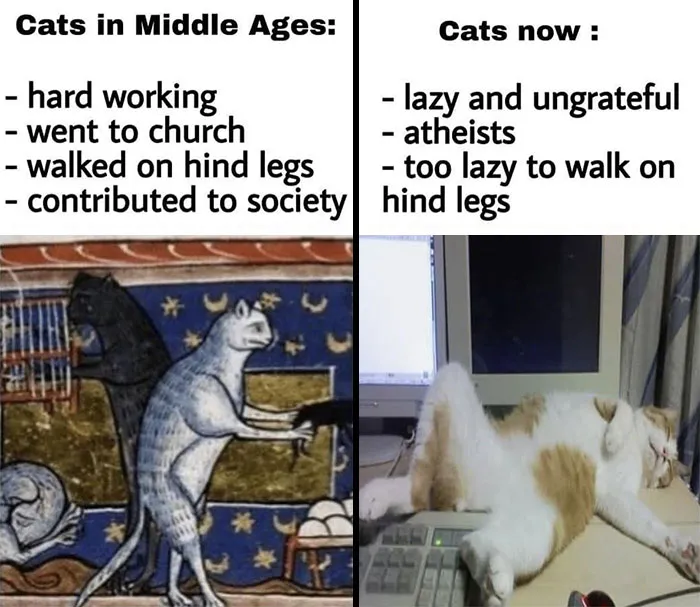
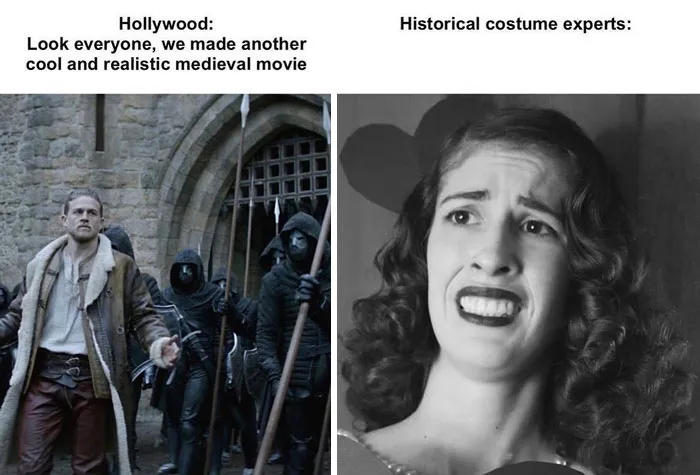

Schmidt said that ultimately, the long-term state of the discipline will rest on how it adapts to a cohort of students—and their parents—who are much less receptive to arguments for the liberal arts than previous generations have been.
He noted that many departments and organizations have already worked out useful ways to articulate the purpose of the major. These are undoubtedly helping attract and retain students.
Who knows, maybe these memes will also help 'sell' history.