






Whenever generations are brought up in the media, workplace discussions, or online culture, the conversation almost always focuses on the friction between Baby Boomers and Millennials, or Millennials and Gen Z.
Generation X is frequently left out of the headlines altogether. Unpacking why this group remains perpetually overlooked comes down to demographics and cultural positioning.



Sandwiched between two massive demographically dominant cohorts, Gen X was born during a notable dip in US birth rates.
According to data from the Pew Research Center and the US Census Bureau, the Baby Boomer generation encompasses roughly 71.6 million individuals.
Millennials top the chart at over 72.1 million. By comparison, Gen X sits at approximately 65 million people.



Beyond population counts, Gen X occupies a distinct position as a cultural and technological bridge.
They were the last generation to experience an entirely analog childhood, marked by unsupervised freedom, rotary phones and VHS tapes. They were also the first to adapt to a digital adult world as the internet and mobile phones emerged.
This is one of the reasons they are also sometimes referred to as the “sandwich generation.”


Much of Gen X’s absence from modern generational debate stems from how they were raised.
Widely remembered as the original “latchkey kids,” they grew up in an era marked by unprecedented independence.
As dual-income households and divorce rates surged throughout the 1970s and 80s, institutional child care had not yet caught up. Left largely unsupervised after school, young Gen Xers learned early on to unlock their own front doors, make their own dinners, and manage their time until their parents returned from work.
They navigated the world without cellphones or GPS, which might also have fostered a fiercely autonomous mindset among many Gen Xers.

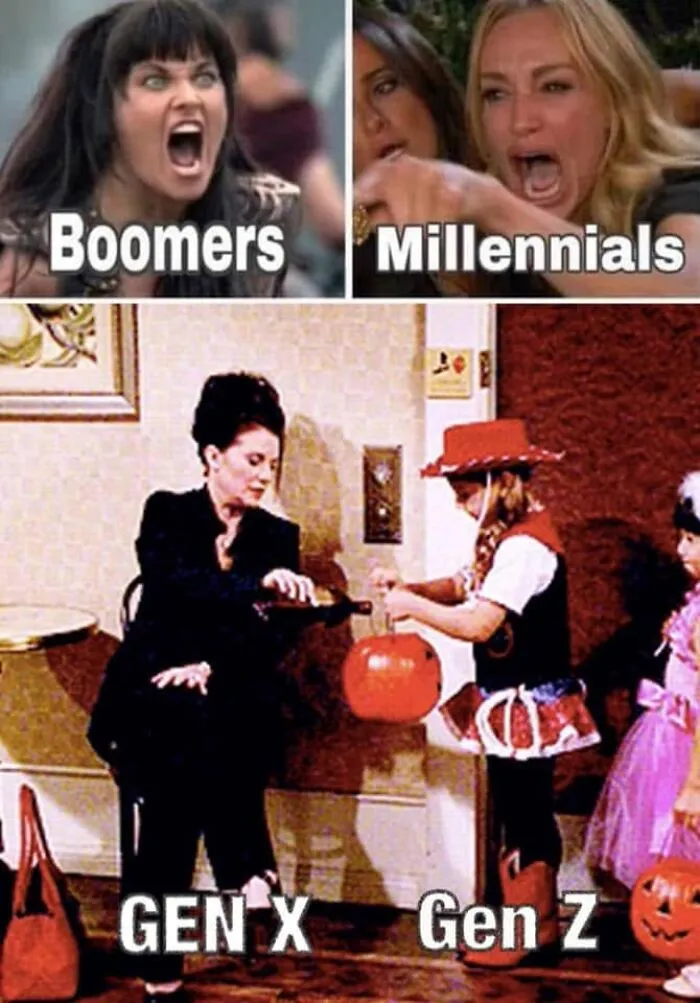

Being perpetually overlooked makes Gen X the ultimate dark horse. Despite decades of nicknames that frame them as neglected or left behind, recent economic data show that Gen X is quietly stepping up as the most influential force of the next decade.
According to a 2025 report by consumer intelligence authority NielsenIQ, this generation has built the world’s second-largest consumer market.
Despite having fewer people than Millennials or Gen Z, Gen X’s collective buying power is second only to the entire United States economy.
“Generation X is typically overlooked and misunderstood by decision makers, and the role and influence of this generation is frequently underestimated. Yet Gen X is not forgotten — they’re hidden in plain sight,” says Noa Friedman, a senior research associate at Environics Research.



Despite their growing influence, Gen X does face some significant challenges.
A 2022 Gallup study found that while younger generations get most of the attention around mental health, Gen X actually reports higher levels of stress and burnout than Baby Boomers.
Much of this pressure stems from being squeezed on both ends. Many Gen Xers are caught in a financial and emotional vice — caring for aging parents while simultaneously funding their own kids' futures during uncertain times.
It isn’t their first trial, either. Gen X has already lived through multiple recessions, the dot-com crash, and global pandemics. They have proven their resilience time and again, but managing family duties alongside middle-age exhaustion is pushing even this famously tough generation to its limits.