



“Overly competitive feelings, addiction to scrolling, curating rather than being present in your life contributed to feelings of distance, sadness, anxiousness, and especially social anxiety,” Dr. Saltz told Bored Panda.
Dr. Saltz made another crucial point: students tend to spend more time scrolling on social media than interacting with their peers in real life, yet their poor mental health remains a mystery to many of them.
#22 Last Night We Lost Power



“The addictive nature of social media may also play a negative role, over time increasing distractibility and decreasing the ability to focus on something for a longer period, which interferes with learning and coursework,” Dr. Saltz stated.
So, how can students maintain their mental well-being in the era of social media? Dr. Saltz’s first piece of advice is to go on a “diet” of at least 15 minutes per day. She also encourages veering away from apps to keep the focus on real-life relationships.

A person’s college years are supposedly one of the most colorful times in their lives. Dr. Saltz encourages students to maximize their experience by socializing with like-minded individuals who are more interested in face-to-face interactions.
Exercising has been proven to improve mental health, something Dr. Saltz also advises. Specifically, she recommends 30 minutes of aerobic work three times a week to decrease depressive episodes and improve anxiety.
#28 I Keep This Pic Of Terry Crews In My Wallet So I Can See It When I'm About To Waste Money On Things I Don't Need...


Of course, there will come a point when professional help will be necessary. According to Dr. Saltz, it is when symptoms have become too prevalent.
“If you find you are sad, lonely, anxious, a good chunk of each day- make a counseling center appointment to get a read on whether you could benefit from some mental health care right now.”




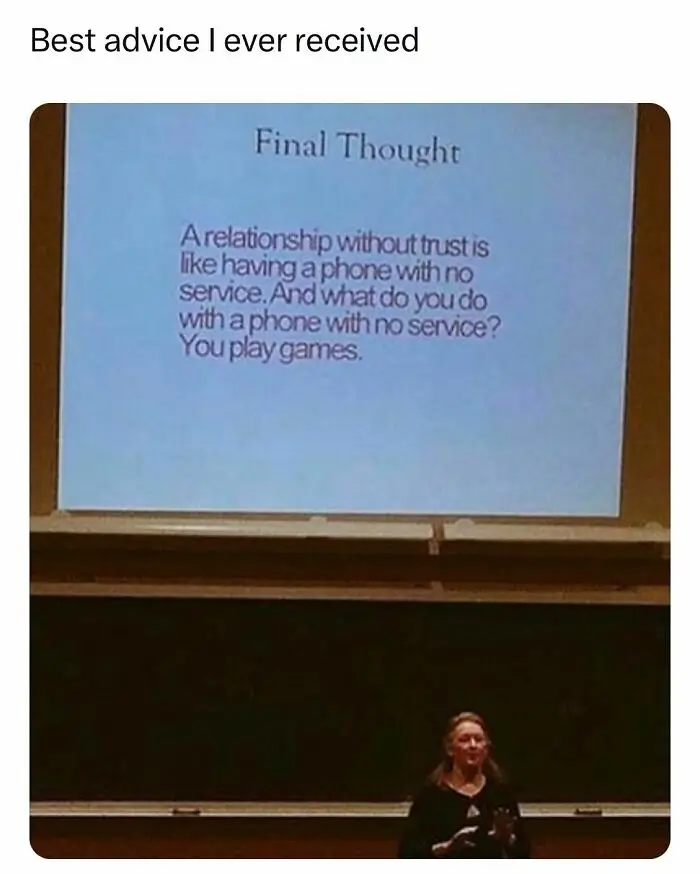

#37 Our School Has This "Stone Tablet Policy"