

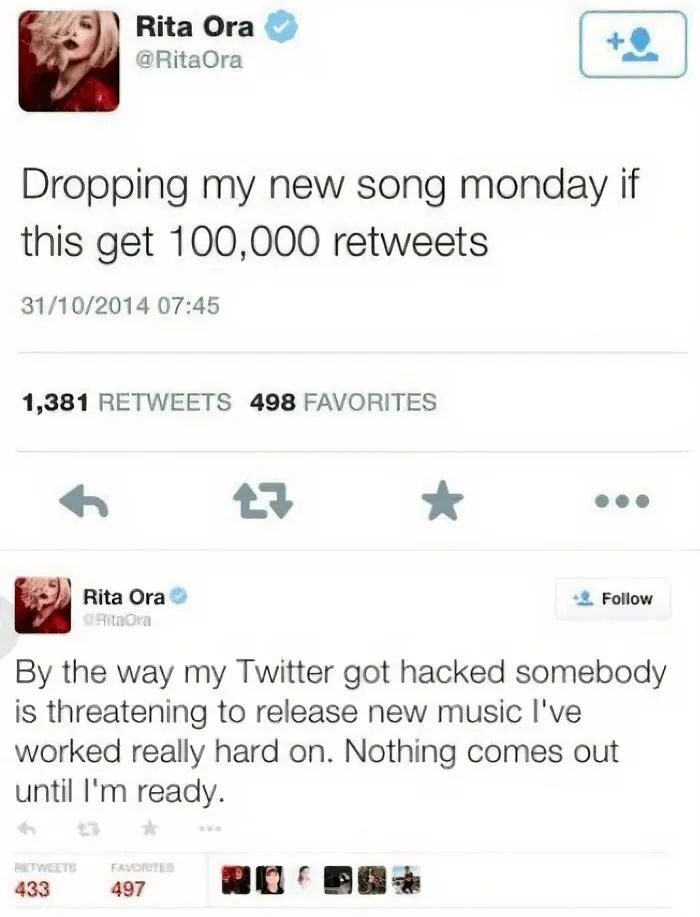
#3 Rita Ora’s Twitter Account Promised New Music If A Tweet Reached 100,000 Retweets, But It Was Deleted After Getting Only 2,000. She Claimed She’d Been Hacked, Though Fans Suspected A Failed Promo Stunt, Which She Denied
The simplest explanation for why celebrities are so consistently bad at social media is that fame destroys the feedback loop that keeps most people in check. In an ordinary life, if you say something obtuse, someone tells you. A friend pushes back, a colleague pulls a face, a family member sends a text.
Famous people are surrounded by people whose income depends on their continued goodwill, which means the honest reactions stop arriving and the bad ideas stop getting intercepted. Add a platform with millions of followers generating instant validation, and the result is someone who has not received a sincere "are you sure about this?" in years, posting with complete confidence way past midnight.
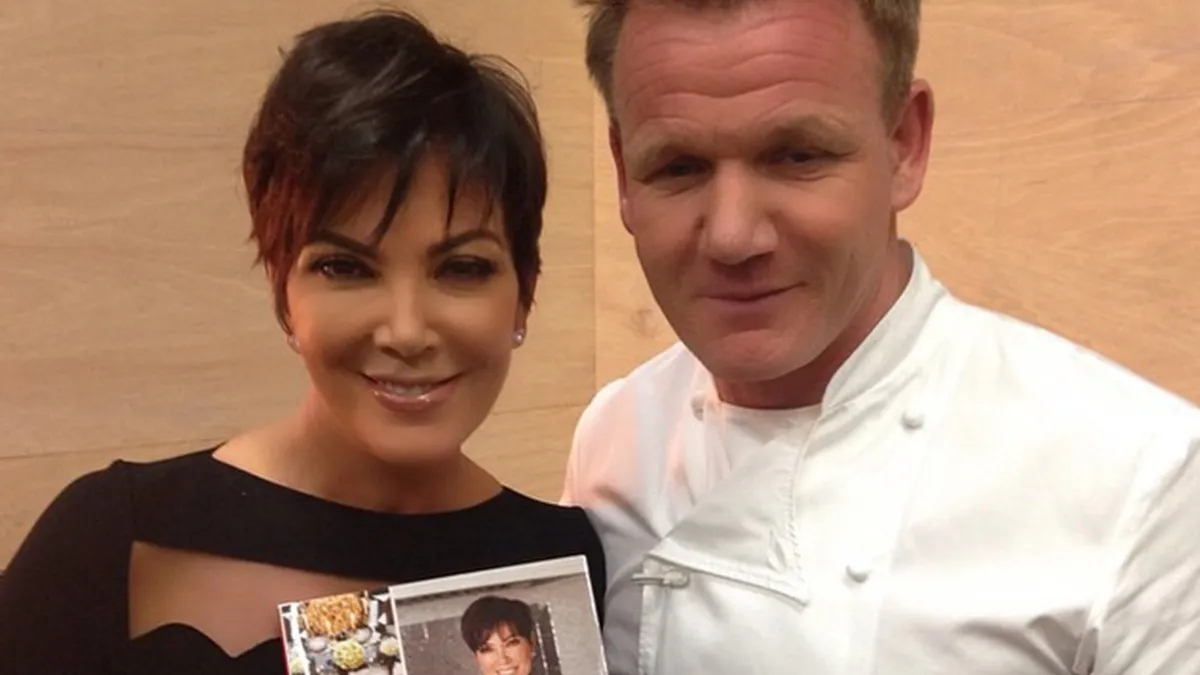
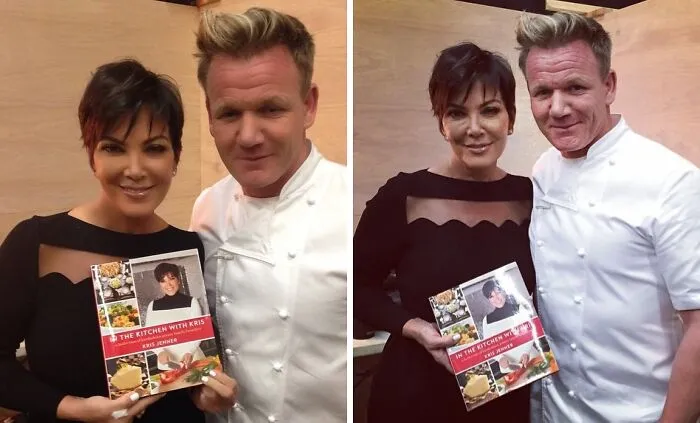
#4 Kris Jenner And Gordon Ramsay Shared Photos Promoting Her Cookbook, But Fans Noticed Kris Appeared To Have Photoshopped Both Of Them In Her Post
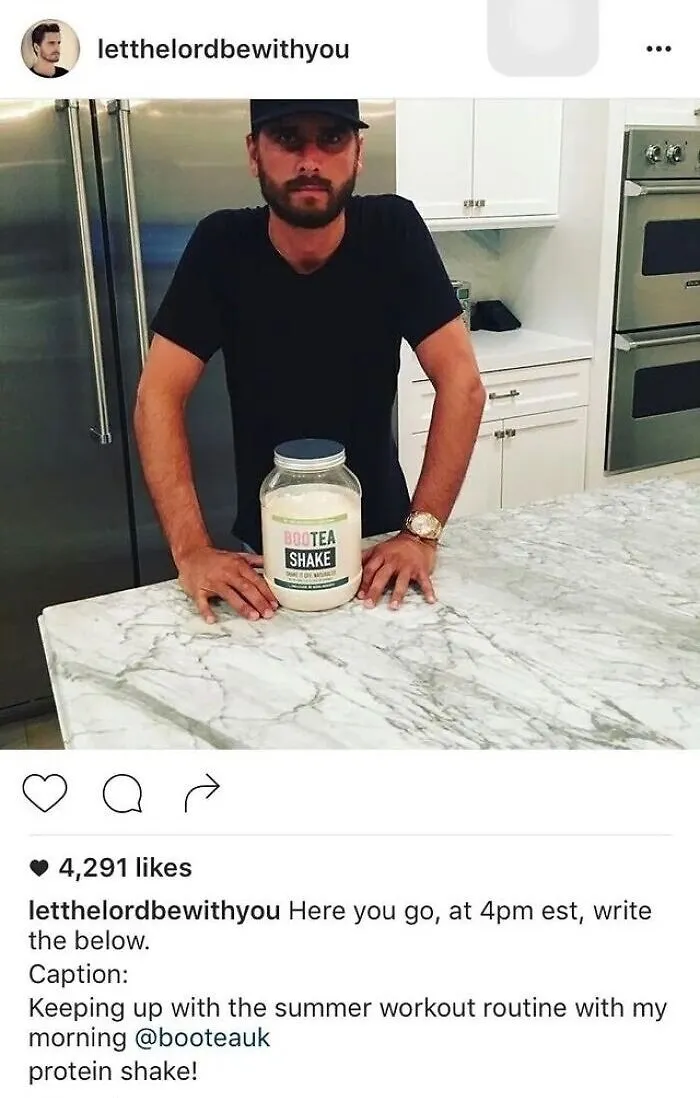
#5 Scott Disick Copy/Pasted An Email From A Marketing Team As His Instagram Caption
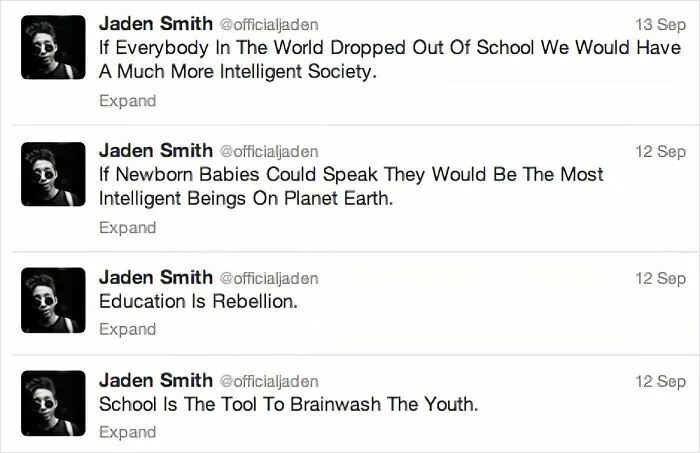
#6 Jaden Smith Drew Mixed Reactions For His Philosophical Tweets, Including Bizarre Musings About Mirrors, Reality, And Newborn Babies Being The Smartest People Alive
The Streisand Effect is the phenomenon where attempting to suppress or delete something online draws way more attention to it than if it had been left alone entirely. It is named after the diva herself, Barbra Streisand, who in 2003 sued a photographer to remove an aerial image of her Malibu home from a coastal survey database. Before the lawsuit, the image had been downloaded six times. Within a month of the legal action, it had been viewed nearly half a million times.
The principle applies to celebrity social media with depressing regularity, because the deleted tweet gets screenshotted before it disappears, and the statement issued to address the original problem almost always introduces new problems that did not previously exist. Every attempt to shrink the story makes it larger, and yet the response is almost never to simply stop responding, because silence reads as guilt and saying something from the heart appears to be beyond the capabilities of most crisis communications teams working in the industry these days.
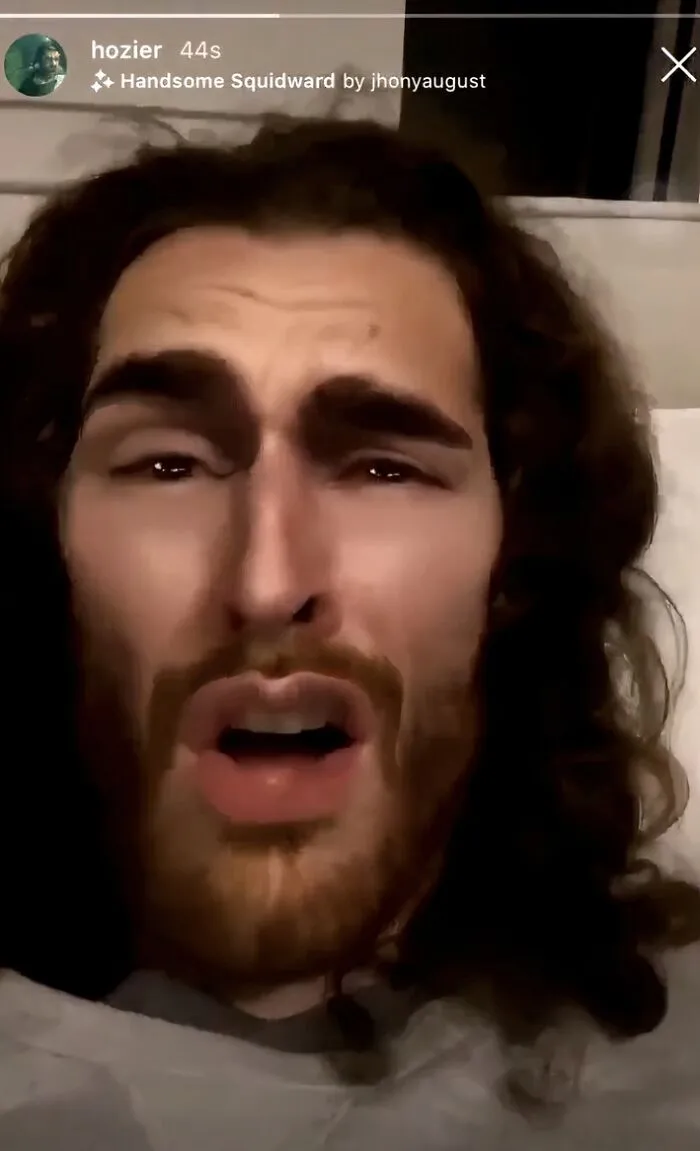
#8 Hozier Accidentally Shared A Video Of Himself Using The “Handsome Squidward” Filter On His Public Instagram Story Instead Of Close Friends
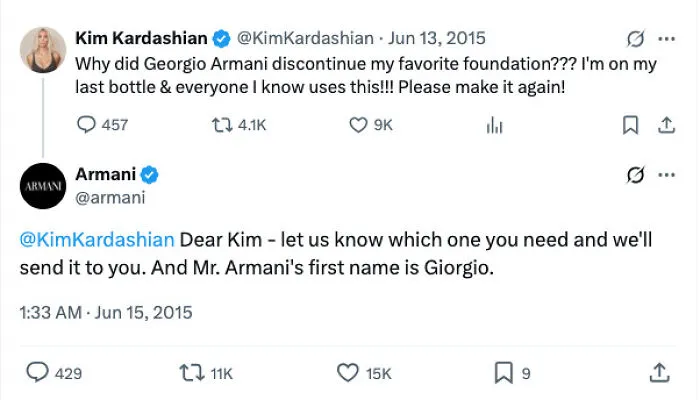
#9 Kim Kardashian Called Out Armani For Discontinuing Her Favorite Foundation, Only For The Brand To Offer Her A Replacement And Correct Her Misspelling Of Giorgio’s Name
When a celebrity posts something catastrophic, the response from their team follows a pattern that has become an artwork in its own right. First, silence while the team convenes. Then a statement that is carefully worded to acknowledge the situation without admitting fault, usually popping up at some obscure hour when people are not looking.
Soon follows the notes app apology, which is supposed to look as personal as possible. It is identifiable by its specific features: a white background, a wall of text, the phrase "I have been doing the work," a commitment to "listening and learning," and a conclusion that subtly reframes the original incident as a misunderstanding rather than a choice. It satisfies and convinces nobody, and it is issued anyway because the alternative is saying nothing, which reads as worse.
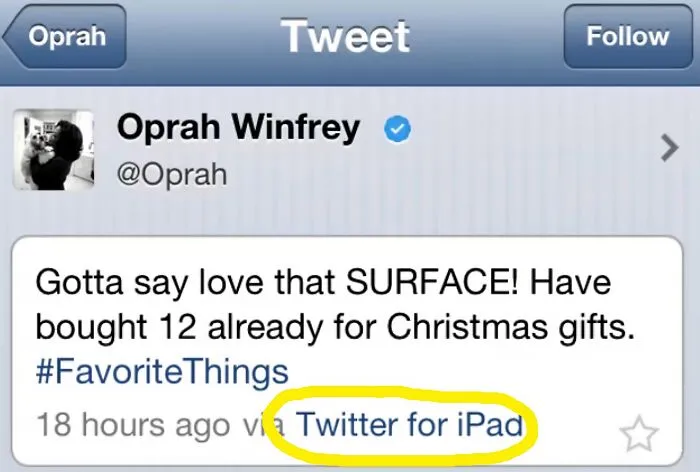
#10 Oprah Praised Microsoft’s Surface Tablet As A Holiday Favorite, But Fans Noticed Her Tweet Was Posted From An iPad
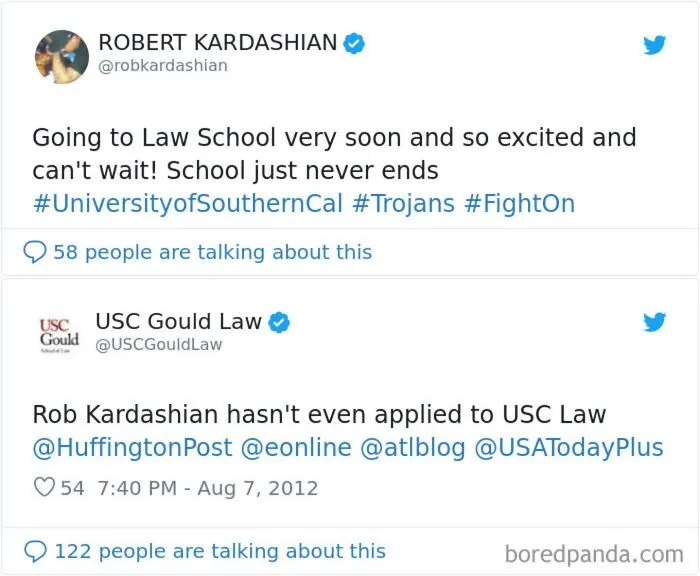
#11 Rob Kardashian Once Claimed He Was Preparing To Attend Usc Law School, But The University Publicly Clarified That He Had Never Applied
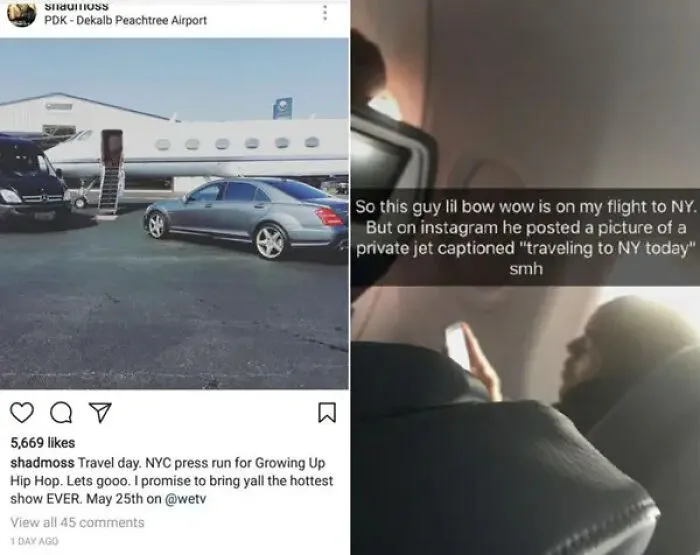
#12 In 2017, Shad Moss (Formerly Lil’ Bow Wow) Posted A Private Jet Photo, Claiming He Was Flying To New York. However, A Woman Alleged He Was Actually On Her Commercial Flight, And Fans Also Noticed The Image Resembled One On A Transportation Company’s Website
The question of who actually recovers from a social media disaster and who does not has less to do with the severity of the post than with the size and loyalty of the existing fanbase at the time of impact. Kanye West's Twitter history is objectively one of the most extensively documented cases of public unraveling in social media history, and his career absorbed it for years before the cumulative weight became genuinely career-altering.
Justine Sacco, a PR executive who posted a racist tweet to her 170 followers before boarding a long-haul flight, landed to find herself globally trending and unemployed. The difference was the infrastructure, not the content. Fame is a form of protection until it is not, and the line between the two is drawn somewhere that nobody can see until they have already crossed it.

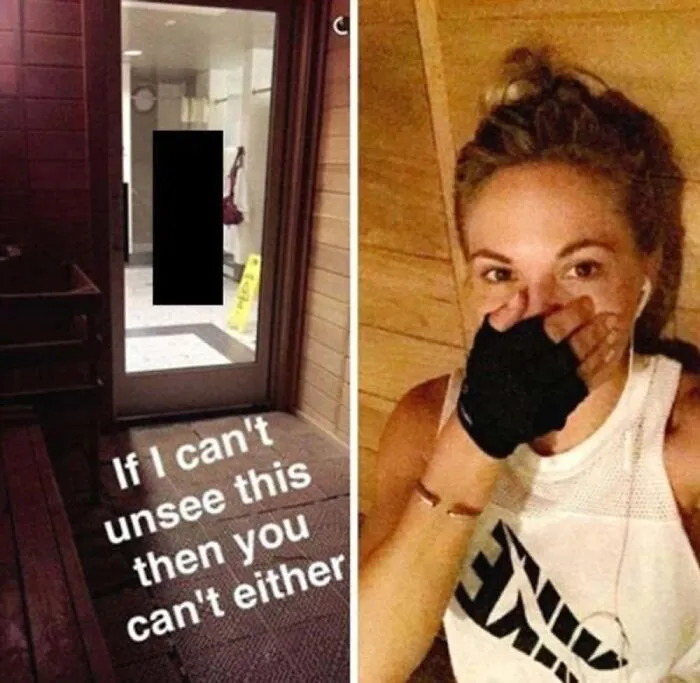
#14 Dani Mathers Shared A Photo Of An Undressed Woman At A Gym, Mocking Her Body On Snapchat
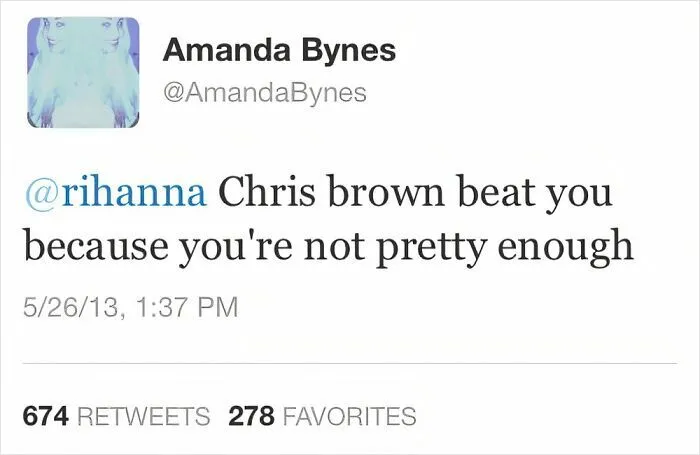
#15 During A Turbulent Period, Amanda Bynes Repeatedly Called People “Ugly” On Twitter, Targeting Celebrities Like Rihanna And Even The Obamas
But it seems like the audience has been slowly logging off for a while now. A survey by EnTribe found that 51% of users simply scroll past influencer content in their feeds, and 29% actively dislike it due to constant promotion and a near-total absence of anything that feels real. Audiences are already exhausted, already skeptical, and already primed to spot the inauthenticity behind most posts.
Sinead Norenius-Raniere, VP of product and creator marketing strategy at Cision, told PR Daily that "people are feeling fatigued around the macro celebrity influencers and the constant, very high-polished sponsored ad." The irony is that the celebrities posting the most, with the biggest budgets and the most carefully managed feeds, are often the ones connecting the least.
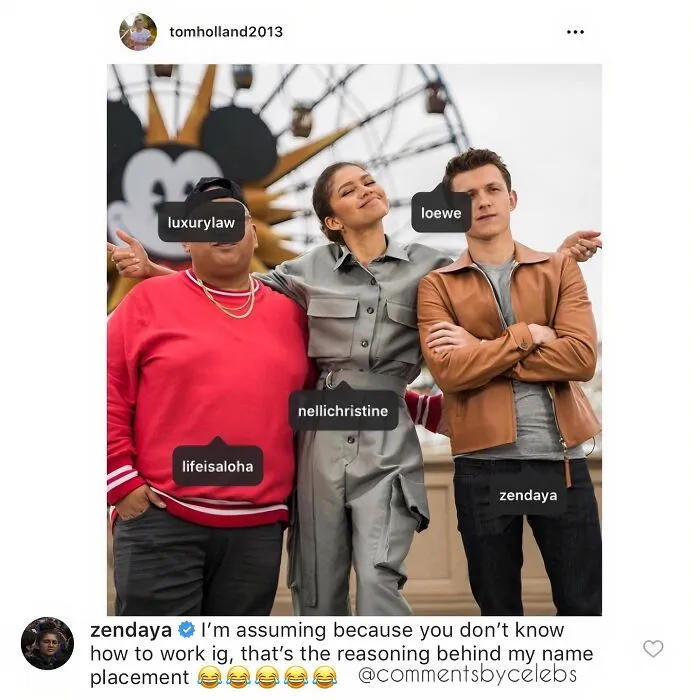
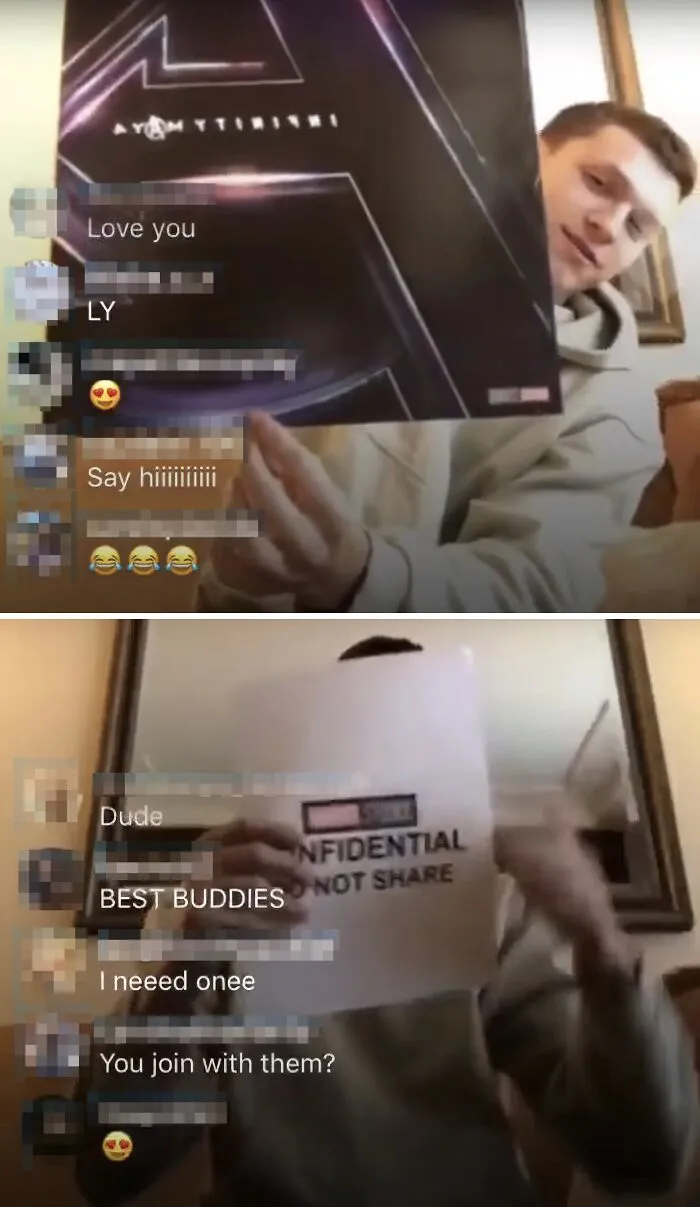
#17 During A Instagram Live, Tom Holland Revealed The Avengers: Infinity War Poster. The Back Of The Letter, Clearly Visible On Camera, Was Stamped With The Words “Confidential. Do Not Share”
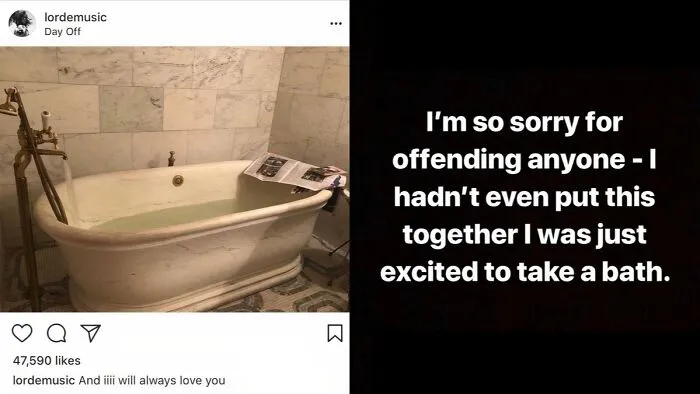
#18 Do You Guys Remember The Lorde/Bathtub Drama. All She Wanted Was To Take A Nice Bath
As far back as 2011, music consumer research firm Bauer Media flagged that social media was making it too easy to follow celebrities on a minute-by-minute basis, increasing the likelihood that fans would simply get bored with them faster. Constant access turned out not to be the gift it appeared to be. Familiarity, at scale and at speed, has a ceiling, and a significant portion of celebrity social media history is the story of people hitting it.
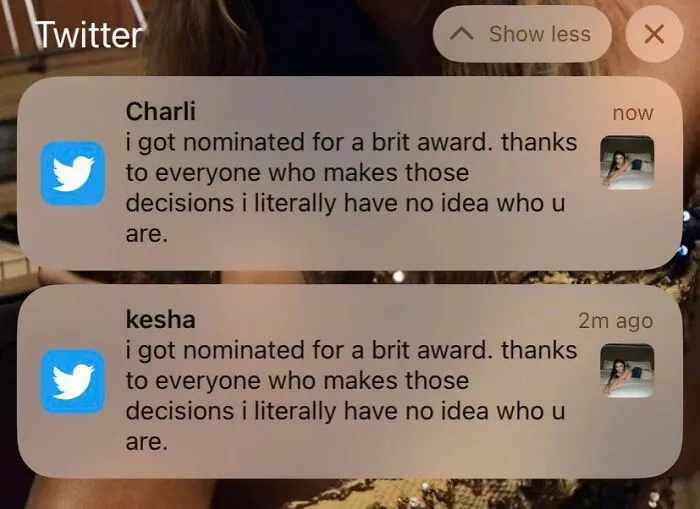
#19 Charli Xcx's Social Media Team Accidentally Tweeted Through Kesha's Twitter Account Instead Of Charli's, Thanking The Brits For Her Nomination
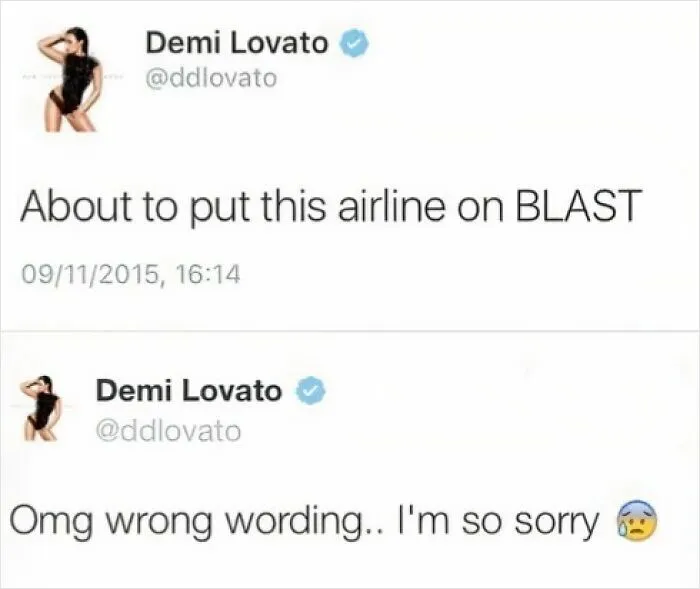
#20 Demi Lovato Once Threatened To Call Out An Airline On Twitter After Poor Service, But Faced Backlash For Posting It On 9/11 And Later Apologized For The Wording