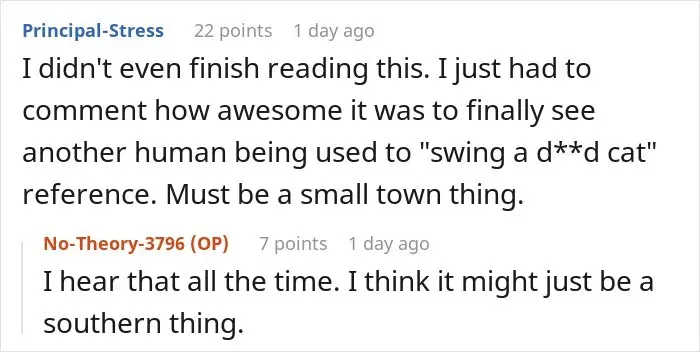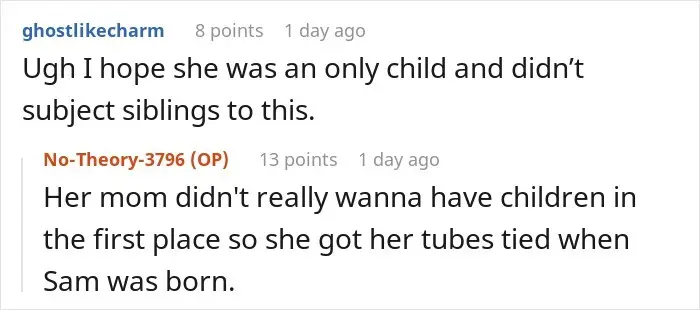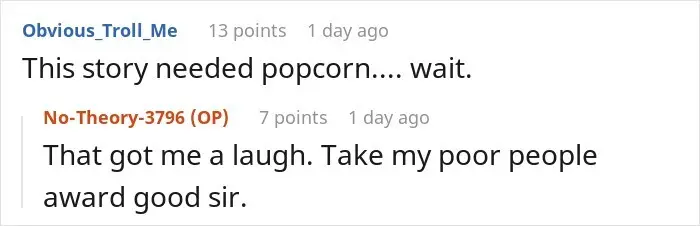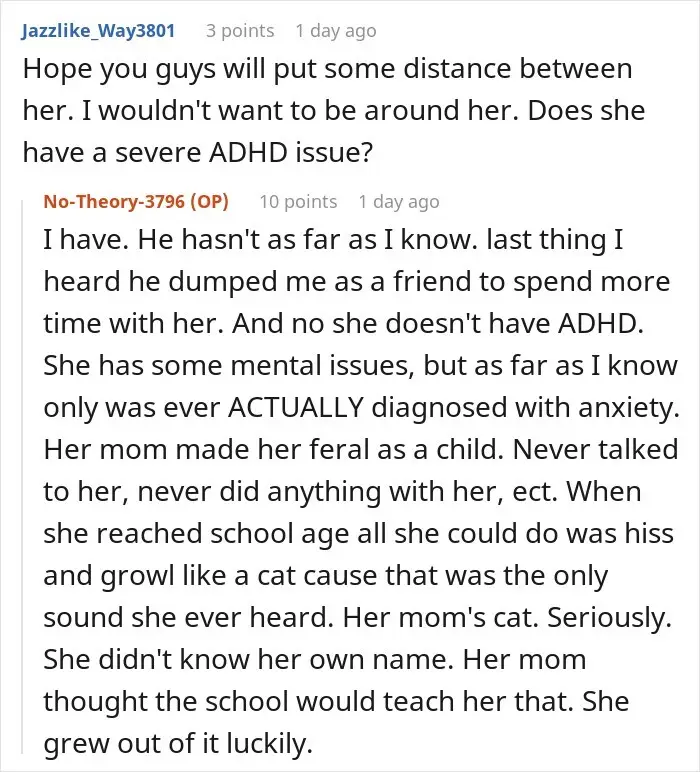

Growing up in a small town means you're likely part of a pretty tight-knit community. It's the kind of place where people share food, where you can count on others to help you out when you're in a pickle, and where you reap the benefits of knowing just about everyone.
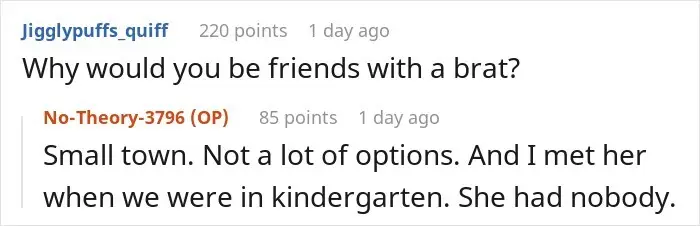
At the same time, knowing everyone and everything can also be... not so great. You don't really expand your friendships beyond those familiar horizons; there are no secrets, gossip runs rampant, and, well, you see the same faces every single day. Apparently, that's how a teenager on r/EntitledPeople ended up befriending a girl when they were young, only to quickly realize she was nothing but a spoiled brat.
Being friends for a long time doesn't mean friendships need to last a lifetime

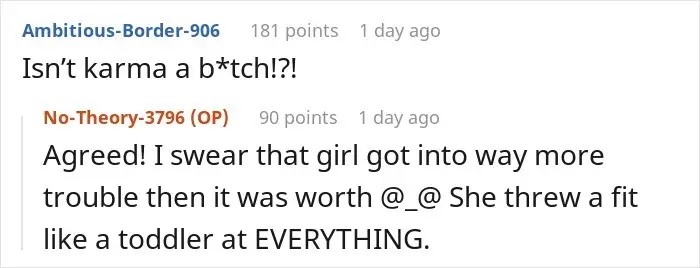
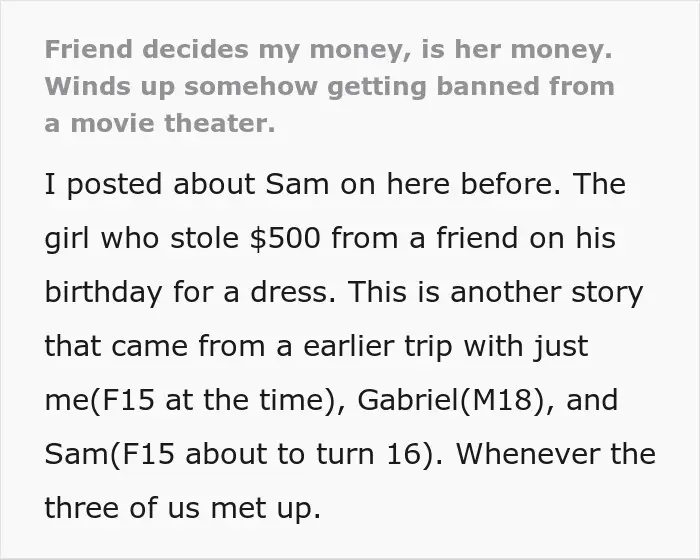
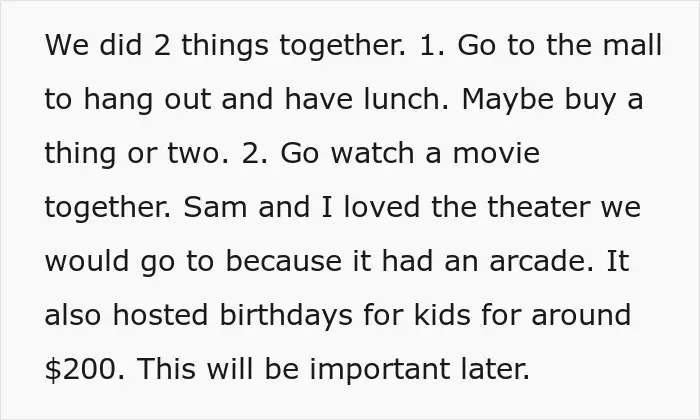
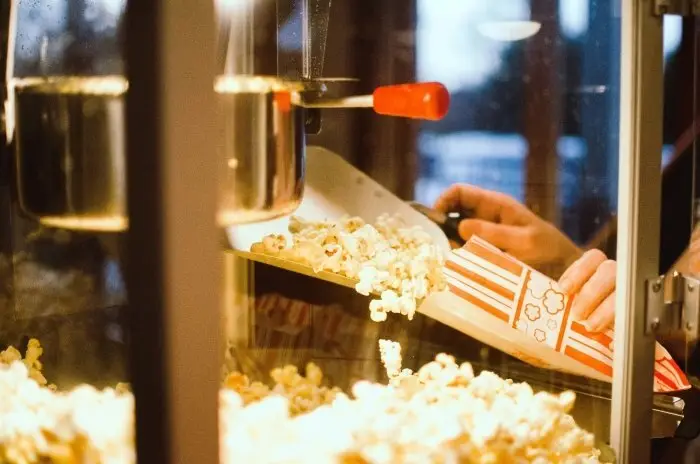
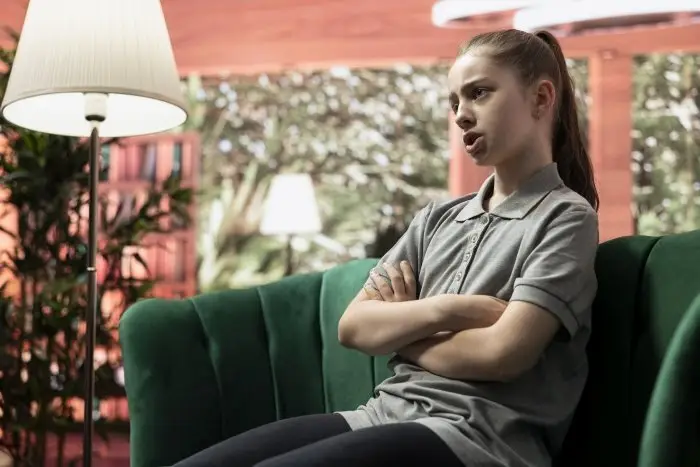
A teenager realized this when she noticed that her longtime friend, Sam, completely lost it over popcorn at the movies
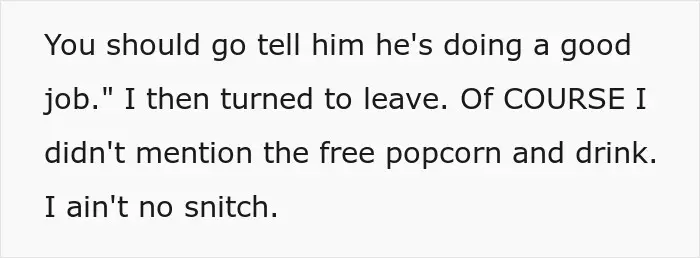
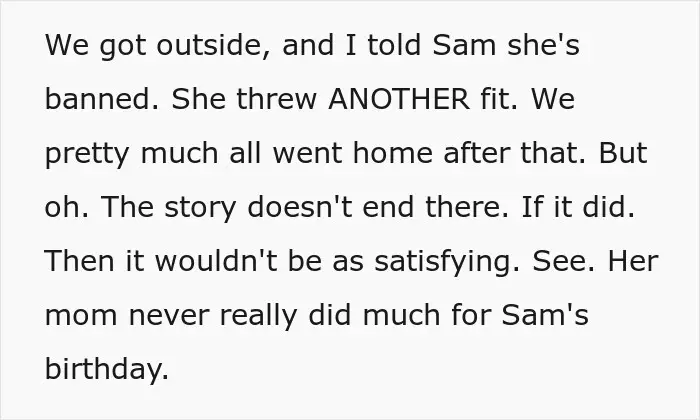
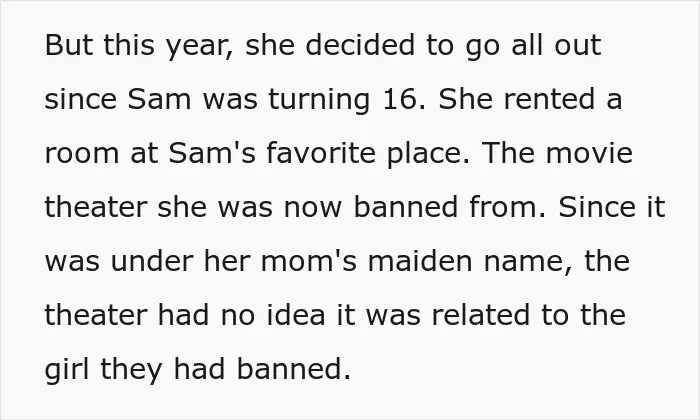
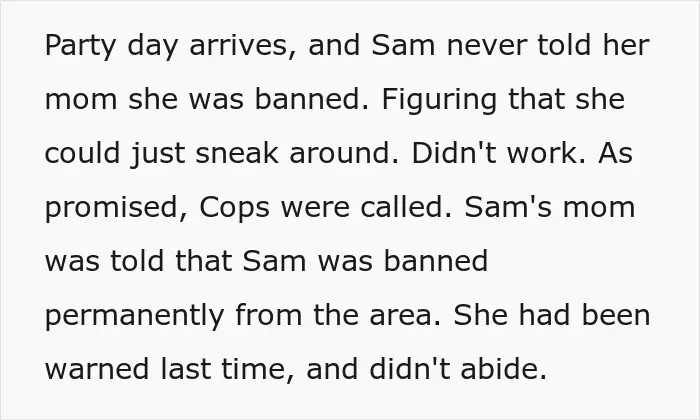
Mistreating workers and staff is unfortunately more common than we like to admit
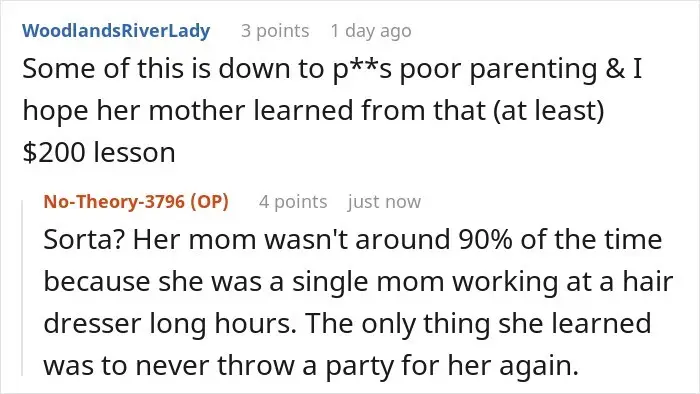
Some parts of this story are incredibly concerning. However, remember one important detail: these are teenagers, and teenagers tend to act intensely. In fact, psychologist Dr. Carl Pickhardt notes that adolescence naturally encourages self-centering, which can develop into entitlement when teens are never told “no” or are shielded from the natural consequences of their behavior.
Unfortunately, teenage entitlement doesn't excuse how badly she behaved, especially toward service workers. If anything, her actions highlight what sociological research has found about customers who target frontline employees. Studies show that service workers often lack a “status shield,” meaning that low-wage staff are disproportionately targeted when customers feel powerless.
Despite everything they had to put up with from her, especially since this wasn't an isolated incident, the workers still showed empathy toward the narrator. Research highlights that toxic customers can cause severe emotional exhaustion and rumination among frontline staff, which makes their show of solidarity with the narrator, as well as the manager's firm decision to ban her, all the more meaningful.

Teenage friendships tend to have toxic dynamics
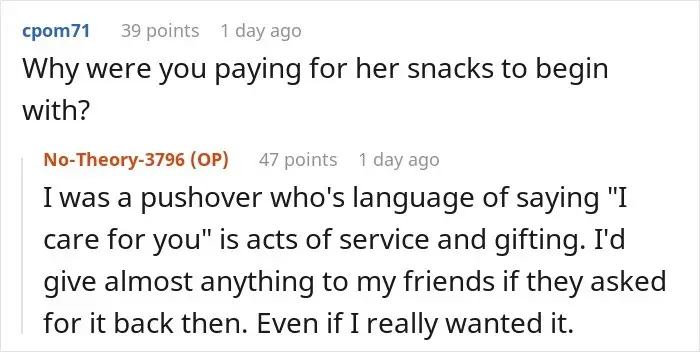
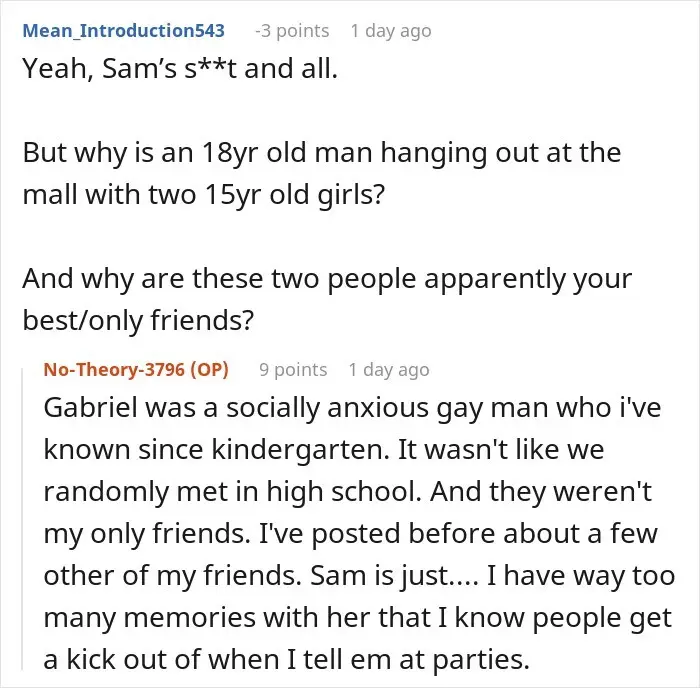
The friendship, however, was already quite toxic. As the narrator explains, the dynamics were already established: she was the one with the money, Sam was the pushy one, and Gabriel always caved to Sam. In fact, a 2024 study on toxic friendships identified controlling behavior as a distinct form of peer victimization, with examples including insulting a friend to force compliance and blaming someone else for fights.
Sadly, while Gabriel and, to some extent, the narrator might believe they're keeping the peace by putting up with Sam's antics, behavioral experts point out that they may actually be falling into an enabling cycle by continuing to pay for things and staying quiet. But the OP did one thing right: she broke that reinforcement cycle.
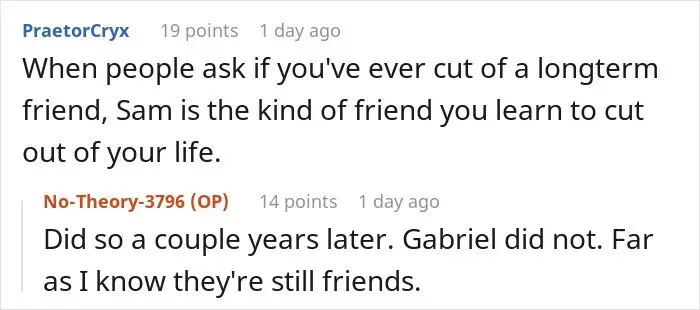
From here on out, though, she should put a firm end to any further communication. Mental health organizations actually advise against face-to-face closure conversations with violent friends or people prone to explosive tantrums, instead suggesting that they cut contact immediately. But do you think she should say something before walking away? Let us know!
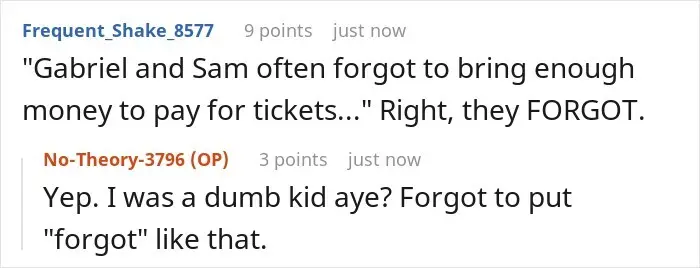
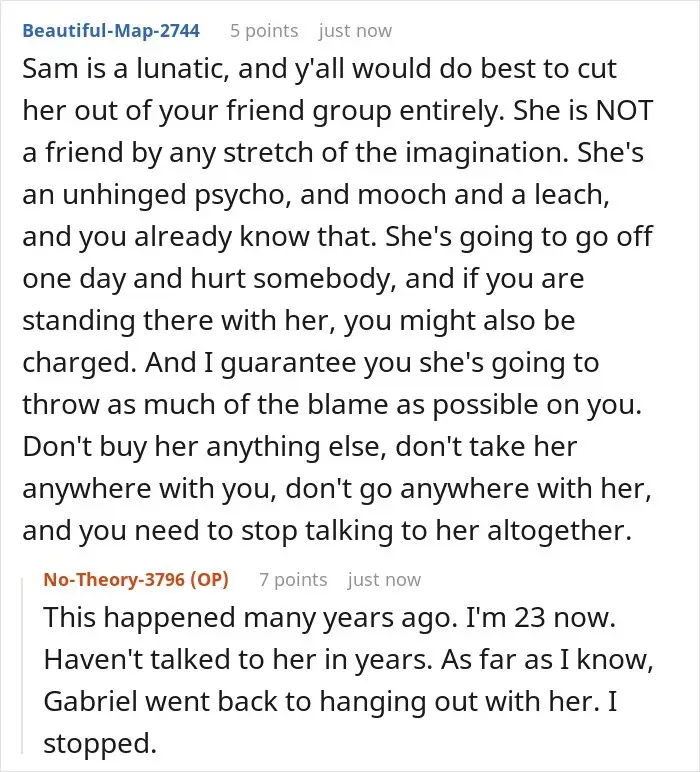
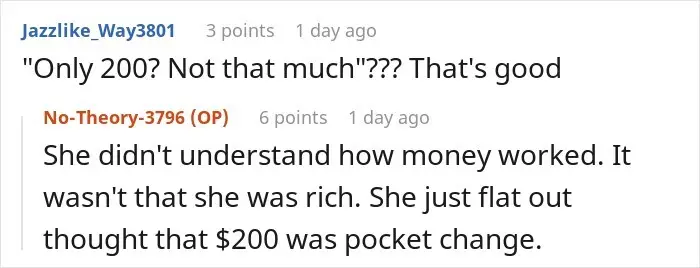
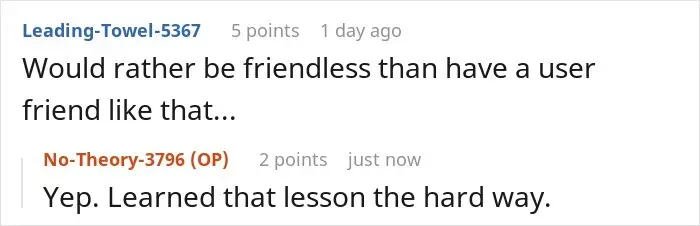
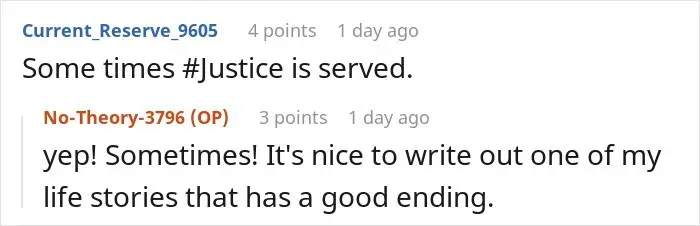
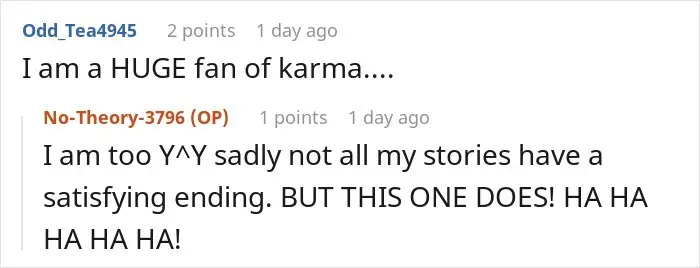
Most readers were sympathetic towards the teen, advising her to completely cut her friend out of her life