






Pregnancy can make people feel strangely entitled to a woman's body, and it's evident in different ways. Their growing belly could become a conversation starter, an invitation for unsolicited advice, and sometimes an excuse for relatives to get handsy. However, it's more uncomfortable when nobody stops to consider whether the expectant mother actually wants it.
That tension becomes especially complicated when the person crossing the line is a loved one, and this was the situation a pregnant woman found herself in. Hoping for some backup from her husband, she was left disappointed when he didn't see any lines being crossed.
A pregnant woman should never have to choose between keeping the peace and feeling comfortable in her own body

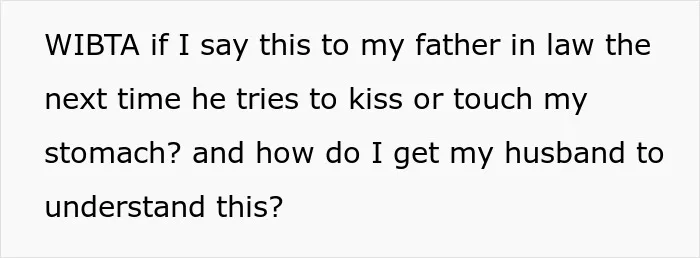
A 20-weeks-pregnant woman felt deeply uncomfortable after her father-in-law kissed her belly without asking for permission
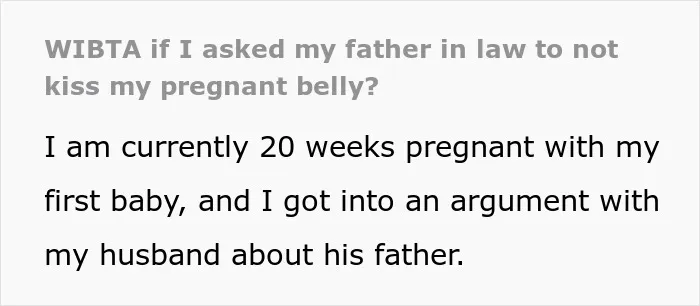
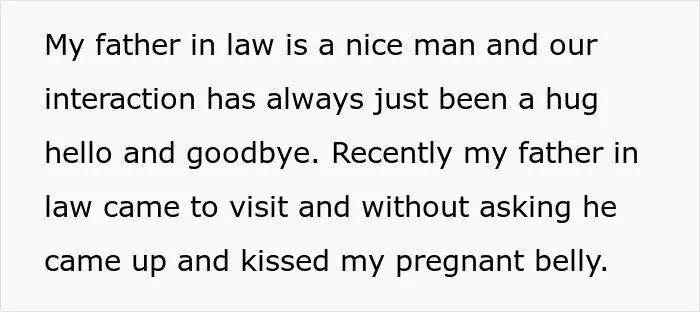

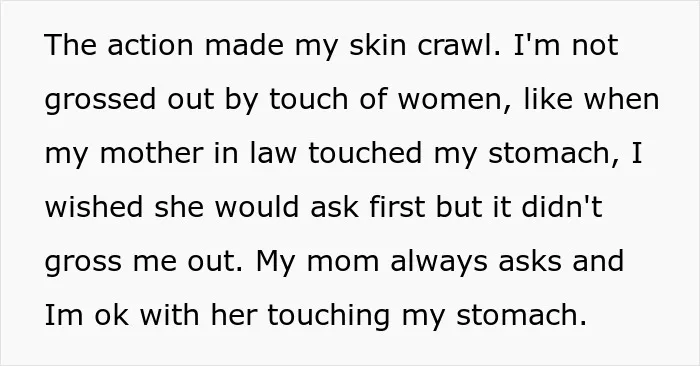

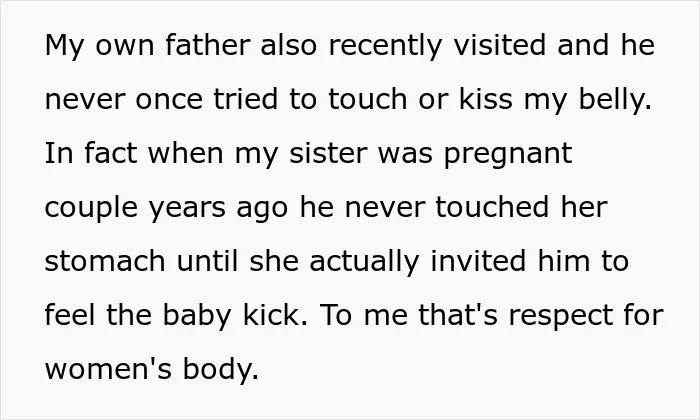
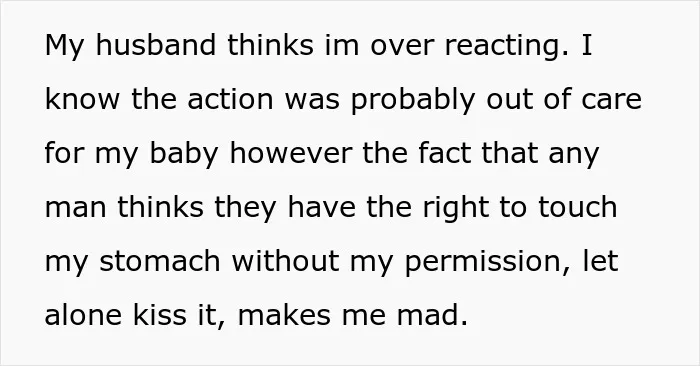
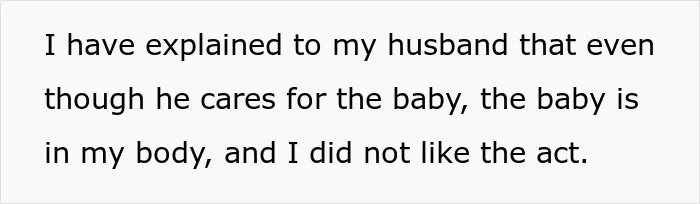
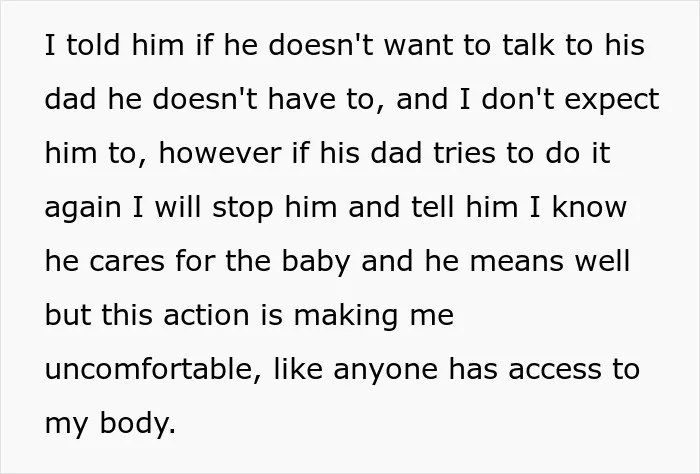

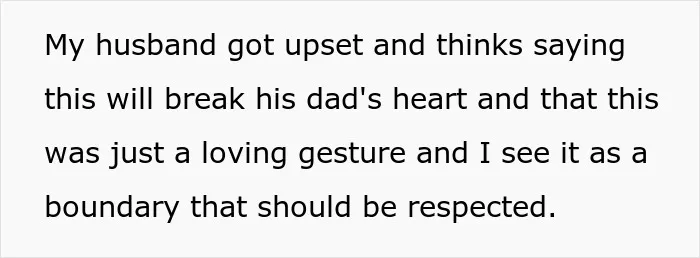
Her husband dismissed her concerns as an overreaction and worried that setting boundaries would hurt his father's feelings

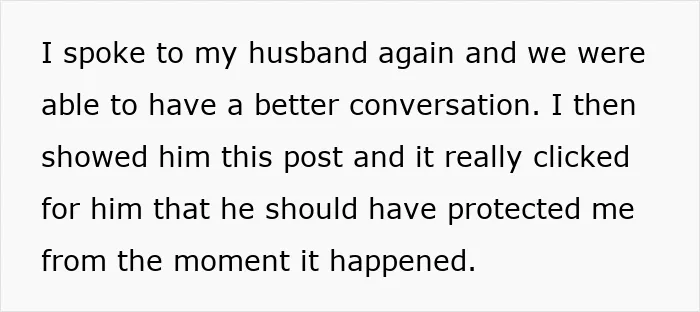

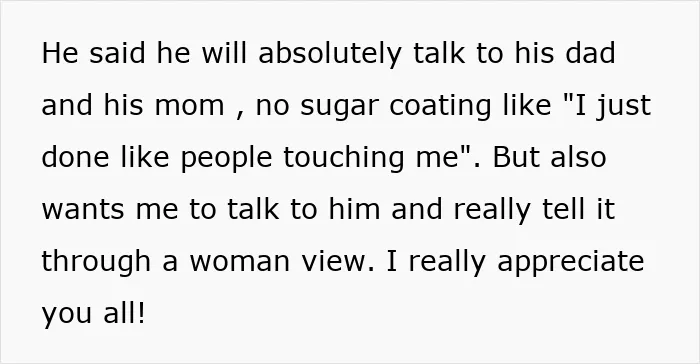
After discussing the issue again, her husband understood her perspective and agreed to speak with both of his parents about respecting her boundaries
Pregnancy can change how women experience their bodies in ways that go beyond physical discomfort. Psychology Today highlights that pregnant women can feel that other people suddenly have greater access to their bodies, including through unsolicited touching and comments about their appearance.
This therefore creates a strange contradiction, because a pregnancy may be a joyful, shared family experience, but the physical changes are happening to one person. Being happy about the baby does not necessarily mean being comfortable with everyone else's involvement.
That distinction is closely connected to the principle of bodily autonomy. The American College of Obstetricians and Gynecologists, through its Committee on Ethics, explains in its guidance on informed consent and shared decision-making that pregnancy does not remove a woman's right to make decisions about her own body and medical care.
Although the guidance focuses on healthcare rather than family affection, the underlying ethical principle is relevant. Pregnancy does not make a person's wishes less important, and while a relative may be excited to feel a baby kick or kiss a growing bump, the pregnant person still gets to decide whether that contact is welcome.

Good intentions can also make boundary disagreements harder to navigate. When someone sees their actions as affectionate, a request to stop may feel like a rejection of their love rather than a simple preference about physical contact. Yet, it is important to note that intention and impact are not the same thing, as Scientific American affirms.
Essentially, a family member can genuinely care about an expectant mother and her baby while still making her uncomfortable. Recognizing that discomfort does not require assuming the person meant harm. It simply means accepting that affection works best when it takes the other person's feelings into account.
Family relationships can make these conversations especially delicate because marriage brings two sets of expectations into one household. And this is where unclear family boundaries and the involvement of other relatives can affect relationship quality. However, this is also where a partner's response can make a meaningful difference.
The Gottman Institute notes that in-law tension can threaten a couple’s sense of security because it touches on loyalty. If one partner minimizes the other’s hurt, privately agrees with their parents, or leaves them to handle criticism alone, the injured partner may feel emotionally abandoned, even if the in-law issue itself is relatively small.
They suggest that listening and offering reassurance can be more constructive than immediately defending a relative's intentions, and that the most useful approach to family boundaries is often a clear, calm explanation before resentment has a chance to build. What do you think about this? Should the husband have stood up for his wife from the start, even if his father meant well? We would love to hear from you!
Netizens felt that the husband was wrong to dismiss his wife’s discomfort just because his father meant well, pointing out that her pregnant belly was not communal property


