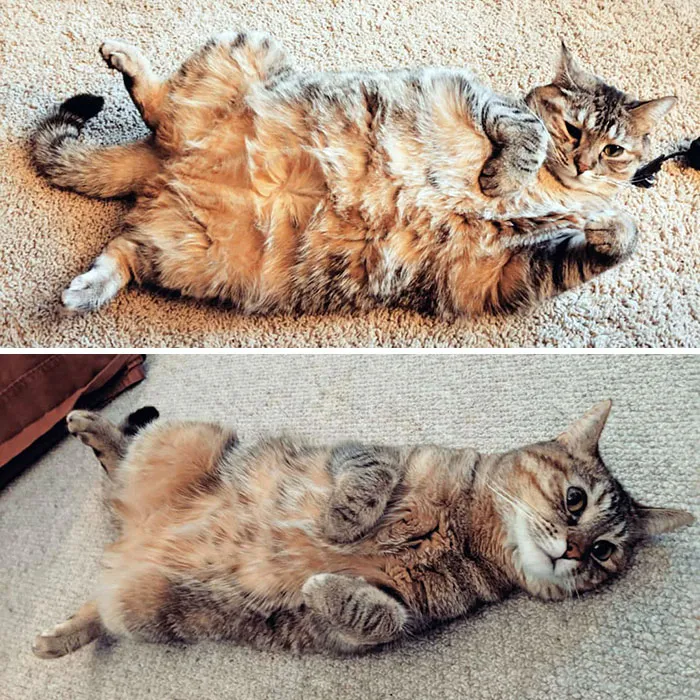
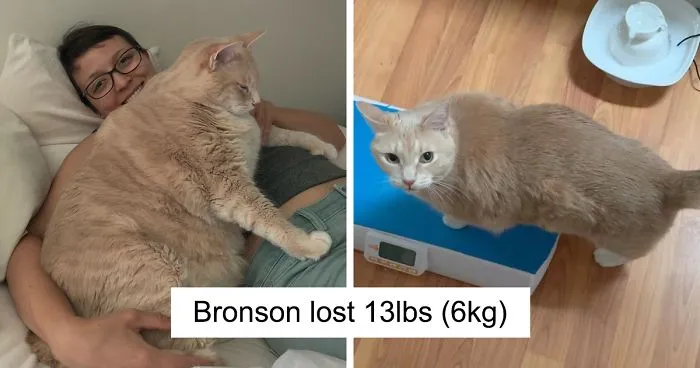

#2 Bronson's Journey To A Healthier Life. Adopted At 33 Lbs (15 Kg), Now He Weighs 19.9 Lbs (9 Kg)
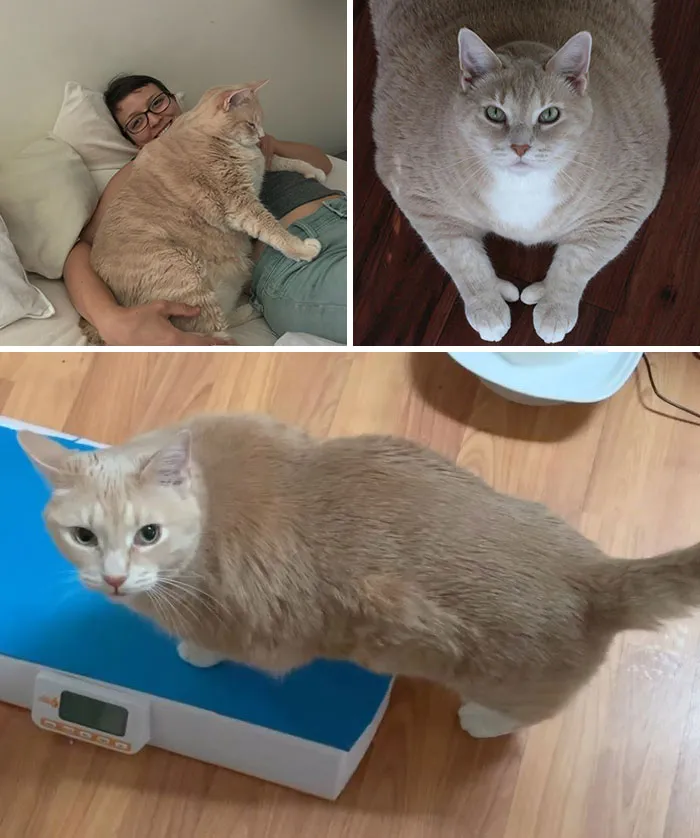
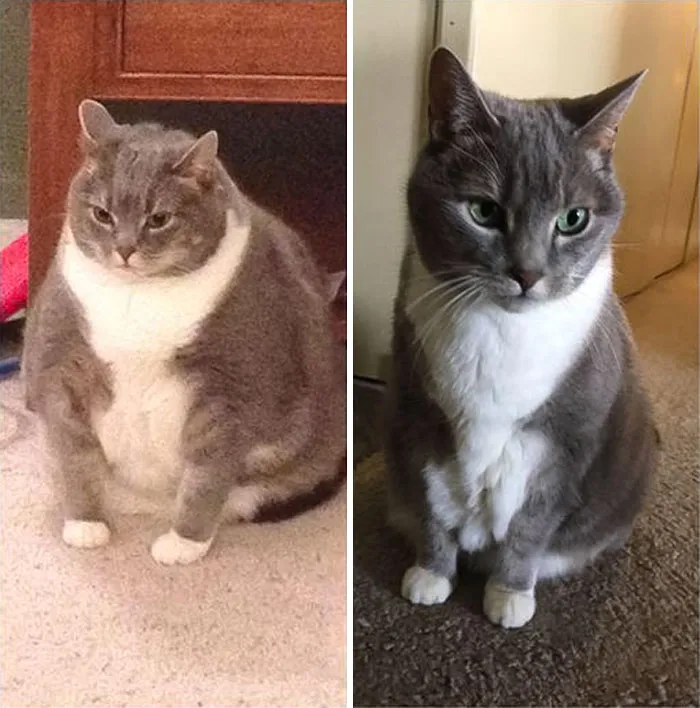
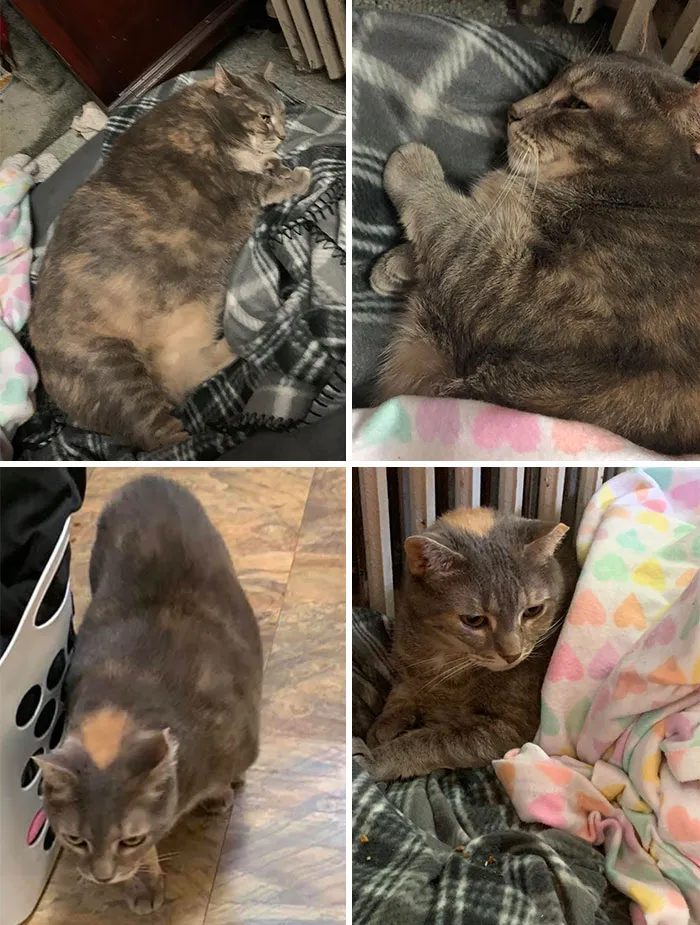
#3 Before - Fat, Dirty, Breathing Problems, And Unable To Clean Herself. Now - Blessed And Highly Favored
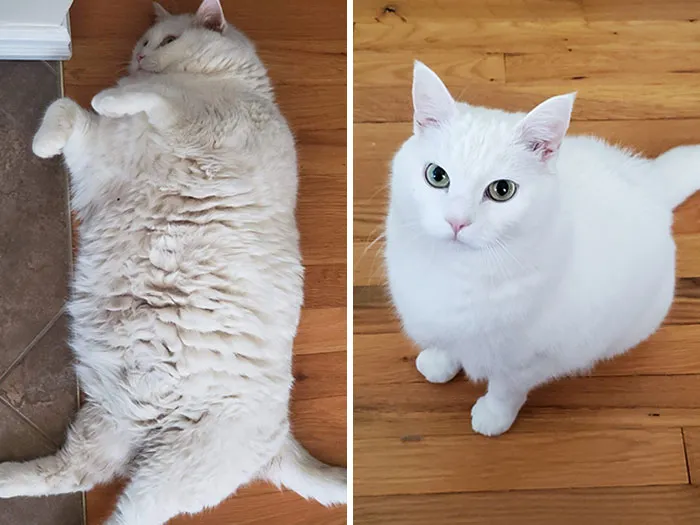
Dr. Ward told Bored Panda that around 90 percent of a cat’s weight loss is related to diet and only 10 percent has to do with physical activity. So it’s vital that you don’t overfeed your cat.
“That's why it's so important cat owners precisely feed the correct number of calories each day. I recommend having your veterinarian assess your cat's current Body Condition Score (BCS), setting target an ideal weight, and calculating the number of calories you should feed each meal,” the pet healthcare professional said.
“I strongly encourage cat owners to weigh the food using a kitchen scale. We've done experiments with cat owners and veterinary professionals and have consistently observed that using a measuring cup isn't as accurate as needed to achieve weight loss in many cases,” Dr. Ward said.
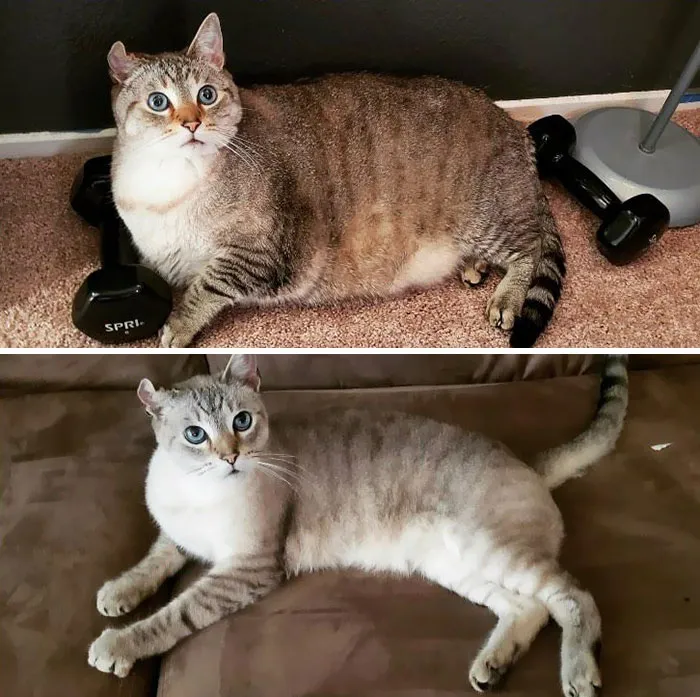
#5 From Almost 20 lbs To 14 lbs. He’s A Larger Cat Than Normal But Now He’s A Lean, Large Cat
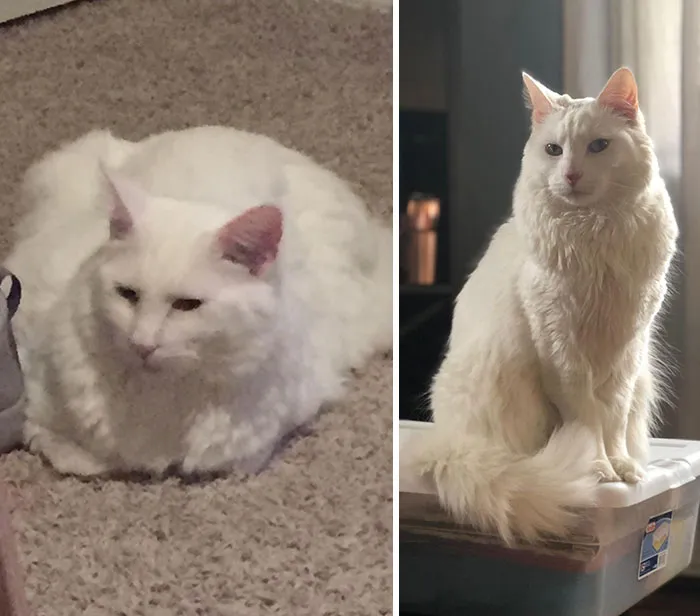
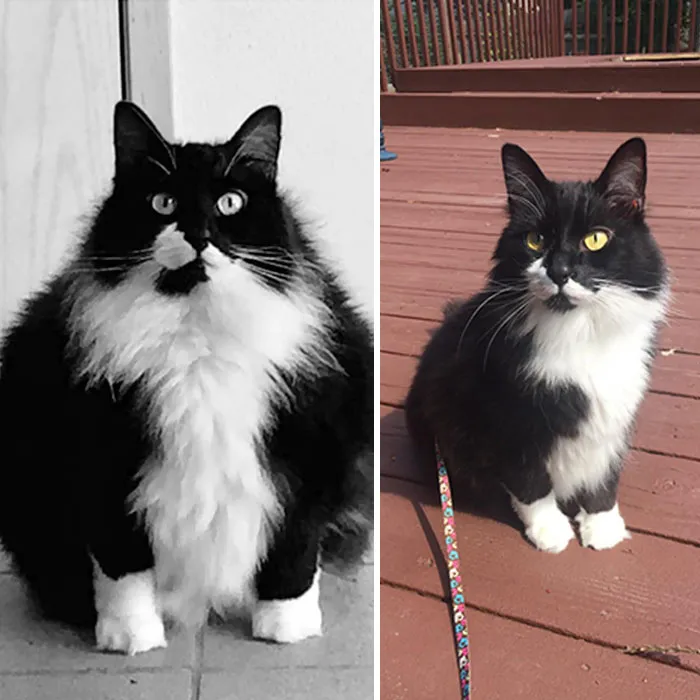
“Even feeding as few as ten extra kibbles each day can add up to a pound of weight gain in a year for a cat. Once you get the hang of it, weighing the food takes no more time than using a measuring cup. Finally, work with your vet to adjust the diet or calories every three months if your cat isn't losing weight.”
He continued: “I've seen too many cats who were being fed the same food for months without losing weight. When I ask them why, the pet parent shrugs, ‘I'm feeding the special food my vet prescribed.’ Weight loss is a journey with many unexpected turns and hills; you must stay alert and be willing to take a different path if you're not reaching your objective.”
Dr. Ward said that exercise for cats can be very simple. For example, all it takes are three 5-minute play sessions with a laser pointer, feather duster, or new cardboard box each day.
#7 Adopted This Cute Overweight Kitty, Put Him On A Diet And After A Few Years He Had Less Than Half The Weight Of When I First Got Him
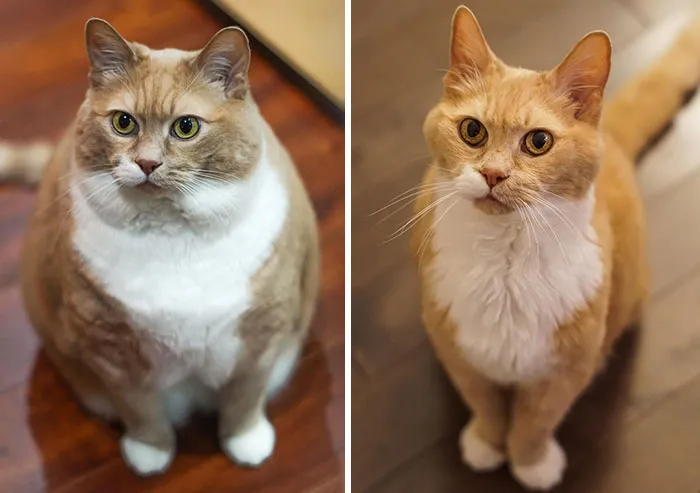
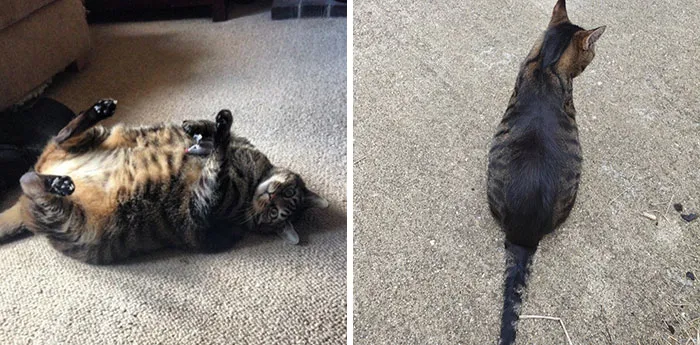
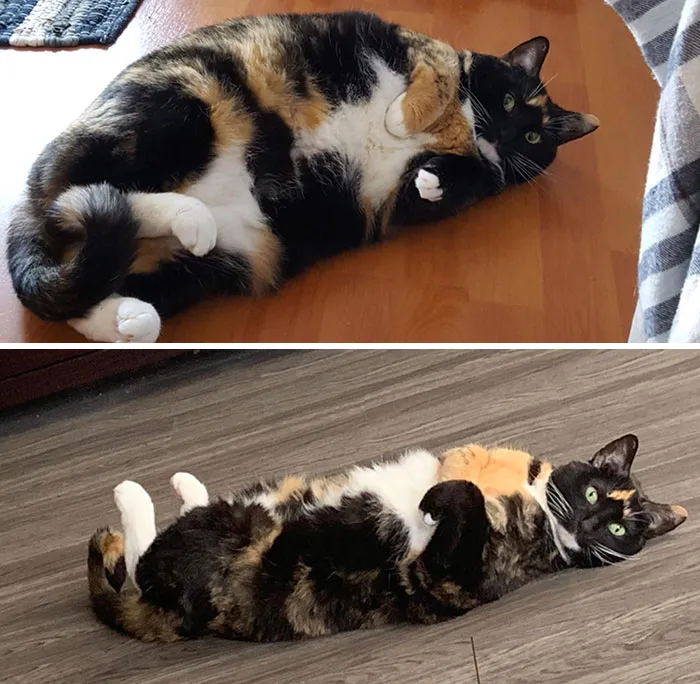
“I also like using ‘hunter feeders’ and food puzzles to engage a cat's ‘inner predator.’ Use vertical surfaces, climbing towers, and other perches to allow your cat to climb and ‘stalk’ as much as possible. Environmental enrichment and exercise are essential for emotional and behavioral health as well as maintaining a lean body mass.”
According to Dr. Ward, cats can safely lose 1 to 3 percent of their body mass each month, as long as they’re on a vet-supervised weight loss program. “That translates to my target weight loss of about a half-pound per month for most cats. If a cat loses too much weight too quickly or is fed too little, it can develop a life-threatening form of liver failure, so be sure to work closely with your veterinarian before beginning any diet program with your cat.”
#10 This Is Amy. She’s Been Living At The Shelter For Over A Year And No One Wanted Her Because She Has Weight Issues. But I Do As Well So We’re On A Diet Together
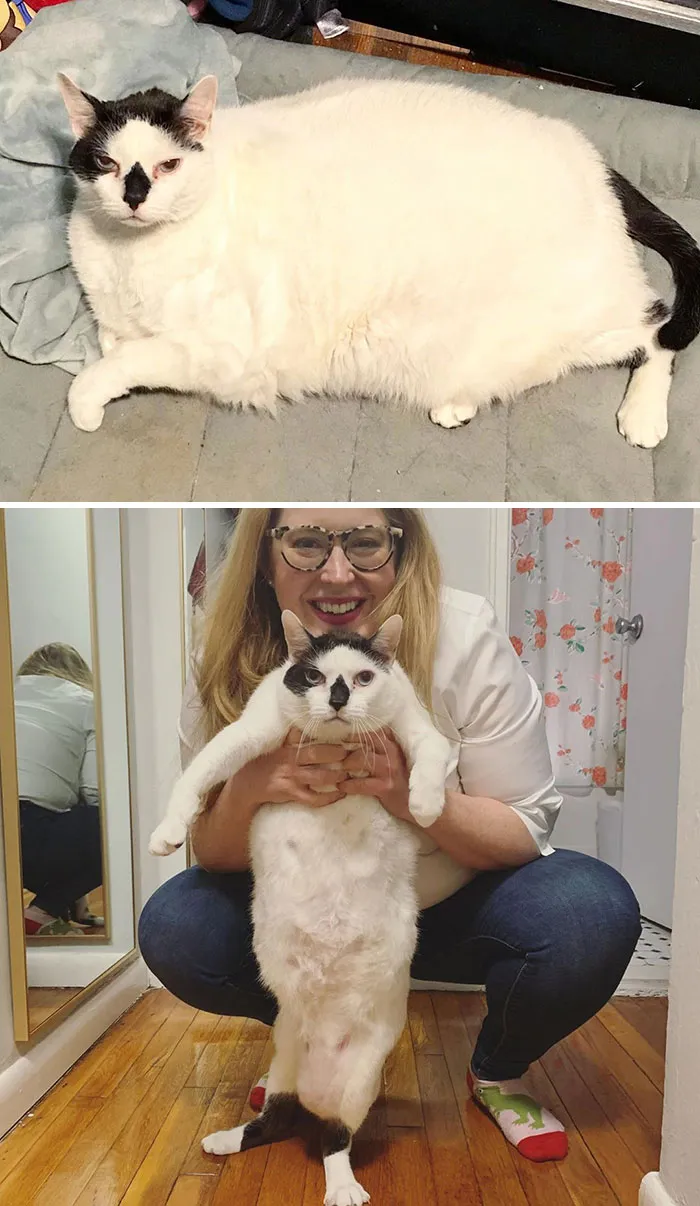
#11 Barsik Came From A Shelter At 41 lbs. He Is On A Vet-Supervised Diet And Losing Steadily
When Bored Panda reached out to PDSA, the UK’s leading vet charity, representatives of the organization told us about the negative effects of obesity, as well as how slowly cats ought to lose weight.
“Cats love to keep their coat clean. Overweight or obese cats often struggle to reach certain areas of their body which can lead to poor grooming and knots developing in their fur,” PDSA explained. “Cats carrying extra weight often lead a less active lifestyle which can lead to further weight gain and also can contribute to poor mental health.”
They continued: “Obesity in cats can also increase the risk of certain diseases such as diabetes, liver problems (such as a fatty liver), bladder problems, and breathing problems in some breeds. Excess weight on joints can contribute to the development of arthritis.”
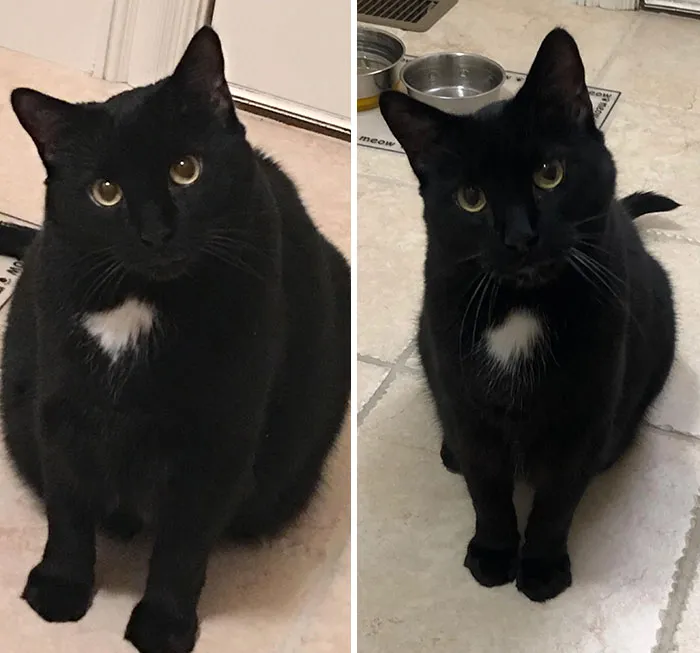
#13 Stan Has Successfully Dechonked At 10 Years Old. He’s Got A Long Life Ahead Of Him
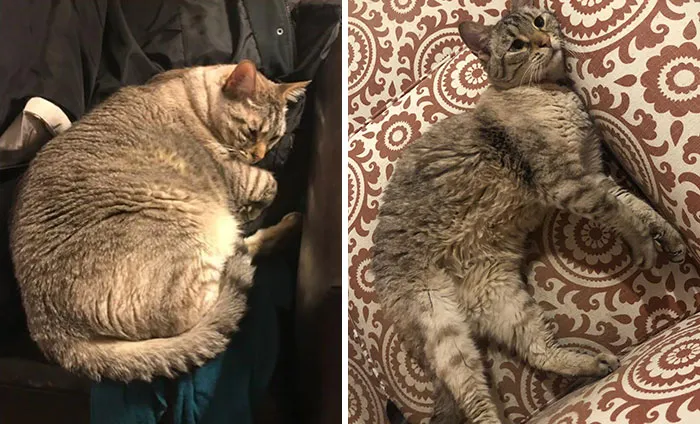
#14 Mister Weez Was Always My Big Chonk. After A Year Of Diet And Exercise, He’s Now My Small/Medium Chonk
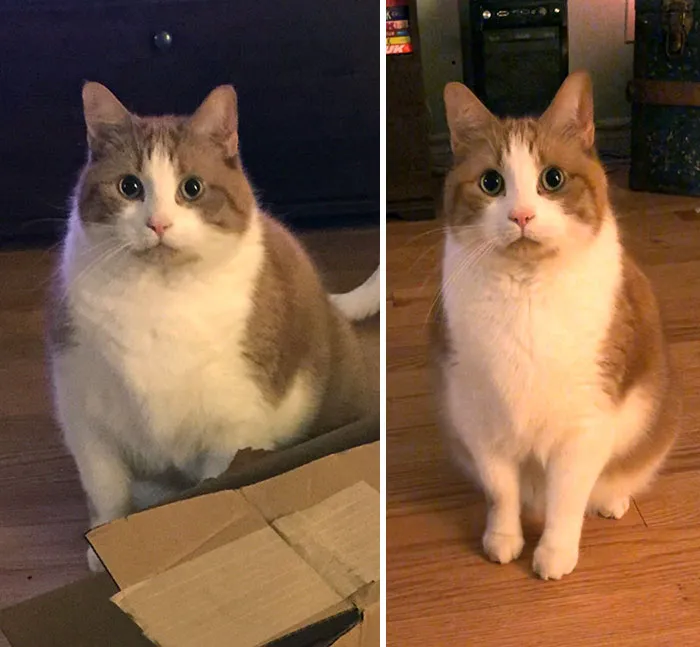
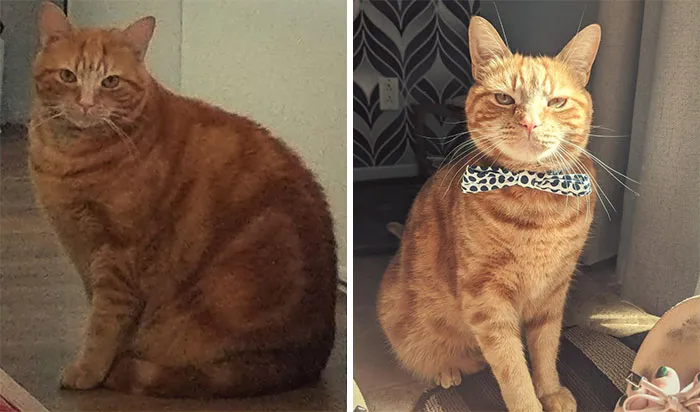
PDSA advises following your vet’s guidance when it comes to diet changes and going for a slow and steady weight loss program instead of one that’s rushed. “We don't want to starve our pets and quickly cutting back on their food can mean they are not eating enough nutrients to maintain a healthy balance which can be harmful,” the team over at PDSA commented.
“Set small, realistic goals which can help reach a bigger long term goal, take pictures and compare your cat against a body condition chart looking at:
1. Look at your cat from the side and from above. They should have a waist.
2. Feel under your cat’s tummy. It should curve in, not bulge out.
3. Feel along your cat’s side and back. You should be able to feel their ribs, spine, and hip bones quite easily but they shouldn’t stick out.
4. Feel the base of your cat’s tail where it meets the spine. There shouldn’t be a build-up of fat.”
For more info about keeping your pets healthy, check out PDSA’s Pet Health Hub right here.
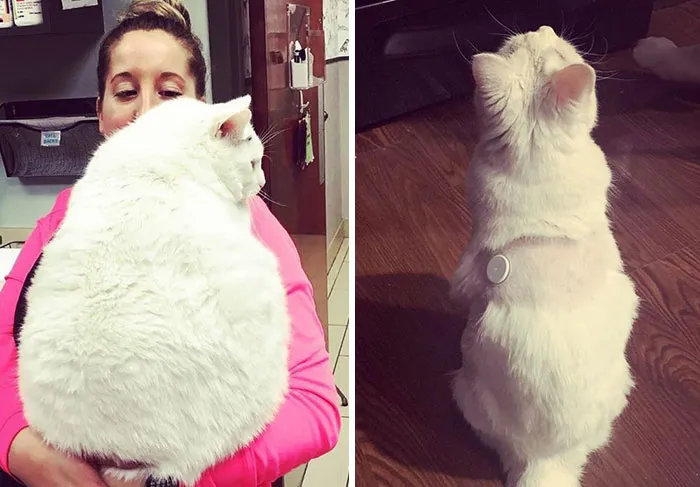
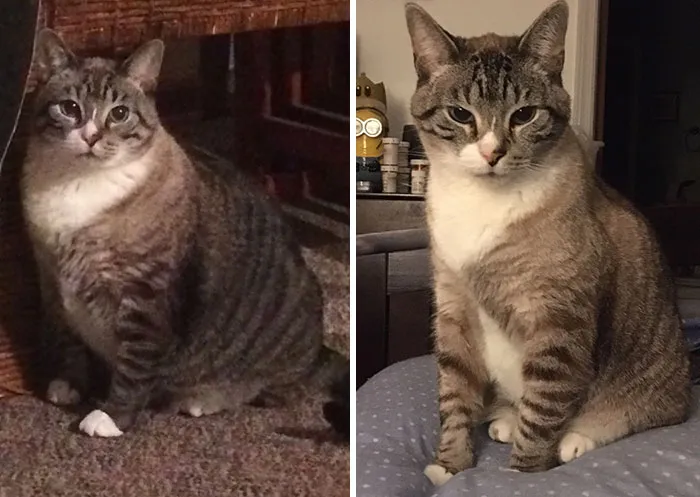
#18 My Senior Rescue Boy Went From Full Loaf To Slice Of Bread
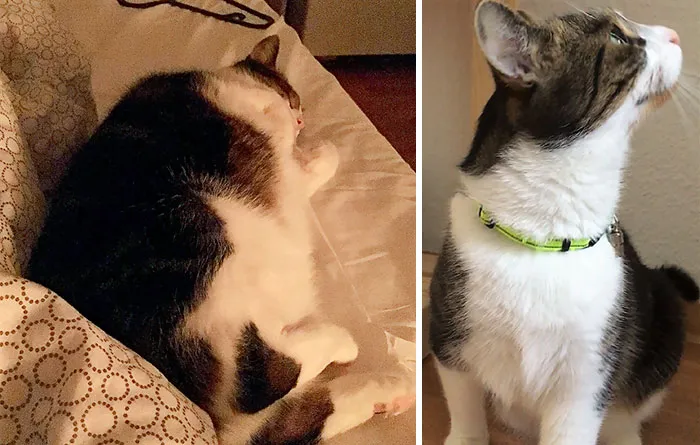
Currently, nearly 60 percent of all indoor cats in the United States are overweight. Carrying around a lot of excess weight has negative effects on your cat’s quality of life; they’re much happier and healthier when they’re sleek and slim. Obesity increases your cat’s risk of getting diabetes. The good news is that shedding the pounds can, in some cases, get rid of their diabetes completely.
Obese cats are also at risk of contracting feline lower urinary tract disease (aka FLUTD): losing weight, changing your cat’s diet, and helping it manage stress all help get rid of it. Meanwhile, fat cats are nearly 5 times more likely than lean felines to develop lameness.
All that extra weight can lead to a lot of other health issues. For example, fat tissue can be a source of constant inflammation throughout the body and this can lead to other diseases. All that fat tissue is also sending out stress-increasing hormones throughout your cat’s system. So even if your chonky catto seems fine, it’s best for it to drop a few pounds before real problems start showing up.
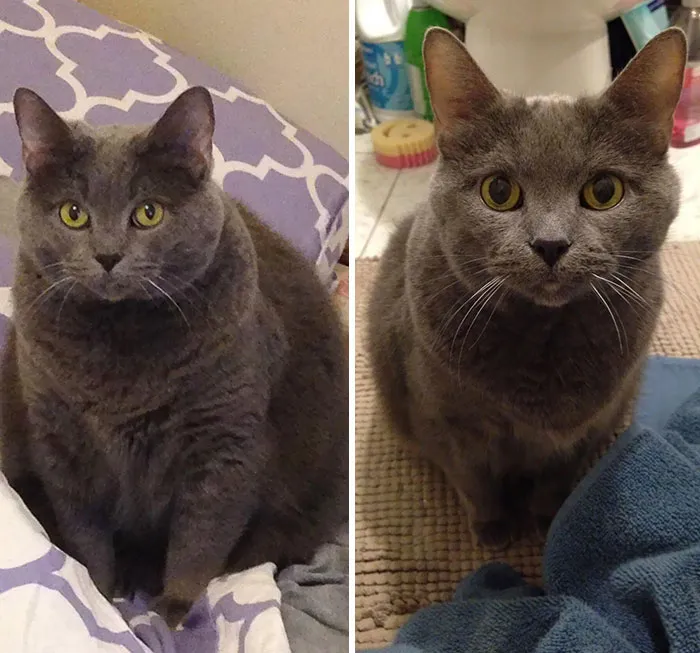
#20 So Two Years Ago The Vet Told Me Muffin Needed To Go On A Diet. Well Look At This Before And After Shot! I'm So Proud Of Her