

Learning happens wherever we happen to be. And though we absolutely love cozy old libraries, they’re not the only way to expand your knowledge about the world. Even social media, with the help of high-quality photos, can help with that.
That’s where the ‘History Archaeology People’ Facebook page comes in. It is a project that is dedicated to educating and entertaining the internet with some of the most powerful photos from ages past. We’ve collected some of the most interesting images to share with you, Pandas, from buildings and artifacts to statues and works of art. They might just give you a whole new perspective about the history of the human race.
#21
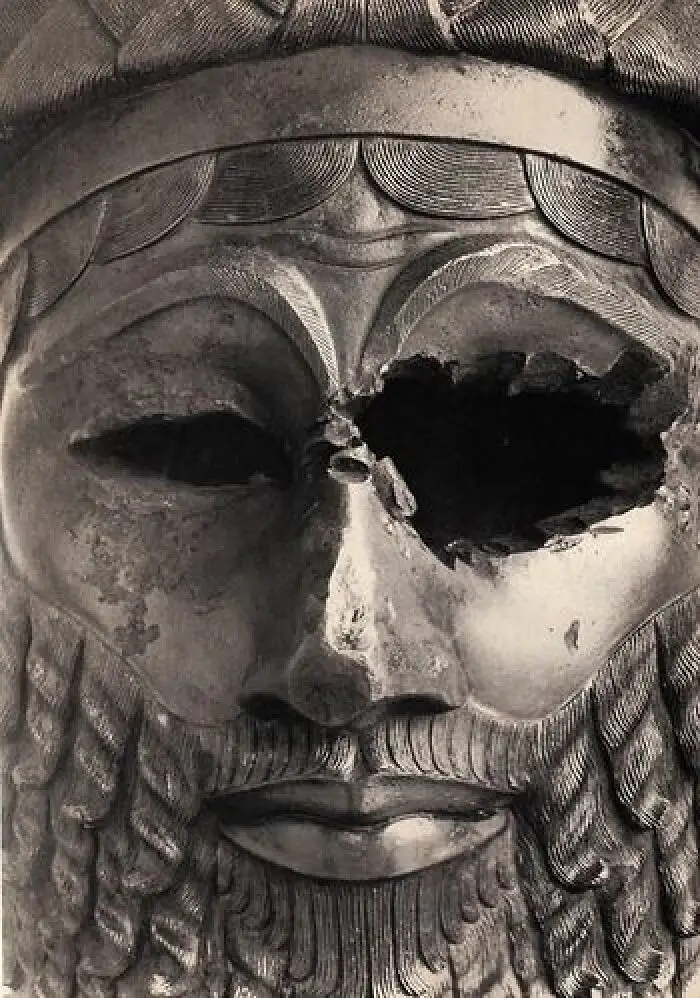
Bronze Head of King Sargon of Akkad, 2306 B.C
"The head of Sargon plainly has been mutilated. In addition to the severing of the head from its lost body, the image bears various marks of violence—the left eye socket has been gouged out, the nose has been flattened at the tip, the ears have been cut off, and the ends of the beard have been broken. Although it has been suggested that the eye socket was damaged by someone attempting to remove an inset of precious material, there is no evidence that the hole ever contained anything at all and, in any case, the other damage still demands explanation. The desecration of the royal portrait was almost certainly intentional and most likely an act of political iconoclasm, possibly carried out at the time of Nineveh’s fall to the Medes and Babylonians in the early seventh century BCE. The selective disfiguration of the head suggests that the goal was not to wipe away all presence of the royal figure, but rather to leave it in a state of defeat and humiliation."
94points
#22
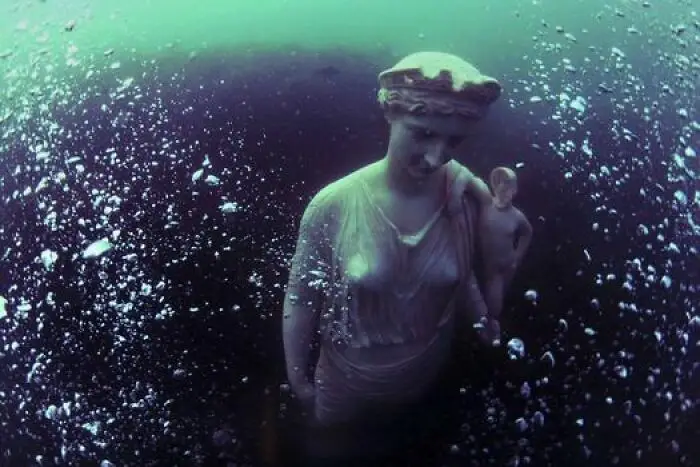
Submerged Statue of Baia City
Baia was an ancient Roman town situated on the northwest shore of the Gulf of Naples. It was a fashionable resort for centuries in antiquity, particularly towards the end of the Roman Republic, when it was reckoned as superior to Pompeii, Herculaneum and Capri by people rich who built luxurious villas here from 100 BC.
The lower part of the town later became submerged in the sea due to local volcanic seismic activity .
The lower part of the town later became submerged in the sea due to local volcanic seismic activity .
94points
#23
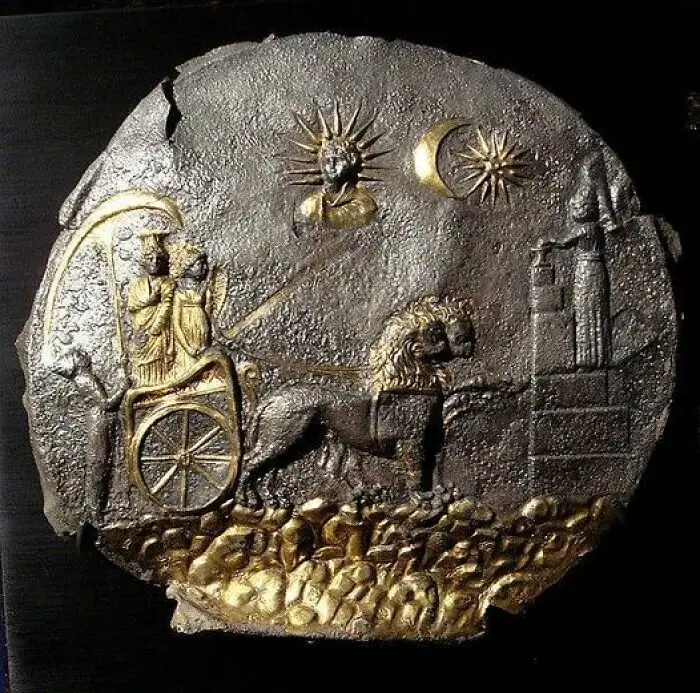
Greek traces in Asia.
A magnificent hybrid Greek and Oriental image.
Ceremonial Plaque depicting Cybele on her chariot, early 3rd century B.C.Afghanistan, Aï Khanum.
A magnificent hybrid Greek and Oriental image.
Ceremonial Plaque depicting Cybele on her chariot, early 3rd century B.C.Afghanistan, Aï Khanum.
One of the oldest antiquities found at Aï Khanum, this spectacular disk depicts Cybele, the goddess of nature, and Nike, the personification of Victory, on a chariot drawn by two lions through a mountainous landscape. It is a remarkable example of hybrid Greek and Oriental imagery that typified the arts of Hellenized Asia. Ancient Near Eastern features include: the parasol—a royal symbol—here held by a priest; the stepped altar; the shape of the chariot; the scalloped pattern indicating mountainous terrain; and the moon crescent and the star. The cult of Cybele originated in Anatolia but had long been adopted by the Greeks. Also borrowed from the Greek tradition are the representation of the winged Nike, the bust of the sun god Helios, and the naturalistic rendering of the drapery and the lions. The overall composition of the scene, however, lacking any indication of perspective, is more typical of Near Eastern art.
Materials & dimensions:
Gilded silver; D. 1/25–2/25 in. x Diam. 9 7/8 in. (1–2 mm x 25 cm)
National Museum of Afghanistan, Kabul, 04.42.7
Materials & dimensions:
Gilded silver; D. 1/25–2/25 in. x Diam. 9 7/8 in. (1–2 mm x 25 cm)
National Museum of Afghanistan, Kabul, 04.42.7
92points
#24
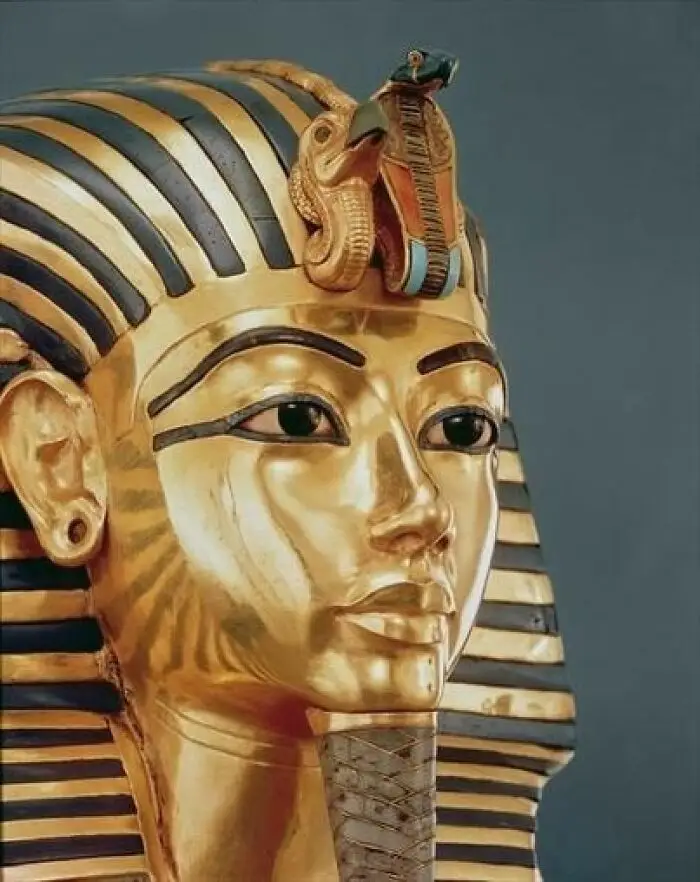
Mask of Tutankhamun,topped by the royal insignia of the “Two Ladies”.
92points
#25
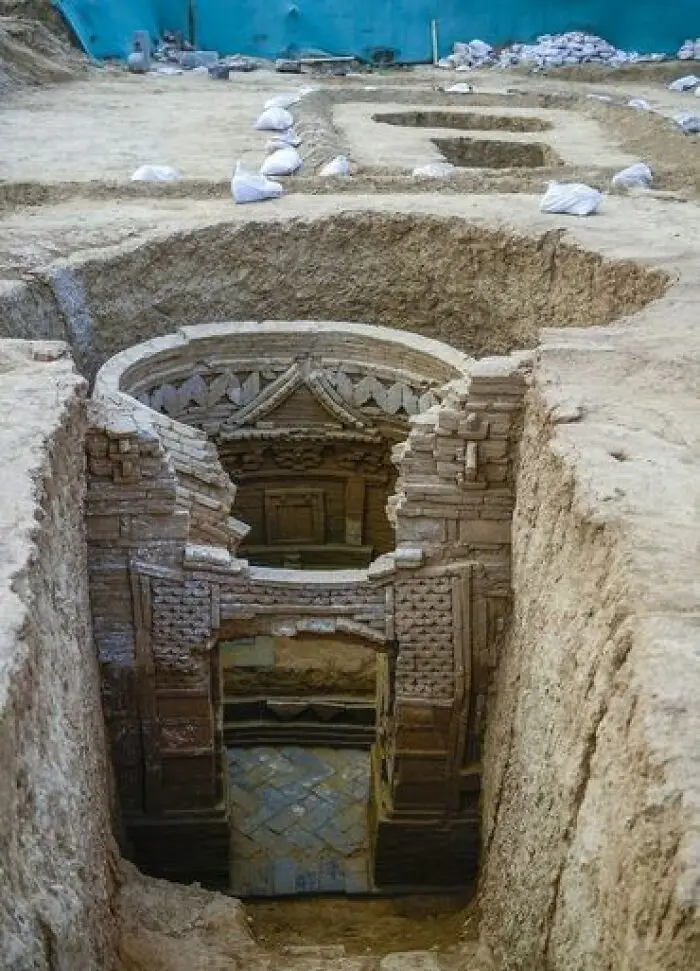
Archeo news.
A group of 12 Medieval Underground Tombs discovered in China. These beautiful structures to protect wealthy dead in afterlife, dating from Yuan Dynasty (1271-1368 CE) were discovered during archaeological research in Jinan, Shandong Province in eastern China.
89points
#26
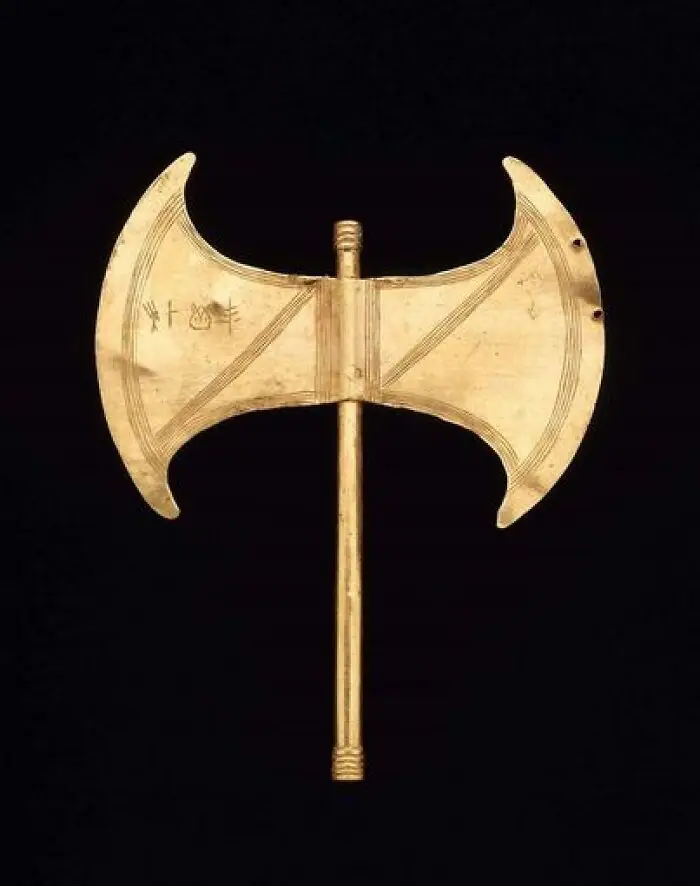
Votive double axe
Early Aegean, Minoan
About 1550–1500 B.C.
Dimensions: Length 9 cm ; width 8.3 cm .
Early Aegean, Minoan
About 1550–1500 B.C.
Dimensions: Length 9 cm ; width 8.3 cm .
Gold double axe composed of thin sheet gold mounted on a hollow gold shaft and outlined by bands of five incised lines. On left blade, inscription of four undeciphered signs . Two pierced holes on right blade.
The axe was deposited in a sacred cave as a votive offering.
The axe was deposited in a sacred cave as a votive offering.
82points
#27
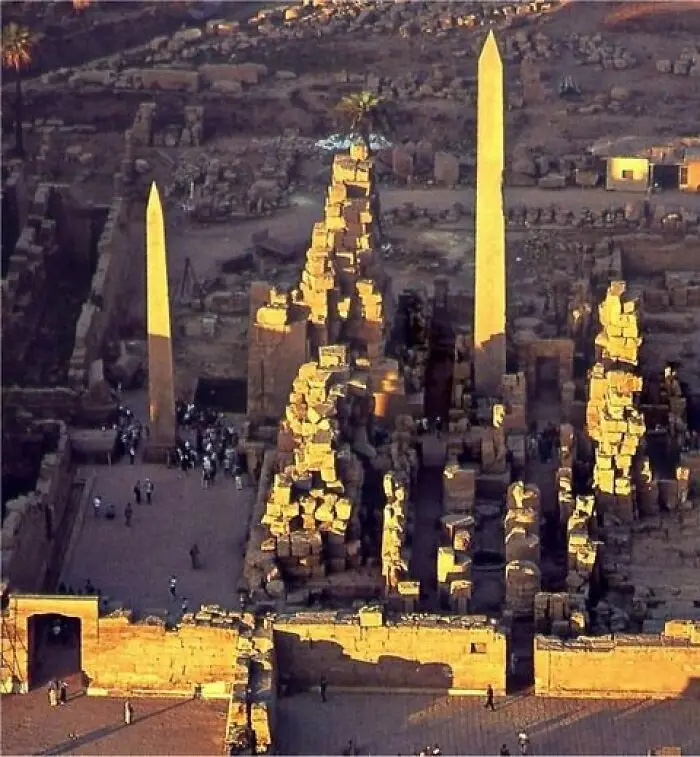
HATSHEPSUT (1507 A.C. – 1456 A.C. )
Karnak, Obelisk of nearly 30 meters high and 350 tons.
Karnak, Obelisk of nearly 30 meters high and 350 tons.
80points
#28
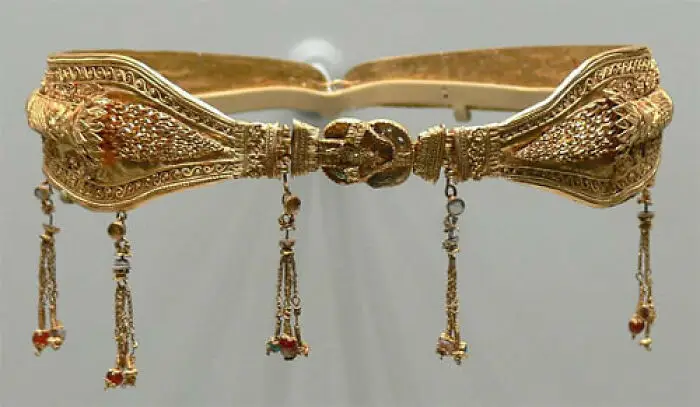
Magnificent ptolemaic Diadem (225–175 B.C.).
Part of Ptolemaic Jewelry Collection (16) - Getty Museum
Made in Egypt probably Alexandria.
Medium: Gold with various inlaid and attached stones, including garnet, cornelian, pearl, bone, moonstone, amethyst, emerald, and glass paste
This diadem has a cord allowing an fit and a Herakles knot clasp known for its apotropaic powers and its status as a symbol of fertility.
It seems possible that the original owner was a woman of the exclusive circle of dynastic princesses, who, ornamented in her golden finery, served the queen in one of the royal cults.
79points
#29
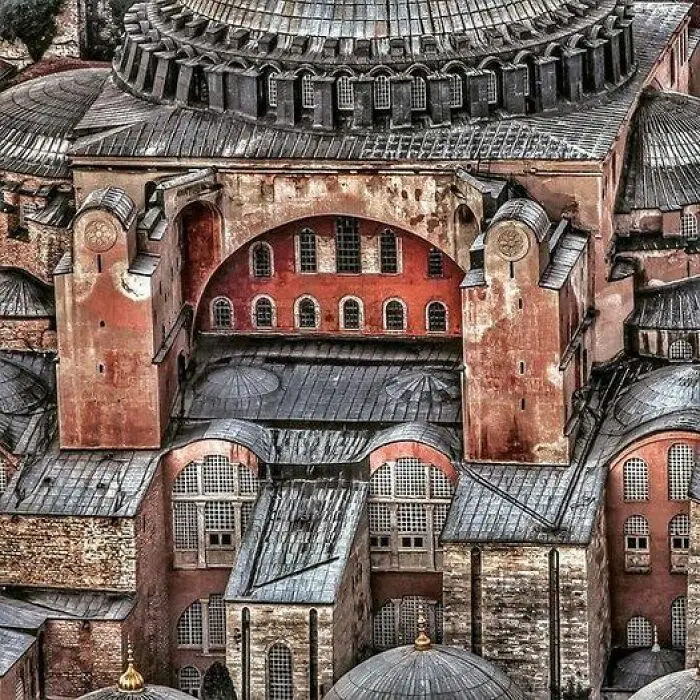
Hagia Sophia
The Hagia Sophia is an enormous architectural marvel in Istanbul, Turkey, that was originally built as a Christian basilica nearly 1,500 years ago.
The Hagia Sophia anchors the Old City of Istanbul and has served for centuries as a landmark for both Christians and Muslims, as its significance has shifted with that of the dominant culture in the Turkish city.
77points