



More than $850 million — that’s the estimated value of the legendary Mona Lisa painting. Nevertheless, one of the most famous paintings and an iconic Renaissance art piece is not for sale. Under French heritage law, an artwork declared priceless is prohibited from being bought or sold. Although you might not be able to take the painting home, you can still take a glimpse at the iconic smiling lady in the Louvre for less than the cost of a meal at Mickey D’s.
However, Leonardo Da Vinci, arguably one of the most famous portraitists who ever lived, isn’t the only face behind some of the best artworks of all time. Art and history fanatics, and just regular folks, really, must know other famous artists such as Michelangelo, Salvador Dalí, the geniuses behind some of the most famous still life paintings, Claude Monet and Vincent van Gogh, and many other talented painters who changed art history forever. Luckily, there is no need to be an art major to recognize some of their most famous paintings.
Below, we’ve compiled a list of famous artworks from some of the most brilliant artists who brought color to history. Famous watercolor paintings, lifelike portrait paintings, and the best of still life, you name it! There’s plenty to recall (or discover). We even threw some dark, even scary paintings into the mix! Take a look and let us know which famous artwork or painter is your favorite. Also, while it was our job to gather the most famous paintings, it’s now up to you to rank them. The more upvotes the artwork receives, the higher it will be on the list, so get upvoting your favorites!
#66 American Gothic by Grant Wood
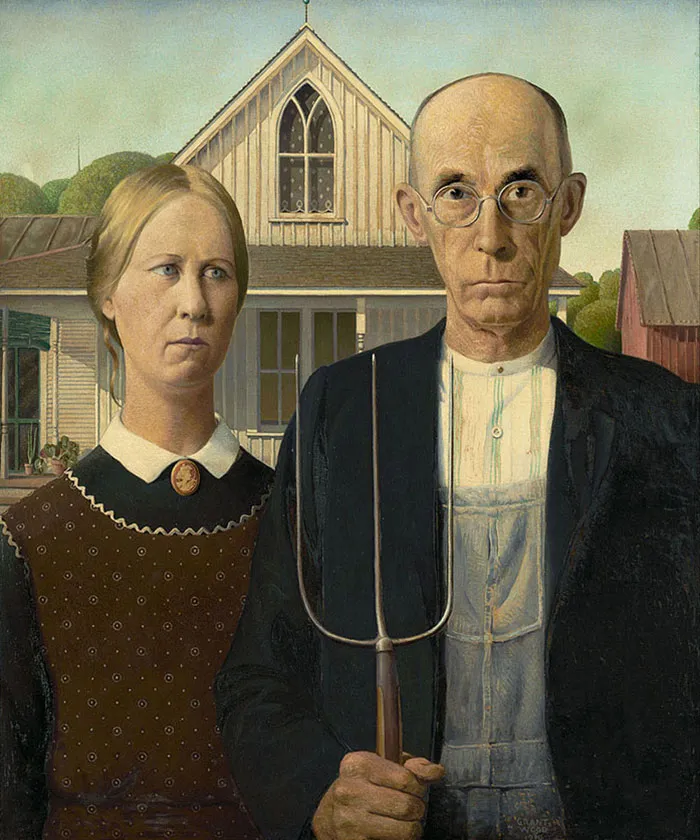
Artist: Grant Wood | Date Completed: 1930 | Period: Modernism
American painter Grant Wood is most recognized for his works that portray the American Midwest in its rural settings, one of which is the American Gothic, arguably one of the 20th century's most well-known works. When shown at the Art Institute of Chicago in 1930, the painting created an absolute stir with the public. It was rare in American art to portray brutal, cold realism and the subject's honest, straightforward, earthy nature. After finding two suitable models who were strangers to one another, Wood purposefully dressed them in vintage attire that he believed complemented this austere architectural style. The woman in the painting was actually Wood's sister, and the man was a local dentist. Wood seems to have stretched the windows and roof of the house and the subjects' faces to make them fit seamlessly within the painting. It may be that the picture feels particularly unsettling because of its peculiar distortion. The image has developed into one of American art's most well-known artistic icons due to its expressive portrait of the Midwest's diligent rural residents.
Report
9points
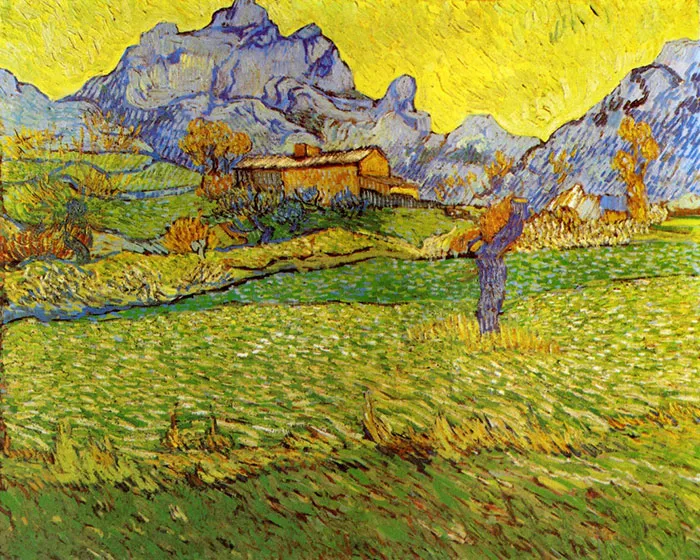
#67 A Meadow In The Mountains: Le Mas De Saint-Paul by Vincent van Gogh
Report
9points
#72 Lucretia by Rembrandt
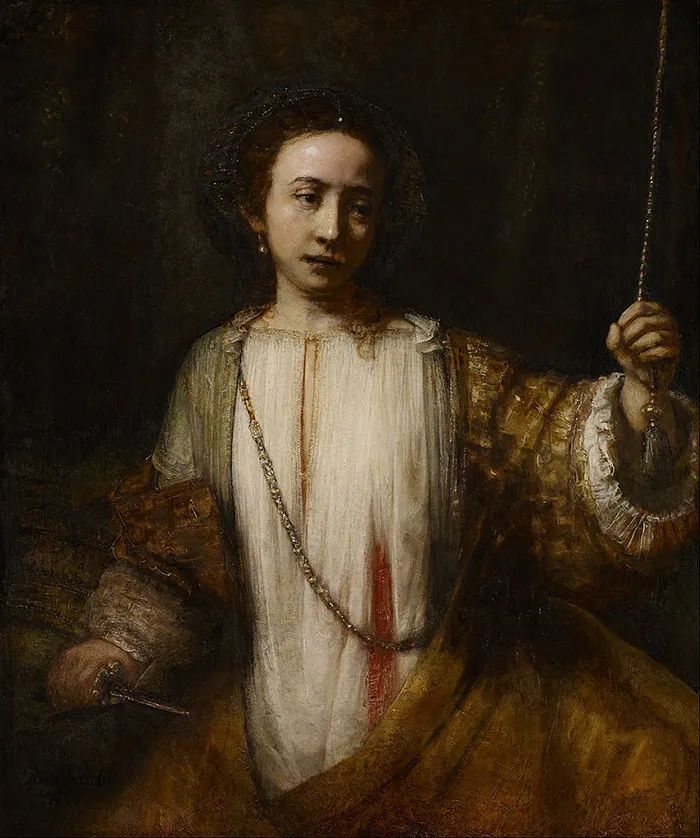
Artist: Rembrandt Van Rijn | Year (completed): 1666 | Periods: Baroque, Dutch Golden Age
Through Lucretia's melancholy and dejected expression, the bloodstains on her gown, and the dagger in her hand, Rembrandt conveys the story of Lucretia. Lucretia was a Roman nobleman's wife and was renowned for her virtue and devotion. Sextus Tarquinius, the tyrant's son, was enthralled by Lucretia's virtue and discreetly went to her house and was welcomed as an honorable guest. However, he turned on her by entering her chamber and sexually molesting her. Lucretia confessed the atrocity to her husband and father before taking her own life in front of them. At a time and place when a woman's perceived virtue was more valued than her life, she decided to end her life to avoid dishonor.
Report
9points
#74 Arnolfini Portrait by Jan van Eyck
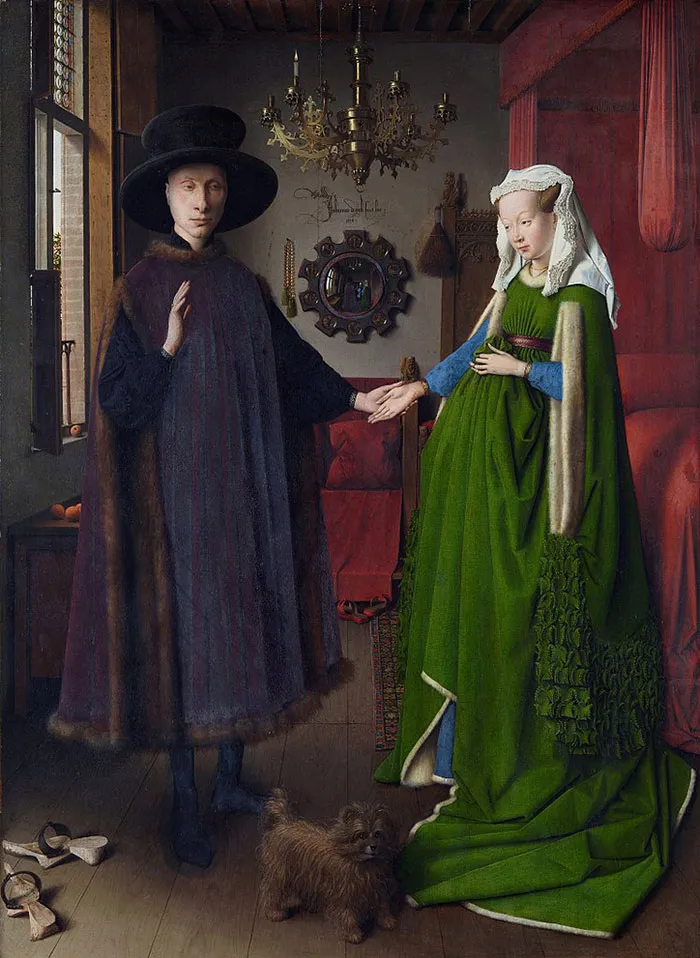
Artist: Jan Van Eyck | Year (completed): 1434 | Period: Northern Renaissance
At first glance, Jan van Eyck's Arnolfini Portrait looks like a detailed yet straightforward picture of a wealthy merchant and his bride. A second look, however, reveals a more captivating picture within this representation of the Arnolfini wedding. The setting where the Arnolfini betrothal is shown is cluttered with items that suggest wealth, have religious overtones, or are just odd. Although Giovanni Arnolfini and Costanza Trenta are presumed to be the couple in the Arnolfini wedding portrait, their identities are unknown. However, experts believe they were most likely wealthy members of the affluent Italian elite. The couple's matching gold and silver wrist bracelets and the elaborate beading on the edge of the woman's veil are just a few of the little, exquisite touches Van Eyck made sure to add. These not only demonstrated his gift for deft, delicate brushwork but also the obvious truth that the couple in the image was not only wealthy but also educated. They knew how to spend their money in a way that would reflect well on themselves.
Report
8points