




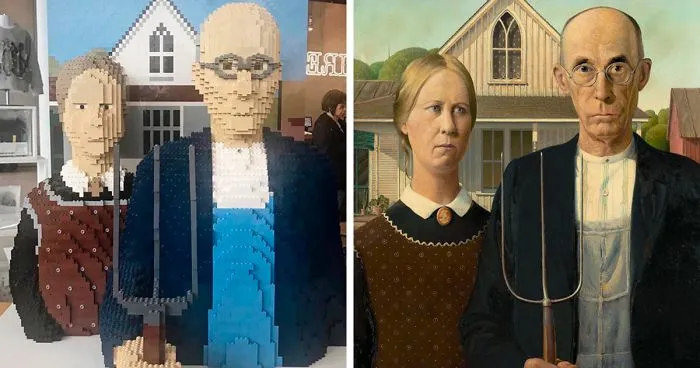

There's this weird correlation between LEGOs and life stages. If, at first, your only interest is to chew the blocks and smash them into one another, then later you actually start to build something out of them. After a while, your LEGO bricks are probably thrown into a dark corner of a closet, with only a few sneaky pieces left lying around for you to step on and swear loudly. Some years pass, and you suddenly remember your long-forgotten LEGO bricks, pull them out of the closet and start playing around, right when you thought you're fully grown-up and toys are not for you anymore. These people, though, took their revived love for LEGO creations a step further and re-did classical art pieces accurately only by using LEGOs.
By saying classical art and famous paintings we really are talking about the artworks of the greatest masters and not some doodles from when you were three. Not only is there the Great Wave Off Kanagawa and American Gothic, but also famous works of Gustav Klimt and even a life-size recreation of Michelangelo's David. The creation of which must've taken as much time as making the original statue. The dedication of it! Anyway, this mash-up of everyone's favorite building blocks and unique art is undoubtedly a hit.
Now, if we managed to arouse your curiosity and grab your attention, scroll down below and check these amazing LEGO builds for yourself. Don't forget to comment and vote for the most elaborate one!
#21 Eugène Delacroix's Liberty Leading The People
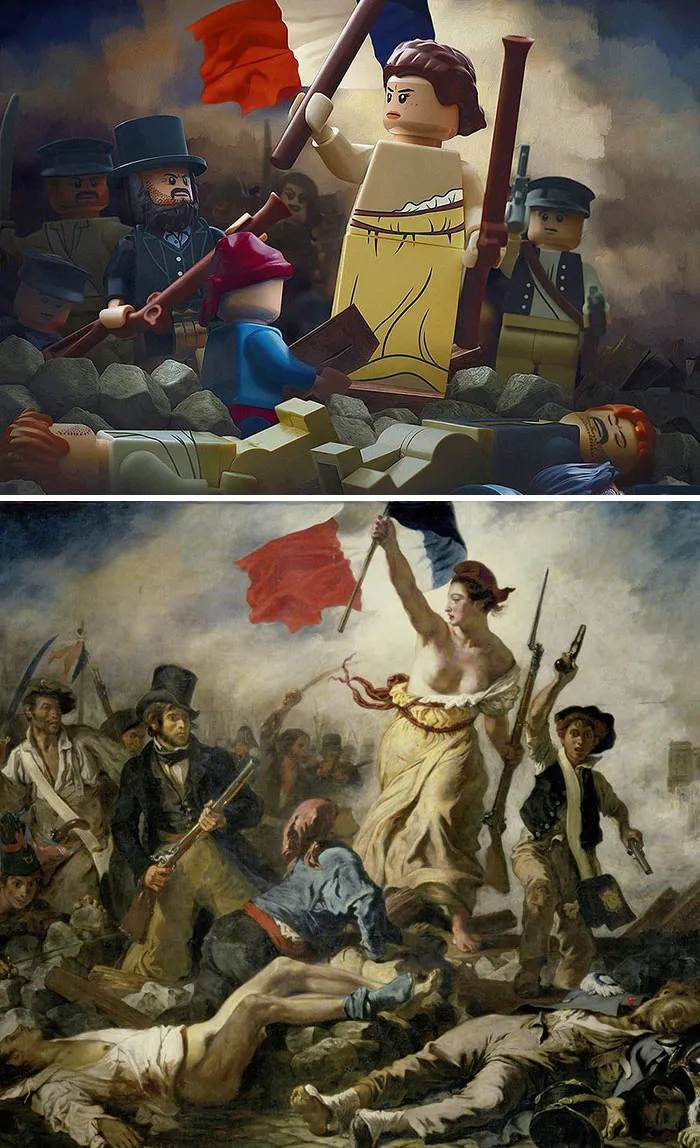
Liberty Leading the People is a painting by Eugène Delacroix commemorating the July Revolution of 1830, which toppled King Charles The Tenth of France. A woman of the people with a Phrygian cap personifying the concept of Liberty leads the crowd forward over a barricade and the bodies of the fallen, holding the flag of the French Revolution – the tricolour, which again became France's national flag after these events – in one hand and brandishing a bayonetted musket with the other. The figure of Liberty is also viewed as a symbol of France and the French Republic known as Marianne
Report
27points
#22 Auguste Rodin's The Thinker
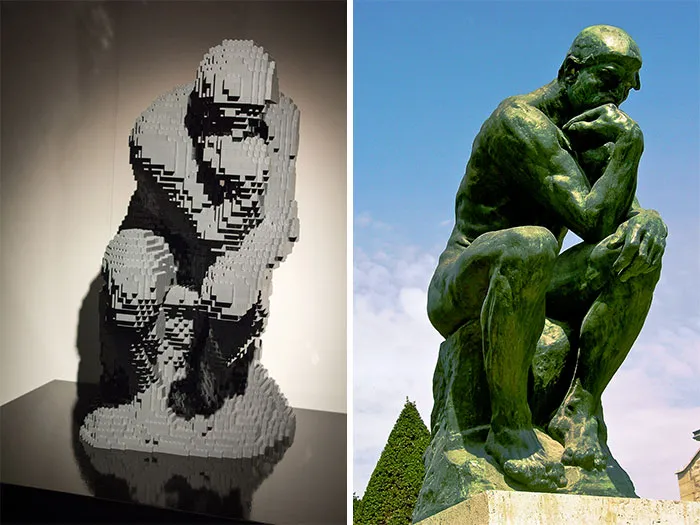
The Thinker is a bronze sculpture by Auguste Rodin, usually placed on a stone pedestal. The work shows a nude male figure of over life-size sitting on a rock with his chin resting on one hand as though deep in thought, often used as an image to represent philosophy. Rodin first conceived the figure as part of his work The Gates of Hell commissioned in 1880, but the first of the familiar monumental bronze castings did not appear until 1904
Report
26points
#23 Mount Rushmore National Memorial
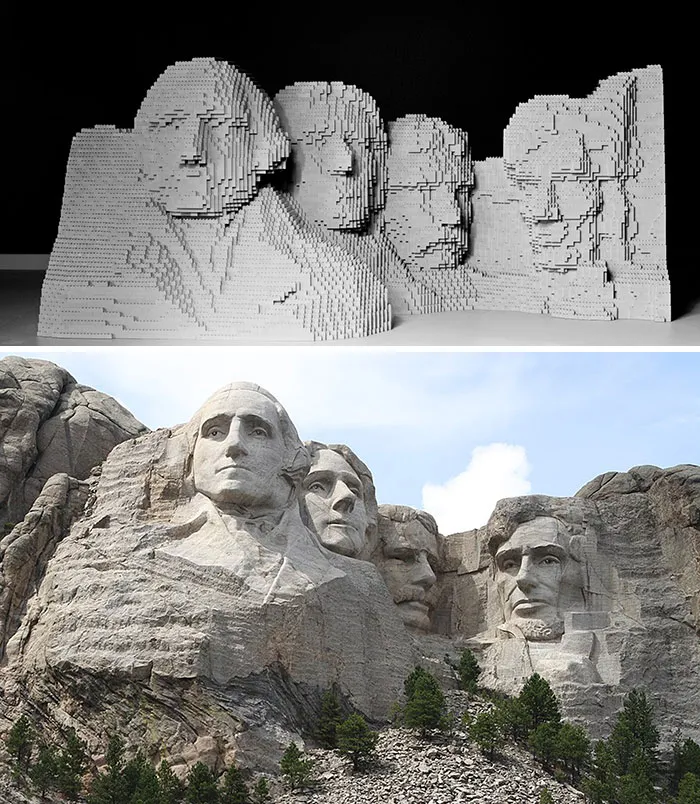
Mount Rushmore National Memorial is centered around a sculpture carved into the granite face of Mount Rushmore in the Black Hills in Keystone, South Dakota. Sculptor Gutzon Borglum created the sculpture's design and oversaw the project's execution from 1927 to 1941 with the help of his son Lincoln Borglum. The statue features the 60-foot (18 m) heads of Presidents George Washington, Thomas Jefferson, Theodore Roosevelt, and Abraham Lincoln. The four presidents were chosen, respectively, to represent the birth, the growth, the development, and the preservation of the United States
Report
26points
#24 Edward Hopper's Rooms By The Sea
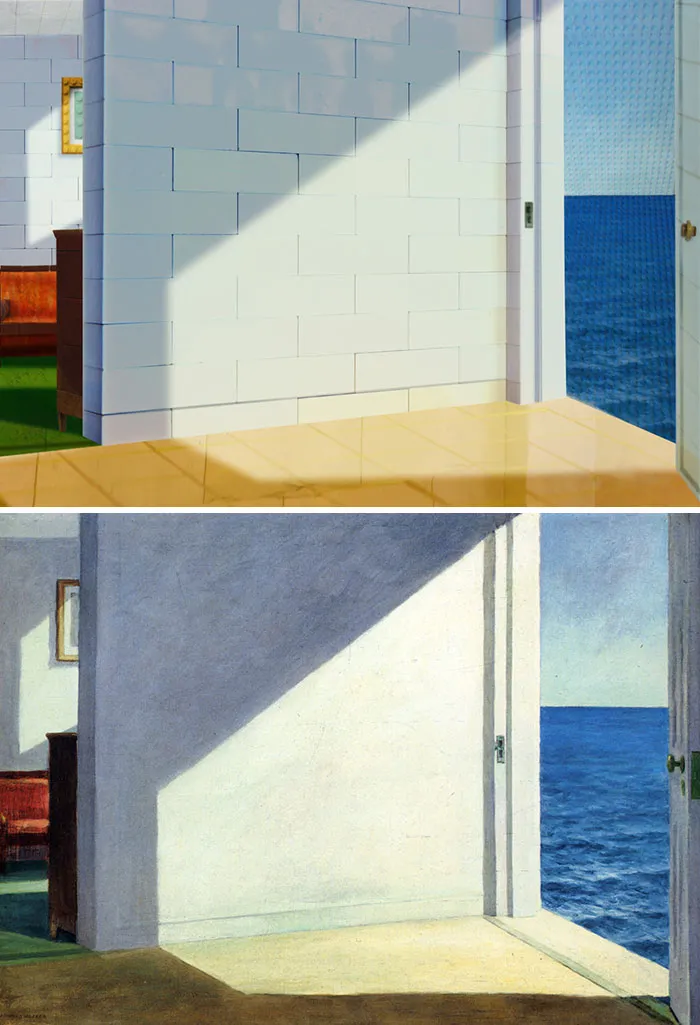
Rooms by the Sea, 1951 by Edward Hopper. Hopper first began painting the effects of sunlight as a young art student in Paris, and this interest continued throughout his career. This painting is based on the view out the back door of his studio. Titled in his record book "Rooms by the Sea. Alias The Jumping Off Place," Hopper noted that the second title was perceived by some to have "malign overtones" and he thus deleted it. While the view from the studio suggested the composition of Rooms by the Sea, the image is more an evocative metaphor of silence and solitude than the transcription of an actual scene
Report
25points
#25 LEGO Napoleon Crossing The Alps
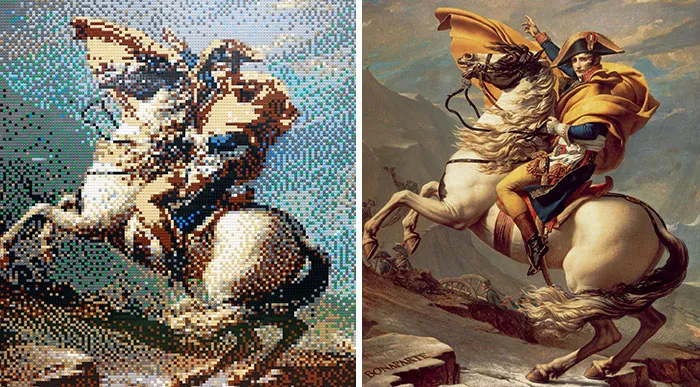
Napoleon Crossing the Alps is the title given to the five versions of an oil on canvas equestrian portrait of Napoleon Bonaparte painted by the French artist Jacques-Louis David between 1801 and 1805
24points
#26 Jacques-Louis David's The Death Of Marat
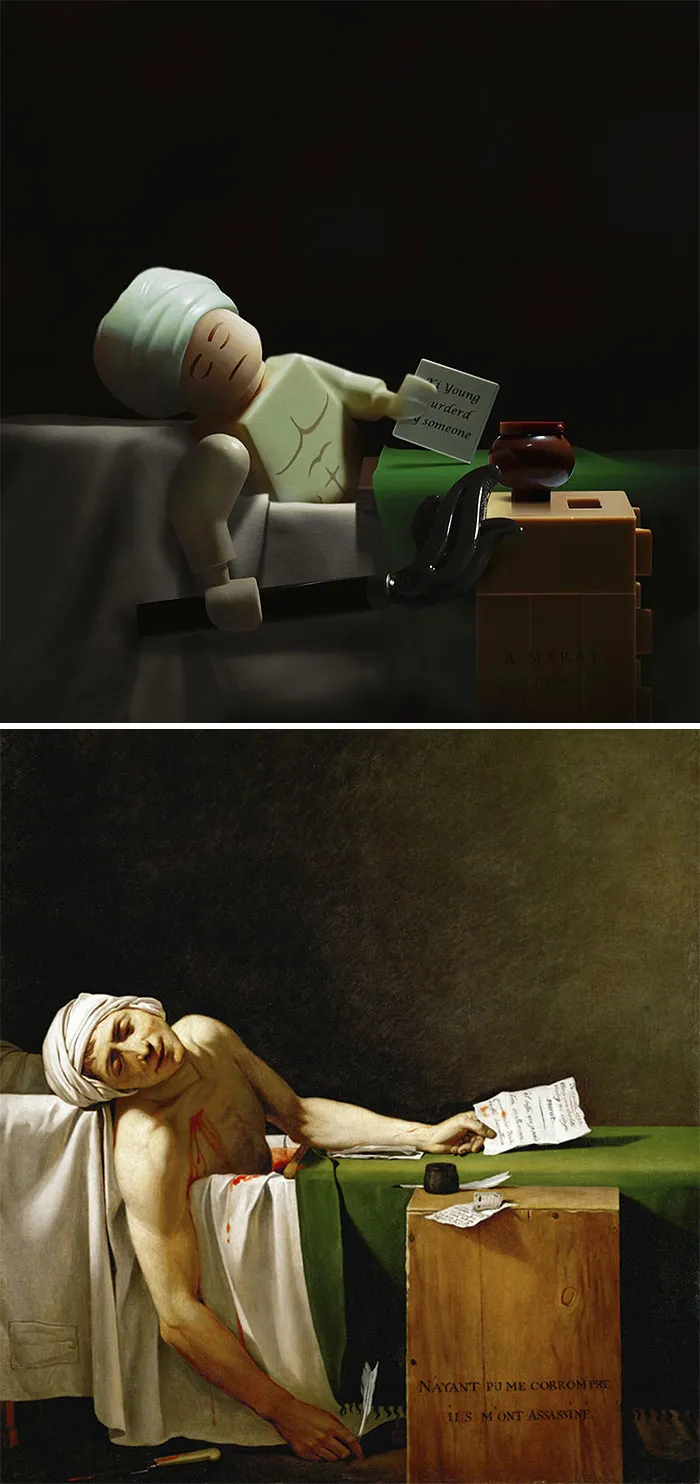
The Death of Marat is a 1793 painting by Jacques-Louis David of the murdered French revolutionary leader Jean-Paul Marat. It is one of the most famous images of the French Revolution. David was the leading French painter, as well as a Montagnard and a member of the Revolutionary Committee of General Security. The painting shows the radical journalist lying dead in his bath on July 13, 1793, after his murder by Charlotte Corday
Report
24points
#27 Unknown Artist's Alexander Mosaic (Battle Of Issus)
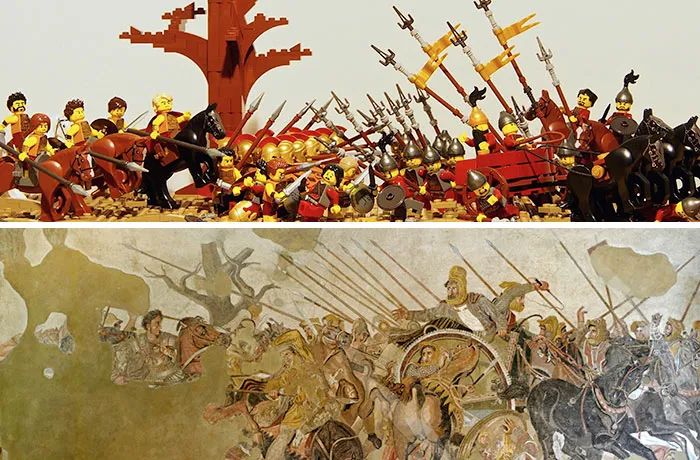
The Alexander Mosaic, dating from circa 100 BC, is a Roman floor mosaic originally from the House of the Faun in Pompeii. It depicts a battle between the armies of Alexander the Great and Darius III of Persia. The mosaic is believed to be a copy of an early 3rd-century BC Hellenistic painting
Report
24points
#28 Claude Monet's Sunset In Venice By Nathan Sawaya
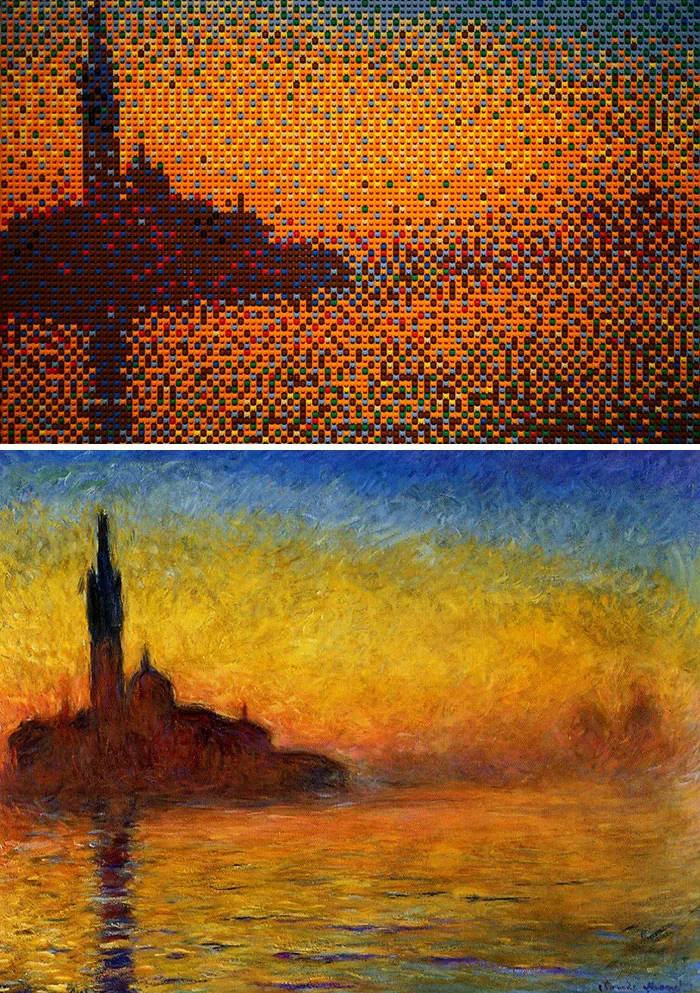
Though less well known than his paintings Haystacks or Water lilies, Claude Monet's oil on canvas painting, Sunset in Venice, is one of the thirty-seven paintings which the artist began during a trip to Venice in 1908. Also known by the titles, Dusk in Venice and San Giorgio Maggiore by Twilight, this oil on canvas is one of a series of paintings by Monet capturing the view of the island and monastery of San Giorgio Maggiore from Venice
Report
23points
#29 Van Gogh's Self Portrait
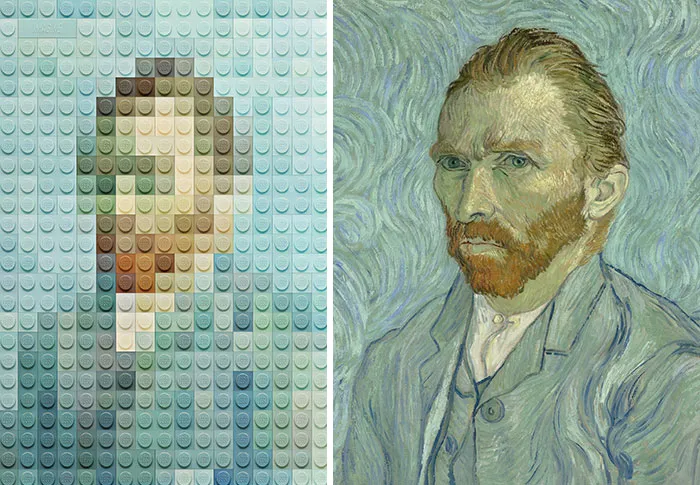
The self-portrait is an 1889 oil on canvas painting by the post-impressionist artist Vincent van Gogh. The picture, which may have been van Gogh's last self-portrait, was painted in September that year, shortly before he left Saint-Rémy-de-Provence in southern France
Report
23points
#30 René Magritte's The Son Of Man
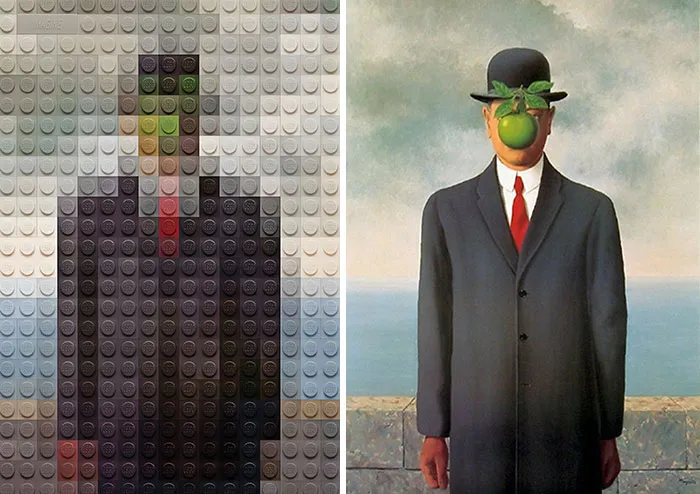
The Son of Man is a 1964 painting by the Belgian surrealist painter René Magritte. It is perhaps his most well-known artwork. Magritte painted it as a self-portrait. The picture consists of a man in an overcoat and a bowler hat standing in front of a low wall, beyond which are the sea and a cloudy sky. The man's face is mostly obscured by a hovering green apple. However, the man's eyes can be seen peeking over the edge of the apple. Another subtle feature is that the man's left arm appears to bend backward at the elbow
Report
20points
#31 Leonardo Da Vinci's Vitruvian Man
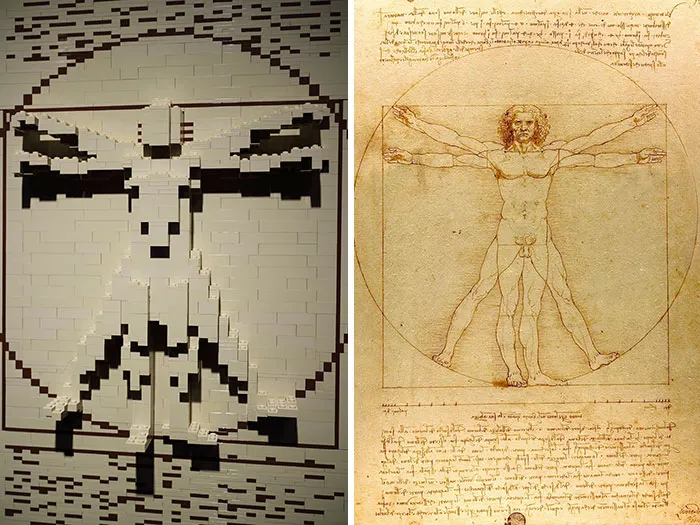
The Vitruvian Man is a drawing made by the Italian polymath Leonardo da Vinci around 1490. It is accompanied by notes based on the work of the architect Vitruvius. The illustration, which is in ink on paper, depicts a man in two superimposed positions with his arms and legs apart and inscribed in a circle and square. The drawing and text are sometimes called the Canon of Proportions or, less often, Proportions of Man. Like most works on paper, it is displayed to the public only occasionally. The drawing is based on the correlations of ideal human body proportions with geometry described by the ancient Roman architect Vitruvius in Book III of his Treatise De Architectura. Vitruvius described the human figure as being the principal source of proportion among the classical orders of architecture. Vitruvius determined that the ideal body should be eight heads high. Leonardo's drawing is traditionally named in honor of the architect
Report
16points
#32 Leonardo Da Vinci's Lady With An Ermine
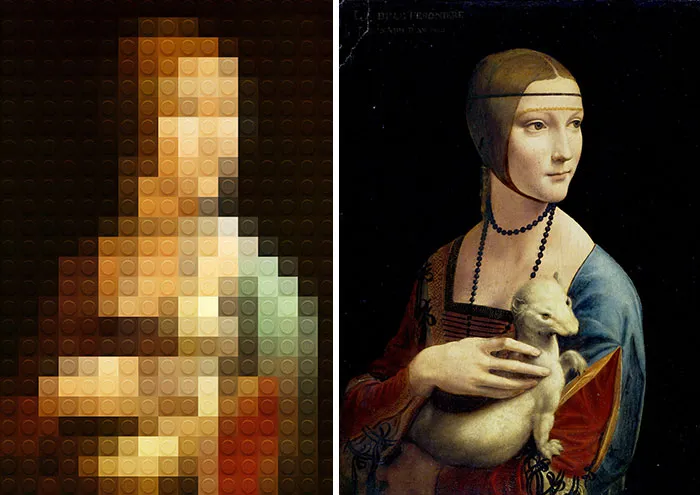
Lady with an Ermine is a painting by Italian artist Leonardo da Vinci from around 1489–1490 and one of Poland's national treasures. The portrait's subject is Cecilia Gallerani, painted at a time when she was the mistress of Ludovico Sforza, Duke of Milan, and Leonardo was in the Duke's service. It is one of only four portraits of women painted by Leonardo
Report
15points
#33 Salvador Dali's The Persistence Of Memory
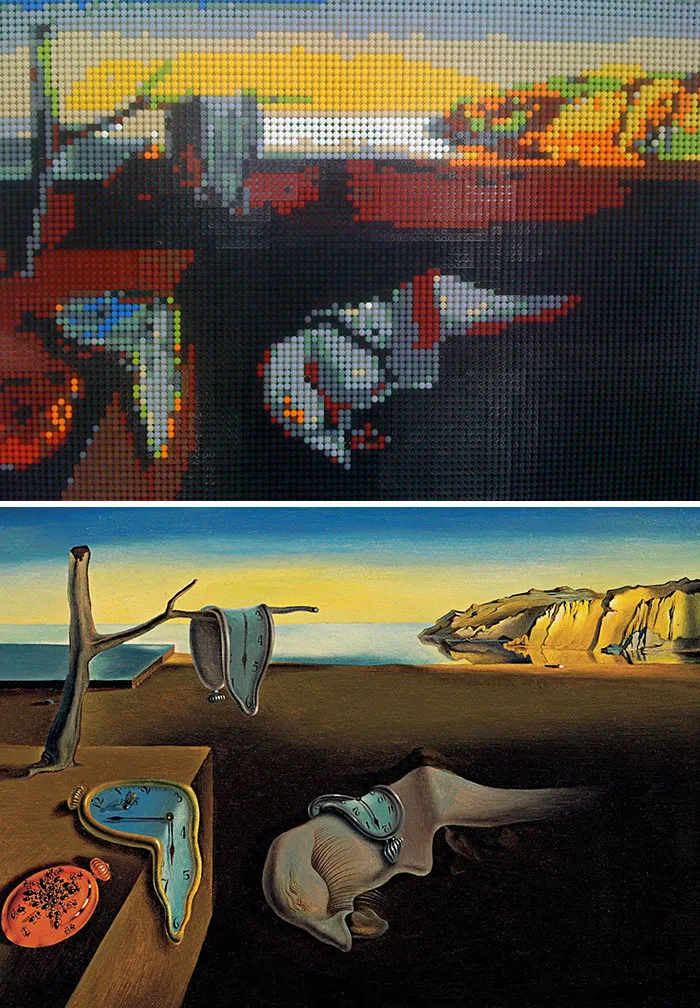
The Persistence of Memory is a 1931 painting by artist Salvador Dalí, and one of his most recognizable works. First shown at the Julien Levy Gallery in 1932, since 1934 the picture has been in the collection of the Museum of Modern Art in New York City, which received it from an anonymous donor. It is widely recognized and frequently referenced in popular culture, and sometimes referred to by more descriptive (though incorrect) titles, such as "Melting Clocks," "The Soft Watches" or "The Melting Watches"
Report
14points
#34 Edward Hopper's Morning Sun
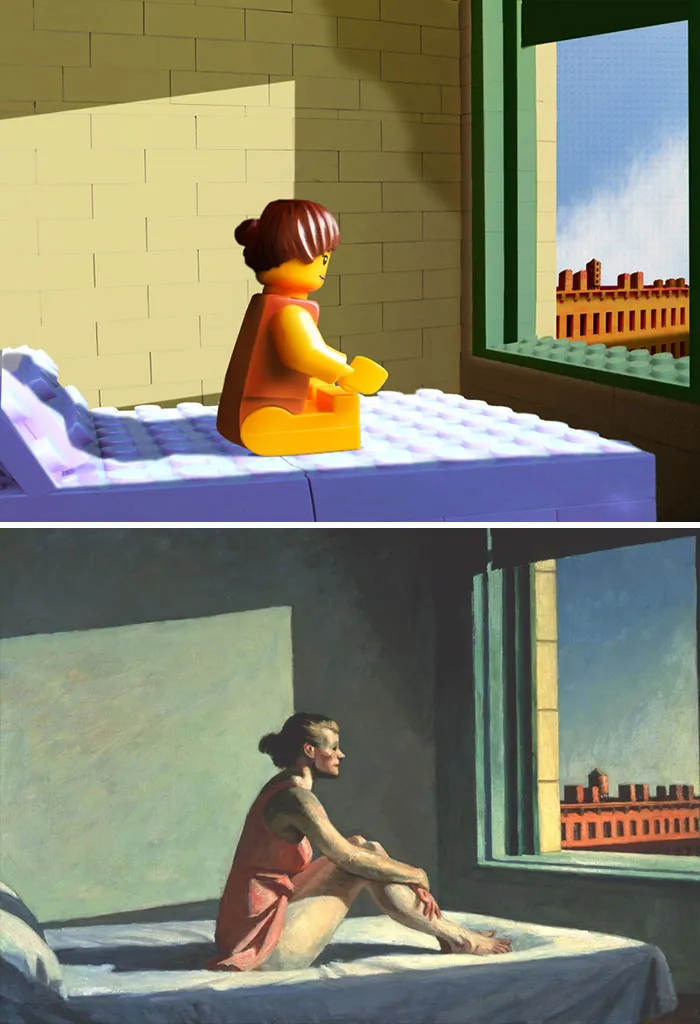
Edward Hopper was one of the early American artists to paint the experience of human isolation in the modern city. In Morning Sun, the woman - modeled after Hopper's wife, Jo - faces the sun impassively and seemingly lost in thought. Her visible right eye appears sightless, emphasizing her isolation. The bare wall and the elevation of the room above the street also suggest the bleakness and solitude of impersonal urban life
Report
14points
#35 James Mcneill Whistler's Arrangement In Grey And Black No.1, Known As Whistler's Mother
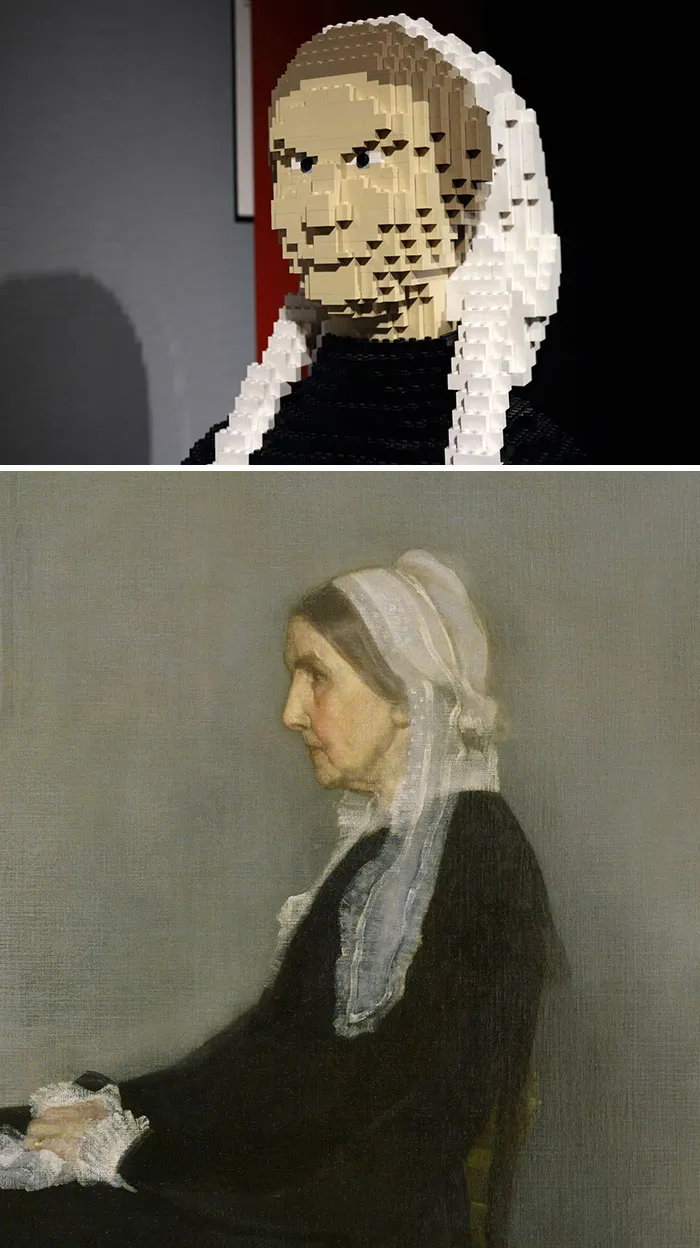
Arrangement in Grey and Black No.1, best known under its colloquial name Whistler's Mother, is a painting in oils on canvas created by the American-born painter James McNeill Whistler in 1871. The subject of the picture is Whistler's mother, Anna McNeill Whistler. The painting is 56.81 by 63.94 inches (144.3 cm × 162.4 cm), displayed in a frame of Whistler's own design. It is one of the most famous works by an American artist outside the United States. It has been variously described as an American icon and a Victorian Mona Lisa
Report
12points
#36 Francesco Hayez's The Kiss
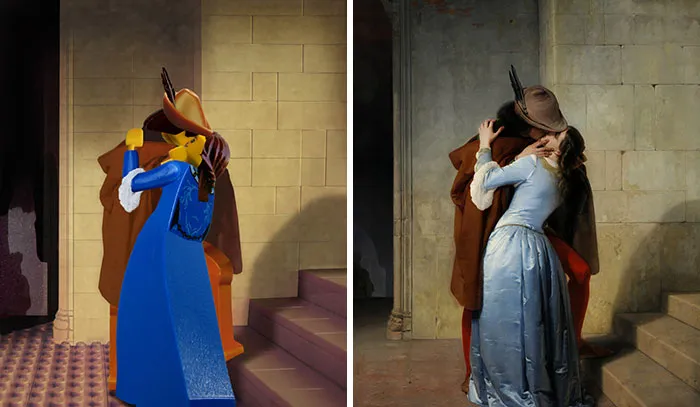
The Kiss is an 1859 painting by the Italian artist Francesco Hayez. It is possibly his best-known work. This painting conveys the main features of Italian Romanticism and has come to represent the spirit of the Risorgimento. It was commissioned by Alfonso Maria Visconti di Saliceto, who donated to the Pinacoteca di Brera after his death
Report
10points
#37 J. Howard Miller's We Can Do It
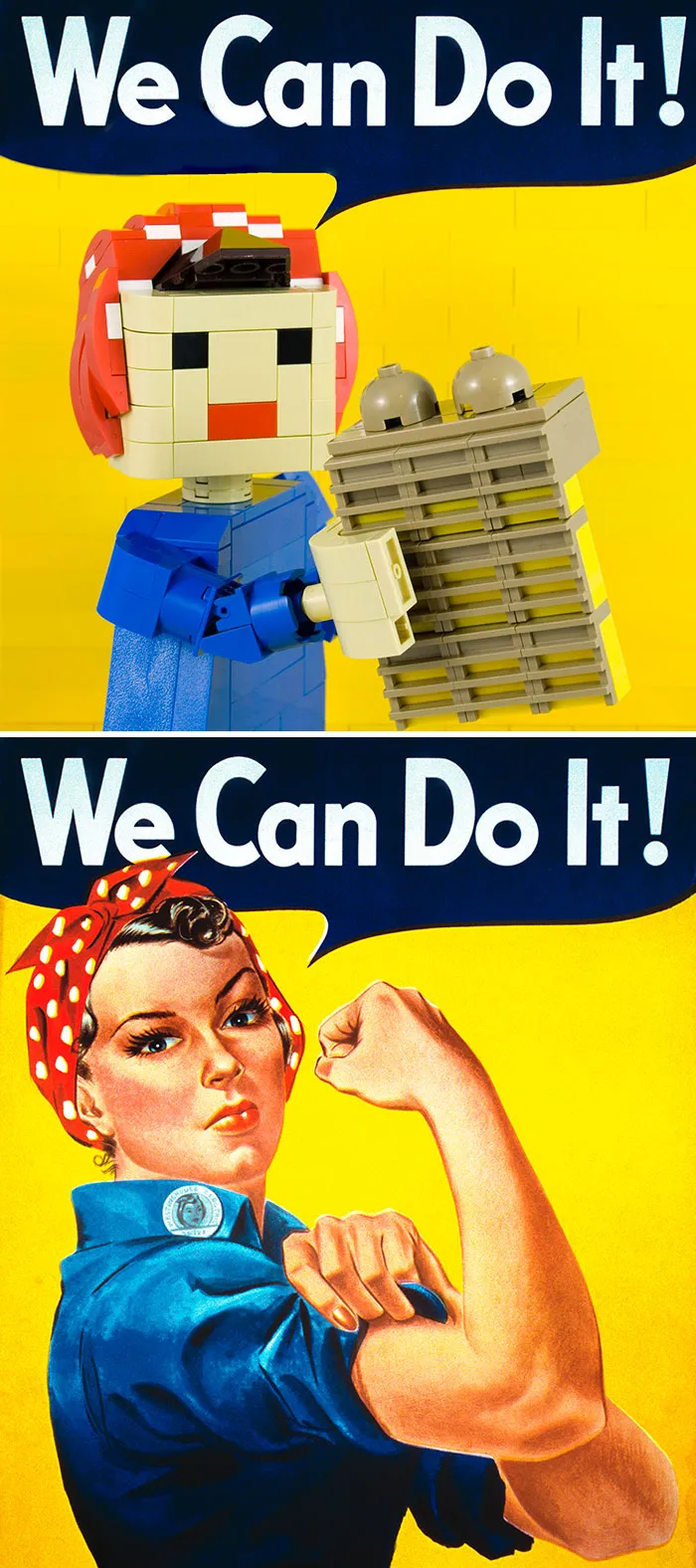
We Can Do It! is an American World War II wartime poster produced by J. Howard Miller in 1943 for Westinghouse Electric as an inspirational image to boost female worker morale. The poster was seen very little during World War II. It was rediscovered in the early 1980s and widely reproduced in many forms, often called "We Can Do It!" but also called "Rosie the Riveter" after the iconic figure of a strong female war production worker. The poster is one of the ten most-requested images at the National Archives and Records Administration
Report
8points
#38 Piet Mondrian's Composition With Red Blue And Yellow
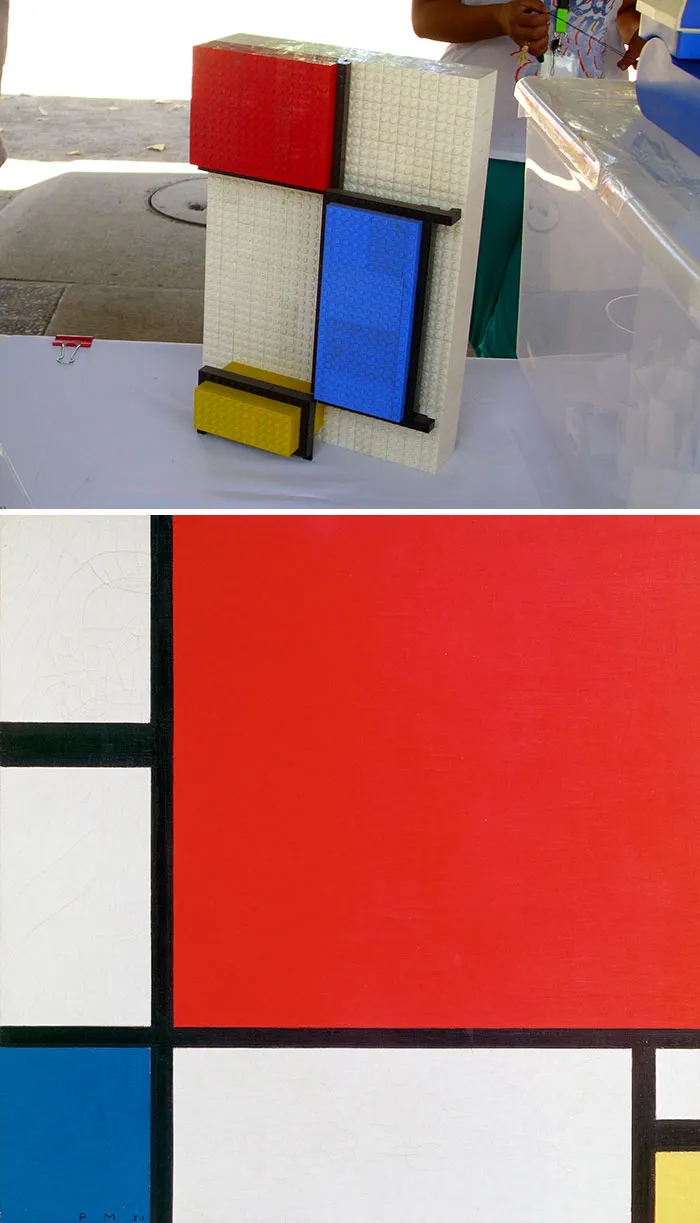
Composition with Red Blue and Yellow is a 1930 painting by Piet Mondrian. A well-known work of Mondrian contributes to the abstract visual language in a significant way despite using a relatively small canvas. Thick, black brushwork defines the borders of the different geometric figures. Comparably, the black brushwork on the canvas is minimal, but it is masterfully applied to become one of the defining features of the work
Report
2points
Just like playful building blocks that start from simple structures and expand into elaborate designs, ear tattoos initially appear subtle but can evolve into striking artistic statements. From geometric shapes to intricate patterns, ear tattoos offer a playful and versatile canvas for self-expression.
To explore more about how these unique tattoo ideas can transform appearances subtly yet effectively, check out some diverse inspirations available on creative tattoo designs.

