



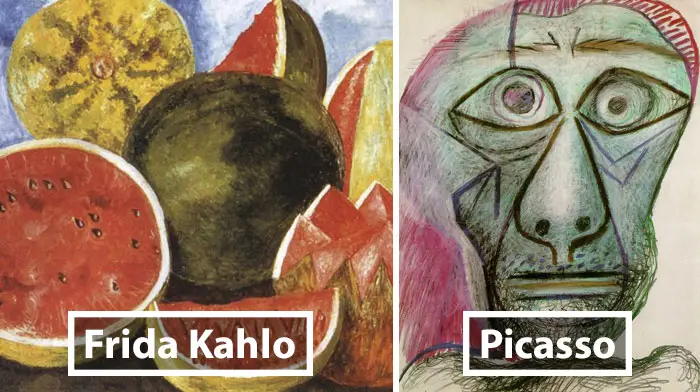

Have you ever wondered what the last artworks of some of history's famous artists looked like? Well, if so, then you’re in luck because we've collected thirty-seven final masterpieces from some of the world’s most well-known artists.
Compiled by Bored Panda, the list includes work from contemporary artists like Picasso and Matisse to classical masters including Caravaggio and Rafael. Scroll down to find your favorite artist, and don't forget to vote.
#21 Hieronymus Bosch: Christ Carrying The Cross (1535)
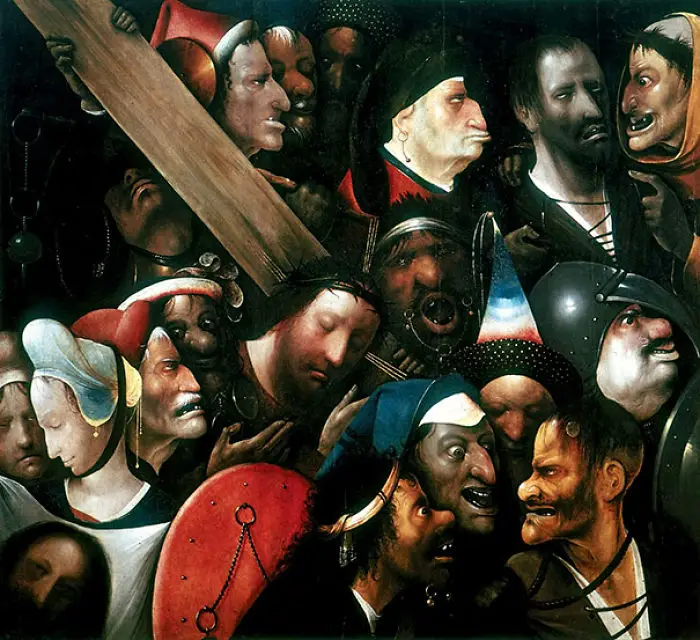
Hieronymus Bosch (1450-1516) was well known for his hellish imagery, and his last work is no exception. Titled Christ Carrying the Cross (1490), the painting is "a harsh indictment of human evil. Nineteen heads are crushed tightly together. Most are nightmarish images, contorted and beastlike. Besides Jesus, only the good thief and Saint Veronica retain human features. Their passive expressions separate them from the hate that rages around them." (source: Renaissance and Reformation, Volume 1)
Report
9points
#22 Max Beckmann: The Argonauts (1950)
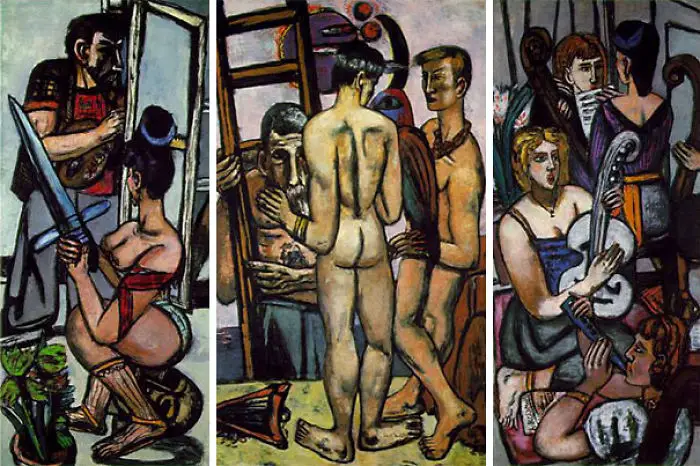
German artist Max Bechmann's last work is actually a triptych titled "The Argonauts" (1949-1950). The paintings are a play on a Greek myth that had interested him since he exiled himself to Amsterdam during World War 2. The Argonauts were a band of heroes who, in the years before the Trojan war, traveled with Jason to Colchis in his quest to find the Golden Fleece. Beckmann died suddenly in New York in 1950. (source: the economist)
Report
8points
#23 Edgar Degas: Two Dancers Resting I
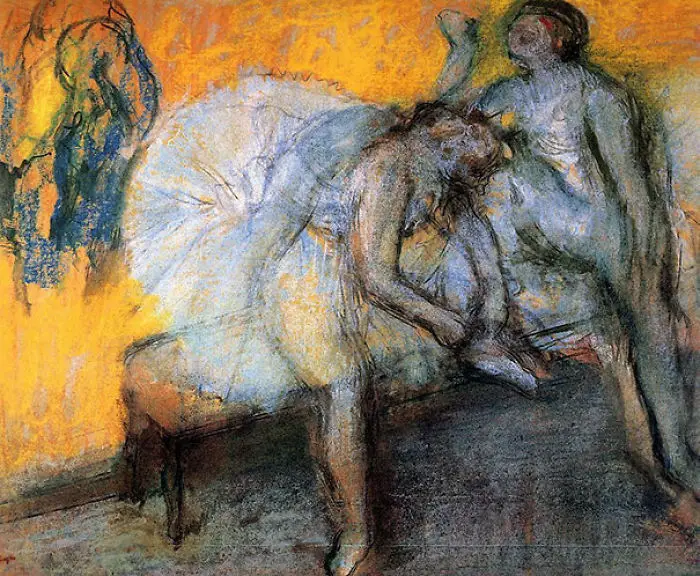
Edgar Degas was a French artist known for his paintings, sculptures, drawings and prints. He is often associated with the subject of dance, and more than half of his works depict dancers in some form or another. Two Dancers Resting I is thought to be his final pastel painting, which he created at a time when his eyesight had almost completely gone. His vision began to decline when he was 36, and he had lost his central vision by his forties due to a form of retinopathy. The artist died in 1917, aged 83. (source: pastelnews.com)
Report
7points
#24 Georges Seurat: The Circus (1891)
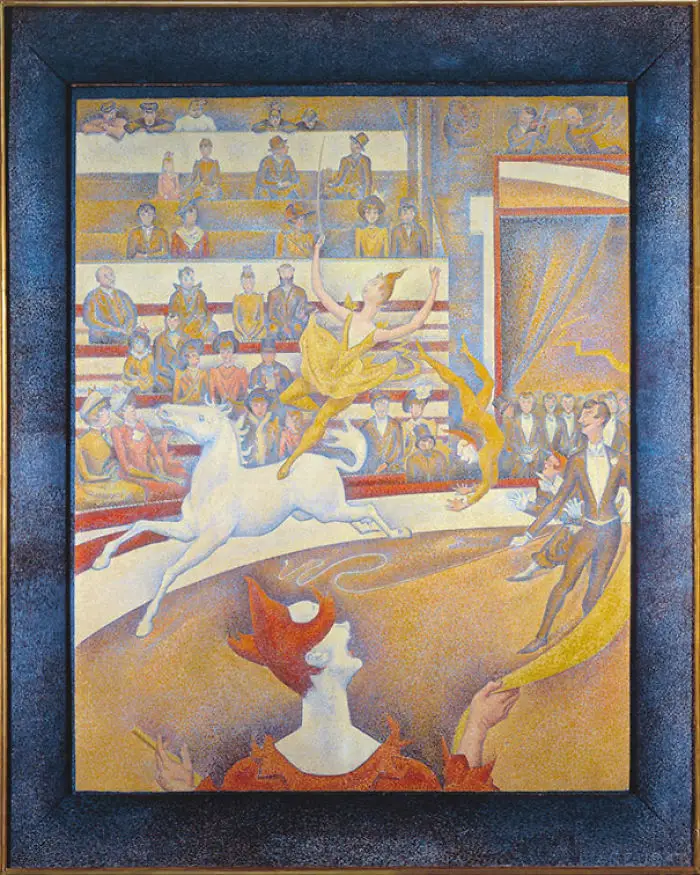
Georges-Pierre Seurat (1859-1891) was a French post-Impressionist painter. He is best known for devising the painting techniques known as chromoluminarism and pointillism. The Circus was his last painting. It's an oil on canvas painted in a Neo-Impressionist style in 1890-91, and it remained unfinished at the time of his death. It can be found at the Musée d'Orsay in Paris. (source: wikipedia.org)
Report
7points
#25 Mark Rothko: Untitled (1970)
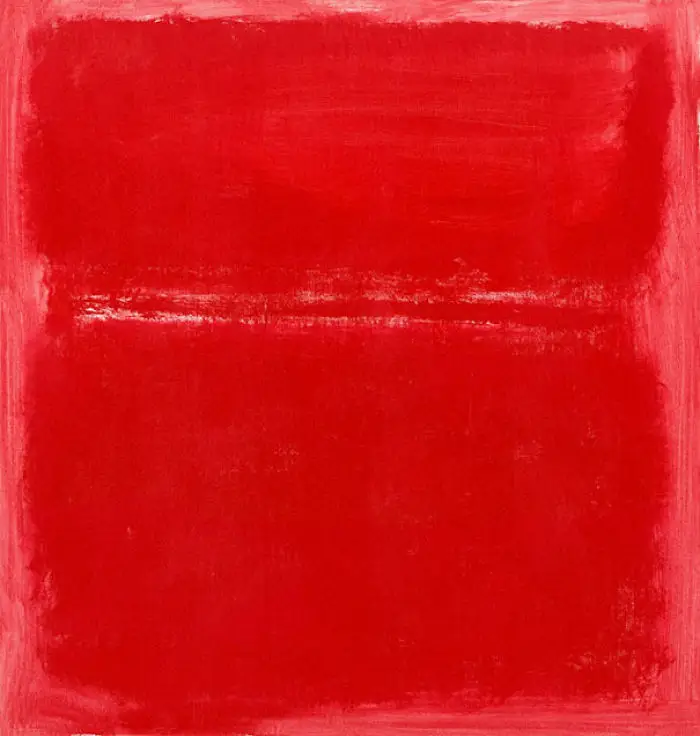
Mark Rothko was an American painter of Russian Jewish descent. Although he refused to adhere to any art movement, Rothko is generally identified as an abstract expressionist. He painted a number of gloomy works in the period running up to his death, but his final piece was bright red. He painted it just before his suicide in 1970, when the artist was 66, and the bright red is often considered to be symbolic of the fact that Rothko was found in a pool of blood after cutting his wrists in his New York studio. (spectator.co.uk)
Report
7points
#26 Andy Warhol: Last Supper (1986)
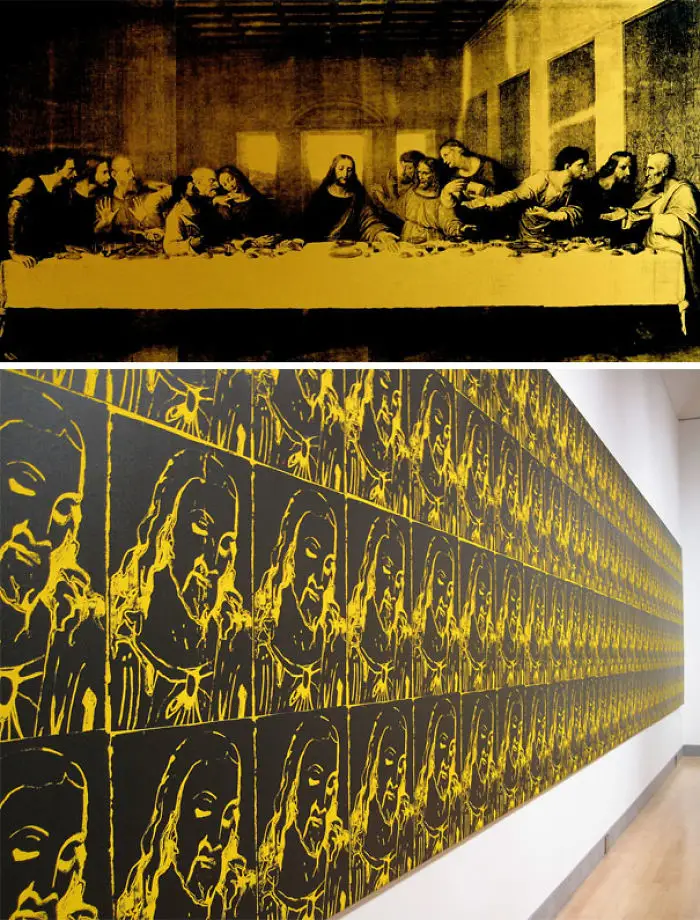
Andy Warhol (1928-1987) was an American artist and leading figure in the visual art movement known as pop art. His work explores the relationship between celebrity culture, artistic expression, and advertising. His final series of paintings, called "The Last Supper," was made in late 1986 and can now be seen at the Guggenheim Museum SoHo. The series was a commission, and the idea was thought up by the late Paris dealer, Alexander Iolas, who arranged for the work to be paid for by the Milan bank Credito-Valtellinese. The pictures were hung in the bank's new premises, just across the street from the Church of Santa Maria della Grazie, where Leonardo da Vinci's noble, dilapidated original can be seen. Warhol, as he often did, used commercial reproductions as his source material. (source: artnet.com)
Report
6points
#27 Stanley Spencer: Christ Preaching At The Cookham Regatta, Unfinished (1959)
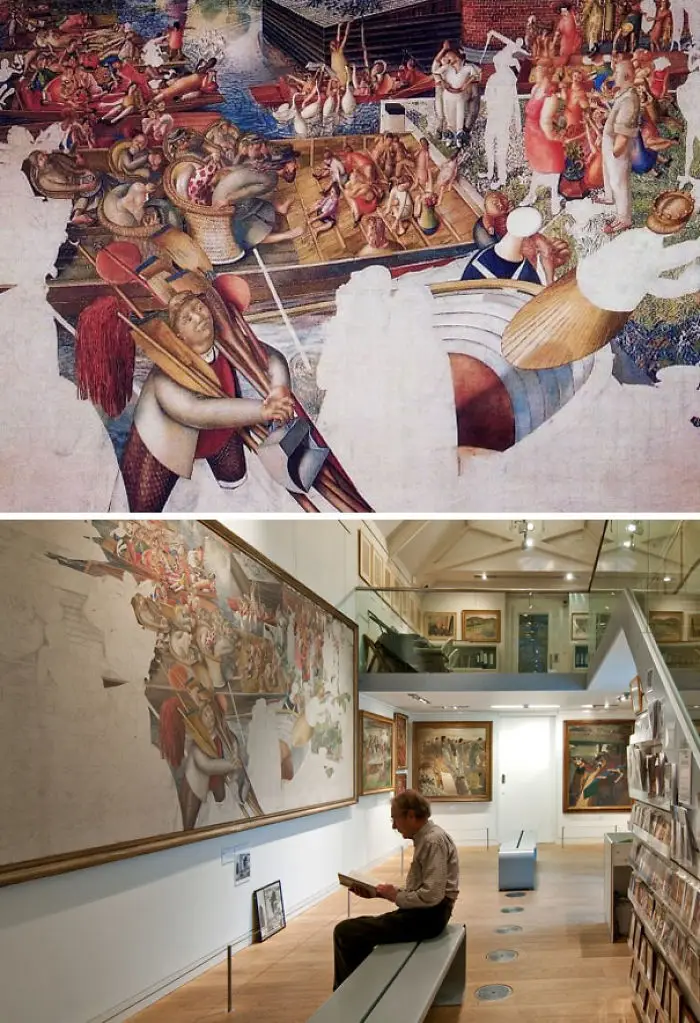
Sir Stanley Spencer (1891 – 1959) was an English painter. He became well known for his paintings depicting Biblical scenes as if taking place in Cookham, the small village beside the River Thames where he was born and spent much of his life. Spencer died of Cancer in 1959, and his last work, titled Christ Preaching at Cookham Regatta, remains unfinished. (source: wikipedia.org)
5points
#28 Titian: Pieta (1576)
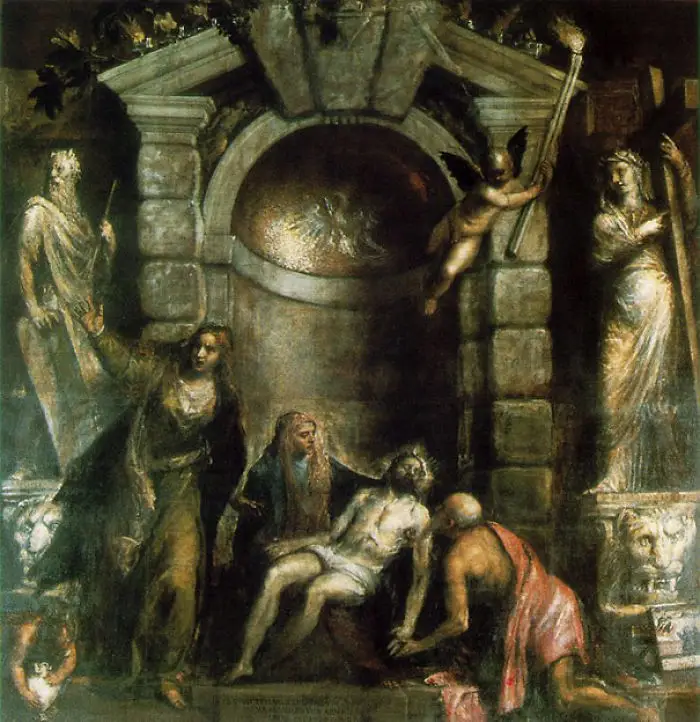
Tiziano Vecelli, or Tiziano Vecellio, known in English as Titian, was an Italian painter born in 1490. He is thought to be one of the most versatile of Italian painters and was equally adept with landscapes, portraits, and mythological and relgious subjects. Titan died of a fever when the plague hit Venice in 1576. His last work was Pieta, a dramatic, nocturnal scene of suffering. (source: wikipedia.org)
Report
5points
#29 Jackson Pollock: Red Black And Silver By (1956)
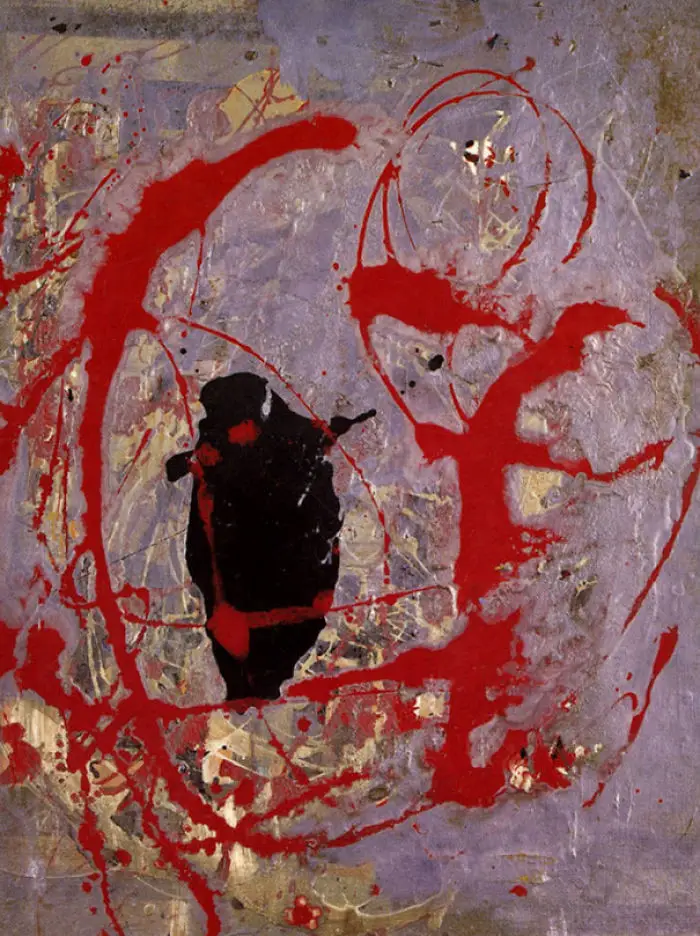
Paul Jackson Pollock, otherwise known as Jackson Pollock, was an American painter and a major player in the abstract expressionist movement. He was best known for his unique style of drip painting. His final work was called Red Black and Silver and was painted just months before the artist died in a car accident in 1956. The painting was for his mistress, Ruth Kligman, but because Pollock's wide, Lee Krasner (who naturally hated Kligman) ran the group that authenticated Pollock's work, Red Black and Silver was never declared a true Pollock until CSI tests proved its authenticity in 2013. (source: nypost.com)
Report
5points
#30 Bartolome Esteban Murillo: The Mystic Marriage Of Saint Catherine (1682)
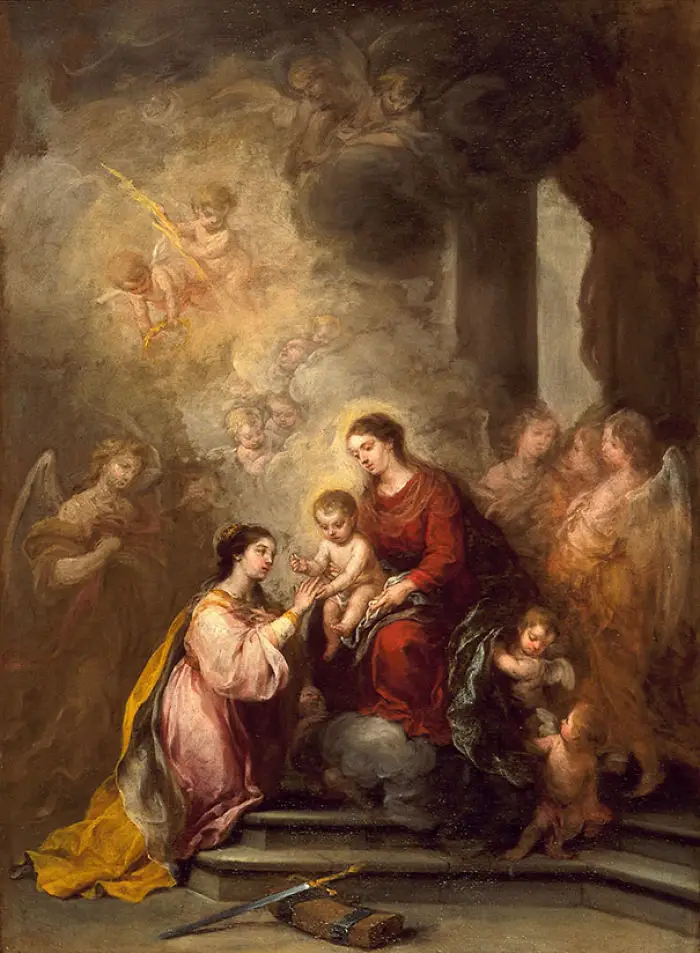
Bartolomé Esteban Murillo was a Spanish Baroque painter. He was born in Seville, Spain, in 1617, and he died in April 1682. He is best known for his religious work but Murillo also produced many paintings of contemporary women and children. His last work is The Mystic Marriage of Saint Catherine (c. 1682), for the altar of the church of Santa Cataline in Cádiz. According to his biographers however, It wasn't actually completed by his hand. The artist fell from scaffolding during the project and died several months later, presumably from his injuries, and so it was up to others to complete his final masterpiece. (source: artdaily.com)
Report
4points
#31 Albrecht Dürer: The Four Apostles (1526)
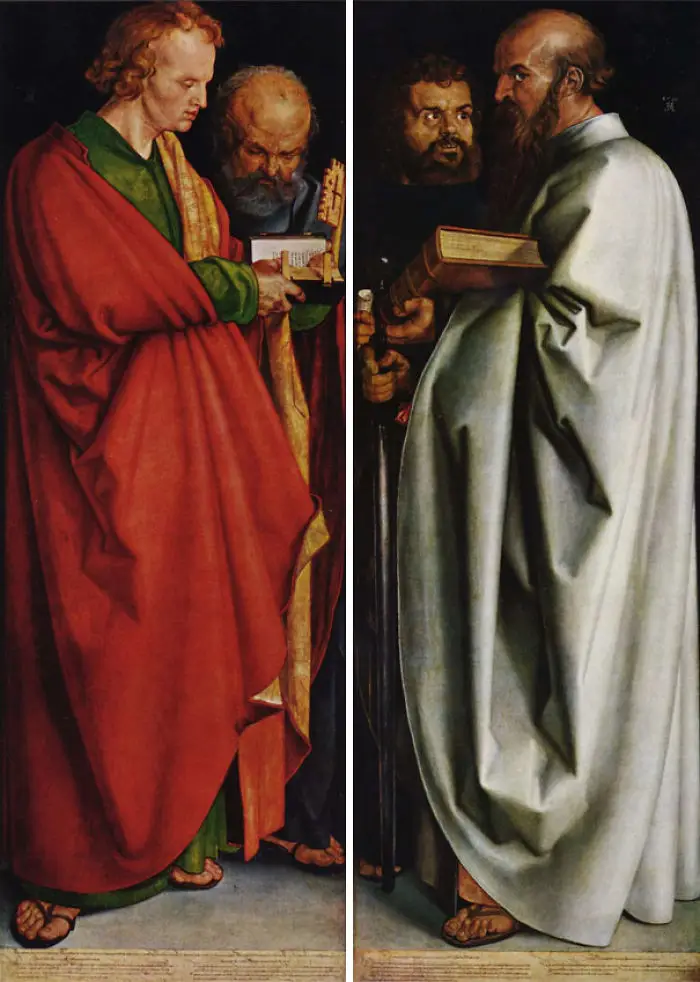
Albrecht Dürer was a painter and printmaker of the German Renaissance. Born in Nuremberg, Dürer established his reputation and influence across Europe when he was still in his twenties, due to his woodcut prints. He once said that "If a man devotes himself to art, much evil is avoided that happens otherwise if one is idle." His last work was a panel painting titled The Four Apostles. The painting was obtained by the Bavarian Elector Maximilian I in 1627. Since then, the painting has been in Munich and, despite all the efforts of Nuremberg since 1806, it has not been returned. (source: wikipedia.org)
Report
4points
#32 Stuart Davis: Fin (1964)
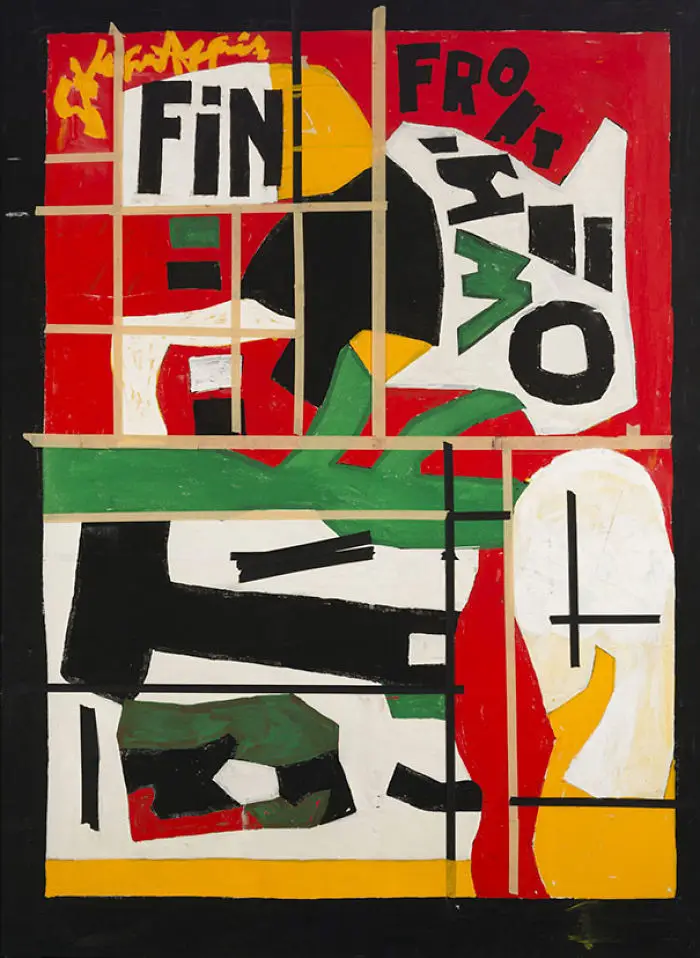
Stuart Davis was an American modernist painter. He was best known for his jazz-influenced pop art paintings of the 1940s and 1950s. Davis spent a lot of his life suffering from heart problems and high blood pressure. On June 23, 1964, after watching a French movie on TV that concluded with the word “fin” (which means “the end,” in French), he added the word on the painting on his easel before going to bed. He suffered a stroke that very same night and died in the ambulance while en route to New York’s Roosevelt Hospital. (source: whitney.org)
Report
4points
#33 Diego Rivera: The Watermelons (1957)
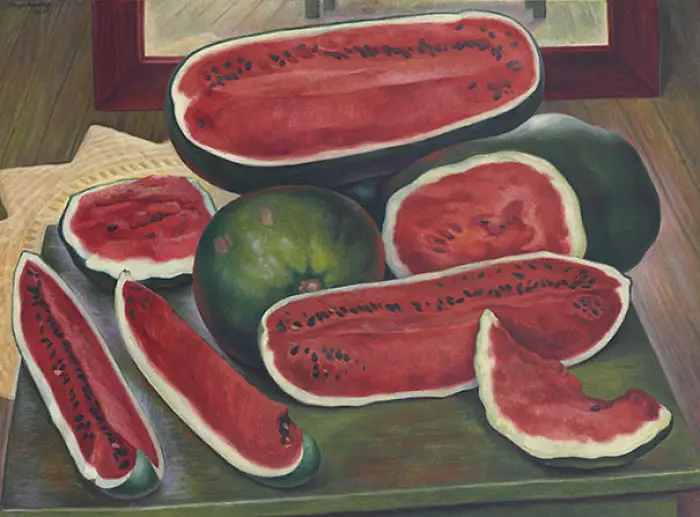
Diego María de la Concepción Juan Nepomuceno Estanislao de la Rivera y Barrientos Acosta y Rodríguez, known as Diego Rivera, was a prominent Mexican painter. His large frescoes helped establish the Mexican Mural Movement in Mexican art. His last work is an oil on canvas painting called The Watermelons (1957). It was made after Dolores Olmedo, one of his greatest supporters and patrons, asked him to paint it for her. At first he refused, saying that he did not like to paint watermelons. Only when Olmedo said that she would commission another prominent artist to paint them for her did Diego comply. This was the last painting he ever completed and signed. He died in Mexico City shortly after, aged 70. (source: high.org)
Report
4points
#34 Piet Mondriaan: Victory Boogie Woogie (1944)
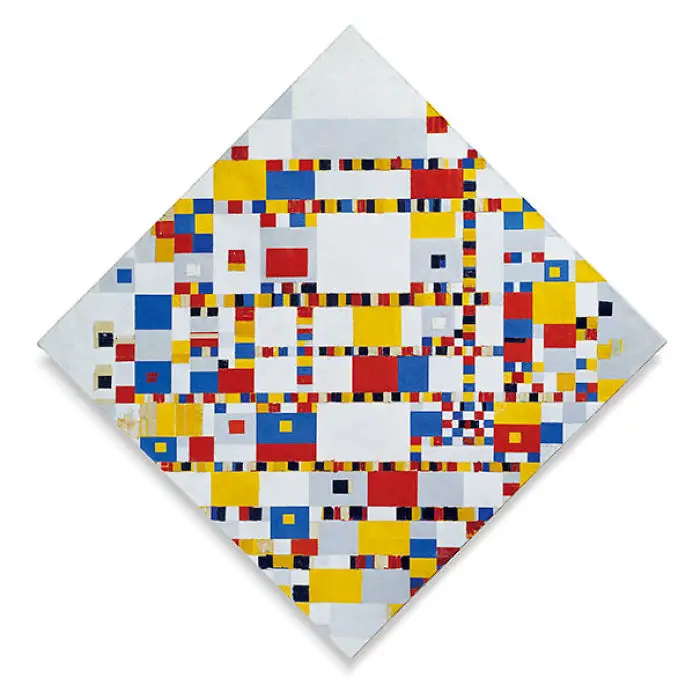
Pieter Cornelis "Piet" Mondriaan (after 1906 Mondrian), was a Dutch painter and contributor to the De Stijl art movement, which was founded by Theo van Doesburg. He evolved a non-representational form which he termed neoplasticism. This consisted of white ground, upon which he painted a grid of vertical and horizontal black lines and the three primary colors. He died of pneumonia in 1944. Victory Boogie Woogie is his last, unfinished work, and it has been in the collection of the Gemeentemuseum in The Hague since 1998. It was purchased at a cost of 80 million guilders (approximately 35 million euros) from the American collector Samuel Irving Newhouse. (source: wikipedia.org)
Report
2points
#35 Cy Twombly: Untitled (2011)
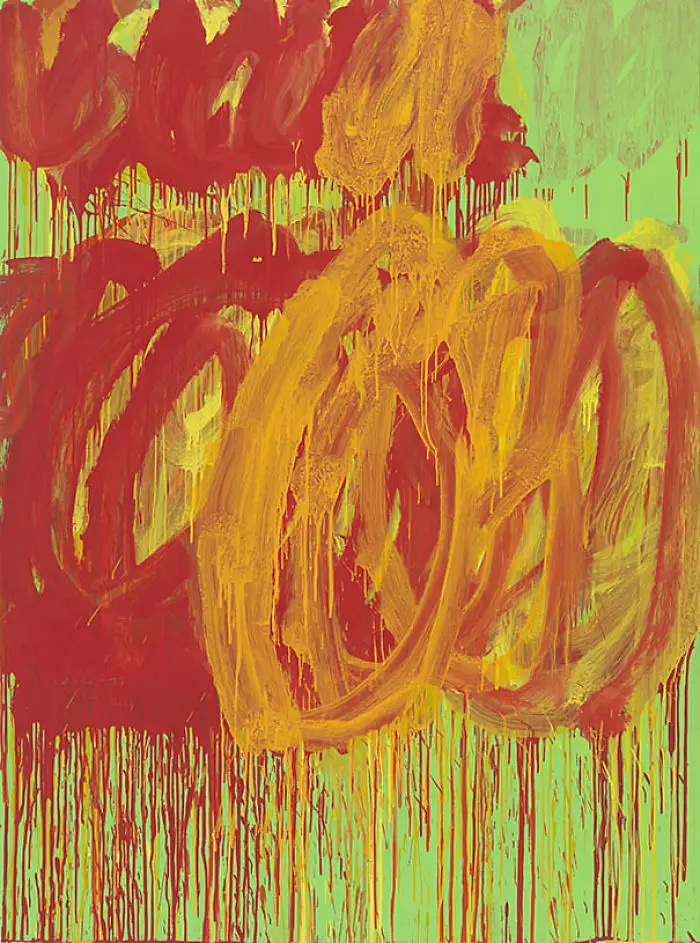
Edwin Parker "Cy" Twombly, Jr (1928-2011) was an American painter, sculptor and photographer. His last works were a series of eight untitled paintings using bold, intense colors and a style that was typical of the freedom with which the artist worked. (source: gagosian.com)
Report
1point
#36 Thomas Eakins: Portrait Of Dr. Edward Anthony Spitzka (1913)
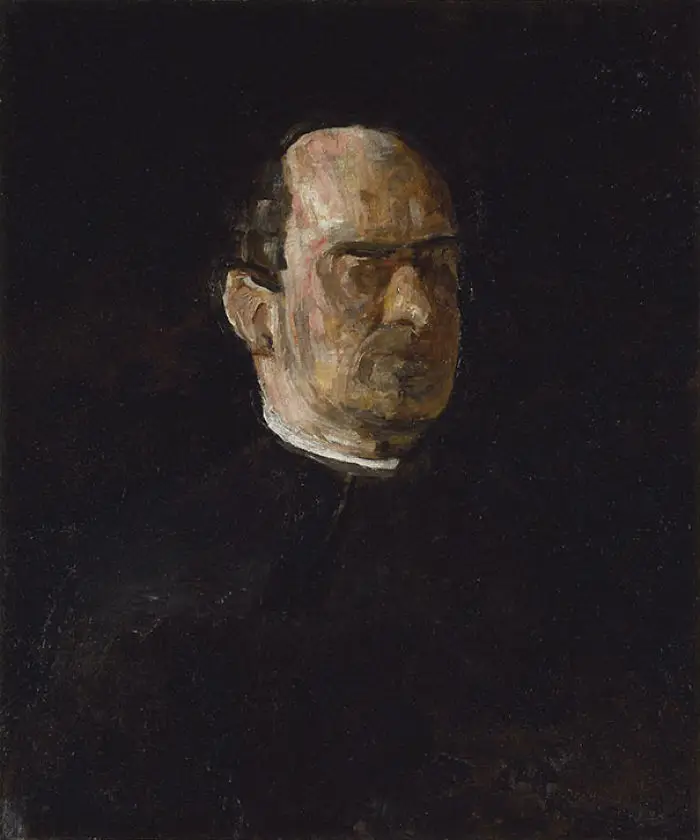
Thomas Cowperthwait Eakins (1844 - 1916) was an American realist painter, photographer, and sculptor. He is widely considered to be one of the most important artists in American art history. His last painting was a portrait of Dr. Edward Anthony Spitzka, painted in 1913. It can be found in the Hirshhorn Museum and Sculpture Garden in Washington D.C. (source: thomaseakins.org)
Report
1point
#37 Paul Klee's Untitled Painting (1940)
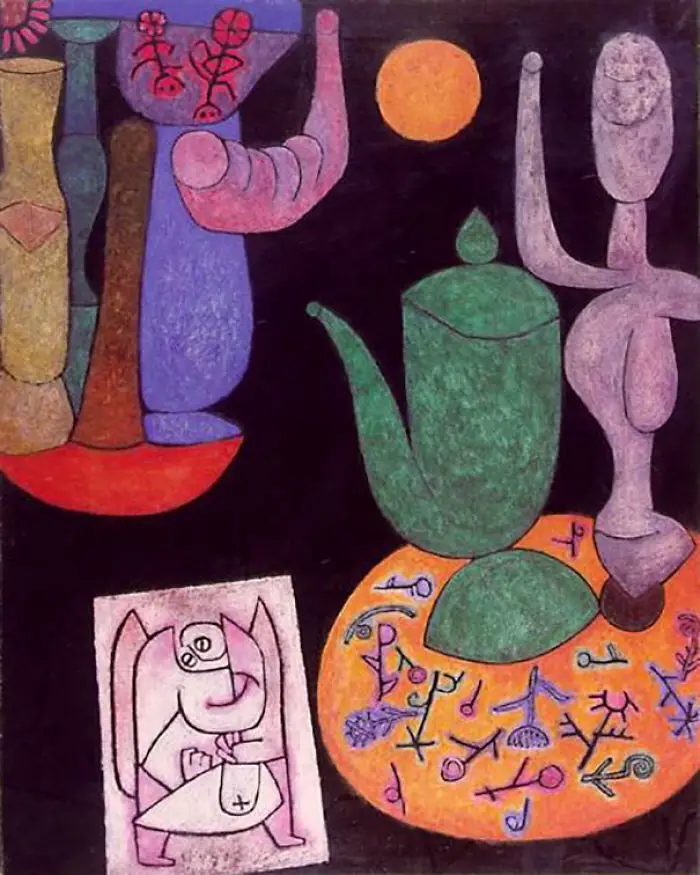
Paul Klee (1879 – 1940) was a Swiss-German artist. His style was influenced by movements in art that included Expressionism, Cubism, and Surrealism. Klee suffered from scleroderma (a wasting disease) toward the end of his life, and the pain he endured can be seen in his latter works. His final painting was a still life, completed in 1940. The painting was among those left in the artist’s Bern studio in Kistlerweg after his death. His son, Felix, retrospectively called it Das letzte Stilleben (The Last Still Life), a description which has become its title. (source: artistsandart.com)
Report
1point