

Infertility can make family life complicated in ways that aren't always so obvious. While one person is celebrating a new baby, another might be quietly grieving the family they have always wanted. Even something as harmless as a cute toddler picture can stir up difficult emotions, and when family group chats become a constant stream of birthday photos, holiday updates, and little childhood milestones, knowing where to draw the line can get tricky.
That's what happened in one family, where a woman spent years trying to accommodate her sister-in-law's struggles with infertility and pregnancy loss. Her sister-in-law had become so uncomfortable around children that she avoided her niece and even asked that the little girl be left out of Christmas celebrations. However, when she demanded that the woman stop sharing pictures of her daughter in the family group chat, years of built-up frustration finally came to a head.
Even when you genuinely care about a person, their happiness can sometimes remind you of your own disappointment

The woman's sister-in-law struggled with infertility for years and suffered a miscarriage, making it painful for her to be around her niece

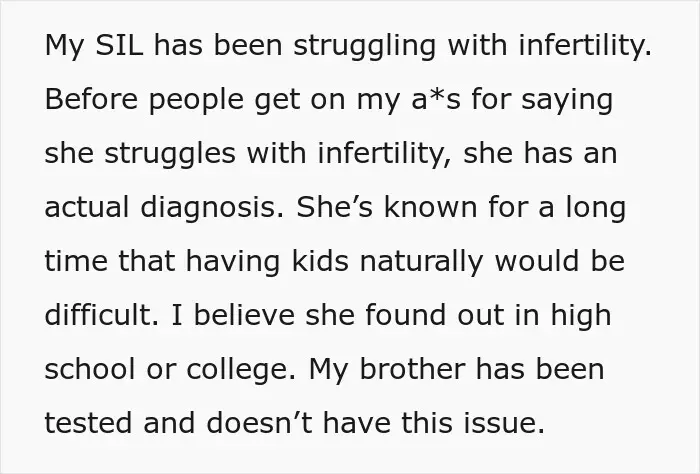
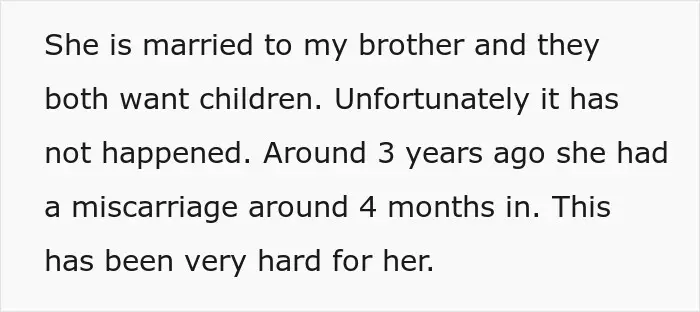
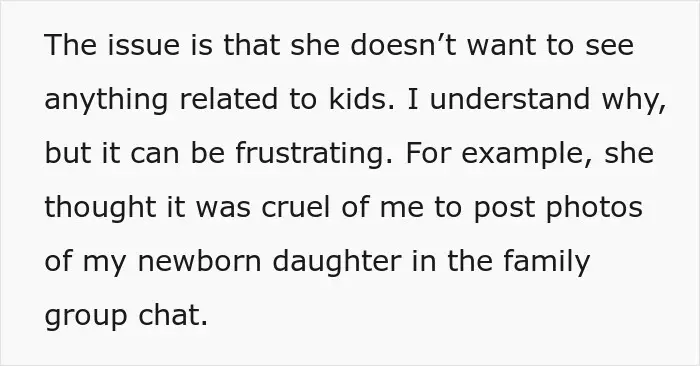


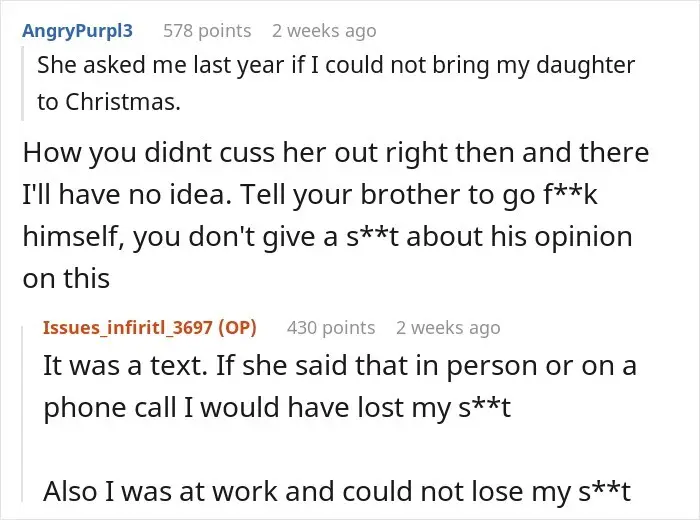
However, the sister-in-law began avoiding the little girl, skipping her milestones, and even asking her mother not to bring her to Christmas

After the sister-in-law demanded that she stop sharing her daughter's pictures in the family group chat, the woman refused and told her to leave if she couldn't handle them
Infertility is not simply a matter of having to wait a little longer for a pregnancy. According to the World Health Organization, approximately one in six people worldwide experience infertility during their reproductive years. The condition can involve difficulties conceiving or maintaining a pregnancy, and its causes can be varied. The emotional impact can also extend beyond the immediate disappointment of not becoming pregnant.
The experience can be emotionally complex and leave people feeling isolated, and it can create significant feelings of loss, uncertainty, and emotional upheaval. People may find themselves grieving the family they imagined having, while also dealing with repeated medical decisions and the uncertainty of whether treatment will work. These feelings can affect relationships with partners, friends, and relatives.
For someone who has wanted children for years, seeing another family member experience the milestones they have been hoping for can make an already difficult situation feel even heavier. In fact, research affirms that emotional recovery can take considerably longer than physical recovery, as people may experience sadness, anxiety, anger, jealousy, or feelings of being overwhelmed.
Certain everyday situations can also bring those feelings back unexpectedly. The pregnancy-loss charity Tommy's identifies baby photographs, pregnancy announcements, family gatherings involving young children, and holidays as potential reminders for people who have experienced miscarriage. Even seemingly ordinary occasions can become difficult when they highlight something someone has lost or desperately wants.
Now, that does not necessarily mean someone who struggles with infertility resents the people around them or wishes they were unhappy. Feelings of jealousy, sadness, and longing can still coexist with genuine affection for friends and relatives who have children. Someone may be happy for a loved one while simultaneously finding it painful to witness what they wish they could experience themselves.

This distinction is important because emotional reactions are not always a reflection of how someone feels about the person triggering them. The sister-in-law may find her niece difficult to be around without actually having anything against the little girl. There are ways families can make these situations easier without pretending that children and pregnancy do not exist.
Psychology Today recommends communicating sensitively when sharing pregnancy news, including telling someone privately before making a public announcement, and giving them time to process the information can prevent them from feeling pressured to react positively on the spot. Relatives can also offer alternative ways to spend time together that do not revolve around parenting.
However, this kind of consideration works best when people communicate their needs rather than expecting others to guess what might be upsetting. Another important distinction is the difference between setting personal boundaries and controlling other people's activities. Someone experiencing infertility may decide to skip a baby shower, mute a family conversation, or leave a gathering early if it becomes overwhelming.
These are ways of managing their own emotional well-being. However, boundaries become more complicated when they involve asking other people to change what they share or excluding a child from family occasions. The American College of Obstetricians and Gynecologists discusses the importance of setting boundaries with people whose behavior causes emotional distress, including temporarily limiting contact when necessary.
That principle can work both ways, in that the sister-in-law can protect her emotional space, while the child's mother can also establish limits on what she is willing to accommodate. What do you think about this situation? Do you think the woman was wrong to refuse to stop sharing pictures of her daughter, or had she been accommodating for long enough? We would love to hear from you!
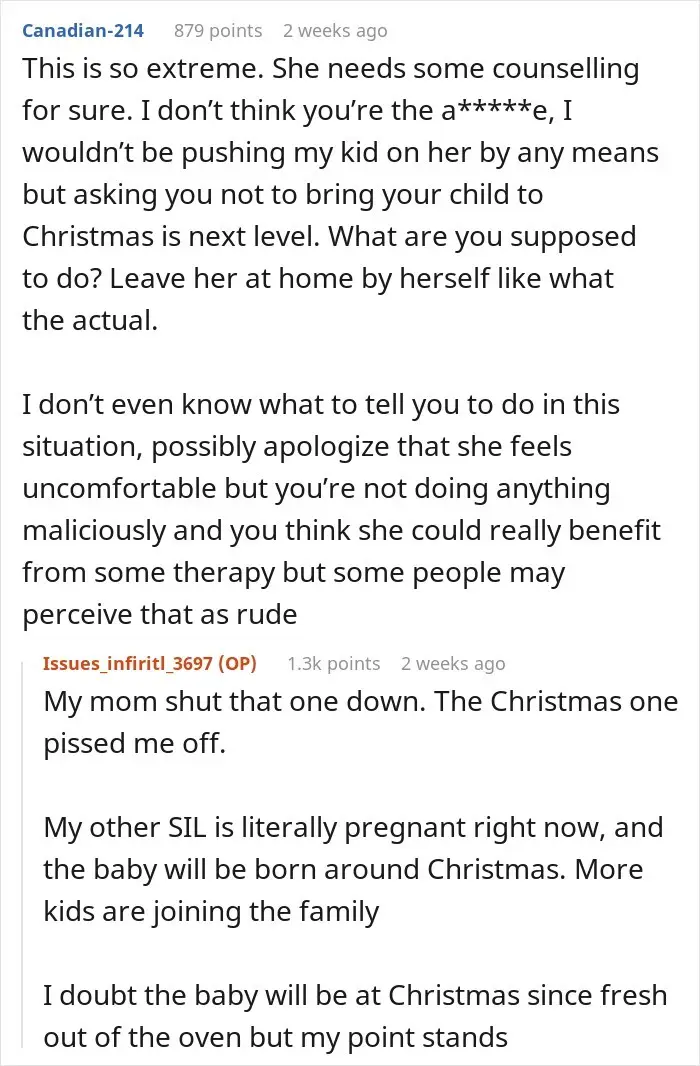
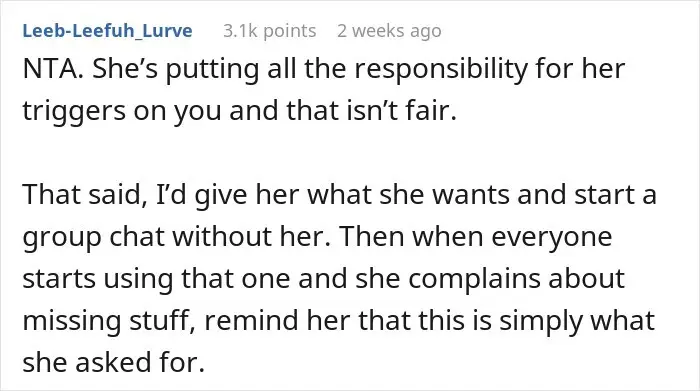
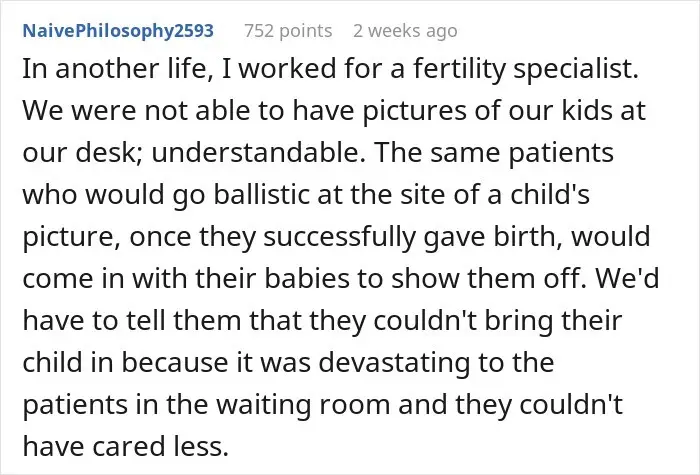
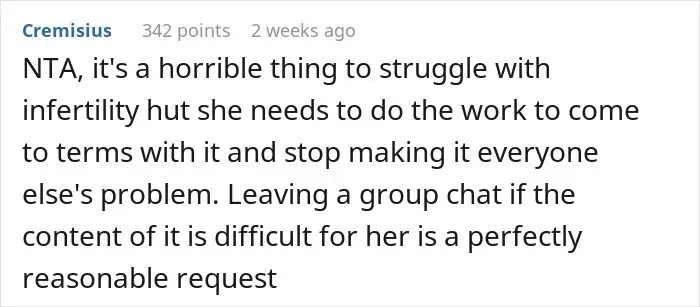
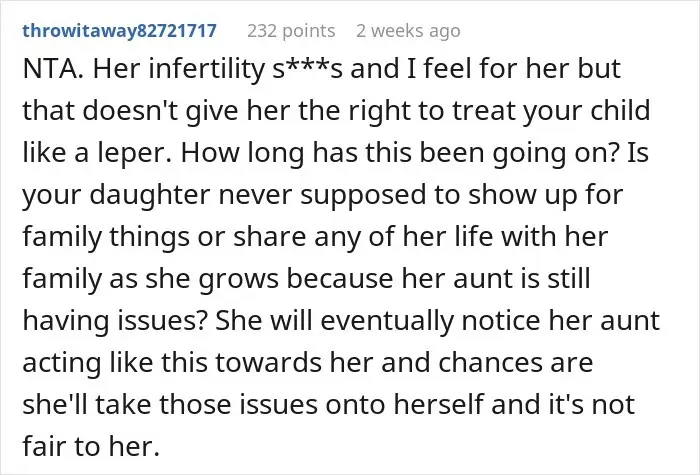
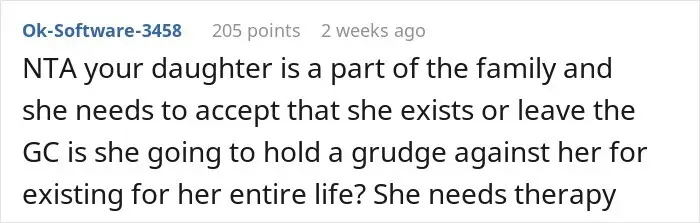
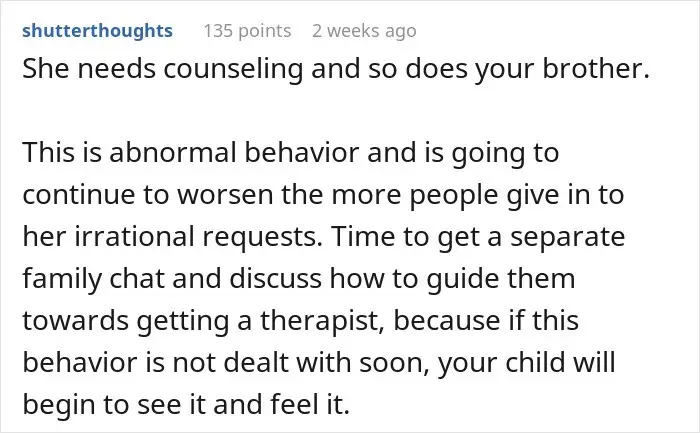
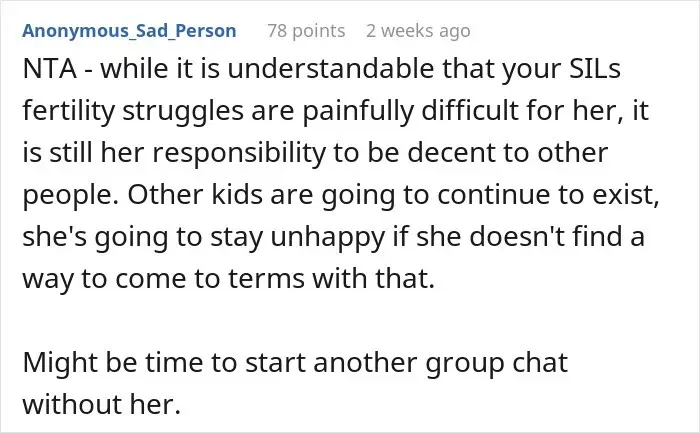
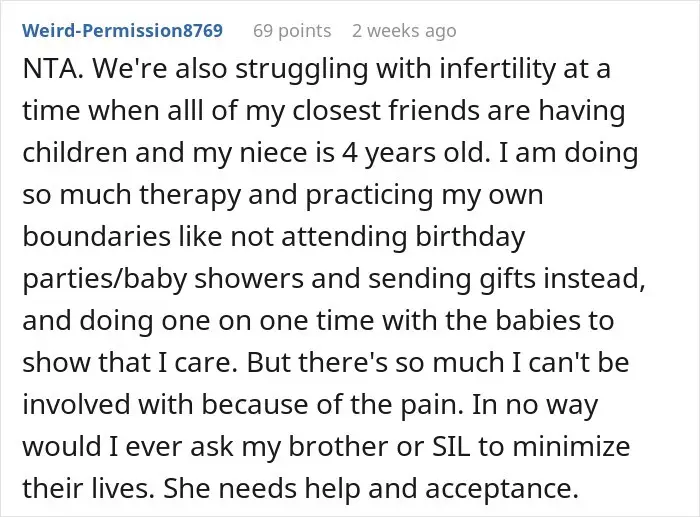
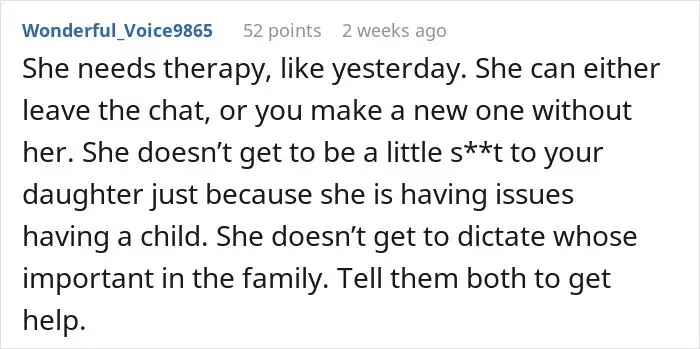
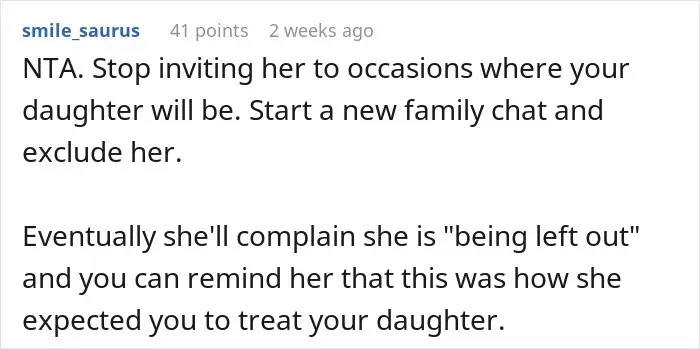
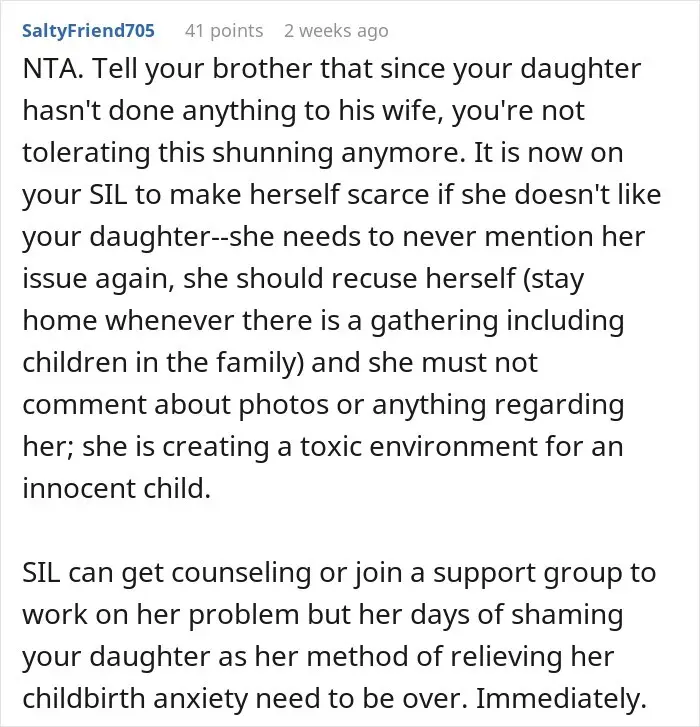
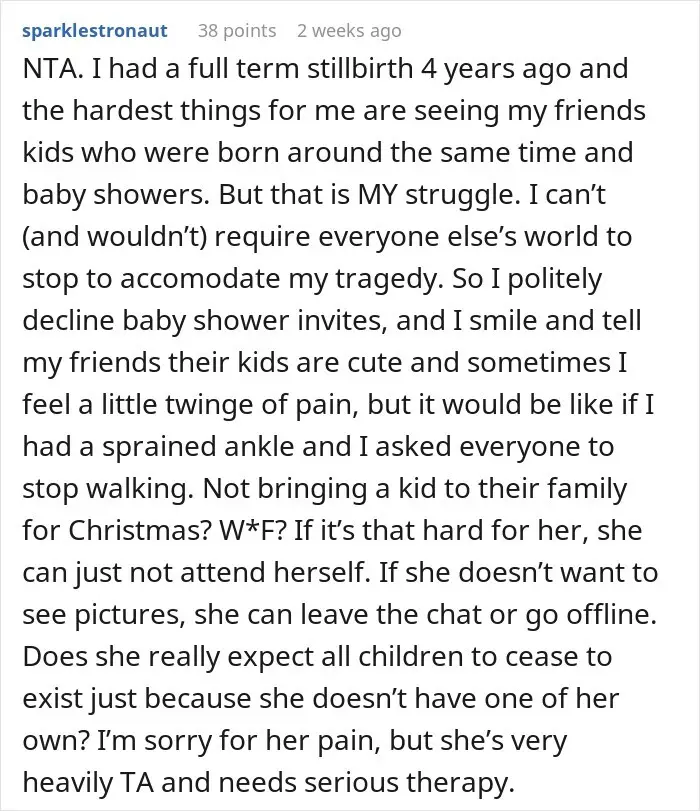
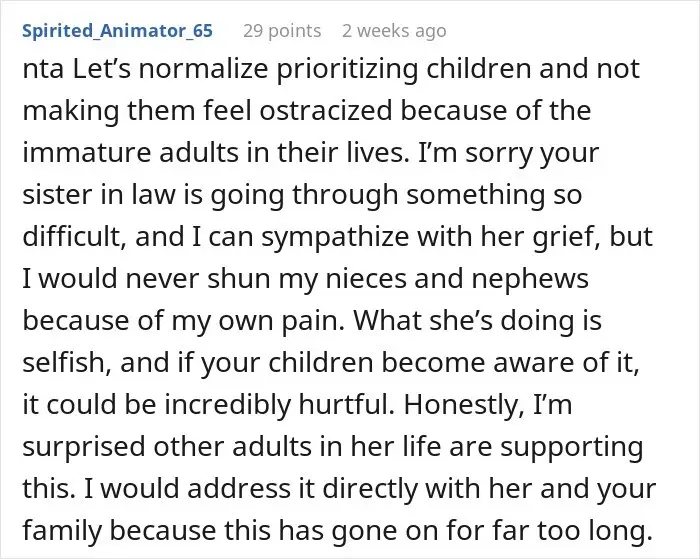
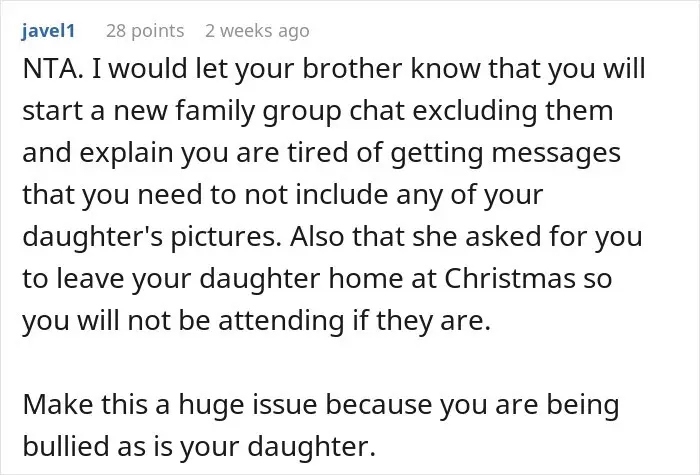
Netizens insisted that the sister-in-law is self-centered and might be in need of therapy