






What you see and what you think are real might actually be ingenious illusions crafted to trick you. Editing, staging, and outright faking photos, whether for fun or propaganda, is nothing new—humanity has been doing it since the invention of photography. And our team here at Bored Panda has the proof.
We have curated this list of some of the most important historical photographs that were faked either for enjoyment or for the sake of someone’s secret agenda. It’s a mind-blowing experience that might reshape how you see the past and make you more skeptical of what you see online.
#21 An Episode After The Battle Of Zonnebeke, Australian Infantry Moving Forward To Resist A Counter Attack, Frank Hurley, 1917
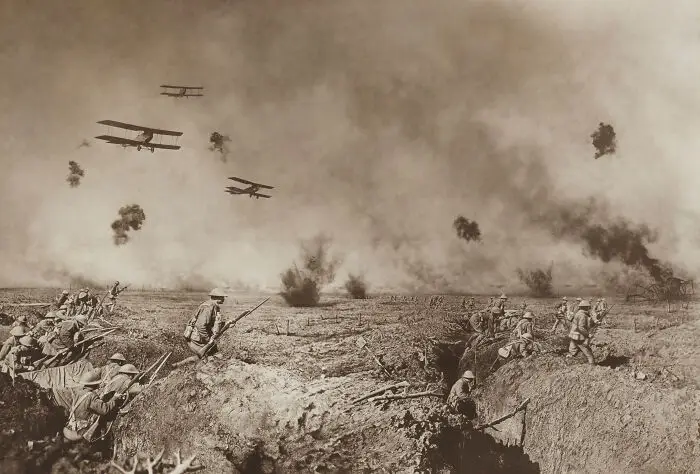
This dramatic WWI image shows Australian soldiers charging forward across a battlefield, supposedly during a counter-attack at Zonnebeke. It became one of the iconic photos of Australian forces in the war.
Photographer Frank Hurley created it by combining multiple negatives. The dramatic composition was impossible to capture in a single shot with the camera technology of the time, so Hurley built it in the darkroom.
Hurley defended his composites by arguing they showed the truth of war better than any single photograph could. Individual shots were limited by exposure times and couldn't capture the chaos and scale of battle. His manipulated images, he claimed, gave viewers a more accurate sense of what combat actually felt like, even if the specific moment never happened exactly as shown.
20points
#22 "The Valley Of The Shadow Of Death" By Roger Fenton, 1855
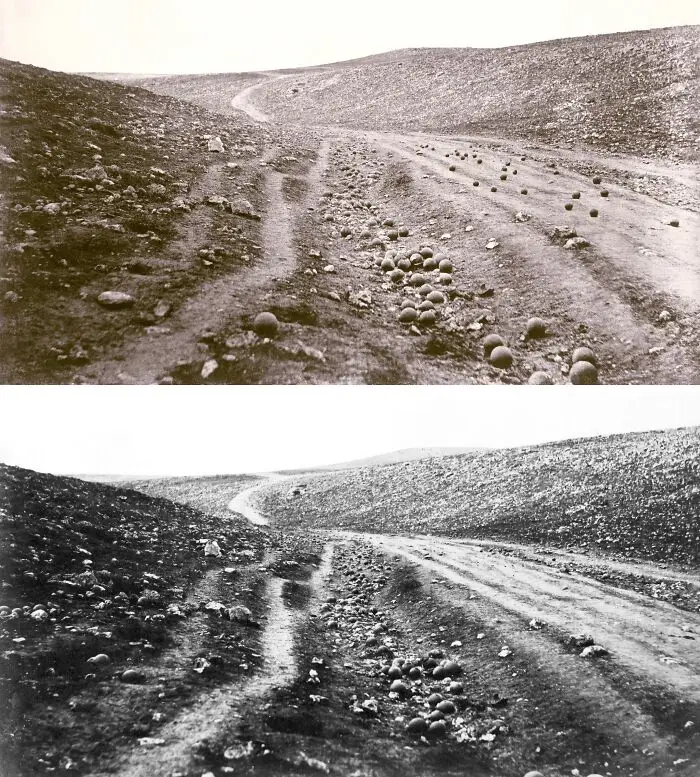
Roger Fenton's famous Crimean War photograph has been questioned for over a century. Two versions exist: one with cannonballs scattered across the road, one with most of them pushed to the side. The debate is which came first, and whether Fenton staged the more dramatic version by dragging cannonballs onto the road for effect.
One documentary filmmaker thinks he did exactly that. The evidence is circumstantial but suggestive. If true, it would make this one of the earliest examples of war photography being manipulated for impact, just years after the medium was invented.
One documentary filmmaker thinks he did exactly that. The evidence is circumstantial but suggestive. If true, it would make this one of the earliest examples of war photography being manipulated for impact, just years after the medium was invented.
Report
19points
#23 The Battle Of The Somme, 1916
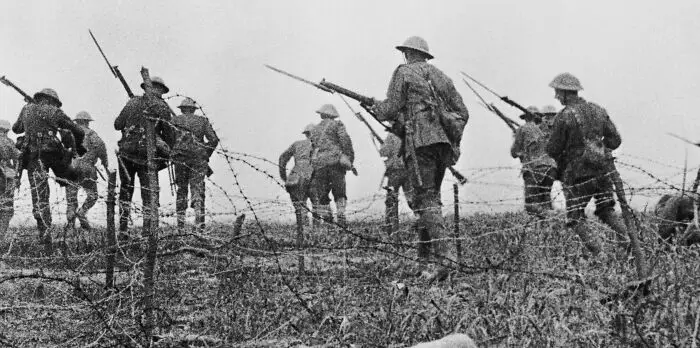
This iconic image of British soldiers going over the top has been reproduced countless times as documentation of WWI trench warfare. There's just one problem: it's a movie still, not combat photography.
The image was staged for a film, meaning these soldiers weren't actually advancing into no man's land under fire, they were actors or soldiers performing for a camera in a controlled setting. But because it looked authentic and captured what people imagined the war to be like, it circulated as if it were real.
The image was staged for a film, meaning these soldiers weren't actually advancing into no man's land under fire, they were actors or soldiers performing for a camera in a controlled setting. But because it looked authentic and captured what people imagined the war to be like, it circulated as if it were real.
Report
19points
#24 Willy Brandt And Leonid Brezhnev, 1971
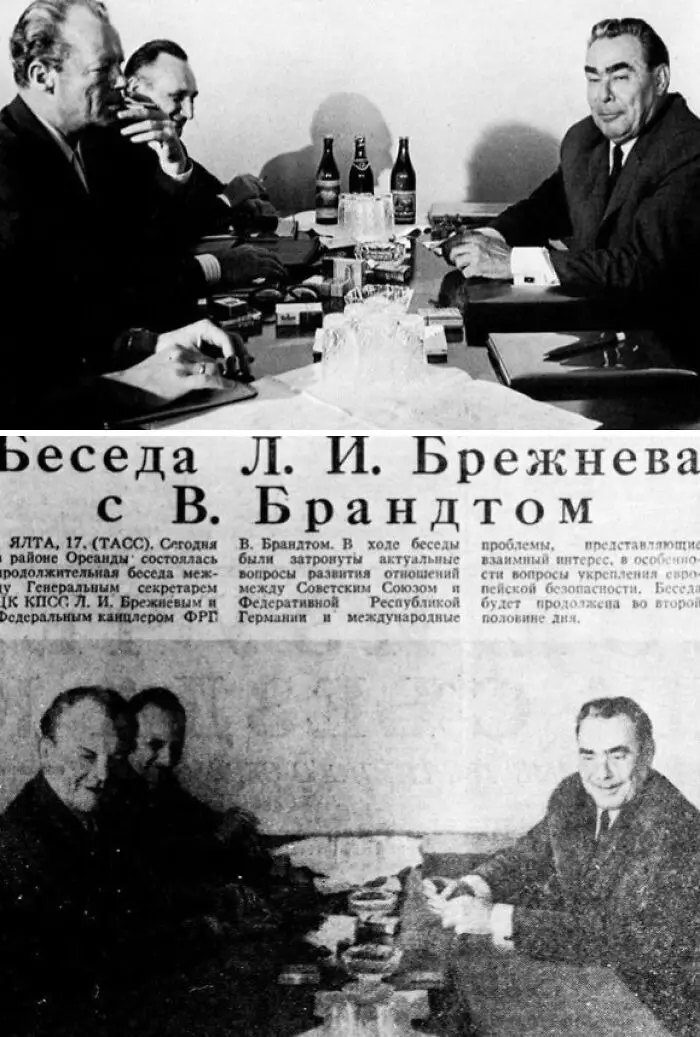
West German Chancellor Willy Brandt met with Soviet leader Leonid Brezhnev in 1971 during negotiations. The German press ran the photo showing both men relaxed, drinking and smoking together, evidence that the talks were going well and the atmosphere was friendly.
The Soviet press published a heavily edited version. They airbrushed out the alcohol bottles, cigarettes, and glasses. What had been a casual, boozy meeting became a sober, formal diplomatic encounter. Soviet leaders couldn't be shown drinking or smoking in official photos as it undermined the image of disciplined communist leadership.
The Soviet press published a heavily edited version. They airbrushed out the alcohol bottles, cigarettes, and glasses. What had been a casual, boozy meeting became a sober, formal diplomatic encounter. Soviet leaders couldn't be shown drinking or smoking in official photos as it undermined the image of disciplined communist leadership.
Report
19points
#25 "Ein Ausflug Nach Hamburg" (A Trip To Hamburg) From Germany, Early 20th Century
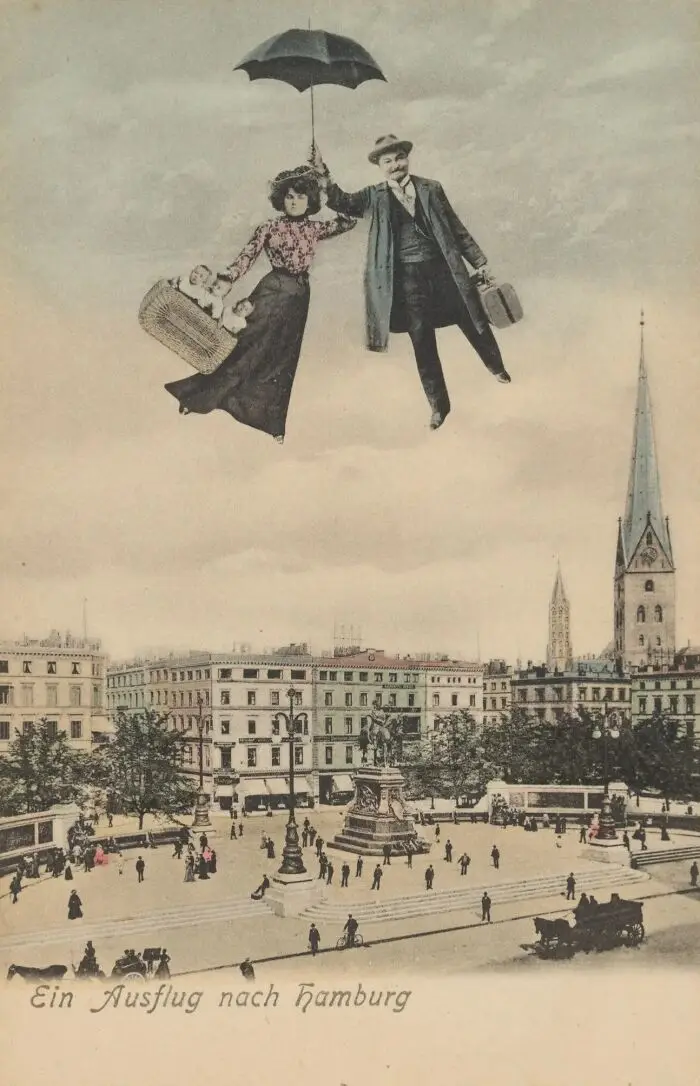
Move over, Mary Poppins because this German couple was floating over cityscapes decades before Disney got the idea. Obviously, Photoshop didn't exist yet, but that didn't stop creative minds from manipulating images long before the digital age.
Using double exposures, cut-and-paste techniques, and careful darkroom trickery, early photographers and printers produced fantastical scenes like this one for postcards, advertisements, and pure entertainment.
This particular image is part of the Rijksmuseum's "Fake!" exhibition in Amsterdam, which explores the long history of photographic deception.
Report
18points
#26 Raising A Flag Over The Reichstag, Yevgeny Khaldei, 1945
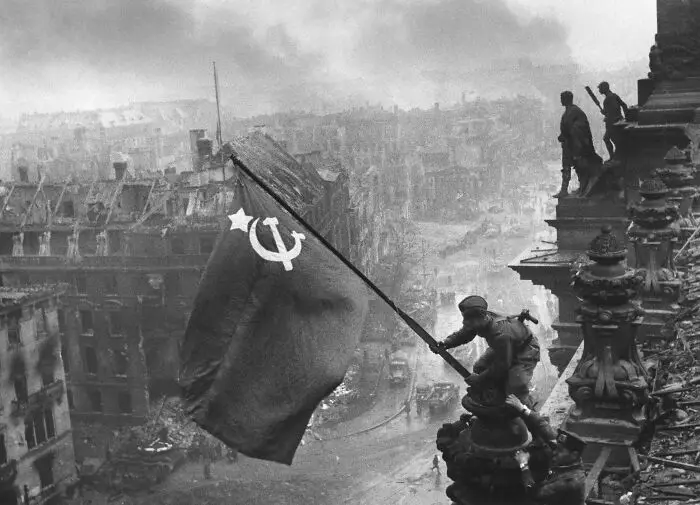
This is one of the most iconic images of WWII—Soviet soldiers raising the hammer and sickle over the Reichstag in Berlin, symbolizing Germany's defeat. But the photograph we know was manipulated by Soviet propagandists before publication.
Photographer Yevgeny Khaldei staged the flag-raising to begin with, arriving after the actual battle with a flag made from tablecloths. But the bigger changes came in the darkroom. Smoke was added to make the scene more dramatic. More notably, one soldier's wrist was retouched to remove a second watch, evidence of looting that didn't fit the heroic narrative the Soviets wanted to tell.
The image became a propaganda cornerstone, printed in newspapers worldwide and turned into posters and monuments. The manipulations weren't revealed until much later.
Report
18points
#27 Raising The Flag On Iwo Jima, Joe Rosenthal, 1945
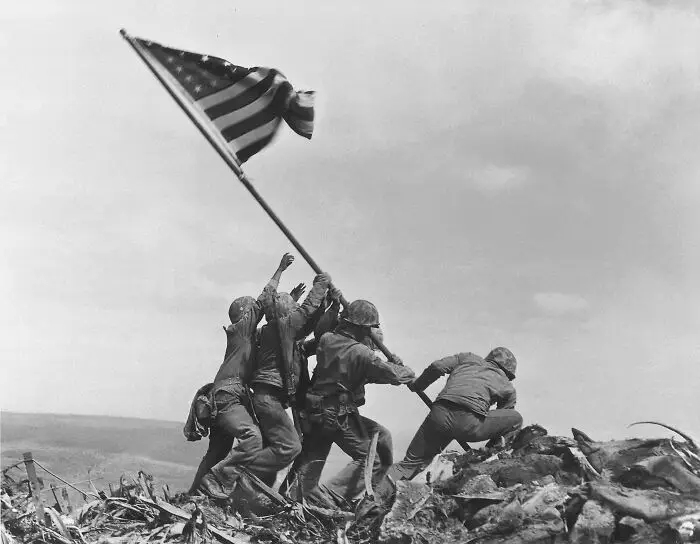
The most famous photo from Iwo Jima wasn't the first flag raising. Marines put up a small flag after taking the island, and someone snapped some photos that weren't particularly dramatic. Officers decided they wanted a bigger, more visible flag, so they sent one up.
Photographer Joe Rosenthal heard about the replacement flag and rushed to get the shot. The resulting image became one of the most iconic war photographs ever taken.
Photographer Joe Rosenthal heard about the replacement flag and rushed to get the shot. The resulting image became one of the most iconic war photographs ever taken.
Report
17points
#28 Abbey Road Album Cover, Iain MacMillan, 1969
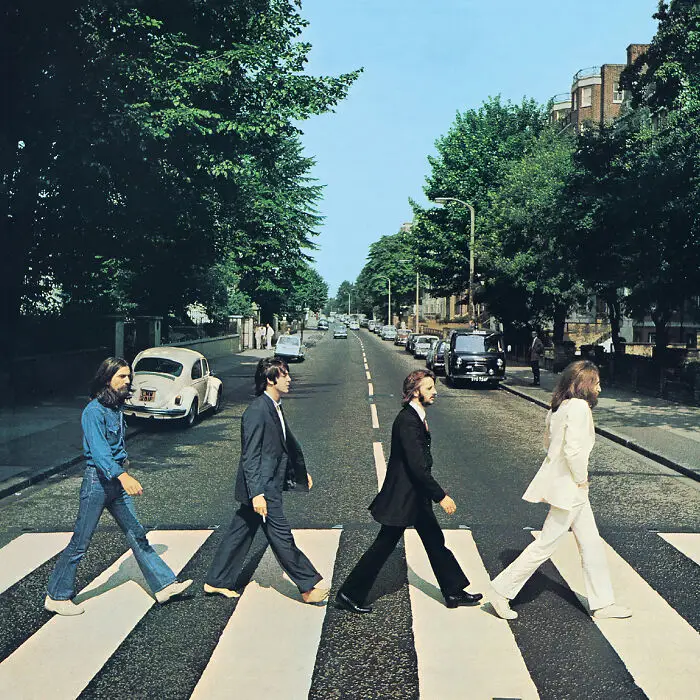
The iconic Beatles album cover shows the four band members crossing the street in single file. In the original, Paul McCartney is holding a cigarette. An American poster company later edited it out, apparently without asking anyone's permission.
Removing the cigarette was part of a broader trend of sanitizing images for American audiences, especially anything that might be marketed to kids. The logic was that showing smoking promoted unhealthy behavior, so better to just erase it entirely.
Removing the cigarette was part of a broader trend of sanitizing images for American audiences, especially anything that might be marketed to kids. The logic was that showing smoking promoted unhealthy behavior, so better to just erase it entirely.
Report
17points
#29 Soviet Cosmonauts Group Photo, Early 1960s
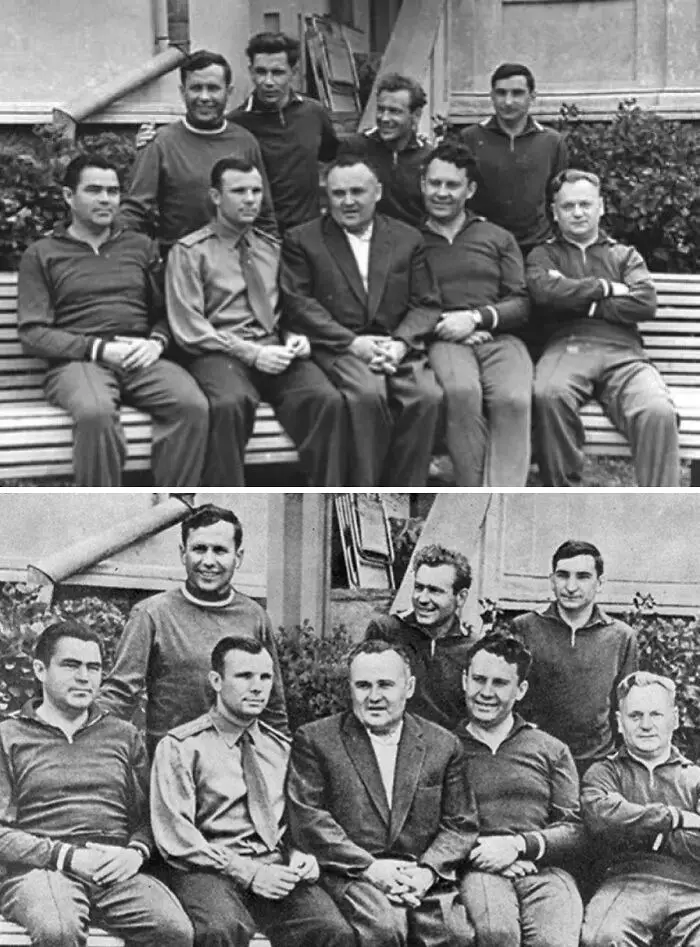
The Soviet space program loved group photos of their cosmonauts lined up together. But when Grigoriy Nelyubov got kicked out of the program for drunk and disorderly conduct, he was airbrushed out of the official photos entirely.
This was standard practice in the Soviet Union. Fall out of favor, and you disappeared from the historical record, literally erased from photographs. Stalin did it to purged officials, and the space program did it to embarrass cosmonauts. The message was clear: mess up badly enough and it's like you never existed.
This was standard practice in the Soviet Union. Fall out of favor, and you disappeared from the historical record, literally erased from photographs. Stalin did it to purged officials, and the space program did it to embarrass cosmonauts. The message was clear: mess up badly enough and it's like you never existed.
Report
17points
#30 Union Generals, 1865
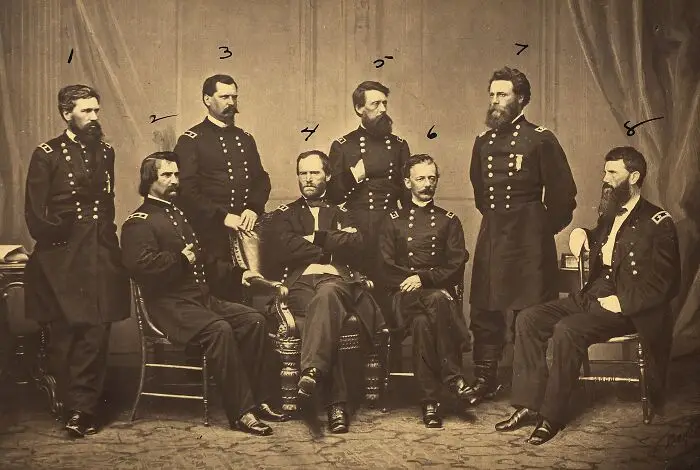
Mathew Brady, one of the most famous Civil War photographers, created this group portrait of Union generals with William Tecumseh Sherman. General Francis P. Blair on the far right wasn't actually there, Brady added him later using composite photography.
Getting all these high-ranking officers in one place at the same time was basically impossible during wartime. Brady's solution was to photograph them separately and combine the images. It let him create an official group portrait that would've been logistically nightmare to arrange for real.
This was standard practice for Brady and other photographers of the era. They saw it as practical problem-solving, not deception. The goal was to document who these important figures were and show them together, even if "together" meant assembled in the darkroom rather than in the same room.
Report
17points
#31 Backyard Photos Of Lee Harvey Oswald, 1963
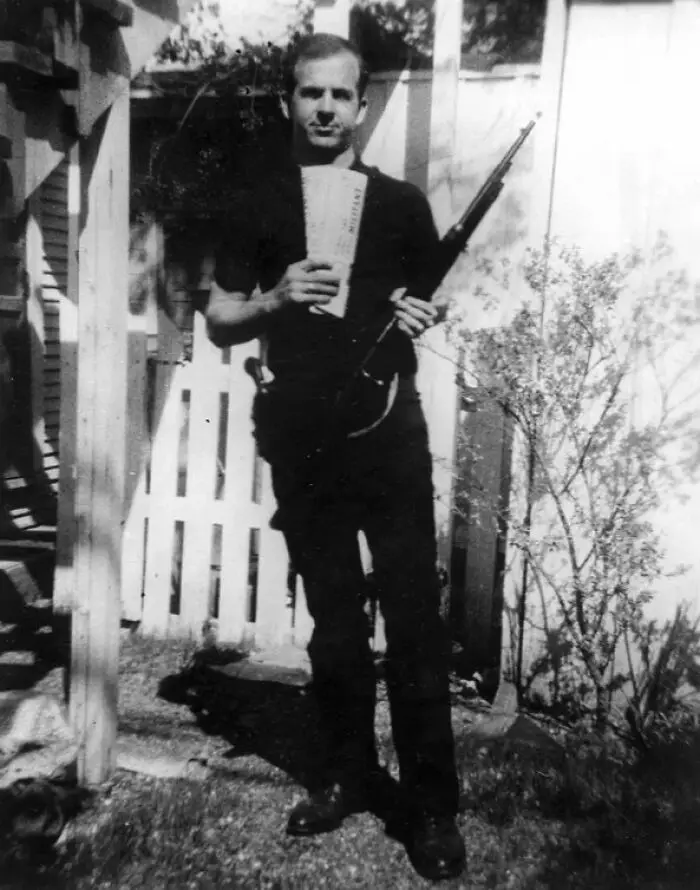
Photos of Lee Harvey Oswald posing in his backyard with a rifle and communist newspapers became key evidence after Kennedy's assassination. They seemed to prove that Oswald was the shooter and had the weapon.
Conspiracy theorists have claimed for decades that the photos were faked. They point to shadows and lighting that supposedly don't match up, arguing someone pasted Oswald's head onto another person's body. Some say his chin looks wrong, or that shadows fall in physically impossible directions.
Conspiracy theorists have claimed for decades that the photos were faked. They point to shadows and lighting that supposedly don't match up, arguing someone pasted Oswald's head onto another person's body. Some say his chin looks wrong, or that shadows fall in physically impossible directions.
Report
16points
#32 Spirit Photographs, William Mumler, 1861-1879
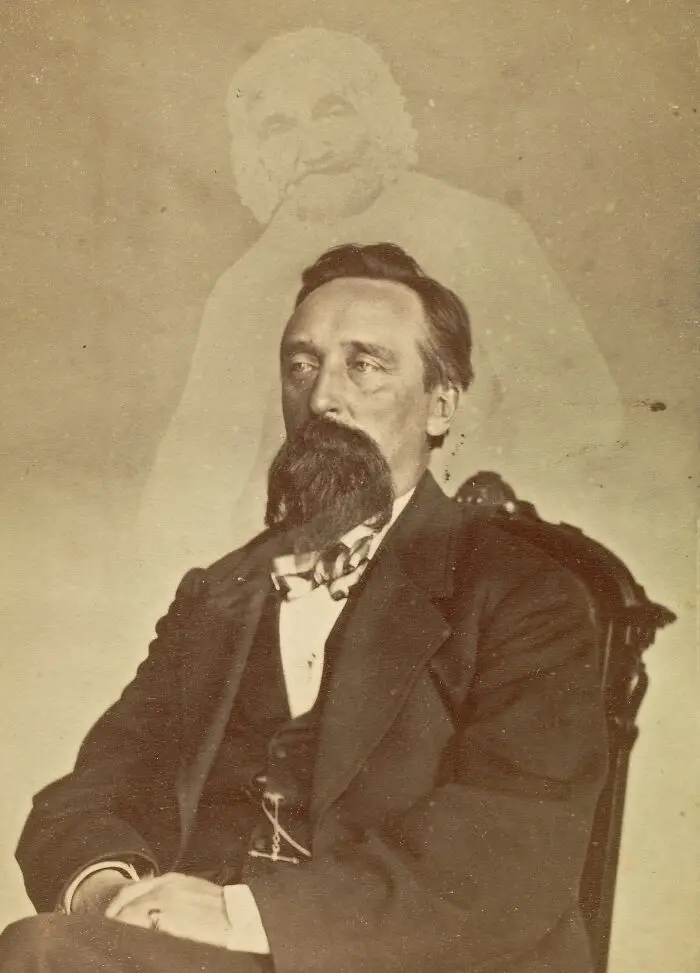
In 1861, Boston jewelry engraver William Mumler developed a self-portrait and noticed a shadowy figure floating beside him. He figured it was leftover from an earlier negative on the same plate, but friends said it looked like his late cousin. The spiritualist community called it the first photograph of a ghost. Mumler saw an opportunity and became the world's first spirit photographer, getting rich off grief-stricken clients who'd lost relatives in the Civil War.
Critics came after him hard. Some spiritualists accused him of fraud, pointing out that his "spirits" resembled living people who'd recently sat for portraits. Professional photographers were furious that he was making their profession look like a con. In 1869, after he moved to New York, police charged him with fraud.
Critics came after him hard. Some spiritualists accused him of fraud, pointing out that his "spirits" resembled living people who'd recently sat for portraits. Professional photographers were furious that he was making their profession look like a con. In 1869, after he moved to New York, police charged him with fraud.
15points
#33 Mikhail Gorbachev's Official Portrait With His Birthmark Removed, 1985
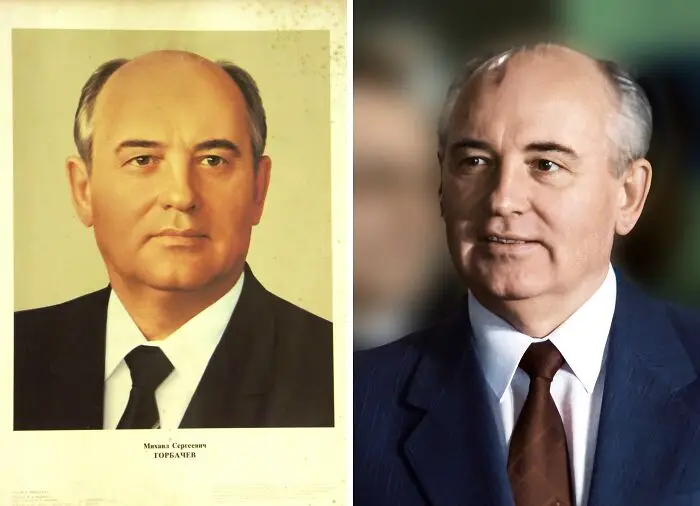
Even the man who brought down the Iron Curtain wasn't immune to a little official retouching. Gorbachev's distinctive port-wine stain birthmark was airbrushed out of his official Soviet portrait, leaving behind a suspiciously smooth forehead.
The reasoning was almost certainly rooted in old Soviet aesthetics; leaders were expected to project an image of physical perfection and authority, and a prominent birthmark didn't fit the carefully constructed visual language of Communist power.
The reasoning was almost certainly rooted in old Soviet aesthetics; leaders were expected to project an image of physical perfection and authority, and a prominent birthmark didn't fit the carefully constructed visual language of Communist power.
Report
13points
#34 Car Floating Above Mulberry Bend Park, New York, Theodor Eismann, 1908
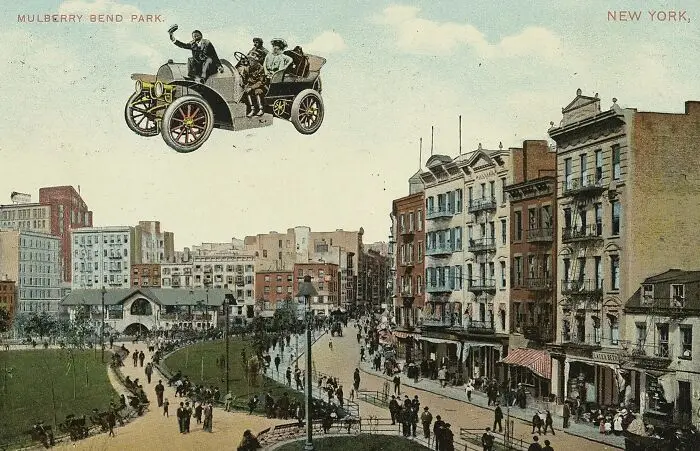
Fake photographs didn't just trick people, they also let them imagine what might be possible. This photomontage by Theodor Eismann is a "toekomstbeeld" (vision of the future), showing a world where cars could fly. Other images in the exhibition show similar fantasies: cityscapes with sky rails and zeppelins pasted in, or airborne visitors floating over Boston, Hamburg, and The Hague like something out of a dream.
The color in Eismann's photograph is just as fake as the flying car. It was added during printing with a limited range of inks, chosen by the designer rather than captured by the camera.
The color in Eismann's photograph is just as fake as the flying car. It was added during printing with a limited range of inks, chosen by the designer rather than captured by the camera.
Report
12points
#35 Wales Family Photograph, Kate Middleton, 2024
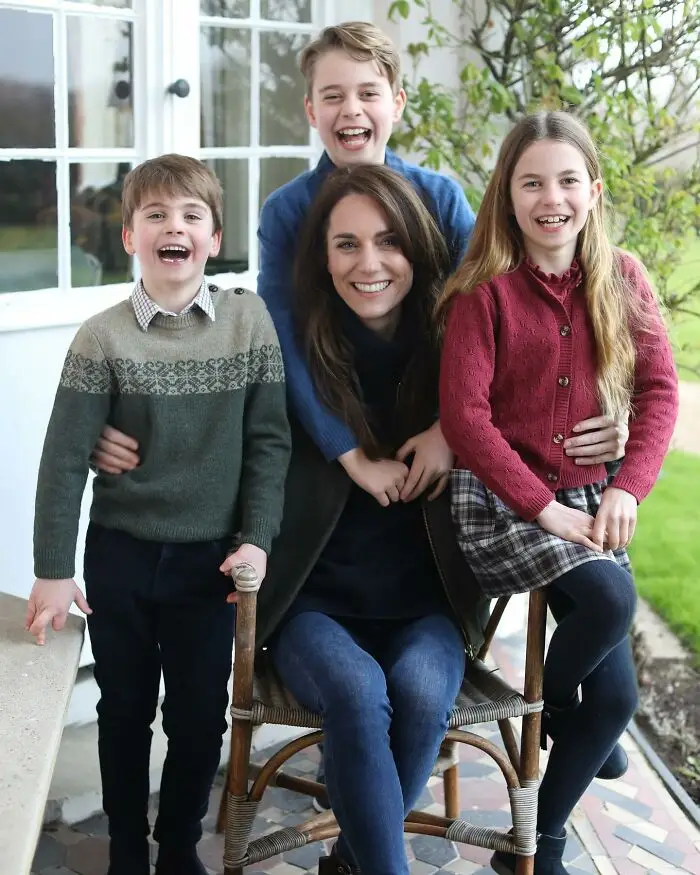
The Princess of Wales disappeared from public view in late 2023 and early 2024. The palace said she was recovering from abdominal surgery, but that didn't stop speculation about where she was and what was really going on.
When Kensington Palace released a Mother's Day family photo to calm things down, it backfired. News agencies immediately issued warnings not to use the image after spotting heavy editing. Princess Charlotte's hand looked wrong, among other problems. It violated guidelines for news images.
Kate apologized, saying "like many amateur photographers, I do occasionally experiment with editing." A few weeks later she announced she had cancer, which explained the absence and shut down most of the conspiracy theories. But the botched Photoshop job turned what could've been a minor embarrassment into a major story, feeding exactly the kind of speculation the palace was trying to avoid.
Report
7points