





Many of us begin a new year hoping to become better versions of ourselves. Some aim to improve their health, others focus on personal goals, and of course, expanding our knowledge is always a win.
That’s why today we’ve compiled a collection of random and wonderfully weird facts from a popular Facebook page. Some are surprising, some are amusing, and all of them are worth a moment of your attention. Keep scrolling to discover facts that might just stick with you.
#41

These bears aren't waiting for evolution. They're hacking it.
A population in Southeast Greenland is using "jumping genes" to rewrite their own DNA in real time. Their metabolism is shifting. Their hunting changed. They're surviving on glacier ice while others starve.
Evolution usually takes thousands of years. These bears are doing it now.
Source: Science Magazine
Report
22points
#42

It's been in a museum for 100 years. Still vibrant as day one.
Pollia condensata creates its metallic blue color through "structural color," microscopic cellulose layers that reflect light. No pigment at all.
Nature invented permanent dye millions of years before we tried.
Source: Proceedings of the National Academy of Sciences
Report
21points
#43

No sugar. No nectar. They started hunting instead.
Long-nosed bats, the primary pollinators for agave, were caught on camera eating aquatic insects to survive the 2025 drought. They abandoned their entire diet.
If the bats don't return to agave, the global tequila supply is in trouble.
Source: Journal of Mammalogy
Report
21points
#44

Your toilet is about to know you better than your doctor.
Japanese tech uses sensors and AI to track hydration, nutrition, and early health warnings from your waste. Reports go straight to your phone.
Preventive care starts in the bathroom now.
Shared for informational purposes only.
Source: Japanese Health Tech Research
Report
21points
#45

No meals for a year. No problem.
Crocodiles pack massive fat reserves into the base of their tails. Combine that with the slowest metabolism in the animal kingdom and they can outlast almost anything.
This is how they've survived for millions of years.
Source: Wildlife Biology Research
Report
21points
#46

It looks like a gemstone. It tastes like honey and vanilla.
High in Tibet's mountains, extreme altitude and intense sunlight turn this apple's skin deep purple, almost black. The flesh inside is bright white and naturally sweet.
Trees take 8 years to mature. Harvest lasts just 2 months. One of Earth's rarest fruits.
Source: Agricultural Research Journal
Report
20points
#47

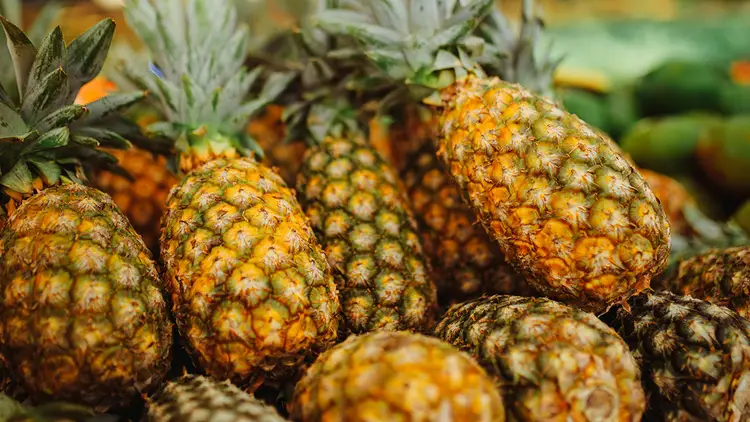
Owning a pineapple meant nothing. Being seen with one meant everything.
In the 1700s, pineapples were so expensive that aristocrats rented them just to carry under their arm at social events. Pure status symbol.
Instagram flexing started centuries before Instagram.
Source: Royal Historical Society
Report
20points
#48

We mastered fire far earlier than we thought.
Archaeologists in England discovered 400,000-year-old evidence of deliberate fire-making. Not using fire. Making it.
This pushes human control of fire back hundreds of thousands of years. We were engineers before we were modern.
Source: Proceedings of the National Academy of Sciences
Report
20points
#49

Chemo attacks cancer. It also attacks hair follicles. Until now.
Researchers developed a hydrogel with shampoo consistency that shields hair follicles from chemotherapy drugs. It prevents hair loss during treatment.
A simple gel solving one of cancer treatment’s cruelest side effects.
Source: Michigan State University
Report
20points
#50

The largest heart on Earth. Over a meter wide. 200 kilograms of muscle.
Each beat pumps 220 liters of blood. The sound travels for miles underwater.
This is biology at its most extreme.
Source: Marine Biology Research
Report
20points
#51

Everything we taught about these planets might be wrong.
A new computational model suggests Uranus and Neptune aren't "Ice Giants" at all. Their cores are likely massive solid rock and carbon, not frozen water.
Time to rewrite the textbooks. Again.
Source: Nature Astronomy
Report
19points
#52

Plants are listening. And responding.
Within 3 minutes of sensing a bee's wing vibration, Evening Primrose flowers increase nectar sugar by 20%. They hear the buzz and prepare the reward.
Flowers figured out customer service before we did.
Source: Ecology Letters
Report
19points
#53

The future of computing might be 70 years old.
Researchers broke chip speed records using “strained germanium,” a material from the 1950s. It moves data faster and cooler than any modern silicon.
Sometimes progress means looking backward.
Source: Nature Electronics
Report
19points
#54

Same rice. Completely different effect on your body.
Cooling cooked white rice in the fridge then reheating it increases resistant starch. This makes it behave like fiber, slowing digestion and reducing blood sugar spikes.
Pair it with protein and healthy fats. Your gut and insulin will thank you.
Source: International Journal of Molecular Sciences
Report
18points
#55

We thought it might already be gone.
On Christmas Day 2025, researchers spotted the critically endangered Manumea bird in a remote Samoan rainforest. It's the dodo's last living cousin.
A ghost from extinction just proved it's still alive.
Source: BirdLife International
Report
18points
#56

She was the city's spiritual shield.
A statue found in Pompeii on December 27 shows a woman wearing a crescent moon protection pendant. Historians believe she was a high-status sorceress who managed the city's defenses against evil spirits.
Buried for 2,000 years. Still guarding the ruins.
Source: Pompeii Archaeological Park
Report
18points
#57

This worm doesn’t jump. It levitates.
Physicists discovered a parasitic worm that generates an electrical charge to launch itself through the air onto passing insects. It uses static like a force field.
A microscopic hitchhiker with its own biological tractor beam.
Source: Current Biology
Report
18points
#58

Mosquitoes are flying biodiversity scanners.
A 2025 study found one mosquito’s blood meal can contain DNA from up to 86 species. Scientists can now track entire ecosystems just by catching bugs.
Want to know what lives in a forest? Interview the mosquitoes.
Source: Molecular Ecology
Report
18points
#59

It's not random. It's precision.
MIT researchers captured the instant of fertilization. A biochemical wave erupts across the egg in structured, rhythmic patterns following the Golden Ratio and Fibonacci sequences.
The same math found in galaxies, hurricanes, and nautilus shells. Life doesn't stumble into existence. It ignites with code.
Source: MIT / Developmental Biology
Report
17points
#60

The tomb was nearly empty. But not because of looters.
Archaeologists in Luxor discovered the burial site of Pharaoh Thutmose II. His wife, Queen Hatshepsut, likely moved his body and treasures to a secret location to protect them from floods.
3,500 years later, we still don't know where she hid him.
Source: Egyptian Ministry of Antiquities
Report
17points