





Look up at the sky, what do you see? Stars most likely, but what about the Moon? To some, seeing the moon in the sky has become a stale sight for the eyes. When you see it every day, it becomes rather boring to look at. All the focus is stolen by the bright dots of stars, but don’t underestimate the Moon. There are some awesome facts about the Moon that you might not know. Sure, it’s in the sky, but this one fact about the moon is just that — one fact. There is plenty to learn about this cosmic body that rotates around the Earth!
Who’s rocky and big? No, not the protagonist of Rocky, but rather our one and only Moon. This lump of rock that brings in the joy of night every day is one of the coolest things in our sky. A lot of interesting facts about the Moon focus more on the scientific side about the Moon. After all, we humans like to explore things. We pushed ourselves so much that we even landed on it. But there are a lot of cool facts about the Moon that we can learn, based more on the creative side. The Moon is said to change emotions based on its phases and waves because of its pull. Our Moon is also as pretty as a picture; some photographers capture its beauty by taking stunning supermoon photos. Of course, there are also some strange facts about the Moon, but give it some slack — it’s our only natural satellite in the sky!
Now, you might just know the crumbs of the fun facts about the Moon that there is to learn. It’s just like Earth — interesting and deep. But why spend time looking for singular facts, when you can have it all here? With the list we created below, not only will you enhance your knowledge of our rocky friend in the sky, but you might also find some interesting talking points to share with others. If a fact piqued your interest, upvote it for others to see. But if you have something to add, be sure to leave a comment.
#21
John Heywood stated that the moon was made of green cheese.
On April fool's day in 2002, NASA said that astronomers have been able to confirm that the Moon is made of green cheese and even found its expiration date after which the Moon may go bad.
Report
10points
#22
Actually, the Moon's surface is dark.
Although it seems extraordinarily bright when contrasted to the night sky, its reflectance is only slightly higher than that of cracked asphalt.
Report
9points
#23
There is water on the moon.
This is in the form of ice trapped within dust and minerals on and under the surface. Comets are most likely responsible for bringing water to the Moon's surface.
Report
9points
#25
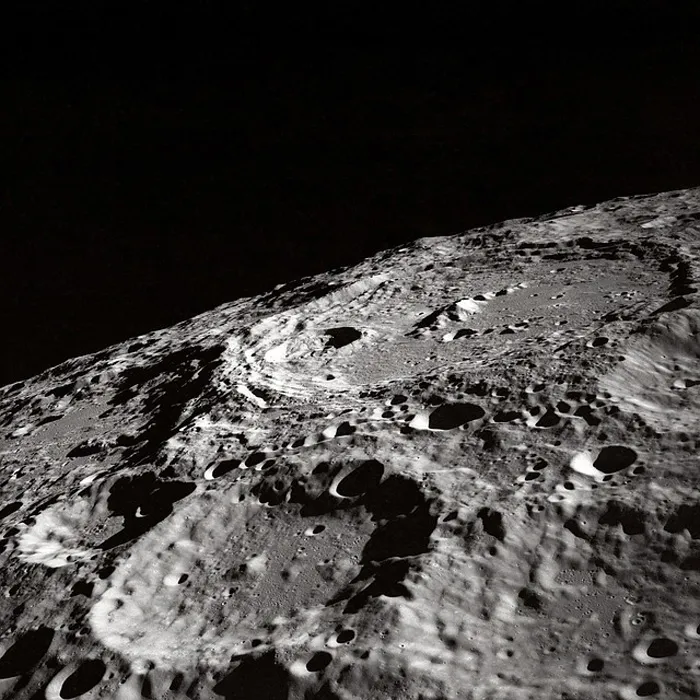
Moon craters can unlock space history.
Each crater, individually, can tell a story, both about the surface it impacted into and about the incoming meteor. Also, all the craters together can tell stories about the history of the surface and the history of solar system bombardment.
Report
9points
#26
The moon's surface is covered with dead volcanoes, impact craters, and lava flows, some visible to the unaided stargazer.
Report
9points
#27
Since the Moon has only a very thin atmosphere, a layer of dust — or a footprint — can sit undisturbed for centuries.
Report
9points
#29
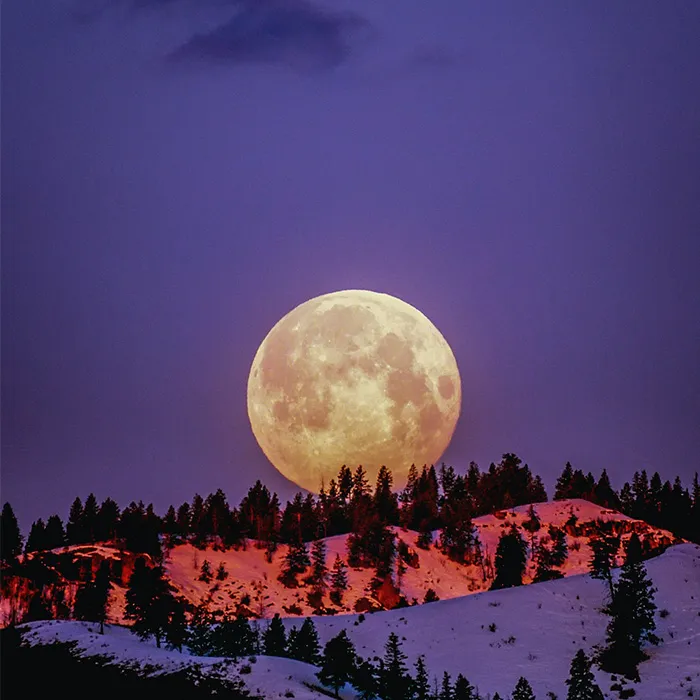
The Moon appears to change its shape each night, because as it orbits the Earth, the Sun lights up different parts of its surface – so it’s just our view of the Moon that’s changing, not the Moon itself.
Report
9points
#30
Like Earth, the Moon has gravity.
The Moon’s gravity is weaker, only one sixth of the Earth’s gravity, in fact. That means you’d weigh much less if you were to stand on the Moon.
Report
9points
#31
The Moon has only been walked on by 12 people.
Twelve of the 24 men who traveled from Earth to the Moon walked on its surface. The first, and most famous, was Neil Armstrong in 1969.
Report
9points
#32
An African American woman, Katherine Johnson, calculated the trajectory and reentry coordinates of the Apollo 11 mission to the Moon. She played a pivotal role in ensuring the U.S. won the space race.
Report
9points
#33
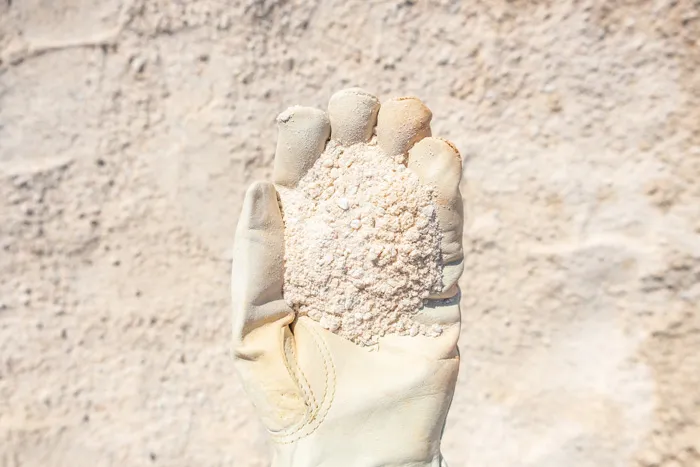
Many astronauts have reported hay fever-type symptoms after coming into contact with moon dust. Sneezing, an itchy throat, and sore eyes are the most common side effects.
Report
9points
#34
Nearly 81% of mental health professionals believe the full moon can make people ill.
Report
9points
#35
The word “lunatic,” after all, stemmed from the idea that changes in mental state were related to lunar cycles.
Report
9points
#36
The ancient Sumerians were the first civilization to use the Moon to form a calendar.
Each month on this calendar had 29 or 30 days, depending on whether or not the first day had a full moon. Regardless, there were always 12 months in a year.
Report
9points
#37
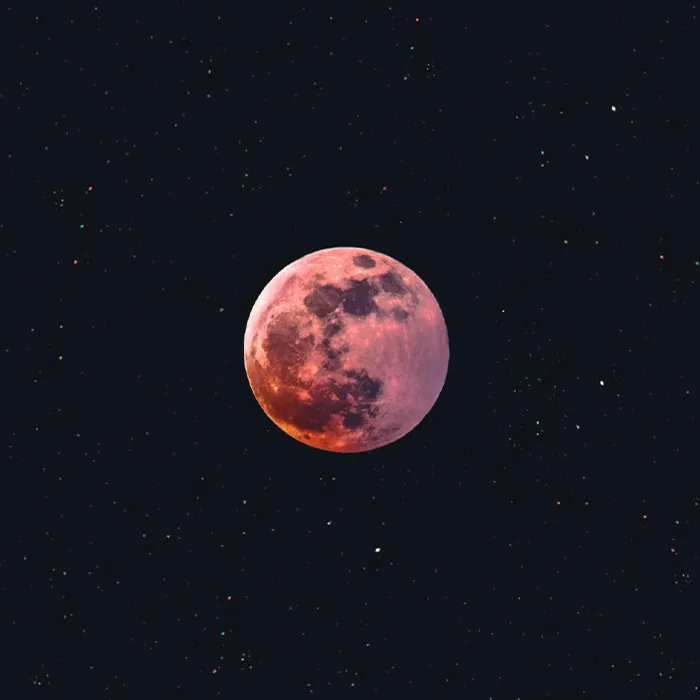
The Moon always shows Earth the same side.
It rotates in synchrony with the Earth. Large, black plains that span the distances between the bright, ancient crustal mountains and the noticeable impact craters are what distinguish its near side.
Report
8points
#38
The Moon and Earth exert a gravitational pull on each other. On Earth, the Moon's gravitational pull causes the oceans to bulge out on both sides of the moon. These bulges create high tides - it causes a tide of rock to rise and fall in the same way as it does with the water.
Report
8points
#39
It takes 27.3 days for the Moon to travel all the way around the Earth and complete its orbit.
Report
8points
#40
The first spacecraft to reach the Moon was Luna 1 in 1959.
This was a Soviet craft, which was launched from the USSR. It passed within 5995 km of the surface of the Moon before going into orbit around the Sun.
Report
8points