







With several Bank Holidays coming up, now is the perfect time to learn a few facts about England, whether you are interested in its rich history or planning to attend the annual cheese rolling festival (more about that later). And if the only fact about England you have heard so far is that it rains there 24/7, unfortunately, it's not true, and your knowledge about the country needs a software update.
You must have inevitably heard at least a few interesting facts about England that made you raise your eyebrow, question whether it really is the 21st century, or wonder whether you are being fooled or not. Although there are many misconceptions and myths surrounding British people, not all of the weird facts about England you hear are false. Quite a few are actually true! It is surprising, for example, that a country with one of the most thriving economies in the world still heavily relies on paper mail and phone calls as their preferred means of communication (yes, red phone booths are there to stay, and Brits do get an overwhelming amount of mail). However, it's these and other hallmarks that distinguish the Brits from other nations and make it one of the top travel destinations for many people. Well, it's the hallmarks AND some of the antiquated, strangest laws and rules in England that have never been revisited, and can still get one arrested if caught red-handed!
Below, we've compiled a list featuring many cool facts about England, including geographical, cultural, and historical information with some weird English laws for dessert. Were you familiar with any of these facts before? If so, let us know by giving them an upvote. Also, are there any other interesting facts that we should have mentioned? Share your knowledge about the country with fellow Pandas in the comments.
#21
England is named after the Angles tribe.
The Germanic Angles tribe settled in England in the early Anglo-Saxon era, approximately 98 AD. The clan spoke Old English, and the name England, which means "land of Engle," originates from them. Their name is also used for the region of East Anglia.
Report
13points
#22
An Englishman invented the World Wide Web.
In 1989, computer scientist Sir Tim Berners-Lee invented the World Wide Web. He created the first web server and browser and helped develop the internet for widespread usage. In 1990, he published the first website, which was a brief guide to using the World Wide Web.
Report
13points
#23
English is a Hybrid Language
German, Dutch, French, Danish, Latin Greek, and Celtic languages have all been amalgamated into English. This is a result of the substantial role that each of these civilizations has played throughout English history, mainly due to invasions from mainland Europe.
Report
13points
#24
The first underground passenger railway in the world was in England.
One of the things the UK is known for is the London Underground. To ease traffic on the streets, London constructed the first underground railway in the world in 1863. These early underground railways first employed steam-powered trains.
Report
11points
#25
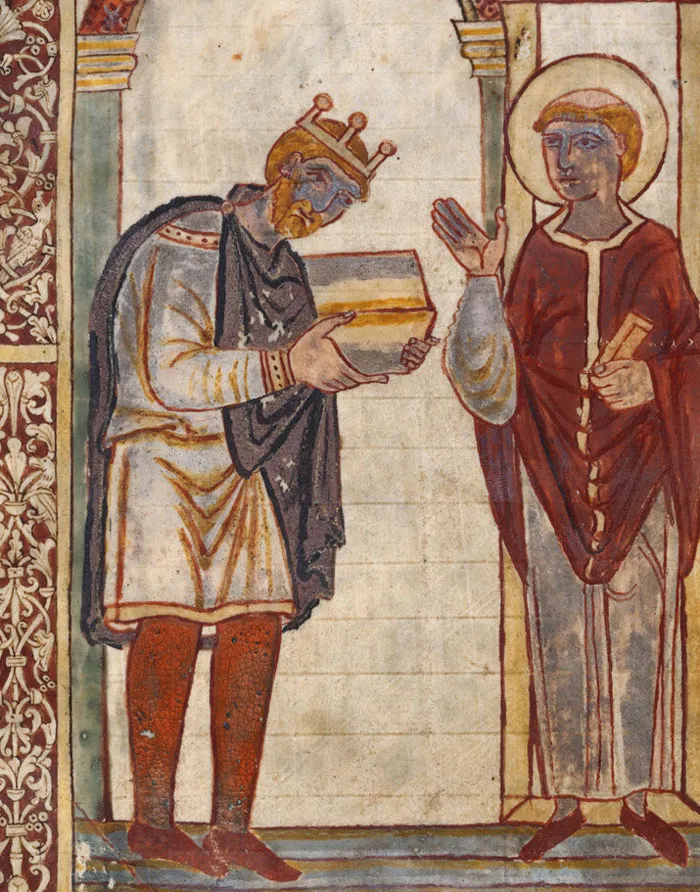
Æthelstan was the first King of England.
In the 10th century AD, King Æthelstan became the first monarch to govern over the territory now known as England. Æthelstan, regarded as one of the greatest Anglo-Saxon rulers, was Alfred the Great’s grandson and started the process that eventually led to Wessex annexing all the kingdoms and becoming England.
Report
11points
#26
The offensive two-finger gesture originated in England.
The Hundred Year’s War is where the vulgar “up yours” or V-sign gesture associated with the F-word first appeared. According to legend, English longbowmen cut off captured French archers’ index and middle fingers to prevent them from ever firing an arrow again. As they still had their fingers and were using them to destroy more Frenchmen, English archers would use the two-finger gesture to mock their foes in battle.
Report
11points
#27
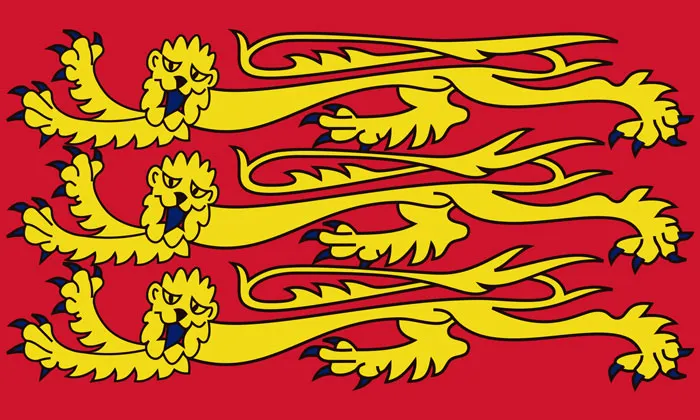
Three lions are England’s national symbol.
A standard with three gold lions on a crimson background used on the battlefield to encourage the troops dates back to the 12th century. The first came from Henry I, also known as the lion of England, who, upon assuming power in 1100, had a lion on his standard. Soon after, he wed Adeliza, whose father's shield had a lion. To mark the occasion, he added a second lion to his standard. When Henry II married Eleanor of Aquitaine in 1154, who—you guessed it—also had a lion on her family crest, there were now three lions.
Report
9points
#28
You can reach England from France through an underwater tunnel.
High-speed rail service known as the Eurostar links the Netherlands, Belgium, and France to England. It takes up to 3 hours to go from Paris to London via train. The train also goes through the Channel Tunnel, which runs underwater and is 31.5 miles long or 50.45 km. And to answer everyone's question: no, you can't actually see the sea from the Eurostar, which may be a bit of a letdown.
Report
9points
#29

It does rain a lot in England.
It's not a cliché that it does rain a lot in England. Yet, some parts of England are drier than others, so applying it to the whole country isn't factual. Throughout the past three decades, there has been variation in the yearly number of rainy days in the UK. In 2021, there were 148.7 days when at least 1 mm of rain fell. The most days with rain on record were 178.5 in 2000.
Report
9points
#30
England has a free at the point of use National Health Service.
The National Health Service (NHS), established in 1948, is one of England's most cherished achievements. Taxes are used to pay for it, and residents are not charged when the necessary medical service is delivered. This implies that everything is free at the point of use, including ambulance journeys, ER visits, lengthy hospital stays, complex surgeries, radiation, and chemotherapy.
Report
8points
#31
England still uses imperial measures.
Although the metric system is often used in business and technology, most of the population still primarily utilizes imperial units. All UK roadways utilize the imperial system except weight restrictions and modern height or width restriction signage.
Report
8points
#32
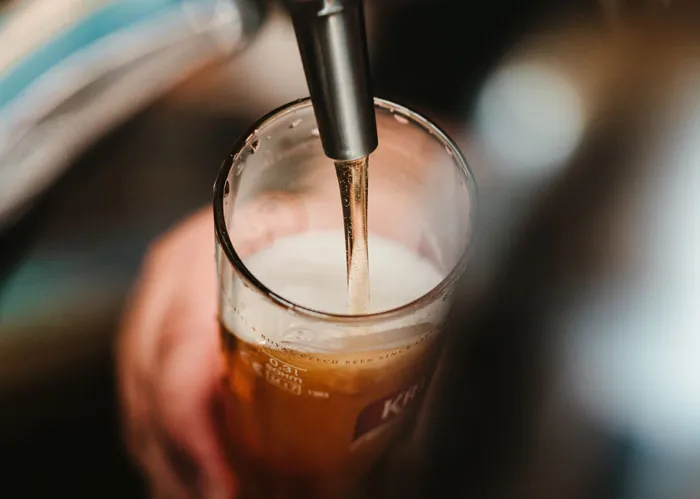
It can be illegal to be drunk in a pub in England.
Many people are guilty of having one too many at their local bar. As unbelievable as it may sound, there is a rule in England that actually forbids drunkenness at pubs—the one place where you are, in theory, allowed to be drunk. “Every person found drunk... on any licensed premises, shall be liable to a penalty,” reads the Licensing Act of 1872’s Section 12. In theory, if you are caught drunk in a bar or other public area, you might be fined £200.
Report
7points
#33
The first record of Morris dance dates back to 1448.
Since it has been practiced there for more than 500 years, the Morris dance is uniquely England's specialty. Although it is noted that it is ceremonial rather than social in nature, it is typically referred to as a type of folk dance, which can be performed solo or in a pair. The dancers may also use props like sticks, swords, and handkerchiefs.
Report
6points
#34
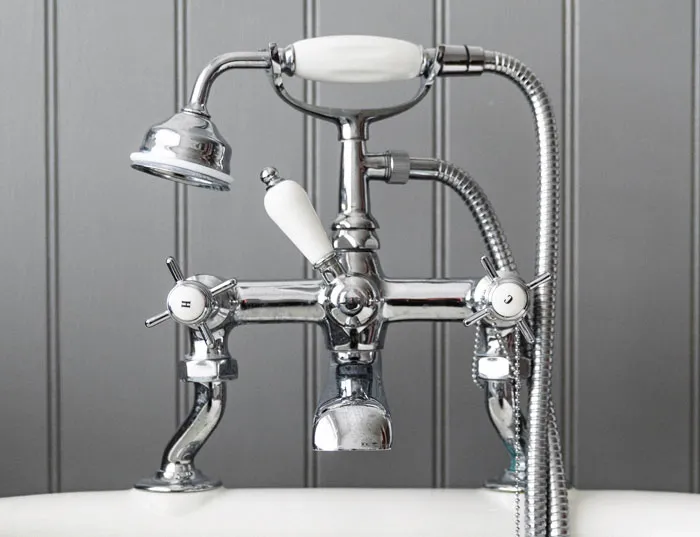
Old houses in England have separate taps for hold and cold water.
The old plumbing system initially only provided cold water directly from the networks. So when the need for hot water arose, people had to install a separate outlet for it. However, there's also a safety reason behind it. The reason for having a separate tank for cold water is to ensure the drinkable water's purity. This is because the hot water in the tank may have been sitting for a long time and could be contaminated. While introducing new fast boilers that do not require a standing tank is making this practice obsolete, it's still a relatively recent development.
Report
-1point
