




This post may include affiliate links.
#1

#2
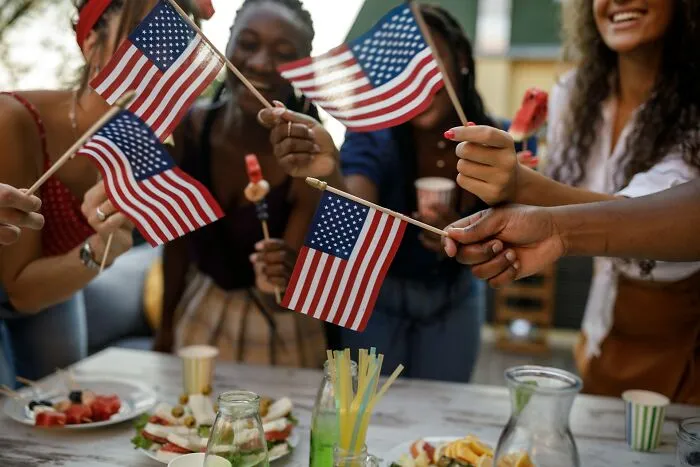
You know what? Maybe it’s a holiday in Great Britain for finally having gotten rid of America.
#3

: Why do you have so many
languages in Europe?
: Because we Germans lost the war
: Oh! I'm so sorry for you!
There are 195 widely recognized countries around the world, and every one of them has its own history, traditions, inventions, food, and little quirks that make it unique. Naturally, none of us can know everything about every corner of the planet, and that's part of what makes learning about other cultures so much fun. But every now and then, someone asks a question that leaves you doing a double take—like wondering whether the sun actually sets in Europe or whether people in Germany have refrigerators. Yes, seriously! And while those questions might make us laugh, they also show just how easy it is to make assumptions about places we haven't experienced ourselves.
#4
#5
#6

In a coffee shop in London.
American with thick Boston accent; "I love your accent!"
Me: "Thank you, I like yours too!"
Her: "I don't have an accent!!"
Me: "Yes you do, you're from Boston, right?"
Her: "Oh sweetie, it's not an accent, everyone in Boston talks like this."
So, rather than focusing on what people don't know about Europe, let's look at some of the fascinating things the continent has given the world. From iconic celebrations and groundbreaking inventions to discoveries that changed everyday life, Europe has had a surprisingly big influence on the way we live today. And we're starting with one of its most famous traditions: Oktoberfest.
The festival began on October 12, 1810, in Munich as a celebration of the wedding of Crown Prince Ludwig and Princess Therese. What started as a royal celebration eventually grew into one of the world's most famous festivals, attracting millions of visitors from around the globe each year. Although beer is now a huge part of the Oktoberfest experience, the original celebration was actually centered around horse races held in honor of the royal wedding. In 2025, Oktoberfest welcomed around 6.5 million visitors, who consumed approximately 6.5 million liters of beer over the 16-to-18-day celebration. That's roughly one liter per visitor! Beyond the beer tents, the festival is also known for traditional Bavarian food, music, costumes, amusement rides, and a lively atmosphere that turns Munich into an international meeting point every autumn.
#7
#8
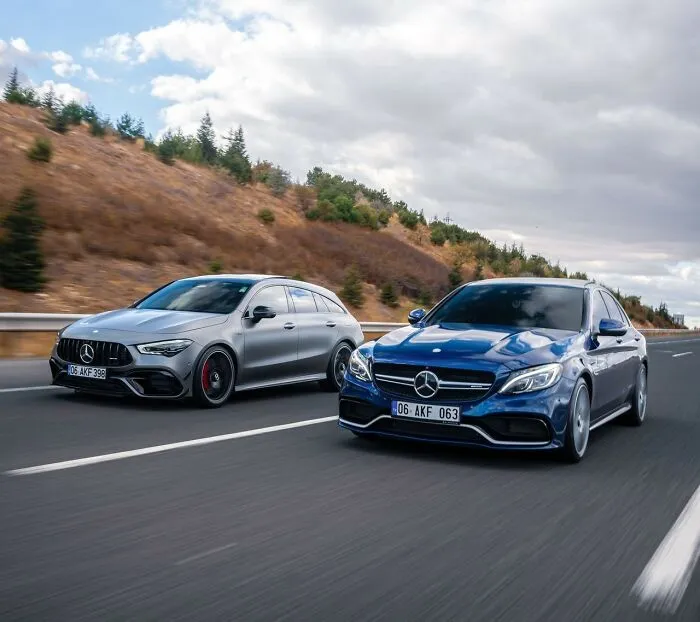
I told them, our Mercedes, BMWs and Porsches there run on water. We sell those that need gas to the US…
#9

Let me do so anyway.
Once I was asked if we have internet. While commenting/arguing here on Threads.
Europe has also played a huge role in the history of the automobile. German inventor Karl Benz patented the Benz Patent-Motorwagen in 1886, widely regarded as the world's first practical gasoline-powered automobile. Unlike modern cars, it was a simple three-wheeled vehicle powered by a small internal-combustion engine, but the basic idea would eventually transform how people traveled. His wife, Bertha Benz, famously took the vehicle on a long-distance journey in 1888, traveling more than 100 kilometers to visit her family. The trip wasn't simply a road adventure—Bertha wanted to demonstrate that her husband's invention could actually be useful outside the workshop. Penny Haw's book The Woman at the Wheel explores how Bertha's determination and practical problem-solving helped prove that the automobile had a future. Her journey is now remembered as an important moment in automotive history.
#10

“Look at this! This is probably completely new to you. Chickens lay these and then we can eat them. You can boil them or fry them. Have you ever seen a real egg before?”
Then they even went, “Here, you can hold it!” and put the egg in my hand so I could apparently experience an egg for the first time.
I’m still not entirely sure what they think is going on in Sweden.
#11
#12
England
“How come you speak English so well?”
Poor dear was so confused.
And yes, Europeans do, in fact, have the internet. Jokes aside, Europe has been responsible for some major developments in modern technology. The World Wide Web was invented by British scientist Tim Berners-Lee in 1989 while he was working at CERN near Geneva, Switzerland. His original idea was to create a system that would allow researchers to easily share information and documents across different computers. The first website went live in 1991, and the technology eventually became the foundation for the web we use today. It's worth remembering that the internet and the World Wide Web aren't technically the same thing: the internet is the wider network connecting computers, while the web is one of the services that runs on it. So, if anyone was still wondering whether Europe has internet access, we have some pretty convincing evidence.
#13
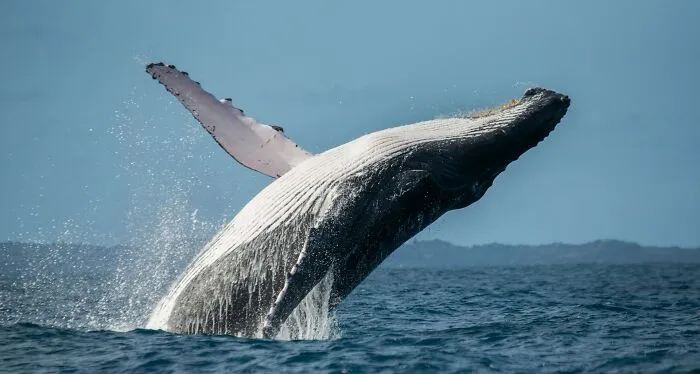
Me: "Wales"
Them: you are from the sea?
Me: "eh?"
Them: " whales live in the sea"
Me: " oh, I see. No the country of Wales"
Them: " where is that?"
Me: "part of the UK"
Them: " so England?"
Me: No, Wales"
Them: " there is no such country"
This was whilst looking at a sunset, in Wales.
#14

We were 2 native French speakers in France.
#15

As an exchange student in Chicago I was asked if we had newspapers in Italy.
I said "no, Italy is so small that if something happens, we just chat to each others and by the end of the day everyone knows what happened".
Then there's Bluetooth, the technology most of us use without giving it a second thought. Whether you're connecting wireless headphones, transferring files, using a keyboard, or pairing your phone with your car, Bluetooth has quietly become part of everyday life. Engineers at Ericsson in Sweden developed the technology in the 1990s as a way for electronic devices to communicate wirelessly over short distances. And its name has a surprisingly old connection.
Bluetooth was named after Harald Bluetooth, a 10th-century Danish king who is remembered for helping unite parts of Scandinavia. The idea was that, just as Harald brought different groups together, Bluetooth technology could bring different electronic devices together. So the next time your headphones connect to your phone without a cable, you can thank a medieval Scandinavian ruler for the rather unusual name.
#16
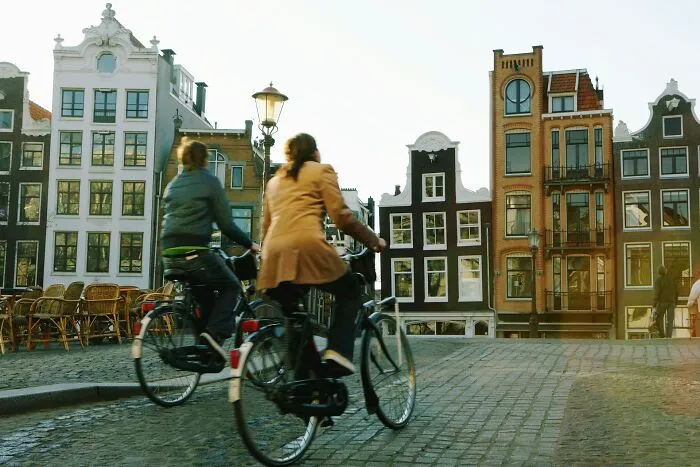
"The Netherlands."
"Which country in The Netherlands?"
"The Netherlands is one country."
"No it isn't, it's Denmark and Amsterdam, so where are you from?"
I just said Amsterdam and walked away.
#17

#18
Europe has also given the world one of modern medicine's most important discoveries: penicillin. Scottish scientist Alexander Fleming discovered penicillin in London in 1928 after returning from holiday and noticing that mold had grown on a forgotten Petri dish containing bacteria. He noticed that the bacteria around the mold had been destroyed. Fleming realized the mold produced a substance that got rid of certain bacteria and eventually identified it as penicillin. The discovery itself was only the beginning, as scientists later developed ways to produce the drug on a much larger scale. Penicillin and other antibiotics went on to transform the treatment of bacterial infections and save countless lives.
#19

#20
"It's my mother language. I grew up here."
"Uhm... but everybody speaks English when they are born and you have to learn your new language, no?"
That happened in Munich, at University during a Seminar for studying the ways of learning languages and teaching languages...