

When you marry someone, you naturally hope you'll get along with their family, too. But let's be real, pandas, relationships with in-laws can sometimes get tricky. Different personalities, expectations, and opinions can lead to disagreements, and before you know it, even the smallest things can turn into full-blown family drama.
This post may include affiliate links.
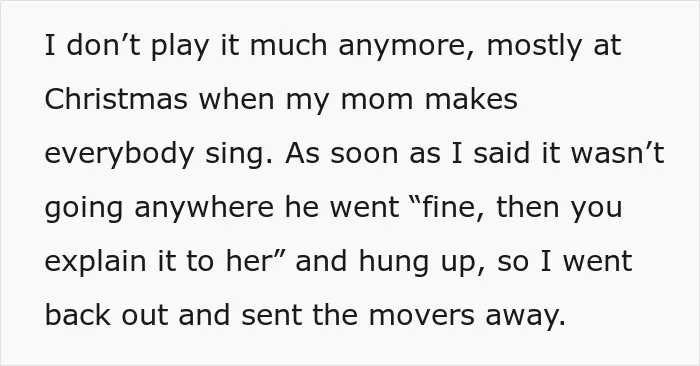
Take this woman's story, for instance. One morning, she was surprised to find movers at her doorstep, ready to take away something that belonged to her. Turns out, her husband had made a promise to his sister without talking to her first. And when the woman refused to go along with the plan, her sister-in-law wasn't too happy. Things only got messier from there. Keep reading to find out what happened next.
Parting with belongings that hold sentimental value can be difficult, especially when someone else makes that decision for you

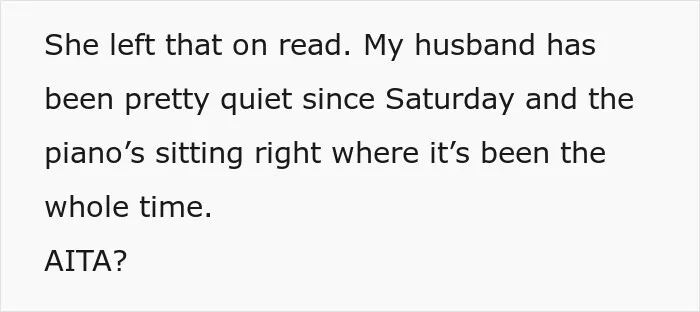
A woman shared how her husband secretly arranged for movers to take her cherished childhood piano to his sister's house



Toxic in-laws may offer unsolicited opinions on everything, including how couples should raise their children
When you become part of a new family, it's always nice to have people who make you feel at home. Maybe it's your father-in-law remembering your favorite snack or your sister-in-law helping you settle in during family gatherings. These little gestures can make a big difference, especially when you're still getting to know everyone. After all, it's nice to feel that your partner's family has your back, too.
But hey, not everyone gets so lucky! Some people deal with in-laws who constantly criticize, interfere, or make them feel unwelcome. And sometimes, these issues can even affect their marriage. In her book Toxic In-Laws: Loving Strategies for Protecting Your Marriage, therapist Dr. Susan Forward explores five types of difficult in-laws and how their behavior can affect family relationships.
First up are "The Critics." These are the relatives who seem to have an opinion about everything. Your cooking isn't good enough, your house could be cleaner, or your career choices need some serious reconsideration. Sound familiar, pandas? And if you have kids, chances are they'll have plenty to say about how you raise them, too.
Psychologist Dr. Michele Goldman highlights this in a Parade article, explaining, "Toxic in-laws will insert themselves into parenting decisions or even parent the child differently than you are parenting them." Imagine telling your toddler they can't have any more sweets, only for a grandparent to sneak them some behind your back. While they might see it as harmless fun, constantly ignoring a parent's rules can create tension and make them feel undermined.
Next are "The Controllers," who want a say in how their grown-up children and their partners live. They might use money, guilt, or family expectations to influence decisions about everything from where a couple lives to how they spend their holidays. And while they may see it as looking out for the family, constantly being told what to do can feel suffocating.
Interestingly, some of these controlling behaviors may have historical roots. In a BBC article, Gretchen Perry, a professor at the University of Canterbury in New Zealand, discusses how traditional family structures contributed to the stereotype of the meddling mother-in-law. In some societies, newly married women moved into their husband's family home, where the mother-in-law held considerable authority.
"Depending on the nature of that circumstance, it can be a difficult, controlling environment, with a lot of conflict," Perry explains. And while family structures have changed over time, some of these expectations can still create tension today.
Then there are "The Engulfers." These are the relatives who struggle to accept that their children have grown up and now have lives of their own. They might expect every weekend to be spent together, call constantly, or get upset when a couple makes plans without them. Of course, wanting to spend time with family is wonderful, but nobody should feel guilty for occasionally wanting some space.

It's important to communicate openly and set clear boundaries with in-laws to maintain healthy family relationships
And let's not forget "The Masters of Chaos." These are the in-laws who always seem to have some new drama unfolding. Whether it's an argument, an emergency, or another disagreement, they somehow manage to drag everyone else into it. As Marriage.com points out, toxic family dynamics can involve spreading rumors, creating unnecessary drama, or exaggerating situations.
Finally, there are "The Rejecters," who make it clear that they don't consider you part of the family. Maybe they exclude you from conversations, leave you out of plans, or constantly make you feel like an outsider. And when you're genuinely trying to build a relationship with your partner's loved ones, that kind of treatment can be particularly hurtful.
Of course, having disagreements with your in-laws doesn't automatically make them toxic. Every family has different personalities, expectations, and occasional arguments. What matters is whether people are willing to listen, respect boundaries, and make an effort to get along. And when conflicts arise, having a partner who supports you and respects your decisions can make a big difference.
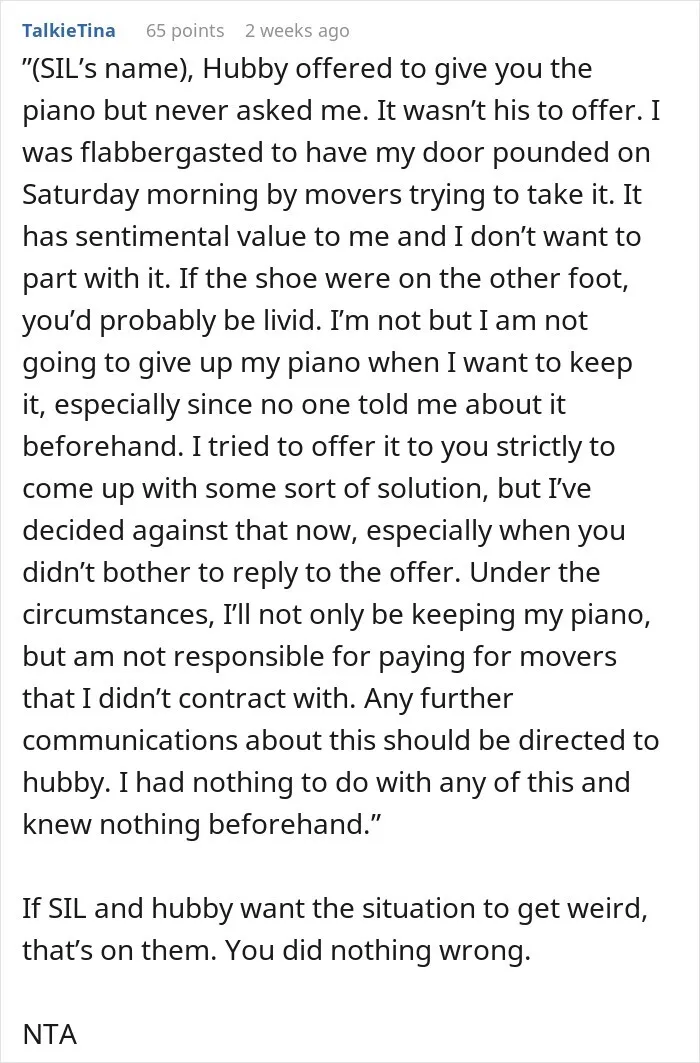
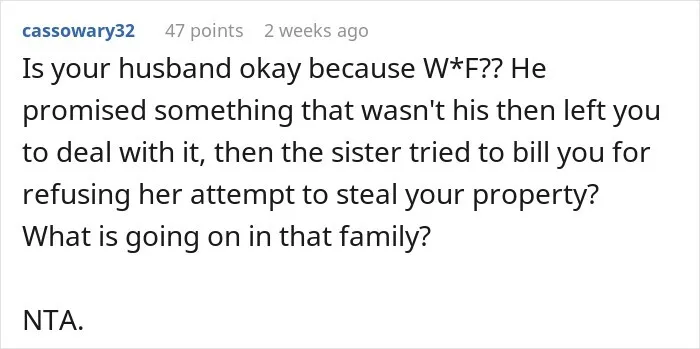
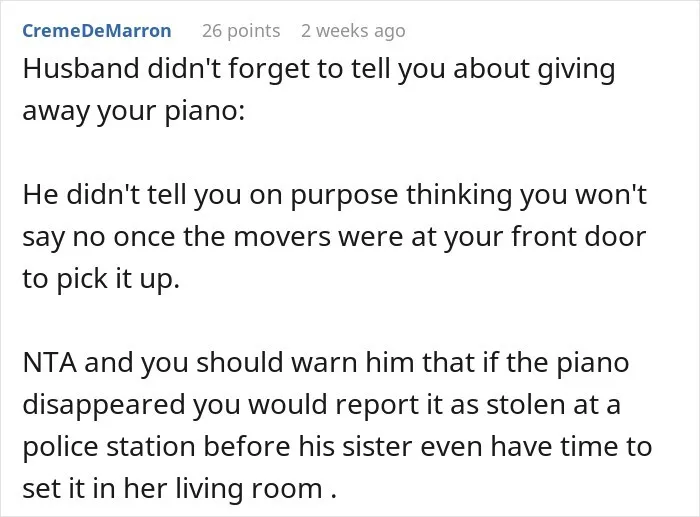
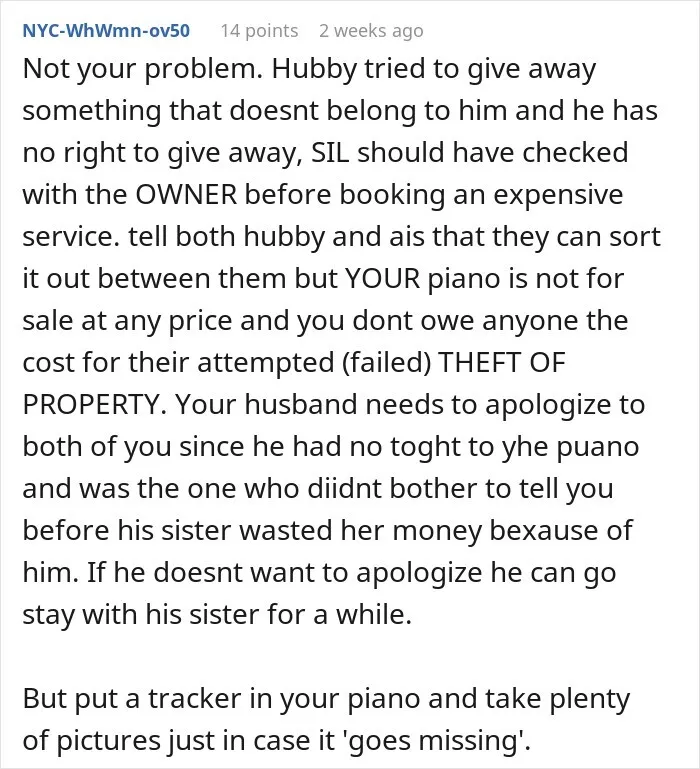
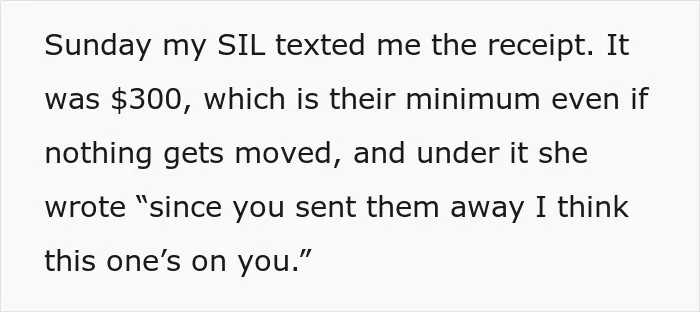
Coming back to today's story, the sister-in-law seemed to have some unreasonable expectations, especially when she asked the woman to pay for movers she never agreed to hire. But the husband wasn't innocent either. After all, he promised away his wife's childhood piano without asking her! So, pandas, was the woman right to send her sister-in-law a price for the piano, or could she have handled things differently? Let us know in the comments below!

People were quick to call out the woman's husband for being disrespectful of her feelings