



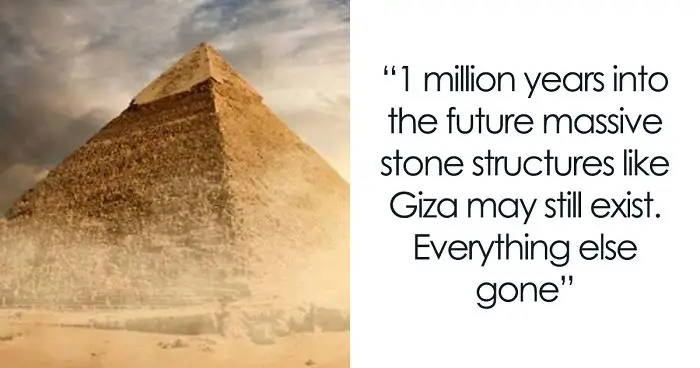

People have always been curious, not only about the future of humanity but also the fate of planet Earth and the universe itself. However these days, the threat that climate change poses makes us think about our planet's future even more often. Although scientists cannot answer for certain what will happen thousands or million years into the future, they try to map the future with information and technology that is available today.
Imgur user WannaWanga did some digging around the internet and gathered a brief timeline of the far-future. If you're interested in these scientific predictions of the fate of the universe, scroll below!
#21 3 Billion Years Into The Future
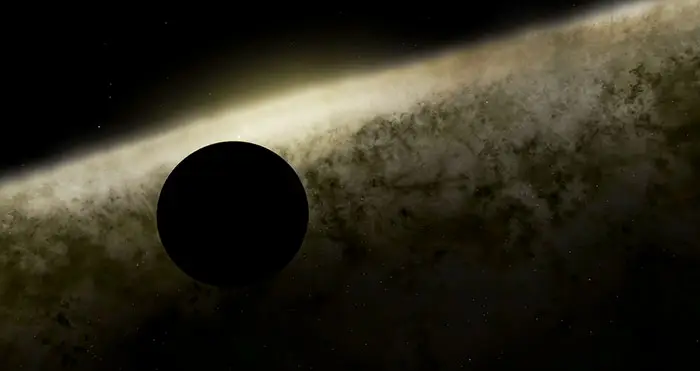
There is a roughly 1 in 100,000 chance that the Earth might be ejected into interstellar space by a stellar encounter before this point, and a 1 in 3 million chance that it will then be captured by another star. Were this to happen, life, assuming it survived the interstellar journey, could potentially continue for far longer.
Median point at which the Moon's rising distance from the Earth lessens its stabilizing effect on the Earth's axial tilt. As a consequence, Earth's true polar wander becomes chaotic and extreme, leading to dramatic shifts in the planet's climate due to the changing axial tilt. If the Earth's tilt exceeds 54°, then the poles will receive more solar radiation than the equator. The planet's tilt could shift to as high as 60° - 90° for periods of 10 million years.
3.6 Billion, Neptune's moon Triton falls through the planet's Roche limit, potentially disintegrating into a planetary ring system similar to Saturn's.
Report
#22 4 Billion Years Into The Future
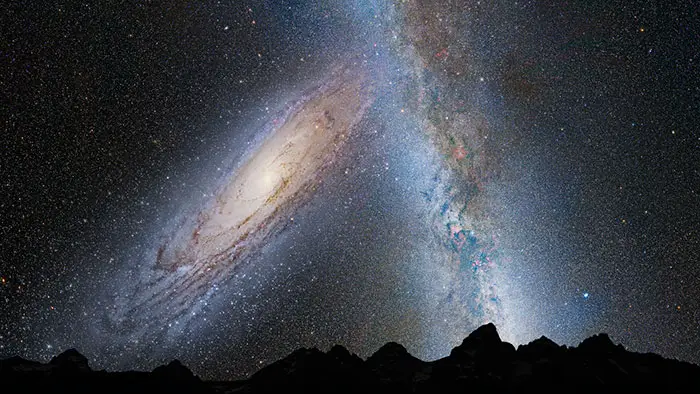
Median point by which the Andromeda Galaxy will have collided with the Milky Way, which will thereafter merge to form a galaxy dubbed "Milkomeda". The planets of the Solar System are expected to be relatively unaffected by this collision
Report
#23 5 Billion Years Into The Future
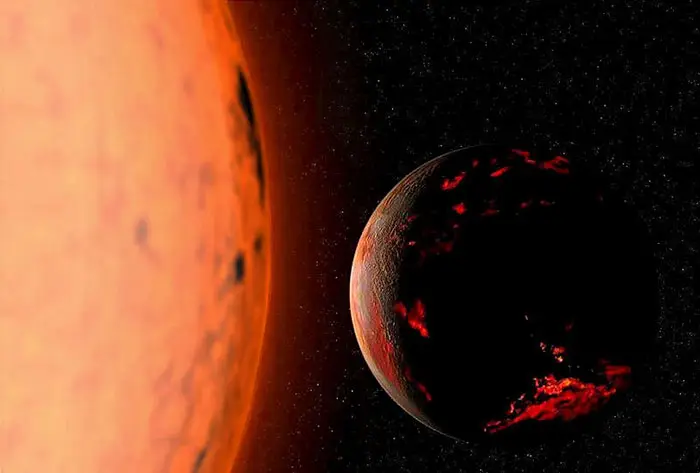
With the hydrogen supply exhausted at its core, the Sun leaves the main sequence and begins to evolve into a red giant.
Report
#24 7 Billion Years Into The Future
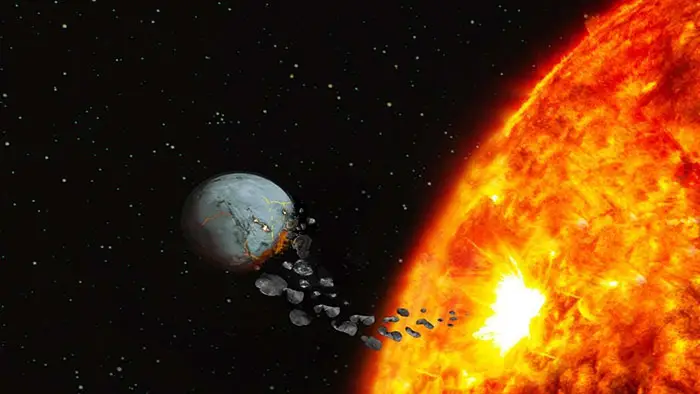
Earth and Mars may become tidally locked with the expanding subgiant Sun.
The Earth and Moon are very likely destroyed by falling into the Sun, just before the Sun reaches the tip of its red giant phase and its maximum radius of 256 times the present-day value. Before the final collision, the Moon possibly spirals below Earth's Roche limit, breaking into a ring of debris, most of which falls to the Earth's surface. During this time, most of the Earth's atmosphere will be lost to space and it's surface will consist of a lava ocean with flouting continents of metals and metal oxides as well as icebergs of refractory materials, with an average temperature of over 2,400 K (2,130 °C; 3,860 °F). During this era, Saturn's moon Titan may reach surface temperatures necessary to support life.
The Earth and Moon are very likely destroyed by falling into the Sun, just before the Sun reaches the tip of its red giant phase and its maximum radius of 256 times the present-day value. Before the final collision, the Moon possibly spirals below Earth's Roche limit, breaking into a ring of debris, most of which falls to the Earth's surface. During this time, most of the Earth's atmosphere will be lost to space and it's surface will consist of a lava ocean with flouting continents of metals and metal oxides as well as icebergs of refractory materials, with an average temperature of over 2,400 K (2,130 °C; 3,860 °F). During this era, Saturn's moon Titan may reach surface temperatures necessary to support life.
The Sun reaches the tip of the red-giant branch of the Hertzsprung–Russell diagram, achieving its maximum radius of 256 times the present-day value. In the process, Mercury, Venus, very likely Earth, and possibly Mars are destroyed.
Report
#25 8 Billion Years Into The Future

The Sun becomes a carbon-oxygen white dwarf with about 54.05% its present mass. At this point, if somehow the Earth survives, temperatures on the surface of the planet, as well as other remaining planets in the Solar System, will begin dropping rapidly, due to the white dwarf Sun emitting much less energy than it does today.
Report
#26 14 Billion Years Into The Future
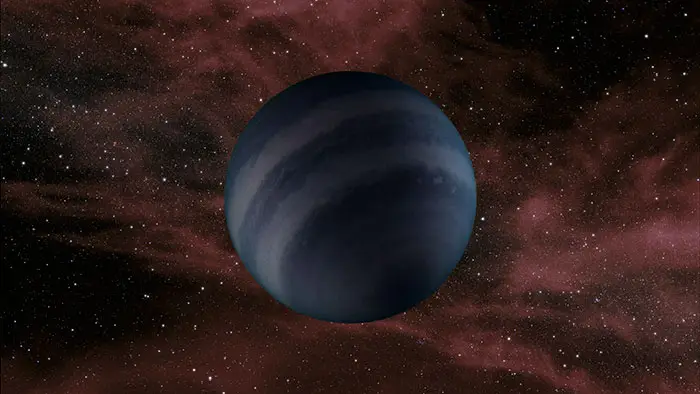
The Sun becomes a black dwarf. Its temperature and luminosity plummets, making it invisible to human eyes (not that they exist anymore).
Report
#27 50 Billion Years Into The Future
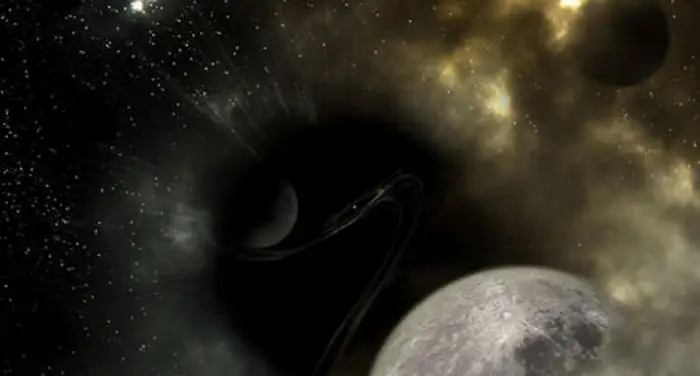
If the Earth and Moon are not engulfed by the Sun, by this time they will become tidelocked, with each showing only one face to the other. Thereafter, the tidal action of the white dwarf Sun will extract angular momentum from the system, causing the lunar orbit to decay and the Earth's spin to accelerate.
Report
#28 22 Billion Years Into The Future
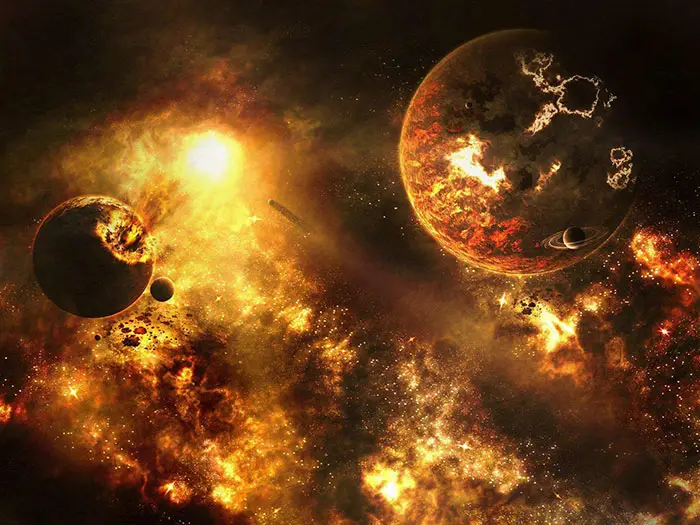
The end of the Universe in the Big Rip scenario, assuming a model of dark energy with w = −1.5. If the density of dark energy is less than -1, then the Universe's expansion would continue to accelerate and the Observable Universe would continue to get smaller. Around 200 million years before the rip, galaxy clusters like the Local Group or the Sculptor Group would be destroyed. 60 million years before the rip, all galaxies will begin to lose stars around their edges and will completely disintegrate in another 40 million years. Three months before the Rip, all star systems will become gravitationally unbound, and planets will fly off into the rapidly expanding universe. 30 minutes before the end, planets, stars, asteroids and even extreme objects like neutron stars and black holes will evaporate into atoms. 10−19 seconds before the end, atoms would break apart and right at the moment of the rip even space time itself would disintegrate. The universe would enter into a "rip singularity" when all distances become infinitely large.
Report
#29 100 Billion Years Into The Future
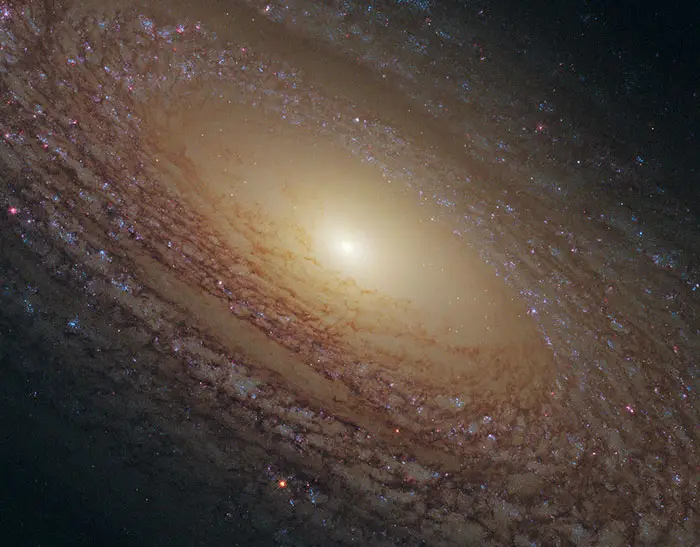
The Universe's expansion causes all galaxies beyond the former Milky Way's Local Group to disappear beyond the cosmic light horizon, removing them from the observable universe
150 Billion, The cosmic microwave background cools from its current temperature of c. 2.7 K to 0.3 K, rendering it essentially undetectable with current technology
Report
#30 1 Trillion Years Into The Future
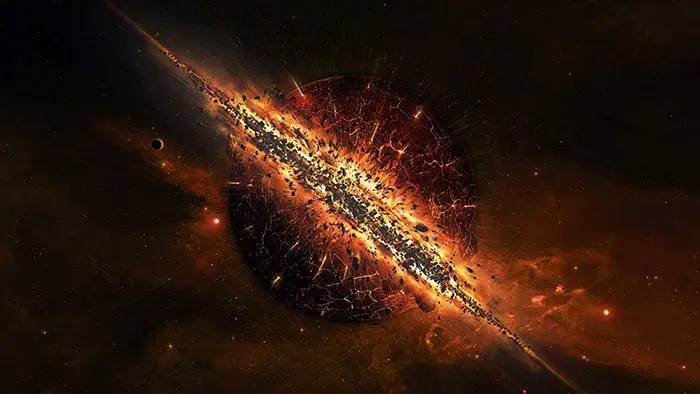
Estimated time the end of the Universe via the Big Crunch, assuming a "closed" model. Depending on how long the expansion phase is, the events in the contraction phase will happen in the reverse order. Galaxy superclusters would first merge, followed by galaxy clusters and then later galaxies. About 100,000 years before the Big Crunch, stars have become so close together that they will begin to collide with each other. Also, the cosmic microwave background temperature will rise to about 100,000 K (100,000 °C; 180,000 °F), which means that stars will no longer be able to expel their internal heat, slowly cooking themselves until they explode. Minutes before the Big Crunch, the temperature will be so great that atomic nuclei will disband and the partials will be sucked up by already coalescing black holes. Finally, all the black holes in the universe will merge into one singular black hole containing all the matter in the universe, which it would then devour the universe, including itself.
After this, it is possible that a new Big Bang would follow and create a new universe. The observed actions of dark energy do not support this scenario; however, the properties of dark energy are still not known, it is possible that dark energy could reverse sometime in the future.
After this, it is possible that a new Big Bang would follow and create a new universe. The observed actions of dark energy do not support this scenario; however, the properties of dark energy are still not known, it is possible that dark energy could reverse sometime in the future.
The universe's expansion, assuming a constant dark energy density, multiplies the wavelength of the cosmic microwave background by 1029, exceeding the scale of the cosmic light horizon and rendering its evidence of the Big Bang undetectable. However, it may still be possible to determine the expansion of the universe through the study of hypervelocity stars.
Report
#31 100 Trillion Years Into The Future
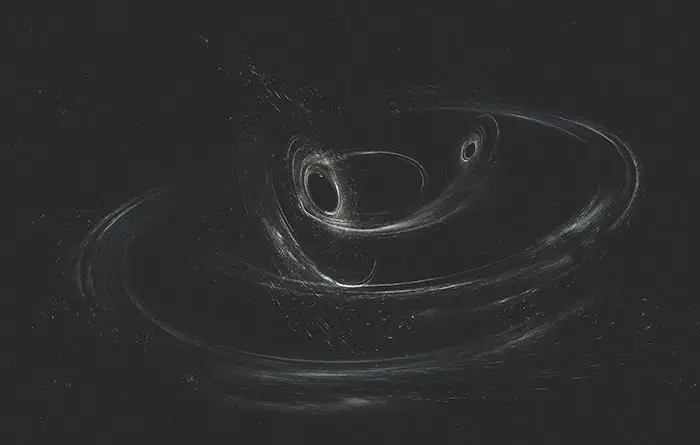
High estimate for the time until normal star formation ends in galaxies. This marks the transition from the Stelliferous Era to the Degenerate Era; with no free hydrogen to form new stars, all remaining stars slowly exhaust their fuel and die
110–120 Trillion, The stellar-mass objects remaining are stellar remnants (white dwarfs, neutron stars, black holes) and brown dwarfs.
Collisions between brown dwarfs will create new red dwarfs on a marginal level: on average, about 100 stars will be shining in what was once the Milky Way. Collisions between stellar remnants will create occasional supernovae.
Collisions between brown dwarfs will create new red dwarfs on a marginal level: on average, about 100 stars will be shining in what was once the Milky Way. Collisions between stellar remnants will create occasional supernovae.
Report
#32 10^10^50 Years

Estimated time for a Boltzmann brain to appear in the vacuum via a spontaneous entropy drop.
The chances of this happening are so small that the last star will die long before it happens. However, the vast majority of our universe’s life will take place not before, but after all the stars have died.
Report
#33 10^10^10^56
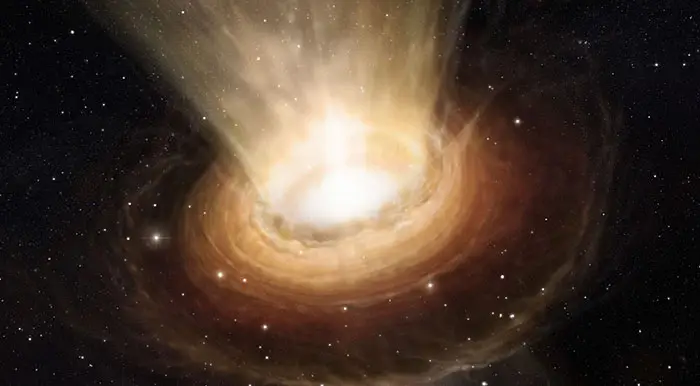
Around this vast timeframe, quantum tunnelling in any isolated patch of the vacuum could generate, via inflation, new Big Bangs giving birth to new universes.
Report