







#1

After he put the last stitch in, my friend started clearing up and found the local anaesthetic bottle, unopened. He realised he'd not put any local in at all and yet the guy didn't once flinch leave aside complain. When asked why he didn't say anything, he just said "oh I thought that's how it's supposed to feel. I didn't mind. Lovely chatting to you", then walked out.
Don't make 'em how they used to.
Lignocaine edit: Spoke to my friend last night. I totally didn't do this story justice! The laceration was sustained in a machete attack. Two guys tried to break in to the man's house and one slashed at him but he fought them off long enough until a neighbor started to run over and they scarpered. Such a relevant detail, how could I have forgotten? He had to clean the wound out thoroughly which is even more painful than suturing. And to those of you pointing out the Flanders inaccuracy, that's purely my incorrect paraphrasing. It was WW2, so ignore the trench comment. I'll refrain from the obvious "I'm a doctor Jim, not a historian" line. Or perhaps I won't.
#2
#3
Unfortunately, pain is a pretty inevitable part of being human—and as unpleasant as it can be, it’s an important one, too. As registered nurse Angela Morrow writes for Verywell Health, “Pain signals that something is wrong in your body. When injury or disease affects a part of your body, nerve signals travel to and from your brain, creating the sensation of pain.” This can trigger protective reflexes—like quickly pulling our hand away from something hot, seemingly without even thinking about it.
#4

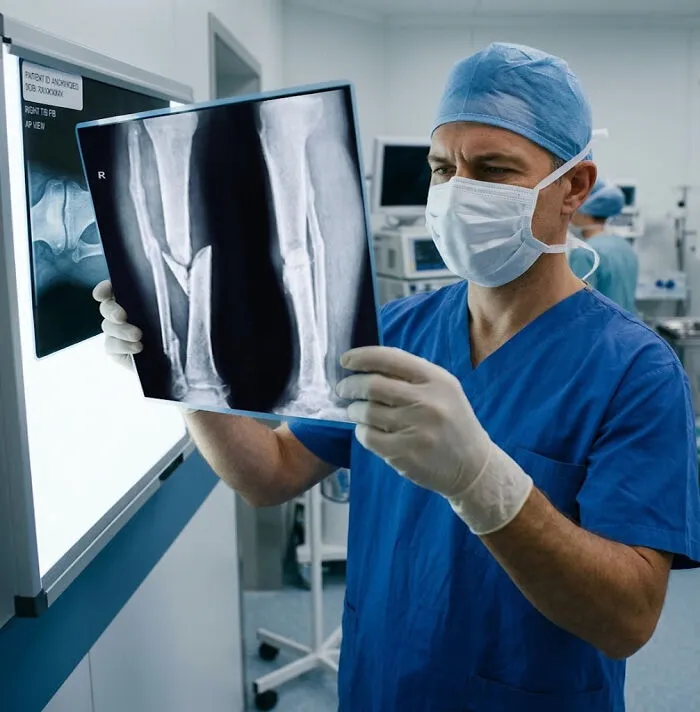
I get into the room and see that the rag was removed...and holy s**t, thats a bone sticking out of his arm. How the hell is this kid not balling (and how the hell did he just walk in to the ER, barely cradling his arm?). Right then I knew this kid was tough. Little did I know that he was about to become superman.
So, I'm sitting there admiring this gruesome wound and listening to his back story. Apparently the kid was out with a friend riding a four wheeler when they accidentally drove into a ditch and flipped the vehical. Kid was thrown and the quad rolled over his arm. This was about 4 miles out in the middle of nowhere over bumpy dirt trails. So of course he just jumps on the quad and rides the 4 miles back to his house with a bone sticking from his arm. Then has his dad just leisurly drives him the 30 minutes into town to the hospital and strolls on in. Best part: when the doctor said that they needed an X-ray of the arm, he just casually asks, "before you move it, can I get a little pain medication, it sorta hurts." Most b****s 8 year old I have ever seen.
#5
#6

Typically, we use a numbing agent to eliminate sensation to the entire finger using something called a "digital block." I put it in. After ten minutes, he still felt me touching his finger tip. I tried putting some around the nail. He still felt everything. His mother said his father actually had a similar thing - lidocaine didn't work on him. I offered him a different numbing medicine (we can inject benadryl in that case) or even knocking him out. He looked at me in the eyes and said "doc, just take it off."
"Without anything??" "Yeah, it's fine. They fix our cuts without numbing medicine."
"But it's gonna hurt a lot. I have to scrape..." "I know"
So I went at it. He grabbed a towel with his other hand and I went to work. 45 minutes later, the nail was off, he was repaired, and I replaced the nail in its rightful place. The kid didn't even make a noise.
Morrow explains that pain can be classified in several ways, including by duration (acute, subacute, or chronic), location (localized, generalized, or diffuse), and source (such as tissue damage, nerve damage, or problems affecting the internal organs or musculoskeletal system). There are also more specific types, including pain caused by normally non-painful stimuli (allodynia), exaggerated pain responses (hyperalgesia), pain felt in an amputated limb (phantom pain), and pain that returns despite treatment (breakthrough pain).
#7

#8
* ~50 year old guy with a massive heart attack just lying there chillin'. Ask him his pain level. Deadpan - "just a little."
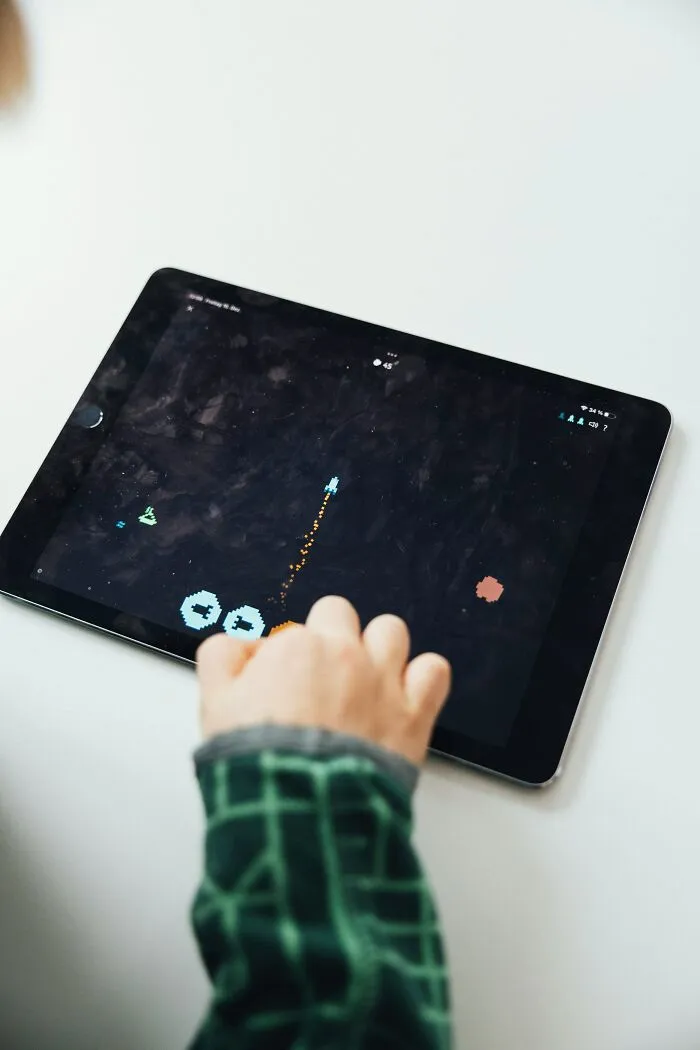
* 5 year old boy with both forearm bones fractured and dislocated. Playing on iPad with other arm.
* 60 year old lady slips, falls, destroys pelvic bone. Just wants one tylenol and, scootches out of bed wanting to walk home. After much convincing, she begrudgingly accepted that might not be a great idea.
There are some bad-a*s people out there.
Some edits:
1) Yes, I'm aware there are "silent" heart attacks.
2) There are two bones in the forearm!! He broke both bones in the same arm. Unfortunately, he does not have a third arm.
#9

I once took a kid (about 18, 19) to the ER screaming all the way... for sunburn. SUNBURN. I mean, yeah, sunburn isn't fun, but this kid was claiming 9/10 pain and whimpering. I was astounded. Charge nurse and I giggled about it for weeks.
Edit: a lot of you have suffered from some horrendous sunburn it seems. Ouch! That does sound like some squirm-inducing pain. This guy was barely pink and hadn't tried anything on his own yet.
Despite these classifications, pain can be notoriously hard to describe, measure, and treat. Part of the reason is that although almost everyone has experienced some version of pain, it is deeply subjective, and each person has their own threshold and tolerance for it.
#10

EDIT: Thanks guys. Seems like it's the appearance, depth, and the associated pain when things don't go correctly that create the aversion.
#11

He had an older Marine that came in, reason being stiff neck and nausea. Does his normal workup, rules out C spine injury, decides to test for meningitis. Tells the guy to touch his chin to his chest, turn left, turn right, look up. Nothing. Tells the guy to stand on his toes, and drop onto his heels, and the guy nearly collapses and then vomits on the floor. Doc asks:
"Didn't it hurt when you touched your chin to your chest?"
Marine replies: "Yes it f****n' hurt, but what does that have to do with it?"
"I'm your doctor, you're supposed to tell me when something is wrong."
The Marine just looked at him with a slightly blank look on his face, and said, "Oh. Sorry doc, won't happen again.".
#12

Pain threshold and pain tolerance are not one and the same, although both depend on complex interactions between our nerves and brain. Pain threshold refers to the point at which a stimulus becomes painful. As Jacquelyn Cafasso writes for Healthline, it basically refers to “the minimum point at which something, such as pressure or heat, causes you pain.”
#13

#14
#15
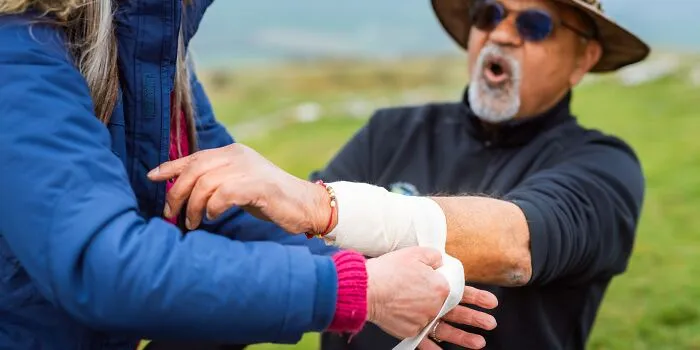
Working at a racing track, I had both of these people come in on the same day:
Male, 54 years, Swedish, small cut on hand.
His reaction to me pouring water(saline) in his wound:
"OW OW OW OW OW, it hurts when you put desinfectant in there, be careful!!"
Male, 32 years, Finnish, deep cut in right forearm (his humeral bone was visible):
"No, it doesn't hurt. Now just tape it the f**k up so I can get back on my bike."
Edit: Yes, I mean the humerus when I say humeral bone. And yes, I mean the upper arm. Not a native english speaker - and also it's 1AM!
Our pain tolerance, on the other hand, refers to how much pain we can endure before we feel the need to do something about it. That “could be in the form of pain relief medications, a heat or cold pack, relaxation techniques, acupuncture or even support from a friend or family member,” according to Cindy Jones, an associate professor of behavioral sciences. It’s basically what Cafasso describes as “the maximum amount of pain you can handle.”
#16

#17
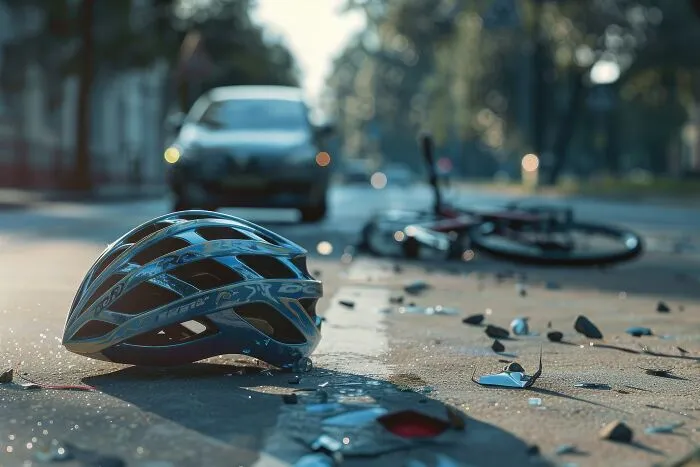
Anyway, in the ER, nurses are setting up an IV in the arm that wasn't injured when I explained I landed on my neck and it was hurting. They asked where so I instinctively used my broken wristed hand to point. Every single person in the room goes "ooooh" and just kind stops and looked at me, and I guess I was in shock because I kinda just looked around like "w*f happened...".
#18
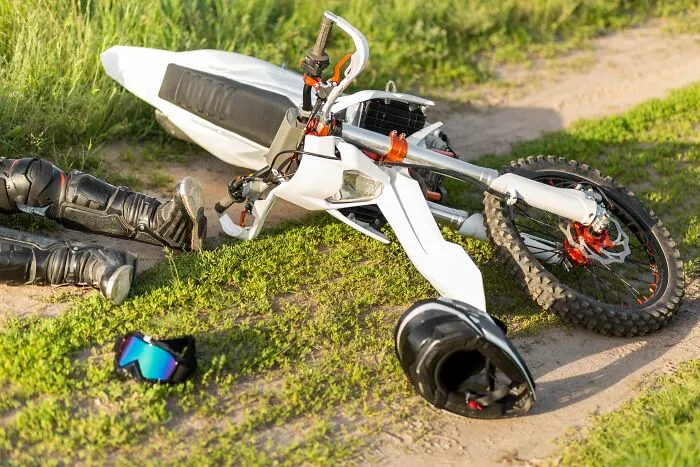
Everyone’s tolerance is different, and as Cafasso outlines, it can depend on a range of factors. These include a person’s genetics, age and gender. But one’s pain tolerance can also change with chronic illness, mental illness, and stress. Social isolation, past experiences of pain, and one’s upbringing and learned coping strategies can also influence one’s responses to pain. Nerve cells also play a part, and nerve damage can affect how we experience and tolerate pain.
#19
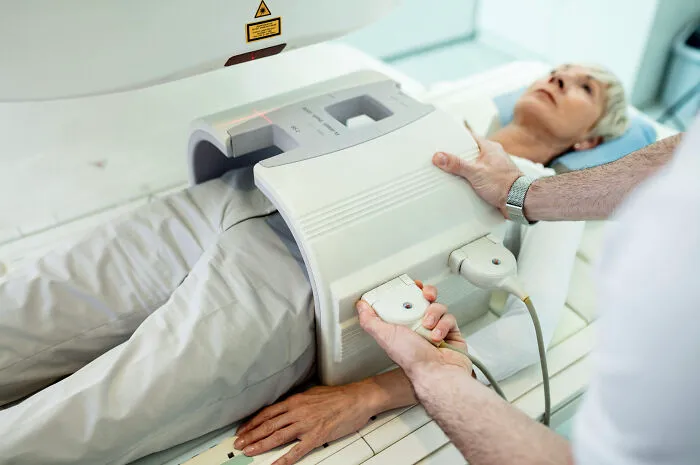
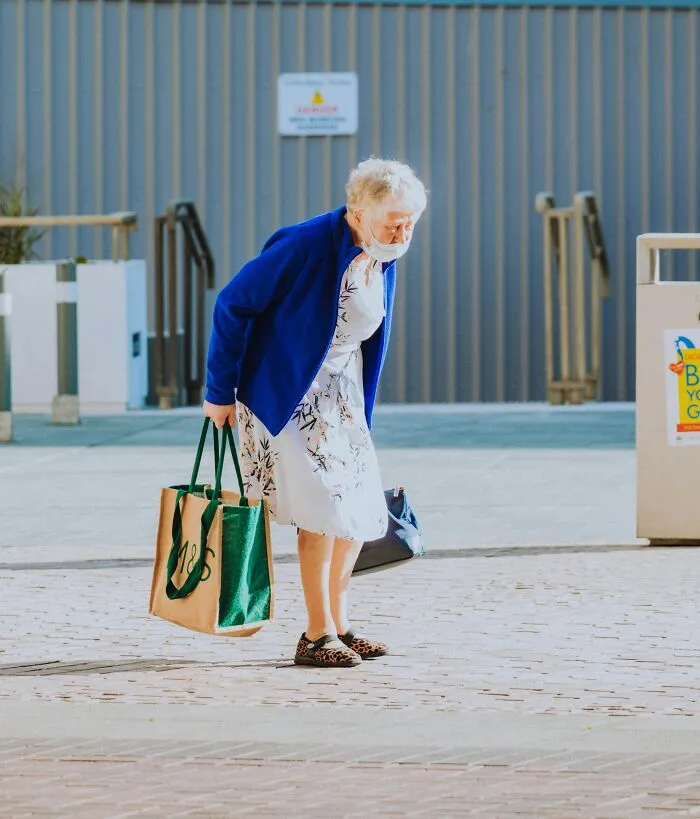
The elderly have a surprisingly high pain tolerance. I've seen elderly patients move limbs with obvious breaks to accommodate our needs without a peep.
People with the least pain tolerance seem to be the younger crowd, ranging from 15-30. They whine and wail from the slightest touch. And more often than not, the ones with no breaks whine and scream the most.
#20
I'll never forget him.