



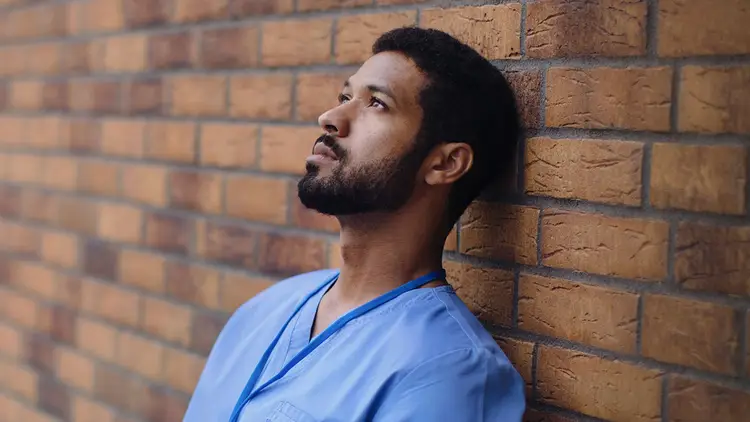


Going to the hospital can be a stressful experience, doubly so if an ambulance is involved in some way, shape or form. Fortunately, the truth is that the professionals treating you spent a lot of time and effort to get to their position. But that doesn’t mean that accidents don’t happen.
Someone asked “Medical professionals, what mistake have you made in your medical career that, because of the outcome, you've never forgotten?” and people shared their stories from fortunately comical to downright grim. So get comfortable as you read through, upvote your favorites and be sure to share your thoughts in the comments down below.
#21

Not a misrake I made, but one I'll never forget none the less.
Arrived to work at 2300hrs one Sunday evening. The attending was just discharging a middle aged women complaining of shoulder pain. She had been in the ER for 10 hours. Had xrays of her shoulder, ribs, chest and neck. Had a CT scan to r/o pulmonary embolism. Her diagnosis on discharge was costocondritis.
90 minutes later an ambulace calls in on the med-phone with a patient in full arrest. It was this woman.
10 hours in the ER with unexplained shoulder pain, and nobody ran a 12 lead EKG or cardiac enzymes.
Lesson of the day, all chest pain is cardiac until proven it isn't.
Arrived to work at 2300hrs one Sunday evening. The attending was just discharging a middle aged women complaining of shoulder pain. She had been in the ER for 10 hours. Had xrays of her shoulder, ribs, chest and neck. Had a CT scan to r/o pulmonary embolism. Her diagnosis on discharge was costocondritis.
90 minutes later an ambulace calls in on the med-phone with a patient in full arrest. It was this woman.
10 hours in the ER with unexplained shoulder pain, and nobody ran a 12 lead EKG or cardiac enzymes.
Lesson of the day, all chest pain is cardiac until proven it isn't.
17points
#22
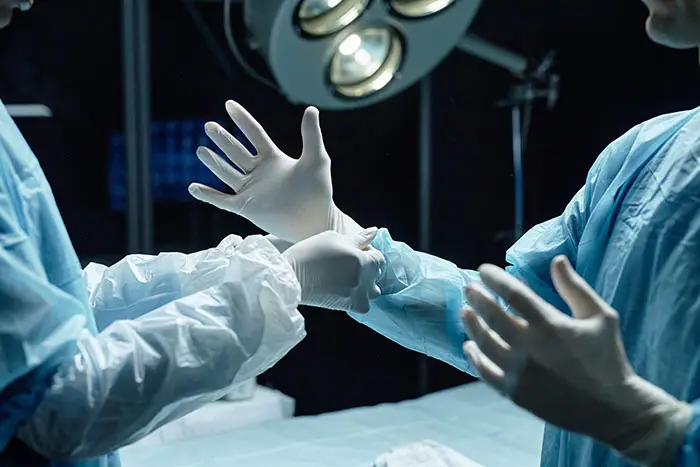
This one took me years to get over. When I was a medical student on my surgery rotation, I was in the OR with only the attending surgeon. The residents on service were otherwise busy, so the attending (somewhat impatiently) decides, "Fine, I'll do it with just the med student." It's a relatively straightforward case, placing a gastric tube for a patient who couldn't eat. The institution I now work at frequently does these under laparoscopic visualization, which is seen as overly cautious by some. Not me.
The attending puts a scope down the patient's esophagus and I have a big needle to push toward the scope. He shines a light towards the skin when he's entered the stomach and I press on the skin and see it dent in on the screen, showing we're in the right place. I thought I took that exact same position and angle, and introduced the needle. Except it didn't show up on screen. So I pulled back. Pressed again and tried again and didn't see it. The attending grows frustrated and tells me to push the needle in deeper then. I had a twinge of concern, but eventually hubbed the needle, which was several inches long. Eventually, the resident shows up and tries as well, and tries introducing the needle but never can visualize it. Eventually, he switched places with the attending, and after another try, got the needle into the stomach and we finished placing the tube.
I come back after my day off to find out that that patient died from internal bleeding. One of the multiple needle pokes - or possibly a cumulative effect - had injured arteries in the abdomen. Now, I know not to ignore that twinge, and I know that even "low-risk" procedures have a risk of catastrophe and always take care to mention that when consenting patients for surgery. "Low-risk" not "no risk".
I harbored guilt over it throughout medical school and still had hesitation the first time I did that procedure as a resident.
The attending puts a scope down the patient's esophagus and I have a big needle to push toward the scope. He shines a light towards the skin when he's entered the stomach and I press on the skin and see it dent in on the screen, showing we're in the right place. I thought I took that exact same position and angle, and introduced the needle. Except it didn't show up on screen. So I pulled back. Pressed again and tried again and didn't see it. The attending grows frustrated and tells me to push the needle in deeper then. I had a twinge of concern, but eventually hubbed the needle, which was several inches long. Eventually, the resident shows up and tries as well, and tries introducing the needle but never can visualize it. Eventually, he switched places with the attending, and after another try, got the needle into the stomach and we finished placing the tube.
I come back after my day off to find out that that patient died from internal bleeding. One of the multiple needle pokes - or possibly a cumulative effect - had injured arteries in the abdomen. Now, I know not to ignore that twinge, and I know that even "low-risk" procedures have a risk of catastrophe and always take care to mention that when consenting patients for surgery. "Low-risk" not "no risk".
I harbored guilt over it throughout medical school and still had hesitation the first time I did that procedure as a resident.
16points
#23
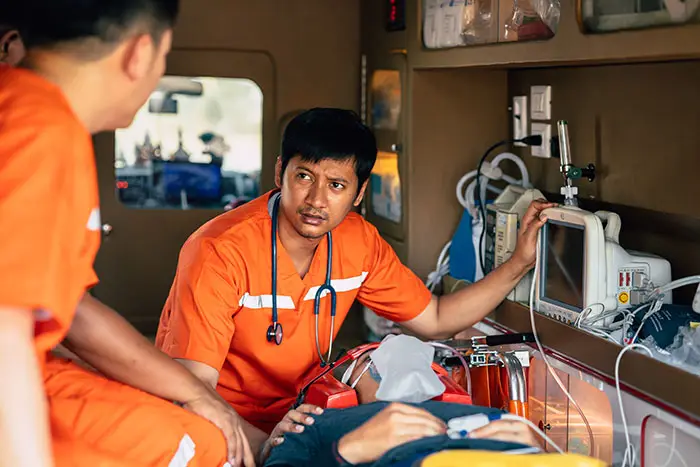
As a paramedic intern I had one call in particular that still sticks with me.
We were called out for an early 40s male with chest pain. We get there to see a healthy guy sitting in his car breathing hard. I get a history from his wife and an initial assessment of the patient. Doesn't have any history except for having anxiety problems and previously treated for abusing his anxiety meds. The patient described his symptoms as being just like when he has panic attacks. I hook him up to the monitor and everything looks fine. Slightly elevated heart rate but all of his other vitals seemed to be within normal limits.
I get him loaded into the ambulance and begin the 20 min transport to the hospital. I start treating him with meds for the chest pain protocol and I start an IV.
Then all hell breaks loose. He tells me his chest doesn't hurt anymore but he can't breathe. His vitals didn't line up with respiratory issues but I put him on high flow oxygen just to be safe. As soon as I get the oxygen on him he starts losing it. He tells me he needs to get out of the ambulance. He starts standing up, ripping all the wires off of him, pulling the oxygen off, and even pulls his IV out. I struggle with him to keep him on the gurney and calm him down. I start another IV, he pulls it out. I hook him back up to the monitor, he pulls it off. Same with the oxygen.
The situation turns into me having to physically hold him down to keep him from jumping out of the ambulance on the freeway. I end up having to be pretty stern. I was yelling at him to sit down and stop fighting. I gave what little report I could to the hospital, holding the radio in one hand and his shirt collar in the other.
All I could tell them was we had an agitated patient initially complaining of chest pain which has resolved, and now seemingly having a panic attack. I didn't use the words "panic attack" , because it isn't my place to diagnose, but the description of the situation spoke for itself. I had no current vitals to give them, cardiac rhythm, nothing. I couldn't even get him to keep an IV in.
When we finally get to the hospital we wheel him in, still holding him down. The moment we transfer him to the bed he goes from an agitated, fighting guy to a full cardiac arrest instantaneously. We worked him up in the ER bed for over 30 minutes. After the doc called time of death he came out of the room with us looking confused. "I thought you were bringing in a panic attack." So did we.
To this day I have no idea why he died or what was wrong with him. I just couldn't stop thinking that there was so much more I could have done for him had I been able to manage his anxiety. I was the last person to have a conversation with this guy and it consisted of me telling him to sit the down.
I had plenty of patients die before and after that, but that is the one that stung the most. I had never felt that helpless/confused before on a call.
TL;DR
Sense of impending doom is a real thing. Sometimes people know they are dying and they go into full fight or flight mode.
We were called out for an early 40s male with chest pain. We get there to see a healthy guy sitting in his car breathing hard. I get a history from his wife and an initial assessment of the patient. Doesn't have any history except for having anxiety problems and previously treated for abusing his anxiety meds. The patient described his symptoms as being just like when he has panic attacks. I hook him up to the monitor and everything looks fine. Slightly elevated heart rate but all of his other vitals seemed to be within normal limits.
I get him loaded into the ambulance and begin the 20 min transport to the hospital. I start treating him with meds for the chest pain protocol and I start an IV.
Then all hell breaks loose. He tells me his chest doesn't hurt anymore but he can't breathe. His vitals didn't line up with respiratory issues but I put him on high flow oxygen just to be safe. As soon as I get the oxygen on him he starts losing it. He tells me he needs to get out of the ambulance. He starts standing up, ripping all the wires off of him, pulling the oxygen off, and even pulls his IV out. I struggle with him to keep him on the gurney and calm him down. I start another IV, he pulls it out. I hook him back up to the monitor, he pulls it off. Same with the oxygen.
The situation turns into me having to physically hold him down to keep him from jumping out of the ambulance on the freeway. I end up having to be pretty stern. I was yelling at him to sit down and stop fighting. I gave what little report I could to the hospital, holding the radio in one hand and his shirt collar in the other.
All I could tell them was we had an agitated patient initially complaining of chest pain which has resolved, and now seemingly having a panic attack. I didn't use the words "panic attack" , because it isn't my place to diagnose, but the description of the situation spoke for itself. I had no current vitals to give them, cardiac rhythm, nothing. I couldn't even get him to keep an IV in.
When we finally get to the hospital we wheel him in, still holding him down. The moment we transfer him to the bed he goes from an agitated, fighting guy to a full cardiac arrest instantaneously. We worked him up in the ER bed for over 30 minutes. After the doc called time of death he came out of the room with us looking confused. "I thought you were bringing in a panic attack." So did we.
To this day I have no idea why he died or what was wrong with him. I just couldn't stop thinking that there was so much more I could have done for him had I been able to manage his anxiety. I was the last person to have a conversation with this guy and it consisted of me telling him to sit the down.
I had plenty of patients die before and after that, but that is the one that stung the most. I had never felt that helpless/confused before on a call.
TL;DR
Sense of impending doom is a real thing. Sometimes people know they are dying and they go into full fight or flight mode.
15points
#24
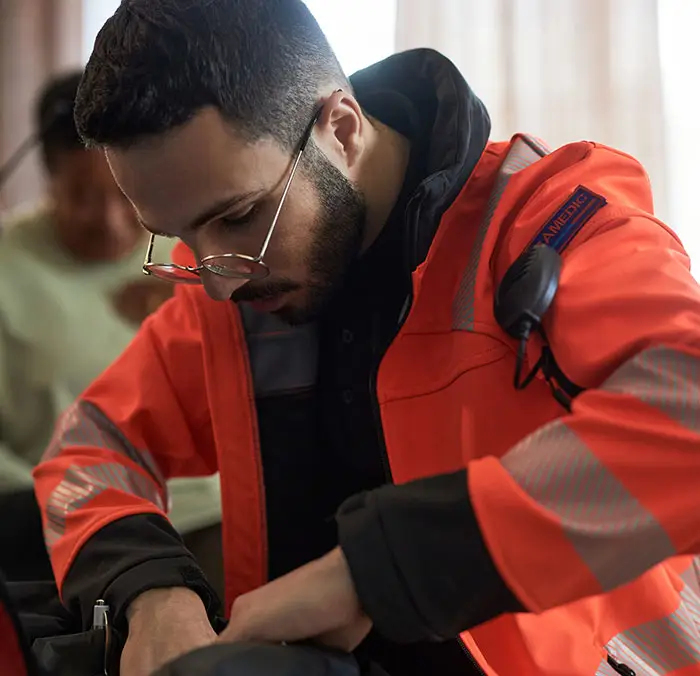
I was still a new EMT and had a new Paramedic as a partner. We got a call of a man with no pulse. We arrived and find a 350ish pound man in the middle of a water bed, no pulse. So the new Paramedic did a quick look with the paddles and decided to shock. The shock creates a muscle spasm and set off a series of events which led to the patient being wedged between the water bed mattress and frame. It was impossible for 2 of us to unwedge him, although there was a brief discussion of cutting the mattress and letting all the water out.
Never shock someone you can't lift, on a water bed.
Never shock someone you can't lift, on a water bed.
14points
#25

I was a final year student at an overseas hospital working a in a few busy trauma ED. Patient came in complaining of pain in her lower leg. Past medical history of CCF and T2DM.
2 days earlier she had been in after a fall at home, been sutured and sent home.
I examined the patient who was stable, with pain out of proportion. I undid the sutures and serous fluid came out. I ordered an U/S which showed no DVT. I discussed the case with the registrar but did not ask for them to review the patient. They advised discharge with oral antibiotics and simple analgesia.
The next day I came in form morning round the find the patient tubed and on inotropic support. My heart sank. I pulled back the sheets and saw gas locules half way up her thigh... Patient was taken to theatre, had a hindquarter amputation and sent to ICU. I left the next day and didn't get to follow her up but like passed away.
Pain out of proportion terrifies me. I've stopped calling people wimps or hypochondriacs. They get imagine, ortho review, full bloods etc. I recently x-rayed someone's leg looking for gas. It will forever change my practice, though the yield on these extra investigations is likely small and one day I'll find an incidentaloma.
2 days earlier she had been in after a fall at home, been sutured and sent home.
I examined the patient who was stable, with pain out of proportion. I undid the sutures and serous fluid came out. I ordered an U/S which showed no DVT. I discussed the case with the registrar but did not ask for them to review the patient. They advised discharge with oral antibiotics and simple analgesia.
The next day I came in form morning round the find the patient tubed and on inotropic support. My heart sank. I pulled back the sheets and saw gas locules half way up her thigh... Patient was taken to theatre, had a hindquarter amputation and sent to ICU. I left the next day and didn't get to follow her up but like passed away.
Pain out of proportion terrifies me. I've stopped calling people wimps or hypochondriacs. They get imagine, ortho review, full bloods etc. I recently x-rayed someone's leg looking for gas. It will forever change my practice, though the yield on these extra investigations is likely small and one day I'll find an incidentaloma.
14points
#26

True but not too serious.
I was a medical student looking after a boy of about 8 years who had broken his arm. He needed an IV but was terrified of needles. I was trying to calm him when he asked "will it be like what they did in the movie Elf?". I had not seen Elf and I figured it must have been a pretty benign scene with that title. I said "Yes" and the kid went into hysterics. I saw the movie later and understood why the poor kid got so upset. I became an expert in Barney, Dora, Bob and Blue to try and prevent future misunderstandings. I watched some Teletubbies too, but it kind of freaked me out.
I was a medical student looking after a boy of about 8 years who had broken his arm. He needed an IV but was terrified of needles. I was trying to calm him when he asked "will it be like what they did in the movie Elf?". I had not seen Elf and I figured it must have been a pretty benign scene with that title. I said "Yes" and the kid went into hysterics. I saw the movie later and understood why the poor kid got so upset. I became an expert in Barney, Dora, Bob and Blue to try and prevent future misunderstandings. I watched some Teletubbies too, but it kind of freaked me out.
14points
#27

I was in nursing school, and several of our clinical rotations were done at a sub-acute long term skilled nursing facility. There was one patient there who was an "old 80"--she was in the SNF because she'd just had her second above knee amputation. She had multiple bed sores, CHF, horrible diabetes that she never controlled (hence the amputation), everything.
A classmate and I were changing her brief and doing some simple wound care on her coccyx. I was holding the patient over to my side of the bed (she was very weak and not much of a help holding the bed rail) while my classmate cleaned her up. The patient started grabbing frantically at me. She had a history of anxiety, so I soothed her as my classmate finished up. We laid her on her back and elevated her head so she could catch her breath before I did my side. She seemed more at ease and let us finish up, but as we were leaving the room she coded.
This SNF was so small that most of the doctors only came in once a week, and none of them answered their phones to give orders during the code, so the nurses and a respiratory therapist ran it. Her intubation was traumatic, with blood coming out of her mouth. Her ribs were broken during CPR. That's how her daughter saw her. She never came back to consciousness.
It was my first time talking to a family about DNR and what they wanted us to do to keep her alive. The daughter signed a DNR about 36 hours later and the patient was gone the next week when we were there for clinicals.
There wasn't a mistake per se, but now I'm a lot more in tune with when patients try to get me to do or not do something. Even if they don't know the reason for it, there always is one.
A classmate and I were changing her brief and doing some simple wound care on her coccyx. I was holding the patient over to my side of the bed (she was very weak and not much of a help holding the bed rail) while my classmate cleaned her up. The patient started grabbing frantically at me. She had a history of anxiety, so I soothed her as my classmate finished up. We laid her on her back and elevated her head so she could catch her breath before I did my side. She seemed more at ease and let us finish up, but as we were leaving the room she coded.
This SNF was so small that most of the doctors only came in once a week, and none of them answered their phones to give orders during the code, so the nurses and a respiratory therapist ran it. Her intubation was traumatic, with blood coming out of her mouth. Her ribs were broken during CPR. That's how her daughter saw her. She never came back to consciousness.
It was my first time talking to a family about DNR and what they wanted us to do to keep her alive. The daughter signed a DNR about 36 hours later and the patient was gone the next week when we were there for clinicals.
There wasn't a mistake per se, but now I'm a lot more in tune with when patients try to get me to do or not do something. Even if they don't know the reason for it, there always is one.
13points
#28

I am a respiratory therapist and work most of the time either in an ICU or the emergency department. This one time, we had to resuscitate a patient who "coded" or cardiac arrested; I can't seem to remember what was the cause. Due to me doing CPR, I displaced a few ribs off the sternum- which is common- but also managed to nick an artery- which is bad. The code team was wondering why the patient cannot sustain his heart beat, and you go through the possible causes, what we call the H's and T's, mnemonics why they cannot obtain a good pumping heartbeat. The doc got an ultrasound reading of the chest and true enough, the patient was bleeding like gangbusters, the whole inside of a chest cavity was socked in with blood, what we call a hemothorax. CPR made it worse too. The doc stuck a chest tube in to drain the blood while we kept on resuscitating the patient. The bleeding also didnt look like it was going to stop anytime soon so a cardiothoracic surgeon had to find out where the bleeding was coming from. Eventually, he died a day and a half later. Granted, his chances for meaningful survival was slim to none because his brain was starved of oxygen for a prolonged period of time, but his resuscitation effort was needlessly complicated by internal bleeding, no thanks to me.
12points
#29

Kind of humorous: I'm a nurse assistant (formerly worked in hospital with chemo patients).
One day I was in with a client/patient getting the room back in order after his morning bed bath. I had already put all my supplies away and had an armload of soiled linen about to leave the room when I asked if he needed anything else. He said no, he was fine. Well.. not skipping a beat, I say "I'll just get out of your hair then..."
*FIFTYSHADESOFBLUSH*
Let's just say... we were both shocked at what I had said, but he made a joke of it along the lines of "I don't have any to hold you back" and I made sure I caught myself before it happened again.
One day I was in with a client/patient getting the room back in order after his morning bed bath. I had already put all my supplies away and had an armload of soiled linen about to leave the room when I asked if he needed anything else. He said no, he was fine. Well.. not skipping a beat, I say "I'll just get out of your hair then..."
*FIFTYSHADESOFBLUSH*
Let's just say... we were both shocked at what I had said, but he made a joke of it along the lines of "I don't have any to hold you back" and I made sure I caught myself before it happened again.
11points
#30

Ill keep it short, cause im unfortunately busy. But young boy probably 6 came in with a gunshot to the head. Wasnt too bad, for what the Mechanism was but I made the executive choice to try and treat the head first which alone isnt wrong, turns out he also had femoral bleeding that was hidden a little. Died a few mins into treatment.
10points
#31
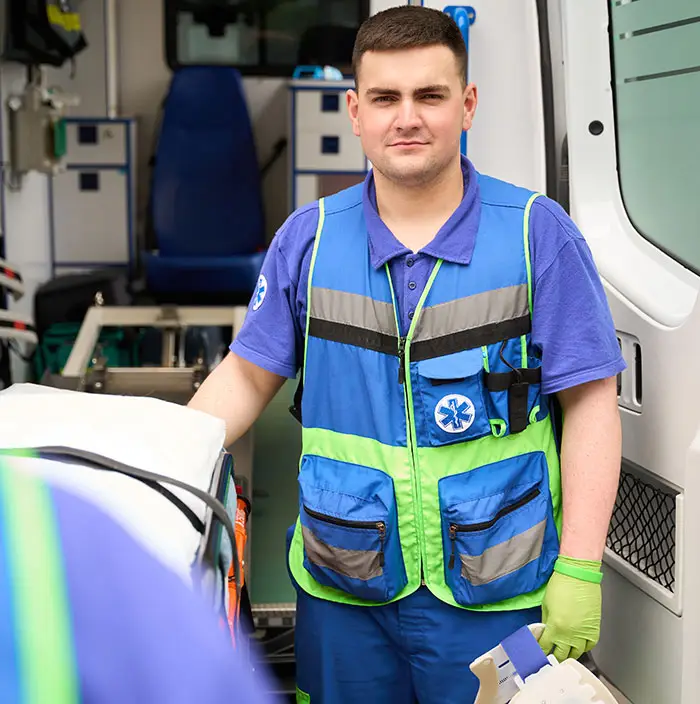
Not really a serious outcome but I'll never forget my first mistake as an EMT. Patient was in the back of the ambulance in a gurney (duh), he required oxygen (he's human afterall) via cannula (little nose thingys). Normally the gurney O2 tank is is much smaller than the house tank on the ambulance so we generally switch over the gurney to the ambulance tank. So basically there is now a small hose attached to the wall of the ambulance that feeds the patient delicious oxygen to his nose. This being my first time I forgot to switch back the hose to the gurney and upon removing the gurney from the back I essentially choked the hell out of his face when the hose tightened. Poor guy, he thought he did something wrong. I explained to him what happened and then he laughed about it. Found out later he still tried to sue. Ah well.
9points
#32

I am an internist. I will never forget the time I was an intern and had one of my first patients who was profoundly neutropenic, rigoring, and hypotensive who ended up crumping big time. Several lessons I learned from that...
- neutropenic patients can decompensate in a matter of several hours
- if a neutropenic patient looks sick...trust your gut...even if you can't find the exact source
- should have given gentamicin sooner.
- neutropenic patients can decompensate in a matter of several hours
- if a neutropenic patient looks sick...trust your gut...even if you can't find the exact source
- should have given gentamicin sooner.
9points
#33

This was a mistake that my pediatrician made with me when I was about 13 years old.
I had a sharp pain in the lower right side of my abdomen. The pain would come and go and increased with intensity each time. I told him it felt like someone was stabbing me over and over. He then proceeded to tell me it was intestinal cramps and did not run any tests.
Well, I dismissed that pain as intestinal cramps for the next three months, until one day I fell on the floor and literally could not get up from the pain.
I luckily had my cell phone and called my mom (who was at work) and told her what was happening. She picked me up (literally), put me in the back seat of the car and drove me to the hospital where they ran tests and immediately took me to the emergency operating room because my appendix had burst after being inflamed for so long.
I was in the hospital for two weeks and bedrest for another two at my house. I missed a month of middle school.
We tried to sue my pediatrician, but according to my mom, we didn't really have a case because no organs were damaged and I did not die.
Needless enough to say, always get a second opinion/ do some research if you are in excruciating pain.
I had a sharp pain in the lower right side of my abdomen. The pain would come and go and increased with intensity each time. I told him it felt like someone was stabbing me over and over. He then proceeded to tell me it was intestinal cramps and did not run any tests.
Well, I dismissed that pain as intestinal cramps for the next three months, until one day I fell on the floor and literally could not get up from the pain.
I luckily had my cell phone and called my mom (who was at work) and told her what was happening. She picked me up (literally), put me in the back seat of the car and drove me to the hospital where they ran tests and immediately took me to the emergency operating room because my appendix had burst after being inflamed for so long.
I was in the hospital for two weeks and bedrest for another two at my house. I missed a month of middle school.
We tried to sue my pediatrician, but according to my mom, we didn't really have a case because no organs were damaged and I did not die.
Needless enough to say, always get a second opinion/ do some research if you are in excruciating pain.
Report
9points
#34

As a former medic in the Army. My biggest mistake was thinking that I would be able to save everyone I touched. Boy was I wrong. Something I'm carrying with me on my journey into medical school.
Happy Memorial Day weekend!
Happy Memorial Day weekend!
9points
