


#1

I was counseling a patient who was morbidly obese, diabetic and had severe peripheral neuropathy.
He was also a chiropractor who had a hard on for homeopathic remedies.
I couldn't get out a full sentence without this guy trying to tell me that "a dilution of whatever the f**k" would do the exact same thing.
Finally, I just said "Look, *Doctor.* You need to cut the sugar and eat something in the vegetable family with every meal. You can drink whatever potions you want on top of that. But 30 years of drinking your distilled water has landed you here, in my office, with a broken pancreas and no feeling in your feet. So let's give this a serious try unless you want to take a chance with your flower remedies when the heart attack or stroke hits."
EDIT: Since a few people have asked, he got highly offended and filed a complaint with our VP of Patient Relations. I was ordered to some b******t sensitivity training where I was told that I should have listened to his opinion on care and validated him as being heard. I was also told, by at least three non-clinicians, that since he was a chiropractor I should have given more weight to his opinion since he was a licensed healthcare provider.
I finished the training and promptly began looking for a new job.
#2

We check her troponin levels, they're elevated.
"Ma'am you're having a heart attack."
"No, I'm not."
"Uh... yes, you are."
"No, I'm not."
Her PCP came into the ER and fired her as his patient. She signed an against medical advice and left.
She was gone the next day. Of a heart attack. Yeah.
#3
Resistance to medicine is almost as old as medicine itself. But recently, that's been more noticeable than ever. Studies show that in April 2020, over 70% of U.S. adults trusted doctors and hospitals. Four years later, that number had plummeted to just 40.1% of people who said they trusted medical staff. That's a big, big drop.
And it came after a worldwide pandemic. People became more distrustful following such a massive global shift, while fear and skepticism toward medical professionals became increasingly common — especially online. That skepticism also helped make holistic practitioners more popular, which can be a rabbit hole in and of itself.
#4
#5

Scoped a guy with knee pain - the joint looked perfect. Told him after the surgery, and he told us "no, my tendons are all torn. I know my body"
Told a lady she was pregnant. "No, I'm not. I just had a big lunch. I know my body"
Edit: Absolutely, when something doesn't feel right and your doctor doesn't want to listen, seek a second opinion. You know how your body normally feels. But if someone has performed an invasive surgery to look at your joint, or has seen a fetus on ultrasound, they probably know what they are talking about.
#6

This intense drop isn't accidental either. Aside from negative personal experiences or even psychological avoidance — both of which experts have cited as reasons why medical distrust exists — we now have a new, much more gigantic horse in the race: social media.
Much like a lot of what's wrong with our society, social media has become one of the main reasons why more and more people have grown to mistrust doctors. Algorithms and online sources can easily overload people with information, feeding confirmation bias and making them feel overly confident in their own self-diagnoses. No, sir, that TikTok doctor (or online witch) can't confirm your condition.
#7
#8
#9

That's what a heart attack is chief.
And then, of course, we have the multiple issues within healthcare itself. If you're somewhere like the United States, where free healthcare is essentially a foreign concept, people may not necessarily distrust doctors, but they can become more reluctant to seek medical help in the first place.
In fact, according to a Yale Cancer study, a significant number of patients completely refused modern medicine as a form of treatment. Instead, they opted for alternative treatments and holistic measures, which ultimately led to them succumbing to their illnesses earlier than they might have with standard care.
#10

Me (part way through taking her history): Do you smoke cigarettes
Her: Yea, about a pack a day
Me: You should definitely stop that
Her: Well, my sister told me that if I stopped smoking, the baby would go into withdrawal and d*e
PSA: DON'T SMOKE IF YOU'RE PREGNANT OR PLANNING ON BECOMING PREGNANT. IT'S NEVER TOO LATE TO QUIT.
#11
Edit: The number of patients I have seen who are acutely unwell because they stopped their medication does my head in. Almost always the reason they stopped the medication is because the condition they were taking it for went away. As a result of the medication. SMH.
#12

But I did then sit down and give her a basic tutorial on the differences between bacteria and viruses, and antibiotics and antivirals. Hopefully it was enough to help her in medical school finals the next week!
Edit: Thank you for all the upvotes! I have surpassed my husband on his upvotes 😄.
But obviously, as we've mentioned, this fear is hardly new. If we were to hop into a little time machine, we'd find that medicine came to be through some... harsh interventions. Mercury dosing, purging... well, you get the idea. Historians have long documented the unethical experiments carried out by doctors of the time, even while trying to treat mundane illnesses.
Nowadays, it isn't nearly as intense, but whenever something new is being developed, there's still an inherent human fear of what might come from it. And this isn't exactly a new phenomenon, either. In the 1850s, when mandatory smallpox vaccination laws were set, anti-vaccination leagues formed across North America and Europe. History really is cyclical.
#13
Me: oh, really? Just out of curiosity, what religion is that?
Mom: I'm Catholic.
Not really a correction per se, but made me laugh a lot.
#14
The gist:
"I keep gaining weight even though I don't eat anything."
"That's against the laws of physics."
"But it's happening to me. I tried a diet where I ate 800 calories per day for 2 weeks and gained 5kg. So those laws don't apply to me."
"I don't believe you."
"So you're calling me a liar!?"
I eventually proceeded to tell the person that if they were really generating mass out of thin air, then scientists around the world would want to study the phenomenon. The only time I have ever almost lost my temper with a patient.
#15
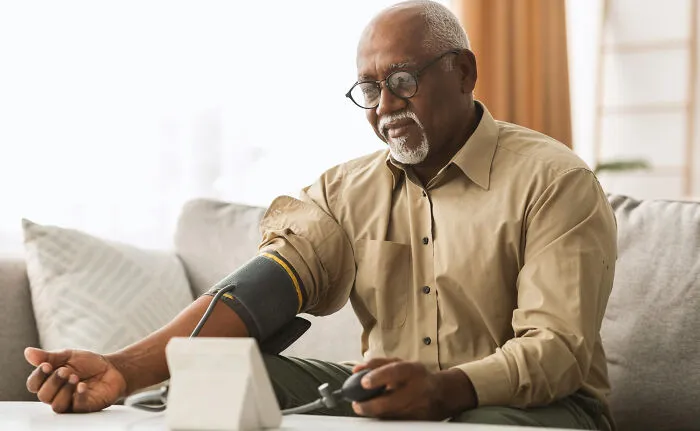
Him: I don't need no pills doc. All I need is Jesus.
But here's what we have to remember: doctors spend years studying and training to help us. At its core, medicine is meant to help people, and while there are obviously good and bad professionals everywhere, that's where collaborative questioning comes in. Experts say that asking for clarification and making informed decisions together with your doctor are all healthy ways to face your fears.
Of course, reluctance is a very normal human response. But more often than not, medical professionals are the people we turn to when we need help, and at the end of the day, we need to make the best decisions for ourselves. With that said, have you ever had a medical experience that made you mistrust a healthcare provider? Let us know!
#16
#17
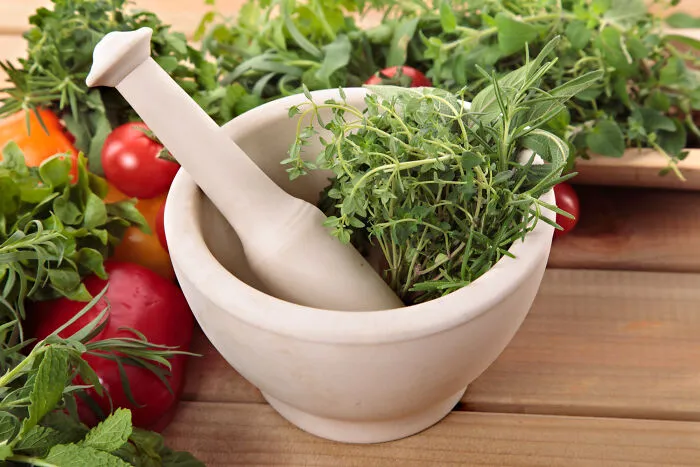
* Him: Well I met this witch online that...
* Me: Wait, did you just said "witch"?
* Him: Yeah, she sent me a bunch of herbs every month to cure my HIV, and they worked, last time i checked I was cured.
* Me: Where and what tests did you do to know you were cured?
* Him: I made an online test that the witch told me to, they were a lot of random questions but in the end it said that I was free of HIV.
* Me: Ooook, we will need to do a blood test to confirm that. Now, can you tell me wich herbs were you consuming?
* Him: I don't know the name, but I have them right here :points at his backpack:
* Me: May I take a look?
* Him: Sure!
I opened the bag and what I saw was nothing but grinded oregano with something that smelled like chlorine... The patient, sadly, was gone from a severe sepsis a month later with a highly resistant microorganism. Just because a "witch" in a website told him to stop taking his meds...
#18
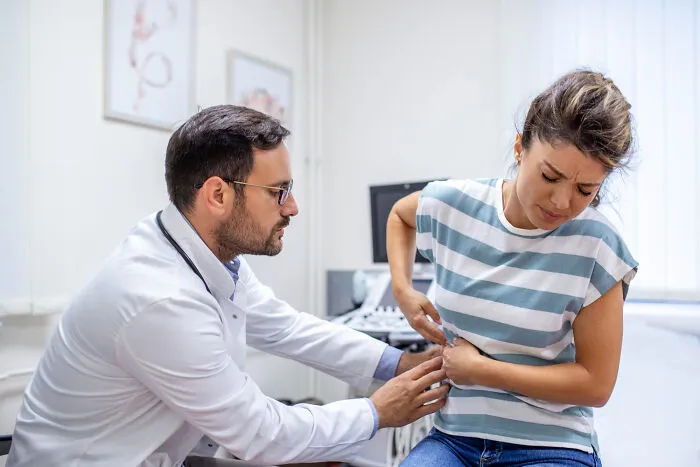
"I think it's my gallbladder," they say.
Looking over their chart, I see their gallbladder was removed 20 years ago so that is impossible. I mention this, to which they reply "yeah but it grew back."
Edit: Yes I know there are a number of other things it could've been. A retained stone crossed my mind, but after 20+ years I found this unlikely. He/she also had the scar to vouch for the surgery. There was definitely a psychosocial element to this case.
#19
Mayonnaise, mustard, and butter are not acceptable burn treatments. Leave the condiments in the fridge. I don not appreciate having to scrub three jars of mayo off grandma.
I had an incredibly sick patient with large burns, and "ARDS"- a serious respiratory complication that makes it very difficult to oxygenate someone- even with maximum settings on the ventilator and continuous medication to open up the lungs. He was then put in a rotating bed that we bolt patients into, and rotate them face down. He was also on continuous dialysis from sudden kidney failure.
Anyway- so patient sick as h**l, had 10- 12 IV bags going at once- just a general shitmess of a person.
Here comes the family member with "medical experience". These are the worst- they always end up being a transciptionist or a nursing assistant at a nursing home or some s**t- but they enjoy coming in and trying to run the show.
Some highlights from "medical expert" before I kicked her out of the unit.
"WHY AREN'T YOU PAYING ATTENTION TO HIS BRAIN WAVES!?" (Yes she yelled everything.) She was pointing to the display on the ventilator- which has everything to do with breathing and nothing to do with the brain.
"WHY ISNT HE ON PRO-PROPANOL!? ITS NEGLIGENT TO NOT HAVE HIM ON PRO-PROPANOL." She meant Propofol (think Michael Jackson)- but he was on Ketamine and Versed because those worked like a charm for him, and Propofol was having some unwanted effects on him earlier.
"THE DRESSINGS ARE DIRTY YOU NEED TO CHANGE THEM IMMEDIATELY!!" Ok f**k right off with this s**t. One, it takes at least an hour or so to change a full body dressing while they are in the rotating bed, AND the patient was so sick that if we rotated him from face down, to face up to get the dressings on his front, the fluid shifting in his lungs would likely have k****d him. Also burn dressings get "gross" quickly.
I was super f*****g irritated by the time I kicked her out. Never kicked anyone else out since but g*****n she was annoying.
**Bonus since you're reading:** here's the kind of injuries that should be seen in a specialized burn center according to the American Burn Association and some paperwork my boss gave me and I lost.
1. Partial thickness burns greater than 10% total body surface area (TBSA).
2. Burns that involve the face, hands, feet, genitalia, perineum, or major joints. *You're going to want a specialist to repair your face and bits. Trust me. Also, since scars do not stretch, joints provide an issue*
3. Third degree burns in any age group. *Third degree requires surgical involvement.*
4. Electrical burns, including lightning injury. *Electrical injury can cause severe, hidden internal injury, as well as s****y heart rhythms.*
5. Chemical burns. *Ok honestly I always call p****n control for backup because you people get into some weird stuff.*
6. Inhalation injury. *As you already know, burns swell and blister. Burns to the airway are just the same- and without intervention, the airway can swell shut.*
7. Burn injury in patients with preexisting medical disorders that could complicate management, prolong recovery, or affect mortality. *Diabeetus.*
8. Any patient with burns and concomitant trauma (such as fractures) in which the burn injury poses the greatest risk of morbidity or mortality. In such cases, if the trauma poses the greater immediate risk, the patient may be initially stabilized in a trauma center before being transferred to a burn unit. Physician judgment will be necessary in such situations and should be in concert with the regional medical control plan and triage protocols. *Pretty self explanatory.*
9. Burned children in hospitals without qualified personnel or equipment for the care of children. *Kids are not just small adults, and require a fuckton of their own equipment. They are also still growing- a problem when scars do not stretch and grow with them.*.
#20