
Plastic surgery has increasingly become a subject of public scrutiny in recent years, with many Hollywood celebrities finding themselves at the center of the debate.
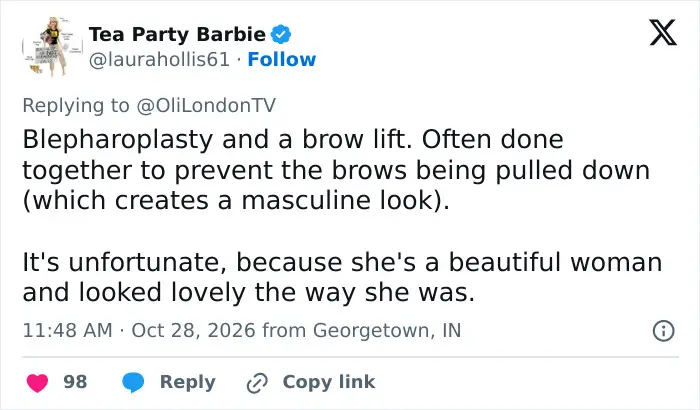
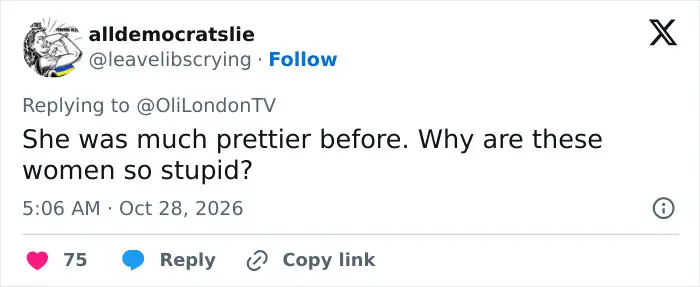
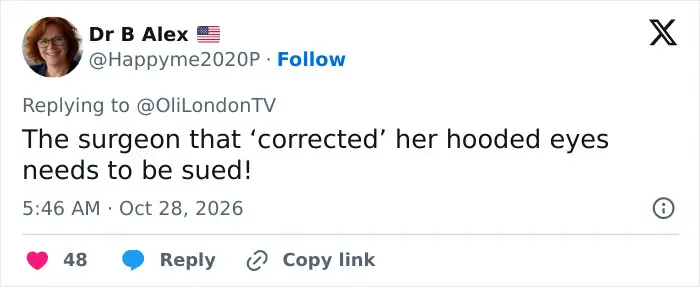
The latest example is Jennifer Lawrence, who was called out for allegedly undergoing an upper blepharoplasty (eyelid surgery) and a brow lift after appearing at the premiere of The Hunger Games: Sunrise on the Reaping.
Highlights
- A plastic surgery and aesthetic medicine expert made a video in 2024 showing the dramatic contrast between a Botox-injected face and a natural one.
- The post recently resurfaced amid the growing plastic surgery allegations against numerous Hollywood A-listers, including Jennifer Lawrence and Florence Pugh.
- Several actresses have shared before why they quit taking Botox after the results of their treatments proved to be unsatisfactory.
While the 36-year-old hasn’t addressed the rumors, she has previously been open about getting Botox and a breast lift after her second kid was born.
Although Botox is a minimally invasive cosmetic procedure and meant for temporarily relaxing facial muscles, that too has been criticized for leaving actors without the ability to express their emotions fully.
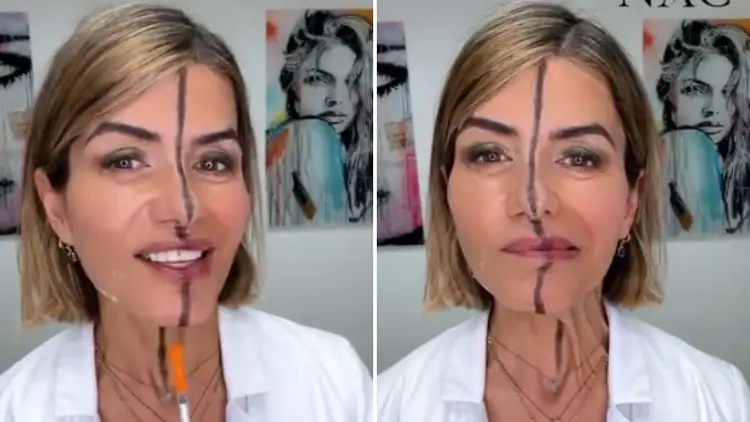
Netizens got a glimpse of the said outcome in an aesthetic medicine doctor’s 2024 video, in which she injected one half of her face to show the difference to her followers.
A doctor showed how she could not move her face much after taking Botox
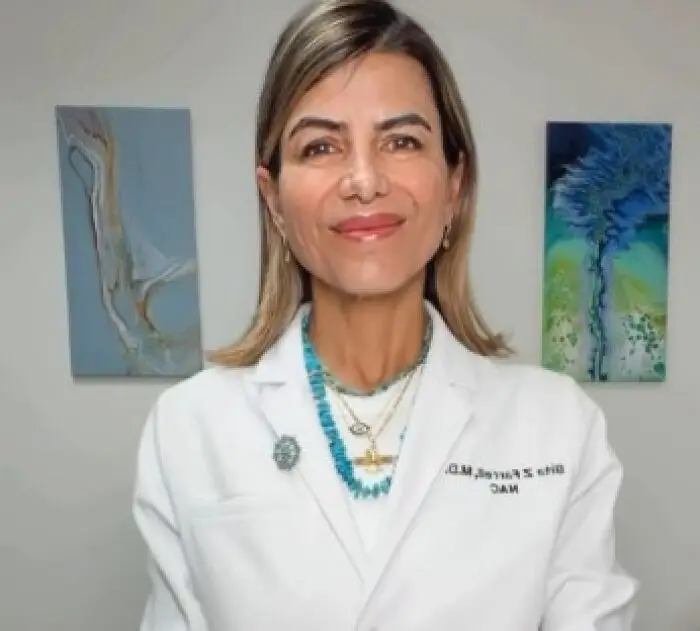
On June 3, 2024, Dr. Bita Farrell, a former UCLA professor and the founder of Natural Aesthetics Center with 153,000 followers on Instagram, shared the aforementioned video, which has since garnered nearly 90,000 likes and 4,000 comments.
Dr. Farrell said that she made herself “her own lab rat” for the sake of educating her followers, and injected Botox into one half of her face to show how it impacted her facial structure and movement two weeks later.
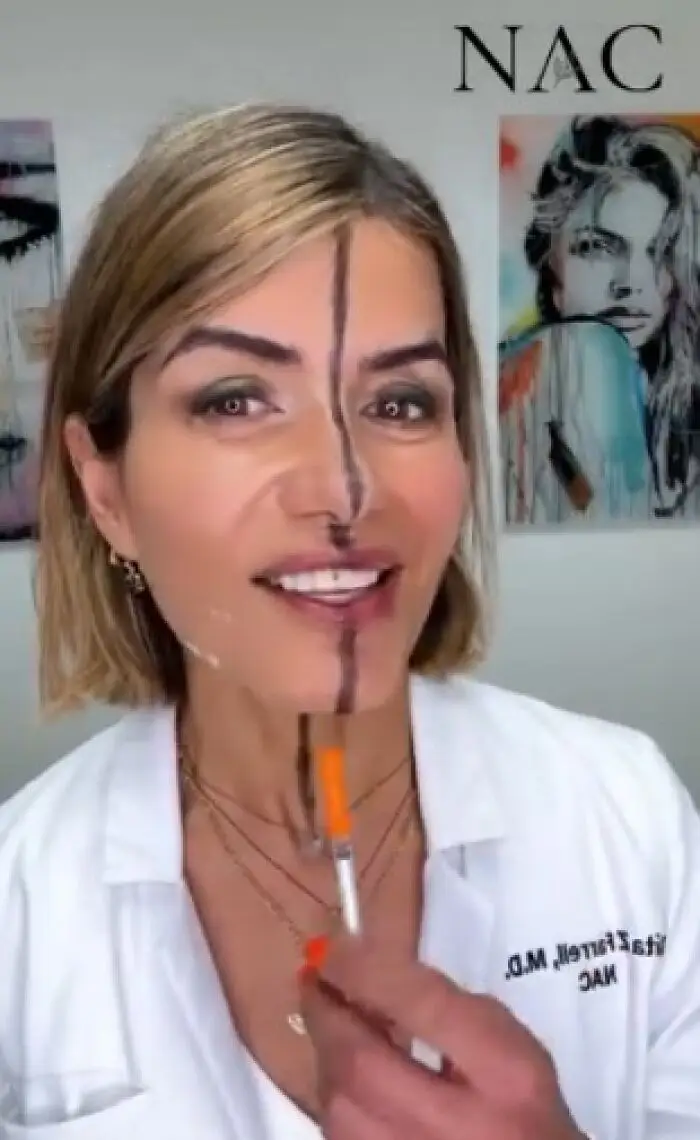
In the video, she is seen with a black line down the middle of her face, with the right side (left on screen) injected and the left side (right on screen) left natural.
She tries to move her mouth downwards at an angle, and the natural side of her face moves easily. But the Botoxed side shows little to no lines or movement.
“The platysma muscle on this side is really pulling my face down, and so is the DAO (depressor anguli oris, also called triangularis), pulling the corner of my mouth down,” she says, pointing at her left side.
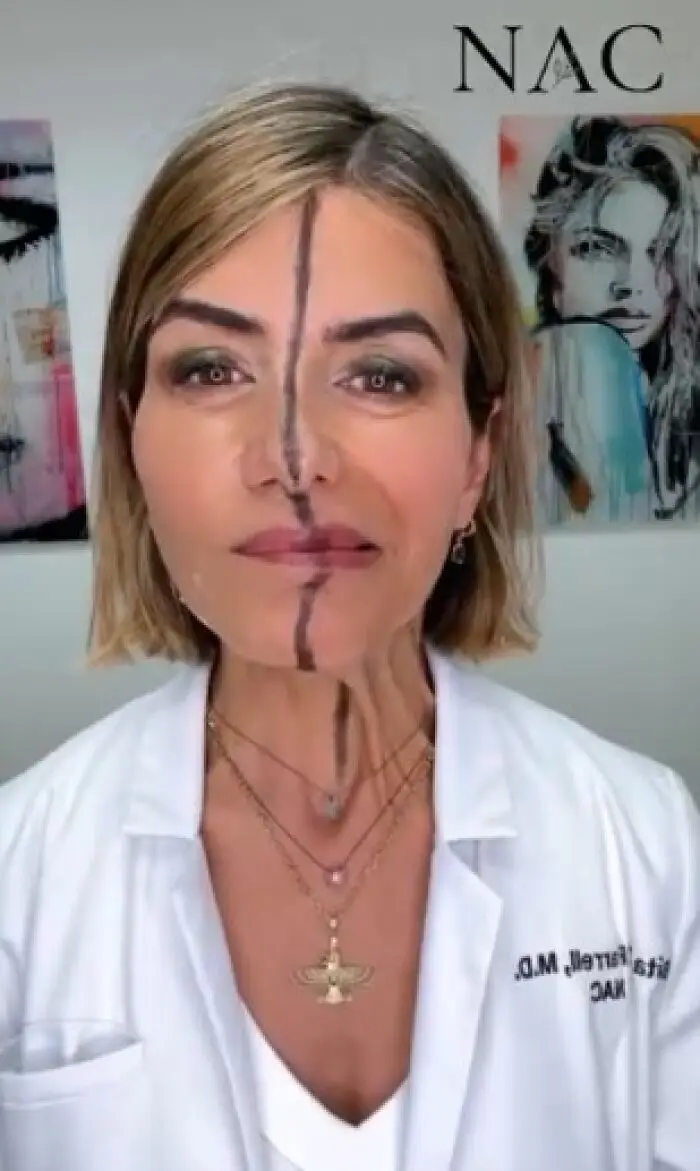
“I’m really trying to pull this side down,” the doctor adds, pointing to the right side, which remains unchanged.
“Also, see that this cheek rides a bit higher, this nasolabial fold feels softer, and so does the shadow of the marionette on this side.”
Dr. Farrell’s explainer video faced mixed reactions from her followers
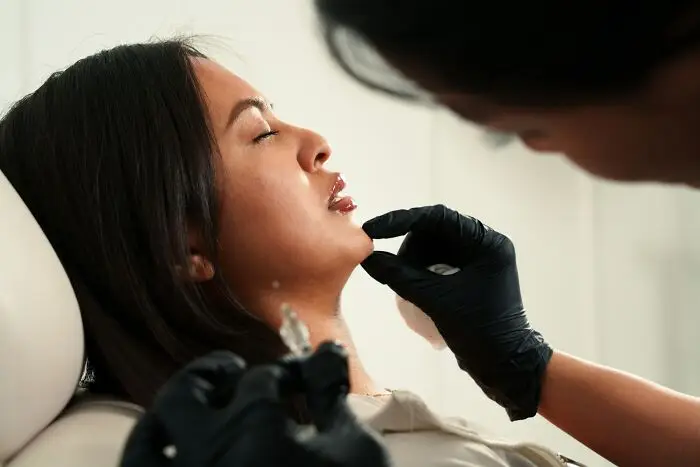
Dr. Farrell explained in the caption how Botox helps give the face a tighter, uplifted look while restricting motion at the same time.
“Muscles of the face either pull up or pull down,” she wrote. “When the muscles that pull the lower face down (platysma and DAO) are injected and relaxed with a Neuromodulator such as Botox, the muscle that pulls the mid face up (zygomaticus or cheek muscle) dominates and pulls the face up!”
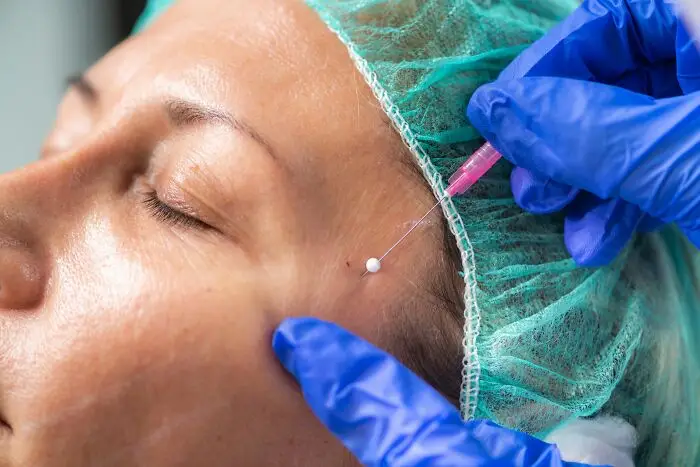
“This can help reduce the appearance of marionette lines, jowls, frown (RBF, or sad face), and the nasolabial folds. It also lifts the neck, can sharpen the jawline, and can make the cheeks appear a bit fuller and more lifted.”
She added that results last an average of 3-4 months, and any FDA-approved neuromodulator can achieve the same.
“Thank you for the cosmetic sacrifice you made to do this,” one user reacted to the video. Another said, “Thanks for taking one for the team.”
“Sad for young girls, but in general, to encourage such interventions... Grow old naturally,” wrote one of the critics. A fourth commented, “So you’re saying you have absolutely no expression after Botox? Gotcha.”
“As someone who has facial paralysis, I can say one thing: Be grateful that every muscle in your face is working,” said a fifth.
Multiple actresses have opened up about quitting Botox due to unsatisfactory outcomes

The aftereffect of Botox that Dr. Farrell showed is the very reason quite a few actresses have stopped taking the substance.
In 2013, Nicole Kidman told Italian newspaper La Repubblica, “I did try Botox, unfortunately, but I got out of it, and now I can finally move my face again.”
Next year, Cameron Diaz told Entertainment Tonight, “I’ve tried [Botox] before, where it was like [a] little tiny touch of something. It changed my face in such a weird way that I was like, ‘No, I don't want to [be] like [that]. I’d rather see my face aging than a face that doesn’t belong to me at all.”
Kelly Ripa admitted in 2016 that a “bad Botox” experience the year before left her unable to smile for six months.
“It did something to my good side, so then I had two bad sides,” the TV star said on Live! With Kelly, adding that she was enjoying looking like herself again.
Gwyneth Paltrow revealed in 2023 that she tried Botox both “successfully and unsuccessfully,” but wouldn’t do it again: “I looked crazy. I looked like Joan Rivers!”

The 2026 press tour of Christopher Nolan’s The Odyssey sparked rumors that Anne Hathaway (Penelope) had undergone plastic surgery and therefore couldn’t move her forehead in a particularly intense scene with Tom Holland (Telemachus).
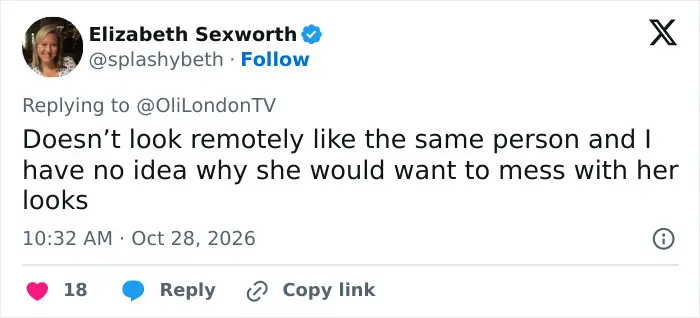
Now, fans worry that Jennifer Lawrence has “lost the character of her face” because of surgeries and Botox ahead of her return as Katniss Everdeen in a cameo role in Sunrise on the Reaping.
"Her unique beauty is forever lost," one user said about Jennifer Lawrence