
#1

In response, the mother creates more insulin, to survive.
So what does the baby do? Creates more hpl! And the mother produces more insulin to negate it.
And it goes on like that until hpl becomes the most plentiful protein hormone in the mother's body. It gets wildly out of hand.
The baby is making 100x more of this hormone than necessary, just to claw sugar away from her, and the mother is producing 3x her baseline insulin just to counteract the effects and stay alive.
When her body loses this arms race, you get gestational diabetes.
Both would be better off if they just settled on a number and made that much hpl and insulin, but evolution doesn't work that way.
#2
#3

Why bother learning these weird facts? For the exact same reason we explore deep oceans, wild forests, or outer space. Humans have always searched for answers to understand our world, find new resources, and build a better life.
Learning how we evolved and how the universe works helps us find our place in the cosmos. It pushes technology forward, opens our minds, and reminds us that we all share one home worth protecting.
#4

#5
#6
Most of the time, these wild facts just fill us with pure awe and make us want to see what’s over the next hill, just like our ancestors did.
Humans are naturally nosy. Honestly, we spend a ton of time on totally unproductive stuff — reading celeb gossip, learning useless trivia, or looking up places we’ll never visit. We love knowing things, even when there’s no practical point.
#7

Wheat wasn't particularly nutritious, and takes care and effort to grow effectively. At that time we as a species didn't really turn to cereal grains unless it was times of hardship, because they were filler at best. Yet, all over the world, everyone started growing wheat.
Wheat didn't even exist outside of a relatively small area of the world as far as we know, yet legitimately became a backbone of human existence. If you dig deeper into it, it's an absolutely insane shift in human behavior.
#8

The advent of the Agrigultural Revolution in Europe about 8000 years ago caused dietary Vitamin D deficiencies which suddenly strongly favored people with lighter skin (because they could more easily make it themselves from sunlight in the far north low sun of Europe). The adaptation took about 3000 years to became widespread.
tldr; only 200-320 generations back, white people were all black.
#9
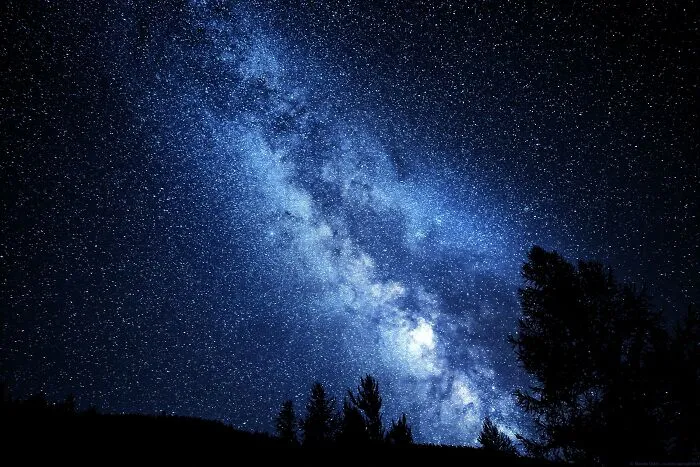
Human curiosity is an evolutionary survival tool.
Early humans needed to explore their environments to find food, discover safer shelters, and spot potential threats before it was too late.
Science shows that our brains actually reward us for learning new things; when we encounter fresh information, the brain releases dopamine.
That is why we get such a rush when solving a puzzle or falling down an internet rabbit hole — our biology literally treats new information like an essential resource.
#10

#11
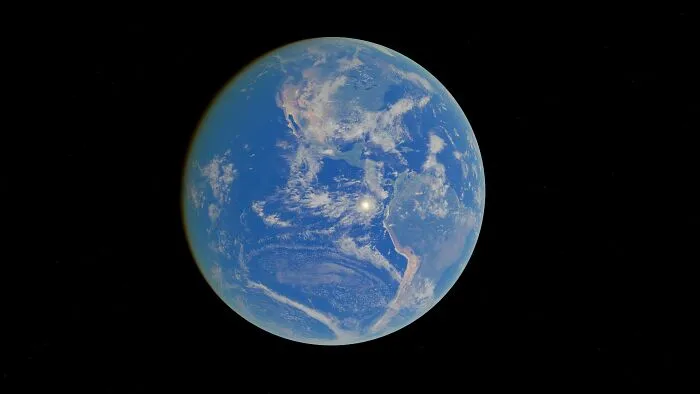
To put that into perspective, if the entire 4.5 billion year of Earth were compressed into 24hrs, humans would appear at roughly 11:59:54 PM, just 6 seconds before EOD.
#12
We are especially drawn to weird, dark, or disturbing facts because of an information gap. When we spot something bizarre or threatening that doesn’t fit what we already know, our brain feels uncomfortable until we figure it out.
Digging into strange realities, like dark universe theories or creepy human biological quirks, lets us test scary situations safely from the comfort of our couch. It satisfies our drive to make sense of the unknown.
“There is something that has been dubbed perceptual curiosity. That’s the curiosity we feel when something surprises us or when something doesn’t quite agree with what we know or think we know. That is felt as an unpleasant state, as an adversity state. It’s a bit like an itch that we need to scratch. That’s why we try to find out the information in order to relieve that type of curiosity,” says astrophysicist Mario Livio.
#13

Defining clothing as body coverings made from outside materials, clothing is rare in the animal kingdom. Outside of our species, the main example I know of is caddisfly larvae. They make casings for themselves using found objects like twigs and sand and gravel, held together with silk that they secrete.
The origin of human clothing has been dated indirectly using the divergence of head lice, which prefer our head hair, and body lice, which prefer our clothing. Origin of Clothing Lice Indicates Early Clothing Use by Anatomically Modern Humans in Africa - PMC 170,000 to 83,000 years ago, about the time of the emergence of behavioral modernity or a little before.
But low-tech people in warm climates do not wear much clothing. Some of us moved to northern Eurasia around 45,000 - 40,000 years ago, and we had to make much more clothing to get through the cold winters there. The main surviving evidence is indirect: bone sewing needles.
Our first clothing was likely animal skins, and we still use animal skin in leather and fur coats and the like.
With the invention of agriculture was the domestication of plants raised for their fibers: flax, cotton, ... Also, some domestic animals were bred to have thick fur for fibers: sheep, Salish wool dogs, ... These fibers were then woven into cloth to make clothing, blankets, tents, ...
Clothing became common in large-scale societies, even in warm climates. As cloth became easier to make, cutting away some cloth became more tolerable, thus enabling clothing cut to fit.
Most recently, we have invented plastics and rubbers, for both woven clothing and shaped clothing, like rubber boots.
#14

My favourite two examples:
1. The theft of fire - basically every culture has a tale of fire being stolen from the gods either by a human hero or a trickster god and then given to humanity.
2. Chaoskampf - The battle between a hero god (usually in the domain of the sky) and a sea-serpent or dragon.
It's really interesting as it shows the similarities in human thinking and the priorities and values of early hominids.
#15
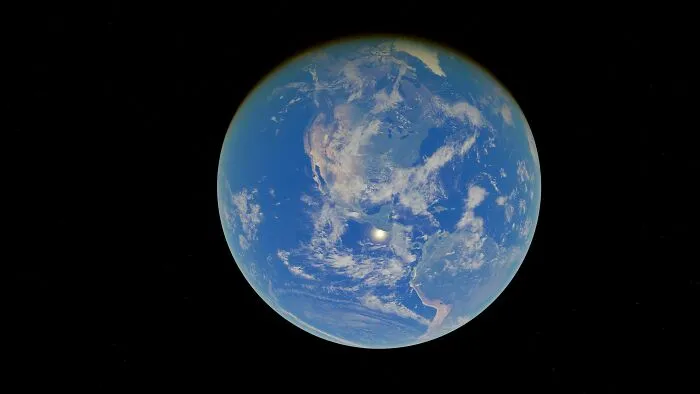
Some people worry that having endless info at our fingertips is making us lazy and destroying our curiosity. But experts say the internet actually fuels our drive to learn — it just changes how we do it.
It helps satisfy what psychologists call specific curiosity. That’s the sudden, nagging itch to know one exact fact: Who wrote that book? What’s the name of that actor?
Instead of obsessing all day, you get your answer in two seconds. Getting that instant fix frees up mental space.
“The digital age helps us because we can find that information, and that may drive us to look for something else about this. And that would drive perhaps epistemic curiosity, which is this love of knowledge and wanting to learn new things,” says Livio.
#16
#17
#18
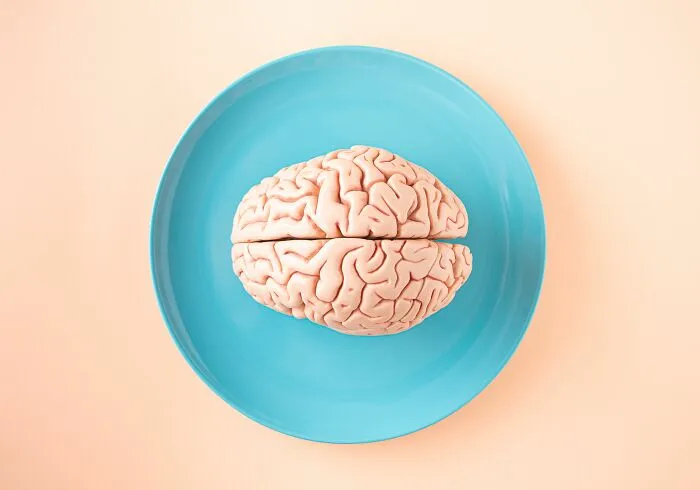
The bad news is that curiosity tends to decline as we age, but it is also increasingly important to our health as we get older.
A 2020 study of over 850 people found that when people start to feel like their time is running out, they subconsciously stop investing energy in learning new things. Their trait curiosity — the everyday urge to explore — diminishes.
But giving up on curiosity is a huge mistake.
A study in Neuroscience and Biobehavioral Reviews found that staying curious literally shields your brain and body from decline. It activates two key neural pathways that help fight off dementia and Alzheimer’s.
The good news is that curiosity isn’t a fixed personality trait. It can be cultivated.
Everyday habits, like asking more questions and seeking interesting facts online, are the exact sparks that jumpstart a bored brain and get you motivated to learn again.
#19

#20