




So much of our daily reality is weird, creepy, or mind-bending, but we rarely slow down enough to notice. Take our own bodies, for instance. A chunk of our DNA actually comes from ancient viruses.
Look up at the night sky, and things get even wilder. Some scientists actually hypothesize that our entire universe is sitting inside a massive black hole right now.
If you’ve never looked at human existence from these angles, prepare to have your mind blown. We’ve rounded up some of the most disturbing facts about humans, evolution, and the cosmos shared by people in an online forum.
These aren’t the kind of thoughts that usually pop into your head over morning coffee — but once you read them, you won’t be able to stop thinking about them.
Click here & follow us for more lists, facts, and stories.
#21

We are not evolved to almost anything in the modern world, leaving our nervous system almost permanently on edge.
Report
0points
Kids ask endless questions because everything around them is completely new. As adults, the world doesn’t run out of mysteries… we just stop paying attention to them.
That is why reading through a list of disturbing facts actually matters. It breaks the routine, forces you to question what you take for granted, and drags you into weird corners of reality you’d otherwise ignore.
Pick some of the most unsettling facts on this list and bring them up at dinner, at the water cooler, or in the group chat. Watch how it instantly shifts the mood, sparks a wild conversation, and wakes your brain right back up.
#22
The kneecap has two properties that are interesting- 1. It acts as a fulcrum for leg muscles, increasing the power and efficiency of those muscles for walking and running. 2. It keeps your knees from bending the other way.
Report
0points
#23

Every bad thing we are capable of doing to each other is possible because it was advantageous at some point in time to do so.
Report
0points
#24
That evolution doesnt care about or favor intelligence, "free will", or sentience. Our self aware nature is just a by product and not necessary to evolutionary persistence.
Report
0points
#25
It took us some 100,000 years to invent agriculture, but when we did, we invented it at several places.
That time is from Behavioral modernity - Wikipedia from dates of various artifacts, like from Blombos Cave, South Africa, about 100,000 - 80,000 years ago.
Vavilov center - Wikipedia and Current perspectives and the future of domestication studies | PNAS -- there are at least four sites of independent invention of agriculture: the Fertile Crescent in the Middle East, South China, Central America, and the Northern Andes in South America.
What made the difference? I've found the theory that climate was erratic during the Last Glacial Period - Wikipedia and stable in the Holocene: Was Agriculture Impossible during the Pleistocene but Mandatory during the Holocene? A Climate Change Hypothesis | American Antiquity | Cambridge Core
The Holocene is the most recent interglacial period, and the previous one is the Last Interglacial - Wikipedia from 130,000 years ago to 115,000 years ago, known as the Eemian and various other names. So why didn't we invent agriculture back then? Were we not behaviorally modern enough? Or was that interglacial's climate also too unstable?
Report
0points
#26
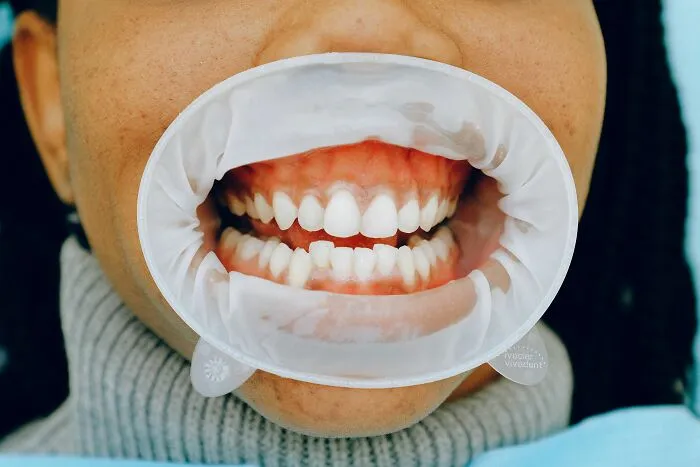
Our teeth aren't bones, they're derived from part of the neural crest during early embryonic development. In other words, teeth are *bitey brain-bits.*.
Report
0points
#27
Humans ([intimate] sapiens) have prehuman ancestors (like millions of years back before [intimate] sapiens) .We know that - but only recently we faced evidence that fire was discovered by pre-[intimate] sapiens, as was construction.
Report
0points
#28
That it's most likely, that we would not have developed from apes if climate change (global warming end of ice age) would not have dried out the sahara. thx, climate change.
Report
0points
#29
From the perspective of subatomic physics, our bodies are composed of more than 99.99% empty space: we are nothing but empty space.
Report
0points
#30
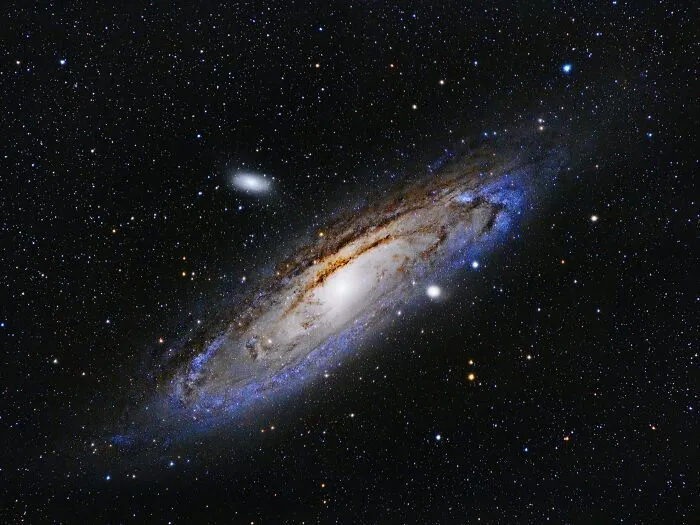
I saw somewhere yesterday that there’s a hypothesis that we are inside a black hole currently.
Report
0points
#31

We’re born premature, because our brains need to fit through the birth canal.
Report
0points
#32
I always think about how you can be born with a maladaptive trait and, like, that's just your life. Like, you won't reproduce and it sort of just [is bad] to be you.
Report
0points
#33
H sapiens exchanged rationality for processing speed.
The vast majority of humans use cognitive shortcuts based on emotional response and social context to make decisions, this is far more energy efficient and much faster cause instead of analyzing each decision, we just do whatever everyone else is doing or use an arbitrary association with your personal likes and dislikes. Like choosing a product cause it has your favorite color even though you can get a cheaper one in other colors or something better with the same price.
There's a really long list of Cognitive biases in Wikipedia that covers Us vs Them mentality to Confirmation bias.
Report
0points
#34
Haven't seen this one yet so I'll chime in. For every beneficial mutation there are many more detrimental mutations. This isn't a problem evolutionarily, because those traits are selected out of the population. But someone has to live those lives. All of the genetic diseases and deleterious inheritable attributes are the price we pay as a species and people for all the things we love about ourselves. But the price isn't paid evenly by everyone; some suffer more. So even if you love your life and humanity for all of its creativity and passion and potential, those things rest on a foundation of mountains of individual suffering.
Report
0points
#35

Jobs are just modern day survival of the fittest. I guess it beats s******* each other over the head with rocks caveman style. (My answer is probably more obvious and talked about, but if you really ponder it, we will always have hierarchies, the harsher ones are just more intricate and cleanly now.) It seems we will always be stuck in some sort of loop. The violence of humanity is pretty harsh compared to some species and even worse because we have that intelligence to commit true atrocities.
Report
0points
#37
That we evolve at a ridiculously lower pace when compared to plants and fruit flies.
Report
0points
#38
[intimate] sapiens interbred with other archaic human species. Makes you wonder what else early humans tried to mate with.
Report
0points
#39
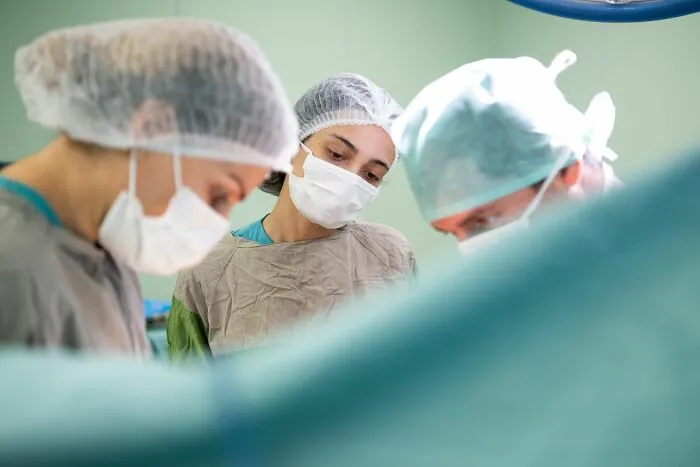
Placentas evolved from a virus.
The people who survived the bubonic plague had more reactive immune systems, which we inherited, so humans are more likely to have autoimmune issues now than they were before the plague.
The people who survived the bubonic plague had more reactive immune systems, which we inherited, so humans are more likely to have autoimmune issues now than they were before the plague.
Report
0points
#40
Just how staggeringly empty most of it is, and the incomprehensible distances involved.
Report
0points