






Hello Everyone, I'm Ugur Gallenkus from Istanbul, Turkey. I create photo collages juxtaposing two images, including the powerful pictures of some of today's most intrepid photojournalists.
I aim to showcase the significant social issues our world is facing, such as injustice, war, climate change, etc., by juxtaposing two pictures side-by-side within a single frame. Through these photography artworks, I strive to illustrate the contrasts between the two different worlds we live in and prompt reflection on making decisions that will minimize these problems by fostering empathy.
I use powerful photos of photojournalists who work under extreme conditions from all over the world. I share these thought-provoking photos and stories, and I want you to know more. Thank you. If you missed the previous issue of my collage ideas, you can see it here.
More info: Instagram
More info: Instagram
#21
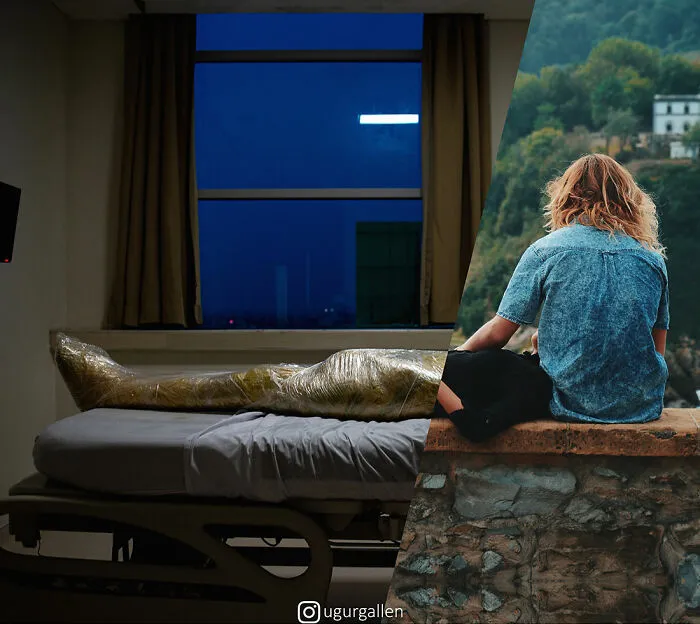
Photo by Joshua Irwandi // The body of a suspected COVID-19 victim lies in an Indonesian hospital. After the patient died, nurses wrapped the body in layers of plastic and applied disinfectant to help prevent the spread of the virus.
36points
#22
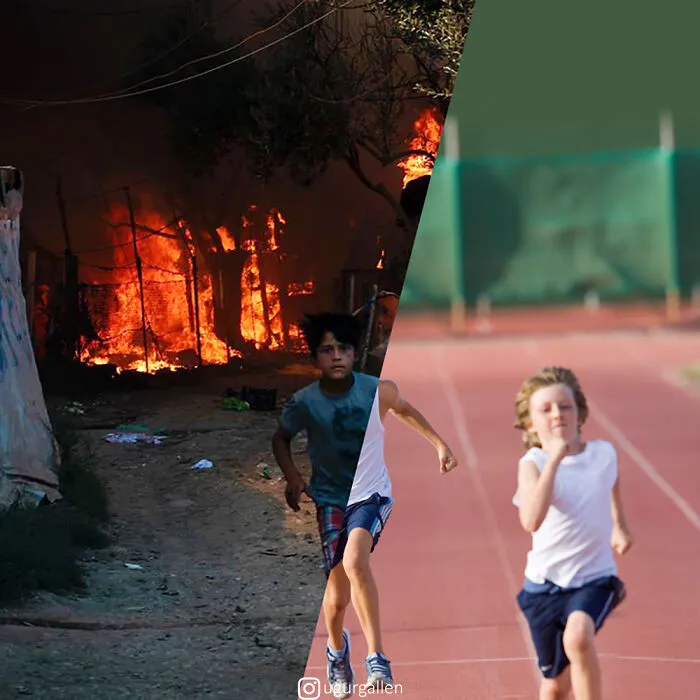
Photo by Afshin Ismaeli // A child flees the Moria refugee camp after fires completely destroyed the camp on September 9, 2020. Thousands of people have been forced to flee their homes after a fire broke out in Moria camp, destroying their homes and belongings.
33points
#23
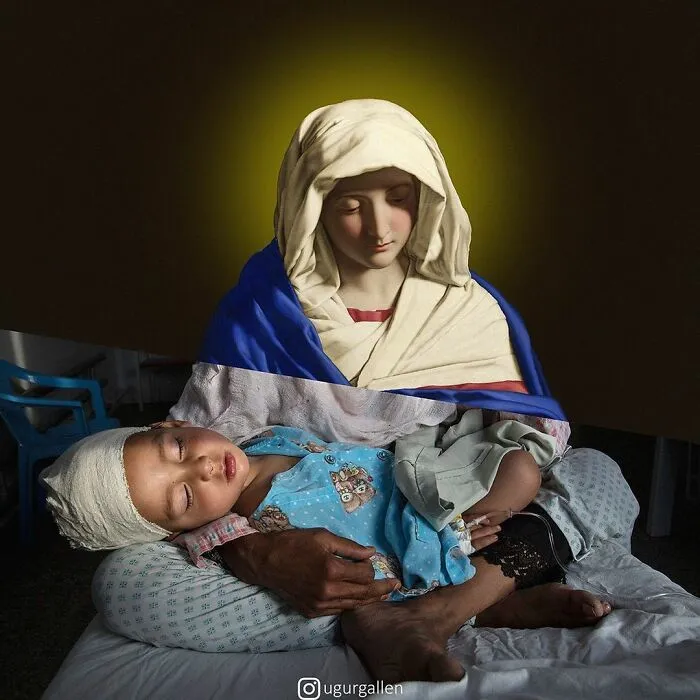
Photo by Paula Bronstein @pbbphoto // At an emergency hospital, Najiba holds her nephew Shabir, age 2, who was injured from a bomb blast that killed his sister in Kabul on March 29, 2016. Najiba had to stay with the children as their mother buried her daughter. Every year the UN comes out with their report documenting the unfortunate carnage from America's 2019 longest and most costly war in history. Along with the price tag estimated in the hundreds of billions, the human toll from a 2015 UN Assistance Mission To Afghanistan (UNAMA) report stated the number of Afghan civilians killed and wounded surpassed 11,000, which was the deadliest on record for civilians in Afghanistan since the US-led invasion more than 14 years ago.
32points
#24
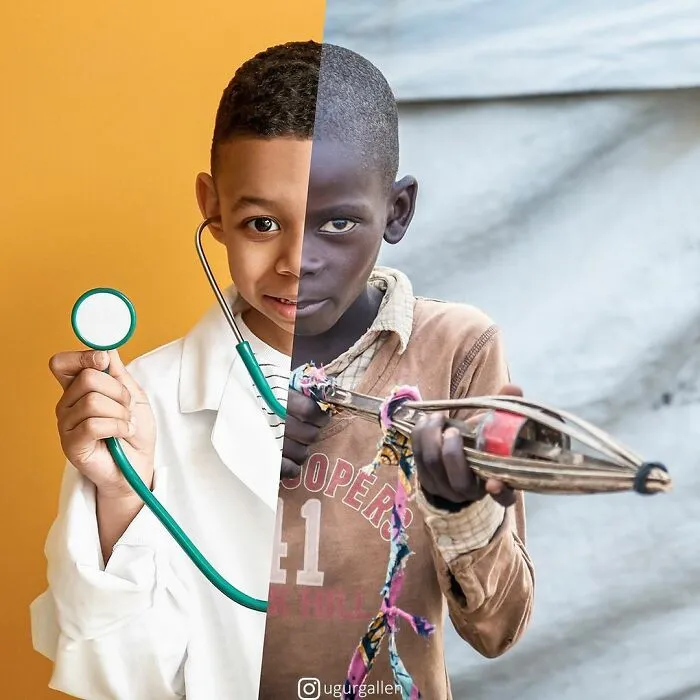
Photo by Yann Libessart // A kid looks with his grenade launchers toy in Mpoko IDP camp at Bangui International Airport, the Central African Republic in 2014.
According to The UNHCR, of the 7.1 million refugee children of school age, 3.7 million—more than half—do not go to school. “School is where refugees are given a second chance,” said Filippo Grandi, UN High Commissioner for Refugees. “We are failing refugees by not giving them the opportunity to build the skills and knowledge they need to invest in their futures.” via UNHCR
“We need to invest in refugee education or pay the price of a generation of children condemned to grow up unable to live independently, find work and be full contributors to their communities,” said Grandi.
32points
#25
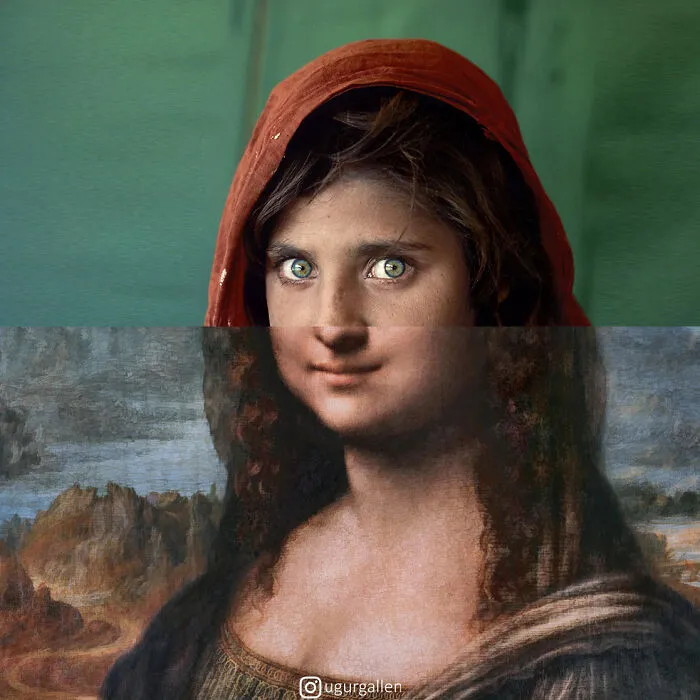
Photo by Steve McCurry // Afghan Girl is a 1984 photographic portrait of a refugee girl, Sharbat Gula. It appeared on the June 1985 cover of National Geographic. Pashtun by ethnicity and from a rural background, Sharbat Gula's family fled their village in eastern Nangarhar during the Soviet Union's bombing of Afghanistan when she was around six years old. Along with her father, brother, and three sisters, she walked across the mountains to Pakistan to the Nasir Bagh refugee camp in 1984. Sharbat Gula was one of the students in an informal school at the Nasir Bagh refugee camp in 1984. Her photograph was taken by Steve McCurry.
The Soviet–Afghan War lasted over nine years, from December 1979 to February 1989. Insurgent groups known collectively as the mujahideen, as well as smaller Maoist groups, fought a guerrilla war against the Soviet Army and the Democratic Republic of Afghanistan government, mostly in the rural countryside. The Mujahideen were variously backed primarily by the United States, Pakistan, Iran, Saudi Arabia, China, and the United Kingdom; the conflict was a Cold War-era proxy war. Between 562,000 and 2,000,000 civilians were killed and millions of Afghans fled the country as refugees, mostly to Pakistan and Iran. via Wikipedia.
Report
31points
#26
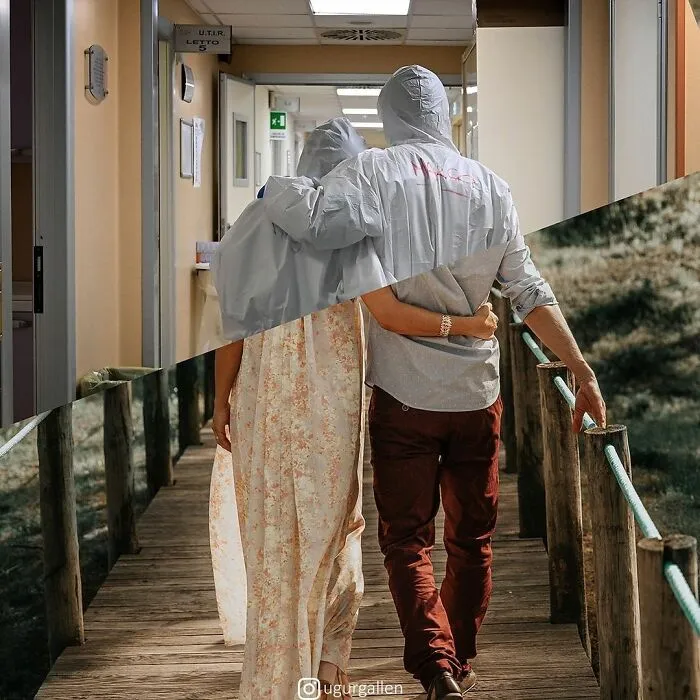
A doctor and a nurse wearing protective gear leave at the end of their shift in a corridor of the level intensive care unit, treating COVID-19 patients, at a hospital in Rome, on April 20, 2020.
31points
#27
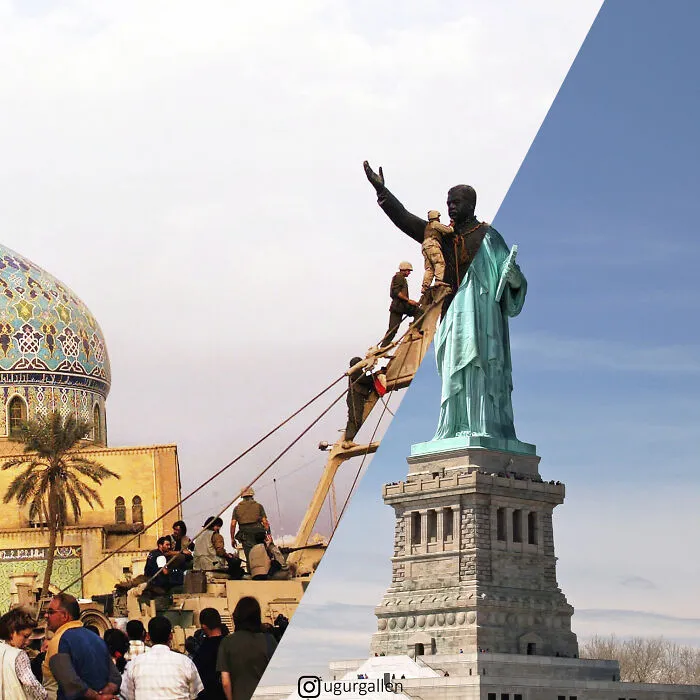
Photo by Wathiq Khuzaie // U.S. marines climb up to topple a statue of Iraqi Saddam Hussein on April 9, 2003, at the al-Fardous Square in Baghdad, Iraq.
29points
#28
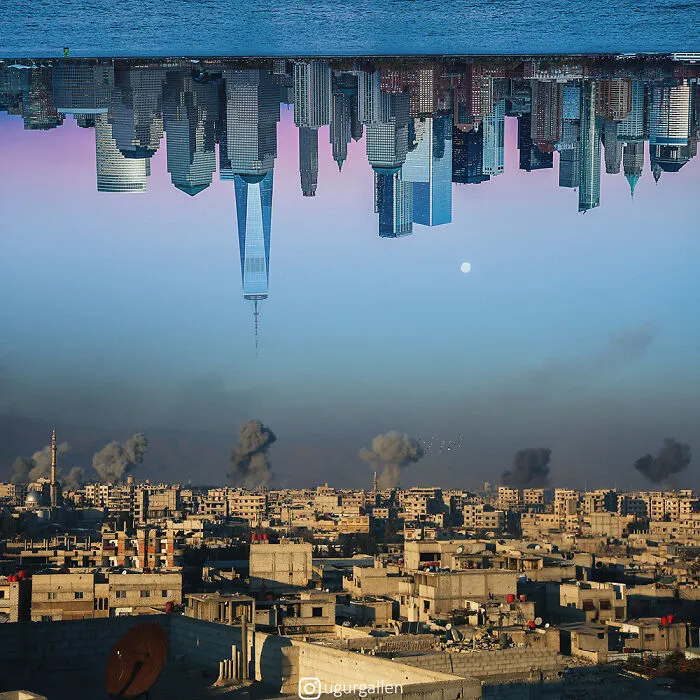
Photo by Amer Almohibany // Smoke rises from buildings following airstrikes on the rebel-held besieged town of Arbin, in the eastern Ghouta region, on the outskirts of the capital Damascus on January 8, 2018.
29points
#29
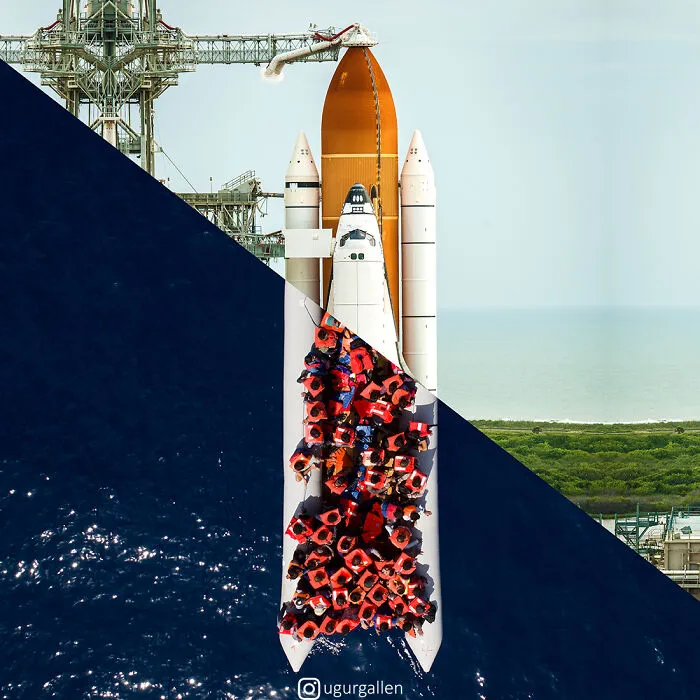
Photo by Felipe Dana // Refugees and migrants wait to be rescued by members of the Spanish NGO Proactiva Open Arms, after leaving Libya trying to reach European soil aboard an overcrowded rubber boat, north of the Libyan coast, Sunday, May 6, 2018. In total, 105 refugees and migrants from Bangladesh, Egypt, Nigeria, Morocco, Ghana, Pakistan, Sudan, Libya, Eritrea, and Senegal were rescued in the overcrowded rubber boat.
Report
28points
#30
28points
Ugur Gallenkus' work, juxtaposing powerful images to illustrate pressing social issues, brings to light the severity of topics such as child labor, akin to the struggles faced by many in Bangladesh. GMB Akash's dedication to providing education opportunities for working kids in Bangladesh highlights the transformative power of education in offering hope and a better future. Similarly, Akash’s efforts reflect the urgent need to address such humanitarian challenges globally, which are also depicted in Gallenkus' thought-provoking pieces.
For insights into the impact of education initiatives, you might want to explore how lives have been transformed through education sponsorships in Bangladesh.
