



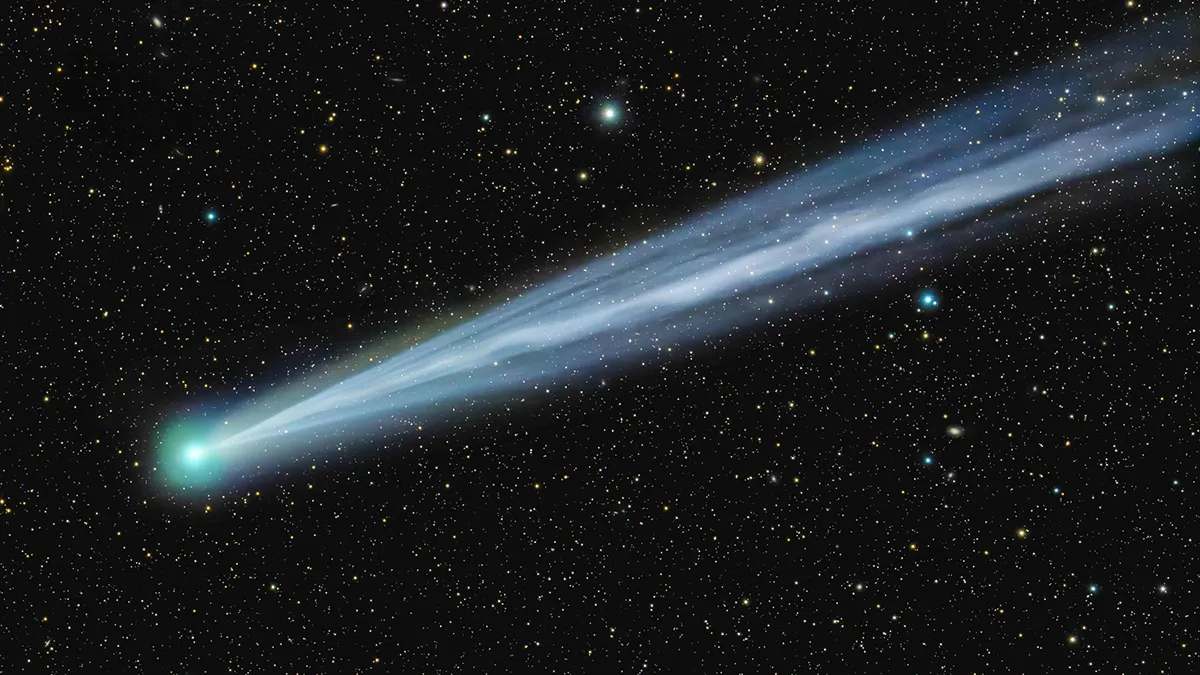


Every year, the Central West Astronomical Society (CWAS) brings together some of the world's most talented astrophotographers through the David Malin Astrophotography Awards, a competition celebrating the beauty and scientific wonder of the night sky. Named after pioneering astronomical photographer David Malin, whose groundbreaking imaging techniques transformed deep-space photography, the awards recognize extraordinary images captured by both amateur and professional photographers. From distant galaxies and colorful nebulae to eclipses, comets, planets, and dramatic nightscapes, the competition showcases the incredible diversity of our universe through the lens of modern astrophotography.
Entries compete across categories including Deep Sky, Solar System, Nightscapes, Wide-Field, Junior, and Animated Sequences, with winners selected for both their technical excellence and artistic vision. The winning photographs are exhibited at the CSIRO Parkes Observatory Visitors Centre before touring museums and galleries across Australia, inspiring visitors to see the cosmos in a completely new way. Below, we've gathered some of the most breathtaking images from this year's competition, each offering a remarkable glimpse into the beauty and scale of the universe.
More info: cwas.org.au | Facebook
#21 Another Day, Another Dollar By Paul Montague: Deep Sky Honorable Mention
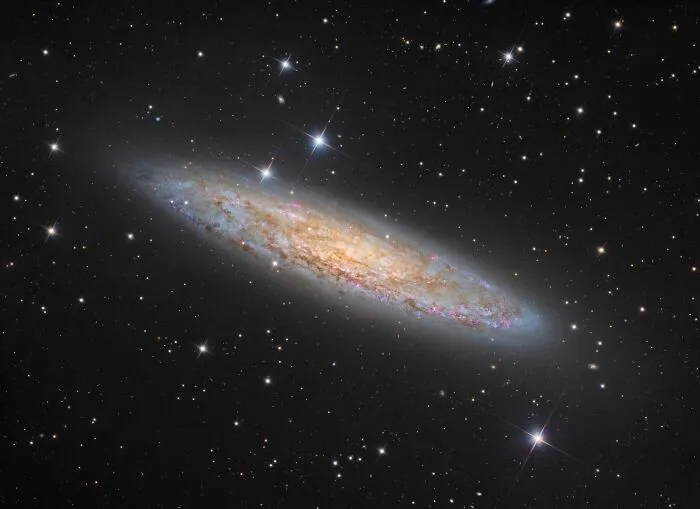
NGC 253, also known as the Sculptor Galaxy or the Silver Coin Galaxy (Dollar Galaxy), is one of the brightest and closest starburst galaxies, located about 11 million light-years away in the constellation Sculptor. Unlike most spiral galaxies, NGC 253 is undergoing an intense burst of star formation, producing new stars at a rate several times higher than that of the Milky Way. The pink knots scattered throughout its spiral disk mark vast hydrogen-rich star-forming regions, while dark lanes of interstellar dust weave through the galaxy's brilliant core. Because of its proximity and nearly edge-on orientation, NGC 253 has become one of the most studied galaxies beyond our own, helping astronomers better understand how galaxies grow, evolve, and form stars over billions of years.
7points
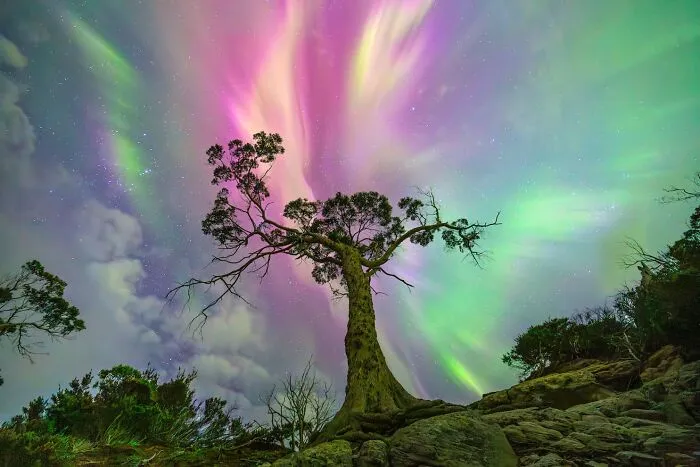
#22 The Wishing Tree By Luke Rasmussen: Nightscapes Honorable Mention
7points
#23 Waxing Gibbous By Andy Casely: Solar System Honorable Mention
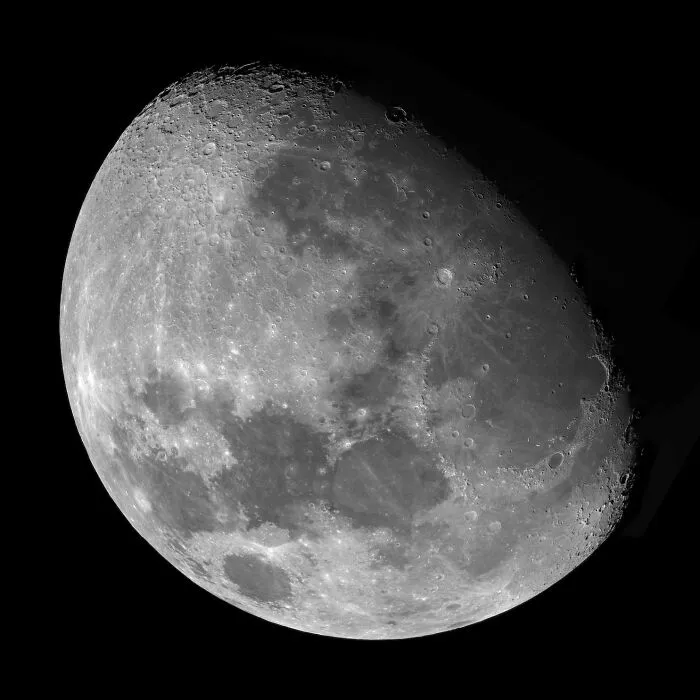
A waxing gibbous Moon is the lunar phase that occurs between the first quarter and the full Moon, when more than half of the Moon's Earth-facing side is illuminated and the bright portion continues to grow each night. During this phase, sunlight strikes the lunar surface at an angle that accentuates craters, mountains, and valleys, creating dramatic shadows and exceptional detail. For this reason, many astronomers and astrophotographers consider the waxing gibbous phase one of the best times to photograph the Moon, as it reveals the rugged texture of the lunar landscape far more vividly than a fully illuminated Moon.
5points