

A father-daughter bond can be incredibly special, but not every relationship is smooth sailing, right, pandas? Sometimes, things get complicated, especially when parents cross boundaries or expect their children to put family obligations ahead of their own needs. And when guilt trips enter the picture, things can get messy pretty quickly.
This post may include affiliate links.
Take this 19-year-old college student's story, for instance. Her father wanted her to take on a responsibility involving his new family, but she wasn't exactly thrilled about it. And when she refused, he accused her of being selfish and abandoning the family. But there was a lot more to their complicated relationship than he was willing to acknowledge. Keep reading to find out what happened next!
Being a teenager comes with plenty of challenges

A 19-year-old shared how her father expected her to take on additional family responsibilities despite her busy college and work schedule






Self-care includes showing yourself compassion, respecting your emotional needs, and setting healthy boundaries
We’ve all heard people talk about the importance of self-care. These days, it’s almost become a buzzword online: bubble baths, skincare routines, solo coffee dates, journaling, long walks, scented candles…you know the vibe. And yes, those things can absolutely help people slow down and recharge. But real self-care goes much deeper than just treating yourself once in a while. At its core, self-care is about protecting your mental, emotional, and physical well-being consistently, especially in situations that drain you. Sometimes self-care looks peaceful and cozy. Other times, it looks uncomfortable, emotional, and difficult — like saying “no,” disappointing people, or stepping away from relationships that constantly leave you exhausted.
Psychiatrist and author Pooja Lakshmin explains this beautifully, saying, “Self-care is a consistent practice, rather than an escape. Real self-care involves getting grounded in your values, treating yourself with self-compassion, stepping into your power, and setting boundaries.” In simpler terms, real self-care is not just about temporarily feeling better; it’s about creating a life where you don’t constantly feel emotionally depleted in the first place. It means learning to prioritize your peace, respecting your own limits, and recognizing that protecting your mental health is not selfish.
And one thing Pooja mentions that really stands out is boundaries. Because setting boundaries is absolutely a form of self-care. Whether it’s saying no to extra work, limiting emotionally draining friendships, or stepping back from people who constantly disrespect your time, boundaries help protect your energy. But here’s the thing many people struggle with: boundaries also apply to family. Yes, even parents, siblings, or relatives. And while setting limits with family can feel deeply uncomfortable (especially if guilt is involved), it’s still important. Being related to someone does not automatically mean you must tolerate manipulation, emotional pressure, or behavior that negatively affects your mental health.
In fact, several studies highlight just how important healthy boundaries are for emotional well-being. Mental health experts consistently note that setting limits is a vital practice for preventing anxiety, depression, emotional exhaustion, and burnout. Think of it this way: when people constantly overextend themselves emotionally to please everyone else, they often leave no time or energy to care for themselves. Boundaries create emotional breathing room. They allow people to rest, process their feelings, focus on their own goals, and avoid becoming overwhelmed by other people’s expectations. Without boundaries, many people slowly slip into cycles of resentment, guilt, stress, and emotional fatigue without even realizing it.
The National Center for Biotechnology Information has highlighted that the quality of relationships with family members can positively or negatively affect overall health and well-being. Loving, supportive relationships can provide comfort and stability, while toxic or emotionally manipulative dynamics can contribute to stress, anxiety, and long-term emotional harm. Which is exactly why learning to set healthy boundaries is not cruel — it’s protective.
Often, you can start setting boundaries with smaller things: limiting how often you engage in emotionally draining conversations, refusing to tolerate disrespectful behavior, or being honest about what you can and cannot do. It can also mean learning not to immediately drop everything every time someone pressures you emotionally. And honestly, many people struggle with this because they were raised to believe that saying “no” makes them selfish or disrespectful. But protecting your mental health does not make you a bad daughter, son, sibling, or friend. Sometimes it simply means recognizing your own limits before you completely burn out trying to save everyone else.
Many estranged adults reported a noticeable reduction in psychological distress after distancing themselves from unhealthy parental relationships
Additionally, boundaries work best when they are expressed clearly and calmly. People cannot always respect limits they do not understand. That means being honest about your capacity, your priorities, and what behavior you will no longer tolerate. It may feel awkward at first, especially if you are used to constantly accommodating others, but healthy communication often prevents even bigger emotional explosions later.
But in difficult situations, it’s important to distance yourself from toxic people. If someone repeatedly ignores your boundaries, manipulates you emotionally, or consistently harms your mental health, stepping away can sometimes be the healthiest option; even if that person is a parent. That decision is never easy, and for many people it comes with guilt, grief, or complicated emotions. But boundaries are not punishments. They are often survival tools. And while society tends to romanticize family relationships, the reality is that not every parent-child relationship is healthy simply because it exists.
Research also shows that distancing oneself from unhealthy family dynamics can genuinely improve emotional well-being for some people. A 2019 study published in Families, Relationships and Societies found that many adults who cut ties with a parent reported feeling more authentic, more in control of their lives, and overall emotionally healthier afterward. Another 2022 study involving more than 260 estranged adults examined a peer support program designed to help participants process family estrangement. After the intervention, participants showed statistically significant reductions in psychological distress, moving on average from moderate distress levels to mild ones. Many also reported feeling less ashamed and less alone in their decision. Researchers concluded that while estrangement can be emotionally painful, it can also feel deeply liberating depending on the relationship and the support system around the individual.
At the end of the day, setting boundaries isn't about being selfish. It's about protecting your peace and knowing when to put your own needs first. And sometimes, that means having difficult conversations or disappointing people who expect too much from you. Coming back to today's story, the 19-year-old chose to stand her ground instead of letting her father's guilt trips influence her decision. With college, work, and her own future to focus on, she didn't want to take on responsibilities that weren't hers. What do you think, pandas? Was she right to refuse? Have you ever felt guilty for setting boundaries with family? Let us know in the comments!
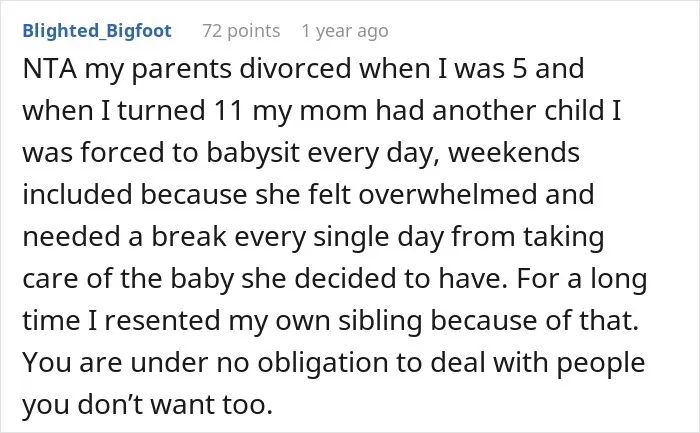
People were quick to call out her father for being inconsiderate and disregarding her needs




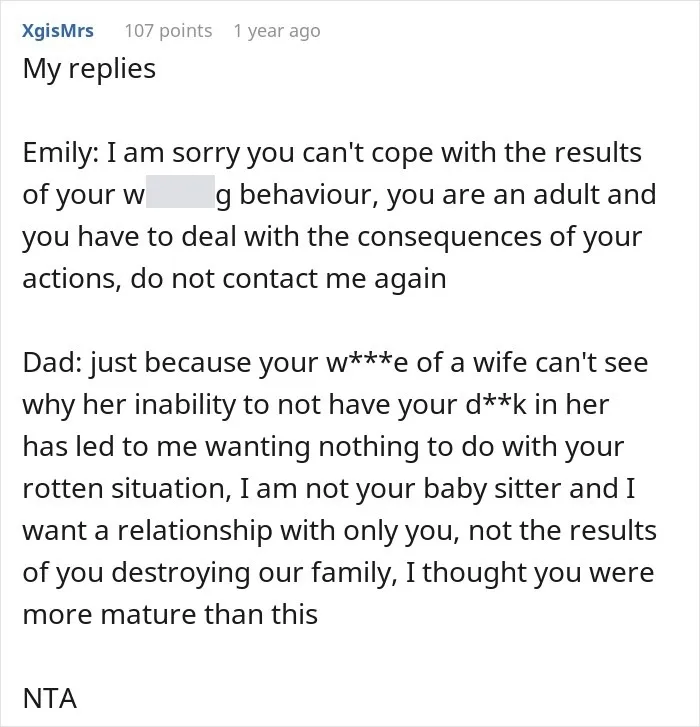

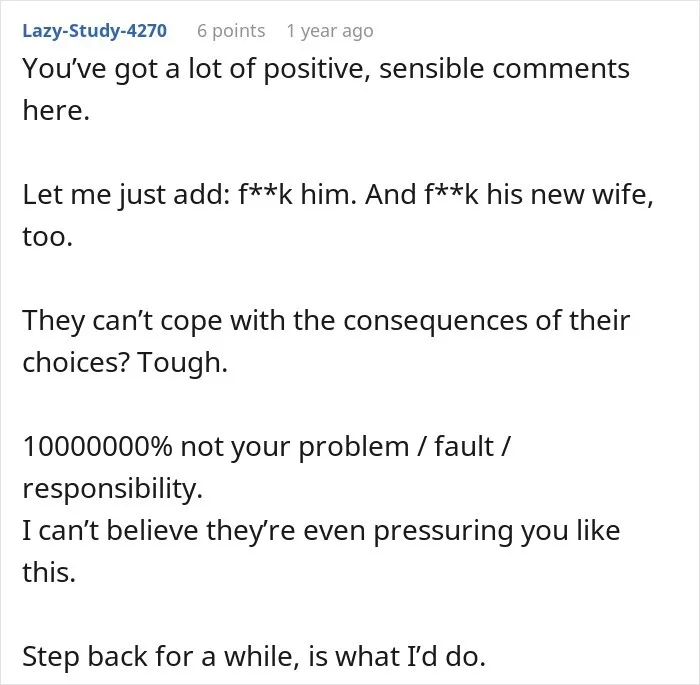












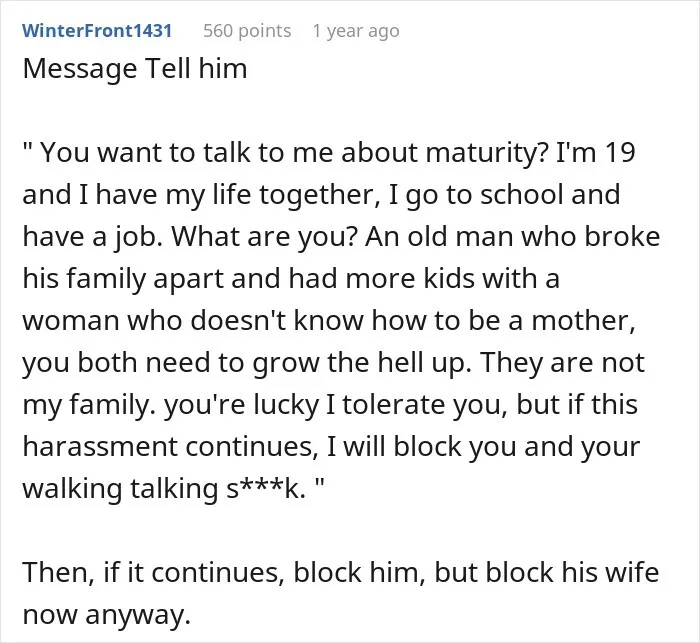






Several others also shared similar experiences of dealing with unreasonable family expectations