





If your workplace's walls could talk, what would they say? I guess it largely depends on your profession. The morgue, for example, might reveal very different secrets to the hair salon or the tech support call center...
One place that holds a rollercoaster of stories is a hospital. Life-changing moments happen here every single day. But what patients and their families see or hear pales in comparison the reality experienced by the staff who work in these buildings. Doctors, nurses, paramedics, and even janitors are privy to things that might surprise even the most hardcore Grey's Anatomy fan.
They've been spilling some secrets online, in response to someone asking, "What are the unspoken (dark) realities of medicine that surprised you most?" From battles with mental health and substance use to admissions that medical professionals are merely making "educated guesses," each answer takes us deeper into the minds of those who have chosen to save lives for a living. Bored Panda has put together a list of the best ones below. Don't forget to upvote your favorites.
#21
That patient families will do anything to keep the patient alive for their own comfort instead of abiding by the doctors orders. For example: feeding an intubated patient a hamburger because “he’s hungry” when they are already getting tube fed and ordered NOT to interfere with the vent or trach. This has resulted in many patient deaths than you think.
10points
#22
Nurses can be forced (mandated) to work 16 hour shifts if there’s no other coverage. Many hospitals are understaffed….
10points
#23
As another perspective to what you've witnessed, substance use treatment is remarkably effective for physicians. Having a multimillion dollar career on the line is an enormous incentive to get treated. The only other demographic with as h**h a rate of treatment success for substance use is pilots, likely for similar reasons. Something like 90% of physicians who seek treatment for substance use are abstinent 10 years later.
Report
9points
#24
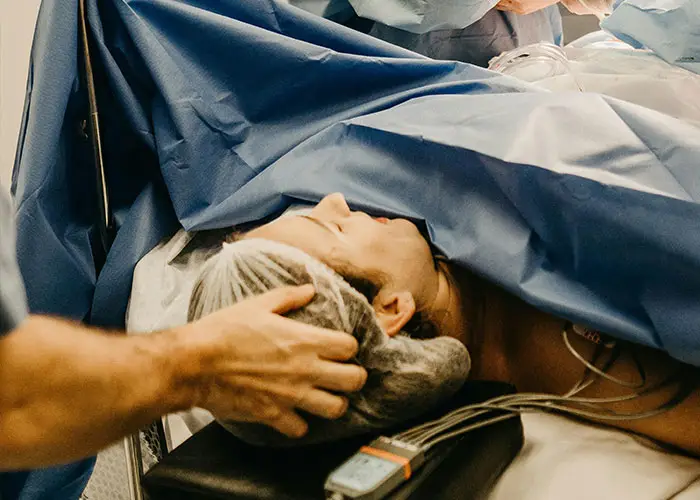
If you sit there on your phone the whole time the mother of your child is in labor such that a nurse has to step in and fulfill the supportive role instead, yeah everyone knows and you’re getting judged by the whole unit.
9points
#25
When nurses/MDs etc are laughing/joking with each other it is a coping mechanism. We aren't trying to be rude we are compartmentalizing the trauma that we see all day every day. If we don't lighten the load we would cry all day and never come back to work it's literally the only way to watch a baby die and then deal with screaming karen next door with out punching them in the face.
Report
9points
#26
How often mistakes are made, even with the whole swiss cheese model and adoption of checklists and EHR. What's surprised me even more was how few were getting caught or recognized, even after the fact.
It would help to have a no blame culture, but given how malpractice works, that's not going to happen anytime soon. I thought for awhile that residents might start getting more sleep, but COVID destroyed any hope of that.
It would help to have a no blame culture, but given how malpractice works, that's not going to happen anytime soon. I thought for awhile that residents might start getting more sleep, but COVID destroyed any hope of that.
Report
8points
#27
At some stage most consultant physicians stop learning, adapting or developing their clinical practice. They also mostly practice based on heuristics (especially availability and familiarity heuristics). This form of practice is likely to handle most things in a decent enough way that is acceptable at a certain time and place. However it restricts the physician from thinking laterally, dealing with new or complex situations, or becoming truly exceptional.
There are a handful of exceptions to this and continue to develop their skills and knowledge. These clinicians have all had a habit of regularly reading journal articles, listening to podcasts or being involved in academia themselves. It’s hard to know if it’s the latest research that is having a positive effect on their practice OR if the kind of clinicians who are regularly working on themselves happen to have a habit for reading articles.
There are a handful of exceptions to this and continue to develop their skills and knowledge. These clinicians have all had a habit of regularly reading journal articles, listening to podcasts or being involved in academia themselves. It’s hard to know if it’s the latest research that is having a positive effect on their practice OR if the kind of clinicians who are regularly working on themselves happen to have a habit for reading articles.
Report
8points
#28
How old so many young people are from lifestyle and uncontrolled diseases. People in their mid 40s who look 80 with multiple amputations, bed sores, multiple cardiac stents from uncontrolled diabetes and obesity, etc. Being raised in a middle class setting where people weren't perfect but generally were active, went to the PCP, maybe carried some extra weight but generally took care of themselves, the degree to which this happens in other populations is shocking. The people I know from my personal life in their 70s are way healthier than the average middle aged patient in the inner city clinic where I trained and it's not even close.
8points
#29
I worked as a case manager at a for profit long term acute hospital many moons ago. I left because I thought it was very unethical even though I made bank for a social worker. Back then (2013ish), discharge date was determined by DRG payments and totally divorced from what was in the best interest of the patient. I got a printout every morning of when people needed to be discharged by for max profit and at which date we would start losing money. People were often hastily discharged to a lower level of care ready or not when their DRG date came up. Then we got into a length of stay crisis because we were discharging too quick (the rules at the time said an LTACH had to have an average length of stay of 25 days). When this crisis was identified people were kept longer than they needed to be. It was awful. I had a CEO breathing down my throat constantly. I sure hope they have reformed things since then.
Report
8points
#30
Not hidden, per se, but for the love of all that is holy, if you insist on bringing your kid into the hospital, do NOT let them crawl or play on the floor. The amount of literal blood, urine, p**p, and vomit that has been on it and hastily (not thoroughly) cleaned up is, well, a lot. The hospital, especially the floors, is NOT a clean environment.
Added to that, think of all the rooms nurses, doctors, housekeeping staff, etc. have walked into. Rooms that have COVID or Norovirus or group A Strep. We walked into those rooms and those same shoes walked into other rooms.
Tl;dr hospital floors are disgusting as f**k.
Added to that, think of all the rooms nurses, doctors, housekeeping staff, etc. have walked into. Rooms that have COVID or Norovirus or group A Strep. We walked into those rooms and those same shoes walked into other rooms.
Tl;dr hospital floors are disgusting as f**k.
Report
8points
#31
Not really hidden and kinda minor but I’ll say it anyways. I deliver food to patients and it’s not hard to tell when someone is on their way out. Could be simply not being hungry, or could be the inability to eat. Had one patient who hadn’t eaten anything off their tray for 3 days straight. The last time I delivered to them, they smiled and gave me a wink. Next day, they were gone. It’s rough seeing these things happen in real time. I’m a grown a*s man who doesn’t cry often, but it always leaves me feeling extra empty picking up the untouched trays and replacing them with another tray that I know will stay untouched as well.
Report
8points
#33
Just because the person seeing you is professional in the room about your weird issue doesn't mean they aren't walking out of there and telling other staff members all about that person that slipped on a bottle and it went in their a*s. No names are used to avoid HIPAA violations but chances are within an hour the entire floor will know about it.
Report
8points
#34

How many policy decisions that seem like they are well-intentioned are to covertly affect behavior in often malintentioned ways. Making portal messaging intentionally difficult to stop patients from creating more work. Setting scheduling up purposely to make it harder for patients with minimally severe complaints to schedule. Peer enforcement policies that make physicians police each other or make an individual feel guilty or inferior, so they will work harder or not speak out against things that cross work-life boundaries, capitalizing on physicians’ insecurities and taking advantage of their charitable attitude.
Second one would be the above, but during conversations centered on financial gain/cost reduction.
Second one would be the above, but during conversations centered on financial gain/cost reduction.
7points
#35
Maybe someone can answer this, but how closed minded some physicians are to alternative careers, or interests that aren’t clinical medicine.
I couldn’t speak about my passions and interest in not practicing medicine during med school. I had people get wiffs and it was scary. Like another poster said, I assumed way more maturity in this field.
I couldn’t speak about my passions and interest in not practicing medicine during med school. I had people get wiffs and it was scary. Like another poster said, I assumed way more maturity in this field.
7points
#36
How many physicians practice counter to well-evidenced guidelines. I'm not obsessed with guidelines, mind you-- they can get out of date quickly. I'm talking about sturdy ones. It astonishes me how rampant it is for practices to do strep swabs on kids with obvious URI symptoms, even before the patients are seen. I'm not talking about kids who seem to possibly have more than one thing going on-- I know Hickam's Dictum. I'm talking about kids with colds and nothing suspicious for strep.
I taught students for years, and I know they know this is wrong and why when they leave. I know they learn pretest probability. I know they understand the harms of inappropriate antibiotics. It's not rocket science. But it seems like they mostly go out and ignore the existence of the common cold.
I have done private practice more years than I taught, and no, it's not hard or time consuming to explain this stuff to patients. I do it every working day. Once I've explained the first time, I don't have to repeat it. I've had rare parents get upset and leave but if we all followed the science, even that wouldn't happen. Parents appreciate honesty, and I have "grand-patients", children of former patients.
Peer pressure is not a good excuse. We have an ethical responsibility towards our patients.
I do not think I will ever understand how seemingly intelligent and well educated people can do this nonsense. It makes me lean towards absurdism sometimes, as a life philosophy.
I taught students for years, and I know they know this is wrong and why when they leave. I know they learn pretest probability. I know they understand the harms of inappropriate antibiotics. It's not rocket science. But it seems like they mostly go out and ignore the existence of the common cold.
I have done private practice more years than I taught, and no, it's not hard or time consuming to explain this stuff to patients. I do it every working day. Once I've explained the first time, I don't have to repeat it. I've had rare parents get upset and leave but if we all followed the science, even that wouldn't happen. Parents appreciate honesty, and I have "grand-patients", children of former patients.
Peer pressure is not a good excuse. We have an ethical responsibility towards our patients.
I do not think I will ever understand how seemingly intelligent and well educated people can do this nonsense. It makes me lean towards absurdism sometimes, as a life philosophy.
Report
7points
#37
An ambulance ride is not a one way ticket to the front of the line. You still get triaged and could be rolled right to the waiting room if you’re non-emergent.
Report
7points
#38
Surgeon here. We listen to music in the OR. Most people seem surprised when they hear that.
Report
7points
#39
It’s not uncommon for families to abandon elderly members at the hospital. They will straight up ghost or at least will be polite enough to say they won’t give any assistance to us in placing them in a nursing home, so Adult Protective Services will get involved and make them a ward of the state. This process can take weeks to months, so these abandoned people just live in the hospital and take up the resources that could be used treating sick people.
There are also many families that keep elderly members in unsafe living conditions so they can continue to take their Social Security checks for personal use.
There are also many families that keep elderly members in unsafe living conditions so they can continue to take their Social Security checks for personal use.
Report
7points