







Our fascination with history shows no sign of fading. We consistently flip through volumes of dusty books to learn more about our past and understand our influence on the world. When we read about intriguing characters or find exciting bits of knowledge we missed in class, we broaden our mental horizons and begin to realize the good and the bad of humanity.
We often applaud and raise toasts to historical heroes who showed kindness and courage to make society a bit better. But unfortunately, there’s no escaping that not every part of our past is worth celebrating. So user rockingkp reached out to fellow members of Ask Reddit to learn more about the dark and disturbing historical events few people know about.
Many users rolled up their sleeves to share the inescapable facts of some of the lowest points in our history. Discovering them might make us feel uncomfortable, but even the worst moments can carry significant lessons to teach us to never repeat them. Scroll down to read the responses and be sure to share your thoughts about them in the comments.
Psst! Just to warn you, though, some of these replies are not for the faint of heart. If you think this might be a bit too much and feel in great need of something positive, check out our recent compilation full of wholesome stories right here.

#21
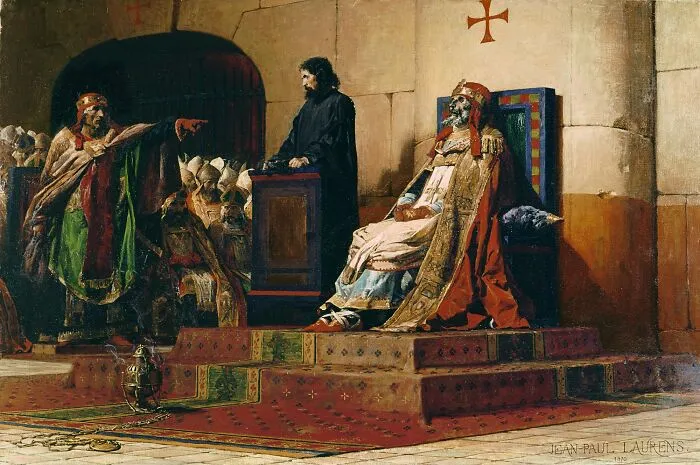
The Cadaver Synod
Basically the pope had a previous Pope's corpse exhumed so the corpse could stand trial for something made up. So they dug up his bloated 7 month old corpse and convicted him, retroactively nullifying his papacy. Then they dumped his bloated and convicted corpse in a river. The people got pissed and overthrew the pope, who was strangled in prison. The next pope came along and had the corpse collected from the river and its papacy posthumously reinstated.
897 was a crazy year.
130points
#22

"Khuk Khi Kai," or the "Chicken Poop Prison" in Thailand. Used by French forces to hold political prisoners (rebellious Thai people) in the Chanthaburi region.
The long-standing impacts of this much-feared torture are still felt in the region today - there's a Thai saying for those who buck authority that roughly translates to "Be careful not to get caught in a chicken poop prison." I learned about this prison from my parents who learned about it from theirs.
____________________
How it worked, was there was a small, 2-story prison. Bottom floor houses the prisoners, and the top floor is basically a huge chicken coop.
The grated floor/ceiling ensures that the chicken poop falls onto the prisoners below.
Apparently, even though the "maximum sentence" in Khuk Khi Kai was around a week, it was one of the most feared punishments there was.
Report
125points
#23
Croatia's Ustachas. Sick radical m***********s. "An ustacha that isn't able to take out a baby from its mother's womb with a blade, isn't a good ustacha." -Ante Pavelic
Some of their most horrific crimes were burning babies infront of their parents, mangling kids from 0-14 y/o with axes, raping girls infront of their mothers, cutting off the ears and noses of their prisoners while being alive. Even the nazis were horrified by these guys methods.
Report
118points
#24
The United Fruit Company’s crimes in Latin America. They perpetrated massacres, slave labour, overthrew governments and generally just ravaged each country they stepped foot in. They left when the soil was dry and no-longer efficient, leaving millions out of work, destabilised governments and still continued to extort locals for years later. It is absolutely disgusting what they did, I encourage everyone to read about it.
Report
116points
#25
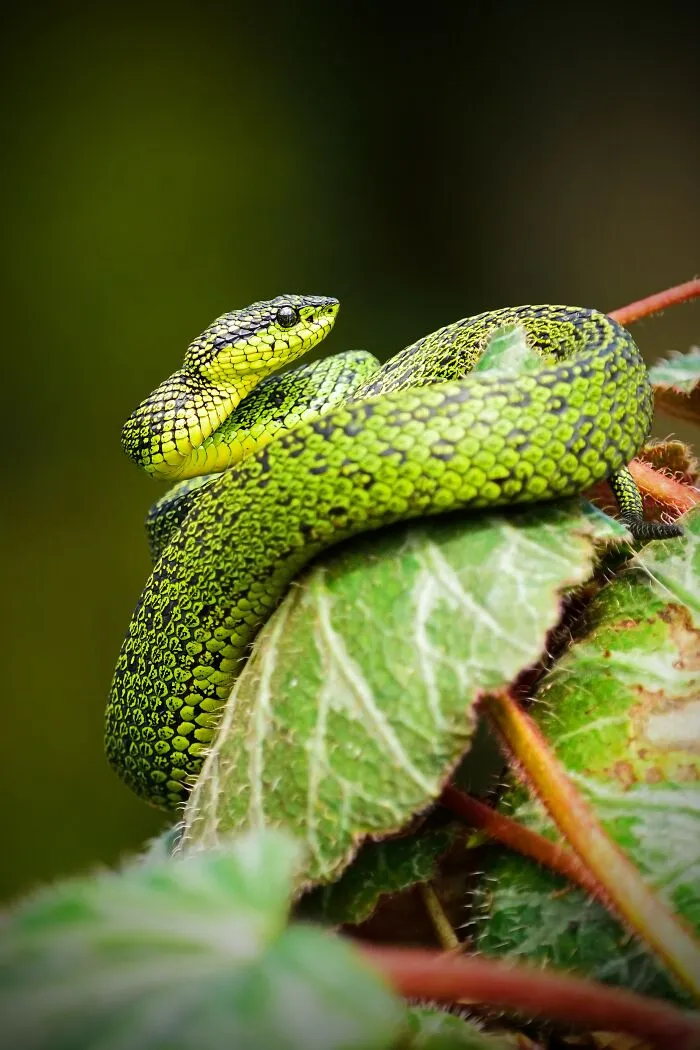
In my family's region in Africa they used to carry out the "capital punishment" by snakebite.
Just a snakebite to each ankle, and then letting the man spend his remaining time with his family before he [passed away] (under supervision).
I thought it sounded sort of humane in a way, like our lethal injections, but apparently they say it was one of the most horrific ways that existed.
Report
115points
#26

Once in the seventies, a film crew was filming an episode of The Six Million Dollar Man, and they were shooting at an amusement park fun house kind of thing. A stage hand was moving what he thought was a prop wax figure on a noose, only for one arm to fall off, revealing human flesh and bone underneath. After an autopsy, it was revealed to be the 60 something year old corpse of an old wild west outlaw that had been taxidermied to an extent.
Report
113points
#27
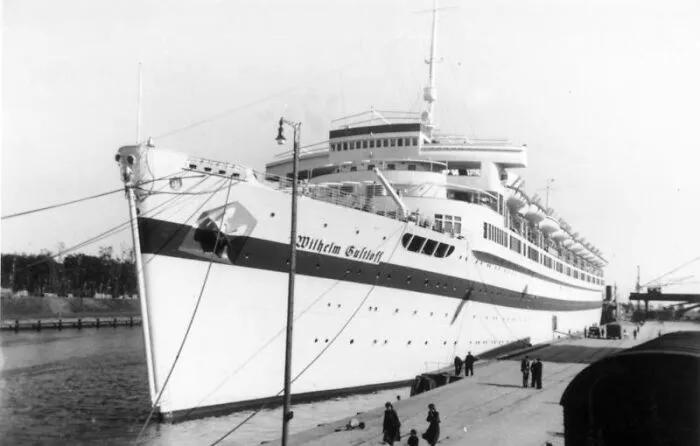
The January 1945 sinking of the MV Wilhelm Gustloff. It was a German ship carrying fleeing Germans from the Eastern Front to the West through the Baltic Sea. It was sunk by the Soviet Navy shorty after setting sail. The total [perished] toll is unknown but estimated at over 9000 since there were so many stowaways. It is the worst maritime disaster ever, several times more than the Titanic.
It didn't get nearly the press because they were the enemy so who cares, and the Nazi media certainly didn't report it because they're at the waning days of a war they're badly losing so the last thing they need is more hits to their already sinking morale.
Report
95points
#28
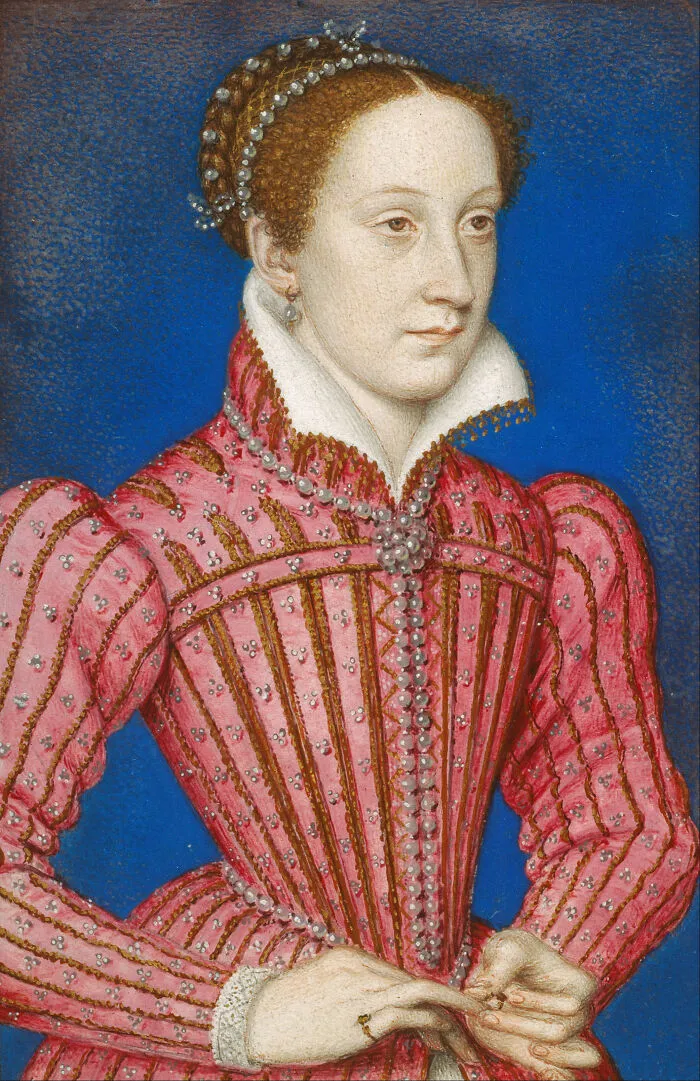
Anyone who's familiar with Mary, Queen of Scots most likely knows that she was beheaded, but many people don't know *how* she was beheaded. My APUSH teacher told my class this story and it's probably one of the most simultaneously interesting, funniest, and saddest executions in history.
The first thing to note was that Mary wore a red dress rather than a white one for a very specific reason: after the execution of a royal or high-class person, commoners would often tear off blood-stained fabric from their clothing solely to flex that they got their hands on the blood of a noble. With red fabric, it would be difficult to see actual blood on the dress. Smart move on Mary's end.
During the actual execution, it was said that Mary's executioner was not very experienced and actually *missed* the initial swing, jamming the axe or whatever weapon they used into the back of her head rather than through her neck. This didn't [take out] her yet, though, and she instead made some sort of medieval olden-time exclamation that can be roughly translated to "goddamn!"
EDIT: After the executioner was done, he picked up her head by the hair, not knowing it was a wig, and the head fell out and rolled onto the floor (thanks Plug_5 and moiochi for reminding me)
After Mary was properly [unalived], her body was left for public viewing, but the audience was surprised to see her red dress start to rustle before allowing Mary's small terrier dog to climb out from underneath. Tragically, the dog refused to leave the body and eventually passed away after staying at the same spot for a lengthy amount of time.
History buffs, please feel free to make any corrections as I heard this story a while ago and probably made a few errors in my recalling! :)
TL;DR: Mary, Queen of Scots avoided crazy memorabilia-savers at her execution with a very intelligent move, got shanked in the head during a failed attempt, the executioner dropped her head onto the floor, and had her dog in her dress with her the entire time
Report
93points
#29

Margaret Beaufort - mother of Henry VII (father of Henry VIII)
She was married off at age 12 to Edmund (25) who was desperate to get her pregnant as quickly as he could. It was not unusual for members of the aristocracy to marry young. It was slightly more unusual, because of the risk to both mother and child, for them to get pregnant before the age of 14.
Edmund [passed away] of plague while Margaret was pregnant, she was widowed and alone and pregnant during war. The birth was a very difficult one and would scar her forever. For a time they believed that she and her unborn child would perish. Not only was she very young but she was also slight of stature and undeveloped for her age so it’s a wonder she even survived childbirth. It was so difficult for her that she never became pregnant again over the rest of her years, despite remarrying two more times. It is widely believed that she was physically damaged during the childbirth and was unable to conceive again, but it’s also possible she was too traumatized to ever put herself in that situation again. Either way, Margaret devoted herself to her son, calling him “my dearest and only desired joy in this world.”
89points
#30
The Parsley Massacre.
Dominican dictator really didn't like Haitians, so he ordered Dominican troops to the northern border region, which was fairly loose and undefined at that time (1937), and told the troops to [unalive] any Haitians on the Dominican side which, again, was fairly unclear. How they determined who was Haitian and who was Dominican was based on how they pronounced the word 'parsley'...the vowel sounds in French and Haitian Kreyol make a Kreyol or French speaker saying the Spanish word very obvious.
The reports of what happened are truly horrific...babies on bayonets, head bashed on trees, etc...and somewhere around 15-20K people were murdered in less than a week. Most Haitians have stories about extended family or friends who were hunted like animals and murdered, and it's said that the Dajabòn River is where the murdered souls live...lots of folks won't drink water or wash in the river because it is (still) a river of blood. It ran red during the Massacre.
The DR paid reparations and citizens/survivors in Haiti got about 2 cents as their reparations because of corruption. The DR is still engaged in trying to get rid of anyone that looks Haitian (read: dark-skinned) with regular deportation of even Dominican citizens who might be Haitian descended or are too dark skinned to be Dominican (by state standards). It has created a huge crisis at the border...people are being forced into Haiti and don't speak Kreyol, don't have anywhere to go, and will never find work on Haiti. It's almost like the Massacre never ended...just evolved.
Report
87points
#31
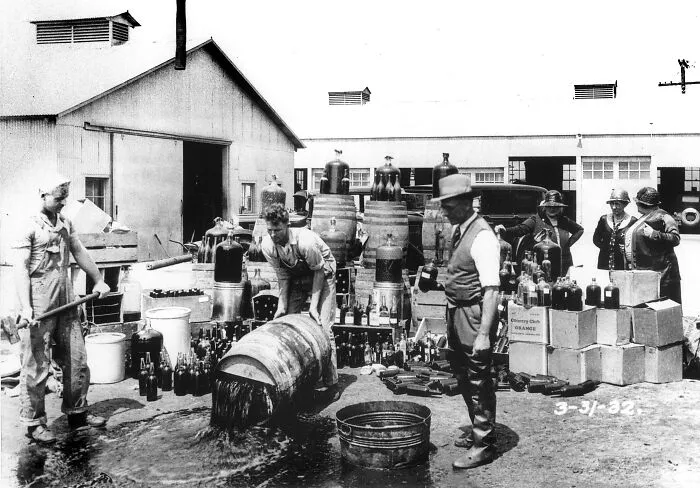
During prohibition the government funded and lead an operation to release barrels of alcohol that they had poisoned to make people sick and shy away from bootleg liquor. Lots of people ended up [passing away] but people still drank more than ever.
Report
80points
#32
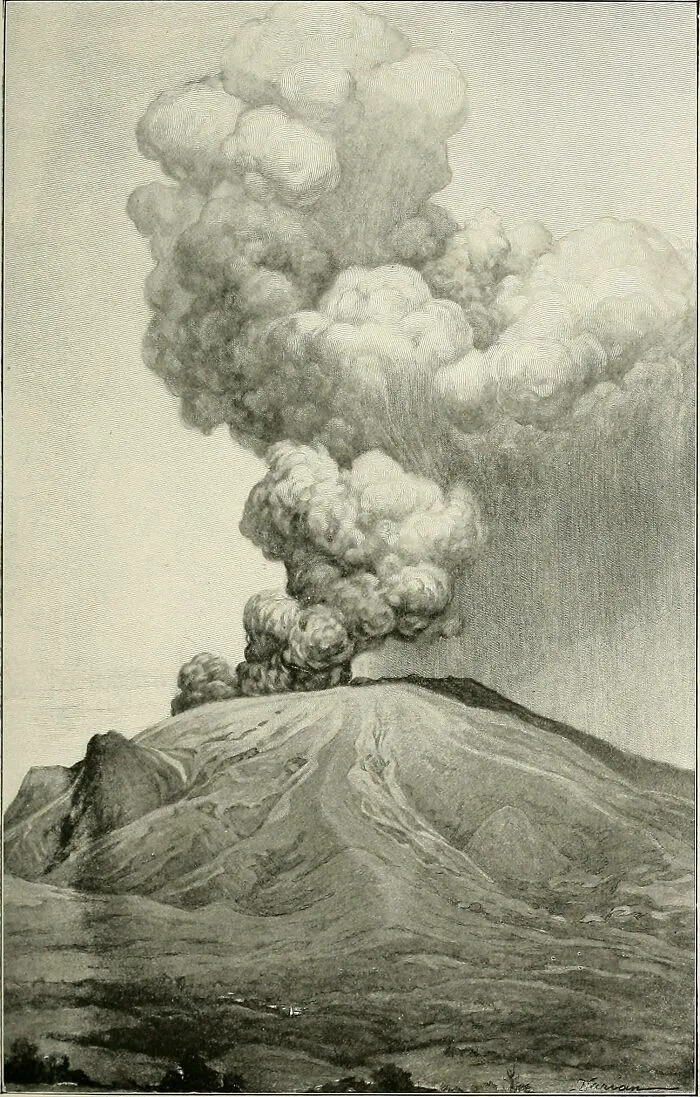
The St. Pierre Snake Invasion / The Eruption of Mt. Pelee
Volcanic eruption, Snake attacks, Boiling Mud Slide, Government negligence, Major volcanic eruption, Tsunami.
Population of 30,000 reduced to a population of 2.
In the late 1890’s and early 1900’s, St. Pierre, Martinique was known as the “Paris of the West Indies”. It was renown for its red-tiled cottage, beautiful tropical plants and charming streets. Although most of the population of 20,000 were native Martiniquans, most of the wealthy were Creoles or French colonial officials. The only thing marring this paradise was the volcano looming over its picturesque streets. Citizens of the area were so use to the volcanic activity on the ‘bald mountain’, that no one took it seriously when the fresh steaming vent-holes and earth tremors stared during April 1902.
On April 23, 1902, minor explosions began at the summit of the volcano. By early May, ash began to rain down continuously, and the nauseating stench of sulfur filled the air. The homes on the mountainside were made uninhabitable. Even worse, more than 100 snakes slithered down and invaded the mulatto quarter of St Pierre. The 6-ft long serpents [unalived] 50 people, mostly children, and many animals.
There are reports of horses, pigs and dogs screaming as red ants and foot long centipedes crawled up their legs and bit them. Things came to a head when on May 5, a landslide of boiling mud and water from the Etang Sec crater lake spilled into the River Blanche. Near the mouth of the river, 23 workman were [unalived] in a rum distillery.
This was followed by a tsunami that [unalived] hundreds. This naturally caused concern in the town, and many wanted to leave for Fort-de-France, Martinique’s second most important city. Unfortunately, this all coincided with a national election and public officials wanted to keep people in town to cast their ballots. They convened a committee to assess the danger, with the only scientist involved being a high school science teacher. The report they sent to Governor Louis Mouttet said “there is nothing in the activity of Mt. Pelée that warrants a departure from St. Pierre.” It concluded that “the safety of St. Pierre is completely assured.” On the assurance of that report, people from the countryside flocked into St. Pierre for safety.
They could not have been more wrong.
Three days later, May 8, Mt Pelee finally exploded, sending a murderous avalanche of white-hot lava straight toward the town. Within three minutes, St Pierre was completely obliterated.
There was a V shaped notched cut through the cliffs surrounding the summit crater. This acted as a gun sight pointing down at the town sending super-heated gas, ash and rock down at more than 100 miles per hour. The on slot was enough to move a three ton statue sixteen meters from its base, and blow one meter thick masonry walls to smithereens. It continued down to the shore and hit the ships in the harbor with hurricane force, capsizing several ships killing their crews. The heat set rum warehouses and distilleries ablaze and sent rivers of flaming liquid through the streets.
Of its 30,000 population, there were only two people survived.
Louis-Auguste Cyparis survived because he was in a poorly ventilated, dungeon-like jail cell.
Léon Compère-Léandre lived on the edge of the city and escaped with severe burns. Havivra Da Ifrile, a young girl, reportedly escaped with injuries during the eruption by taking a small boat to a cave down shore, and was later found adrift two miles from the island, unconscious. The event marked the only major volcanic disaster in the history of France and its overseas territories.
Report
71points
#33
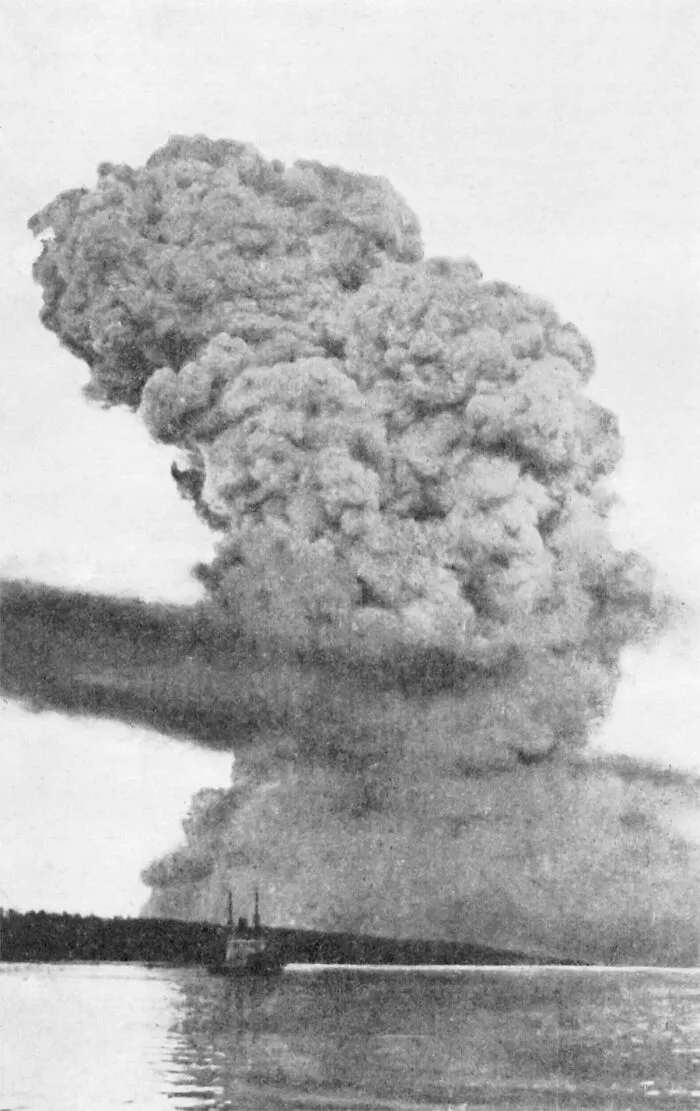
The Halifax Explosion.
Regarded by many as the biggest man-made explosion prior to the invention of the atomic bomb. A ship laden with explosives collided with another vessel in Halifax Harbour. The resulting explosion flattened much of the city's downtown core, [unaliving] roughly 2,000 and injuring 9,000.
The blast is said to have temporarily displaced the water in the harbour, forming a tsunami that reached up to 15 metres high, surging over the wreckage of the waterfront.
The following day, Halifax was hit by a blizzard that dumped 40 cm of snow on top of the city, further complicating rescue efforts.
The city is also home to a cemetery where many victims of the Titanic were laid to rest. It is said that the body identification system developed at the time of the Titanic's sinking in 1912 aided efforts to identify victims of the Halifax explosion in 1917.
Report
67points
#34
Dekulakization. The soviets [unalived] an entire social class of people. My great grandma was one of them, and witnessed her whole family be slaughtered in front of her. Then was told to run. My grandma was then raised in a gulag. Apparently it's not genocide though, because [taking out] an entire social class doesn't fit the technical definition.
Report
65points
#35

You know Jameson Whiskey?
Well a long a*s time ago in like the 19th one of their family Heirs fed a little girl to cannibals.
Like legit went and bought a little girl in the Congo as a slave and brought her up to a cannibal tribe because he wanted to see them.
Sick f**k drew pictures of it and s**t as it was happening.
Of course for years the family tried to bury the fact, and the stories and such. Discredit the witnesses.
But the crazy bastard was happy to document the whole thing, his only rebuttal incase it reflected badly on him was that "he wanted to see if they would do it"
And his accounts matched up with the evidence witnesses had provided.
Report
58points
History not only fascinates but also reminds us of our ever-evolving society. From honor and courage to recognizing mistakes, each moment in time offers a lesson. While discussing these moments, it's essential to remember that alongside these pointed historical narratives, visual storytelling plays a significant role in shaping perceptions.
For a closer look at how first impressions can impact our understanding, this resource on the intricacies of book cover design offers valuable insights.


