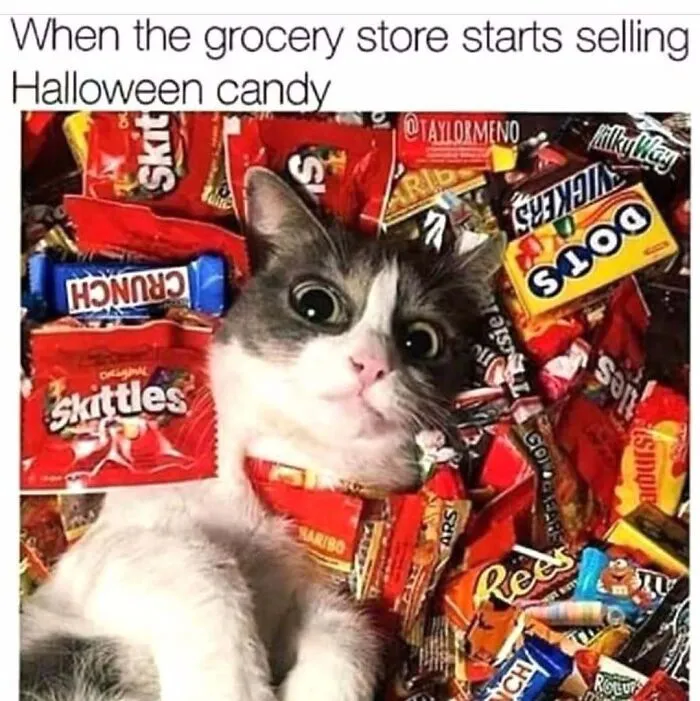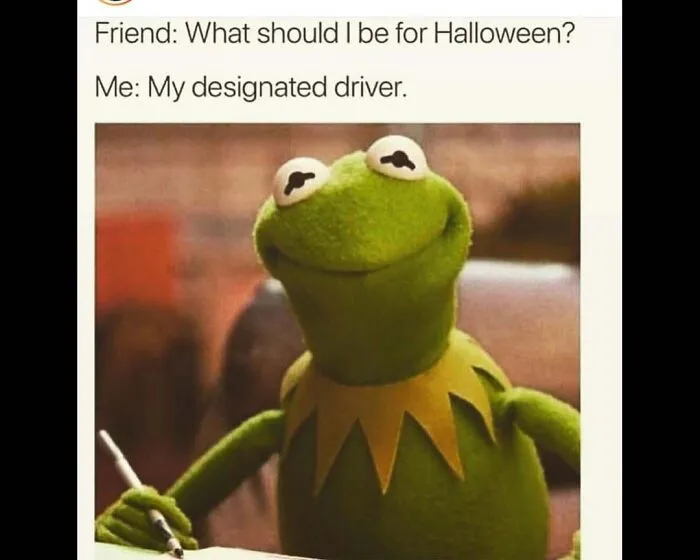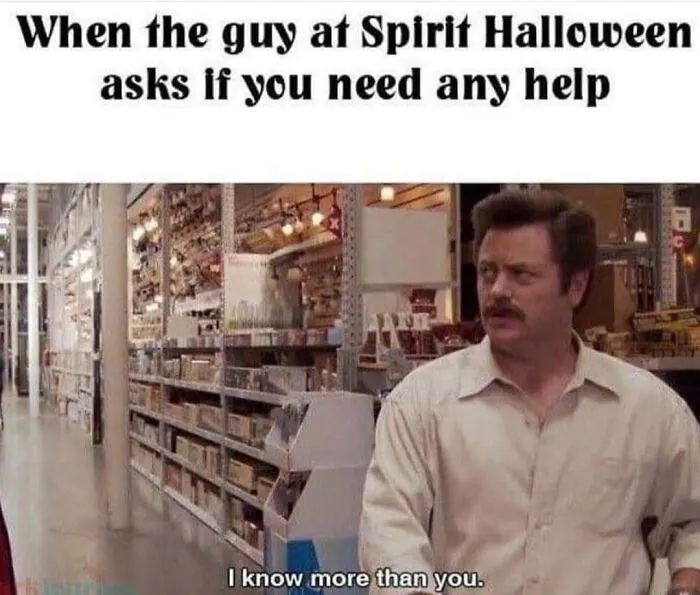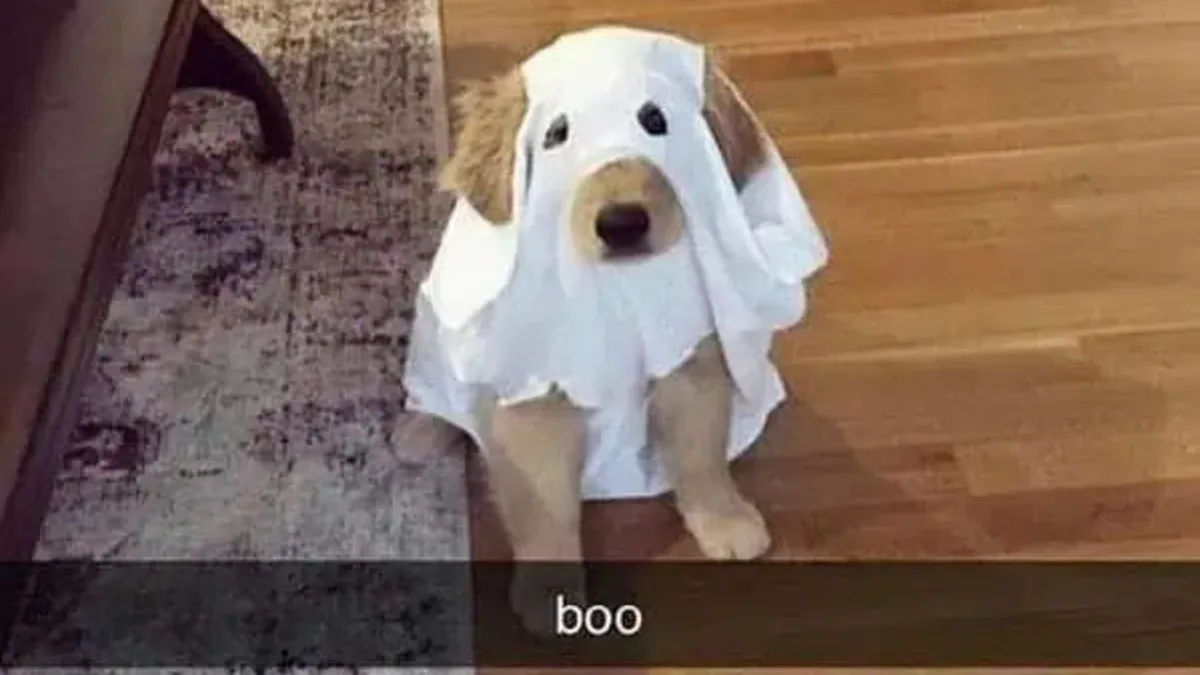


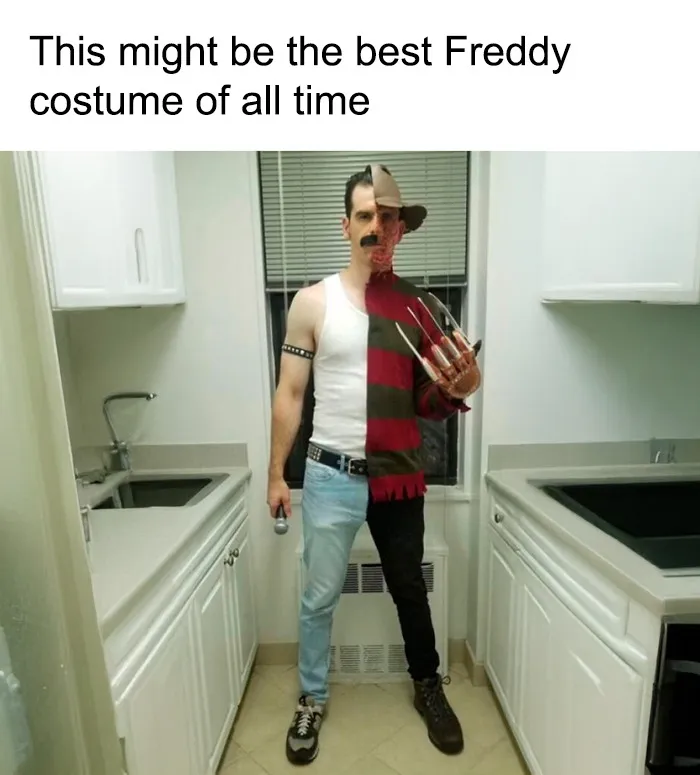
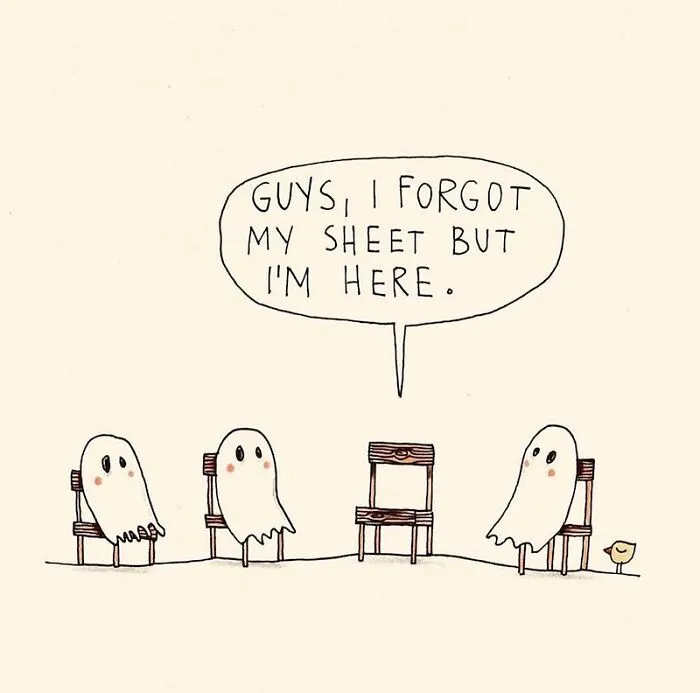
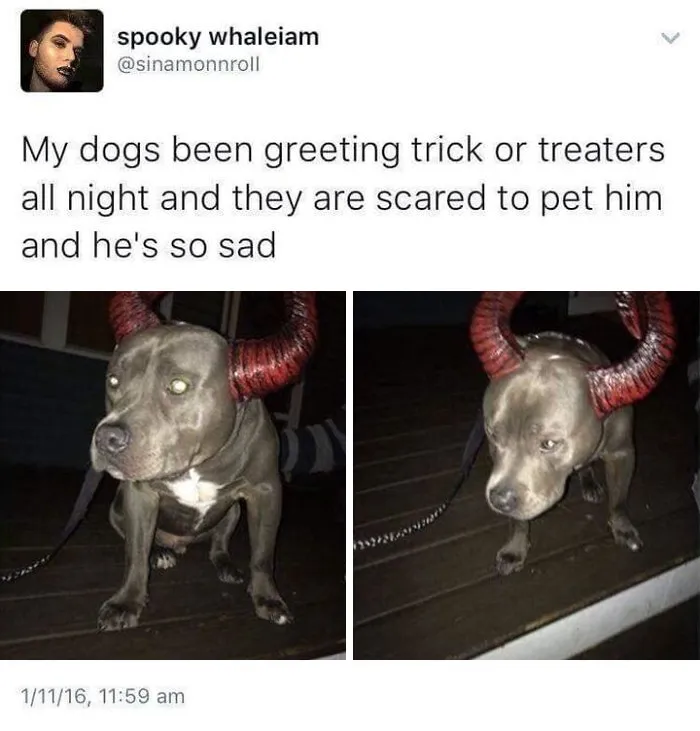
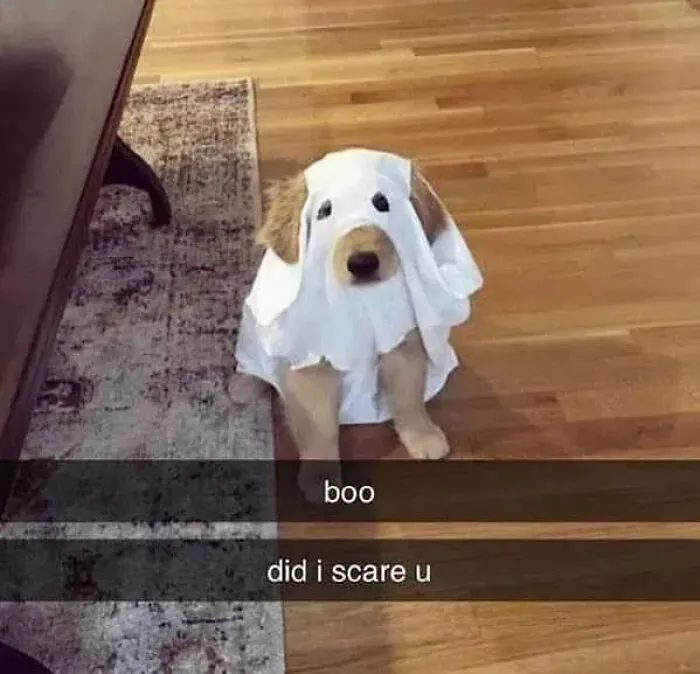
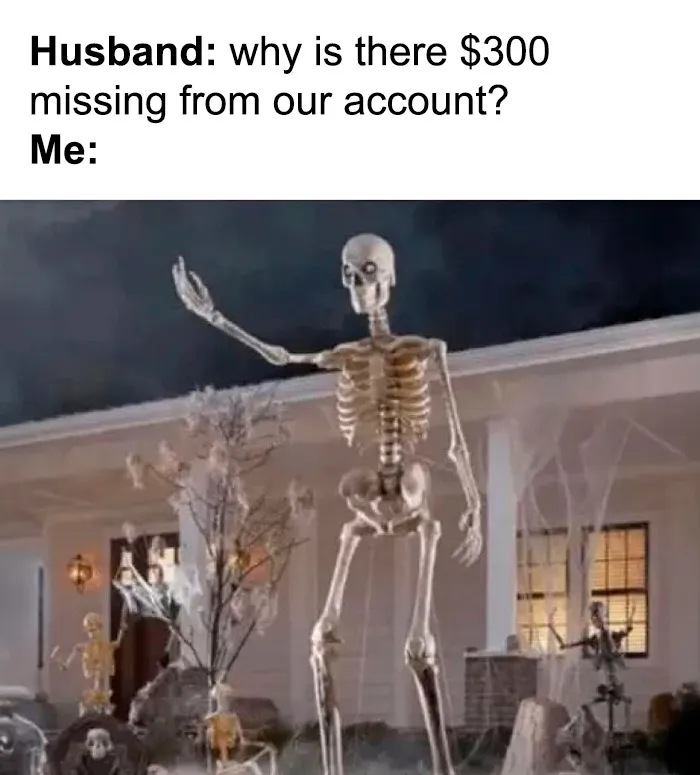
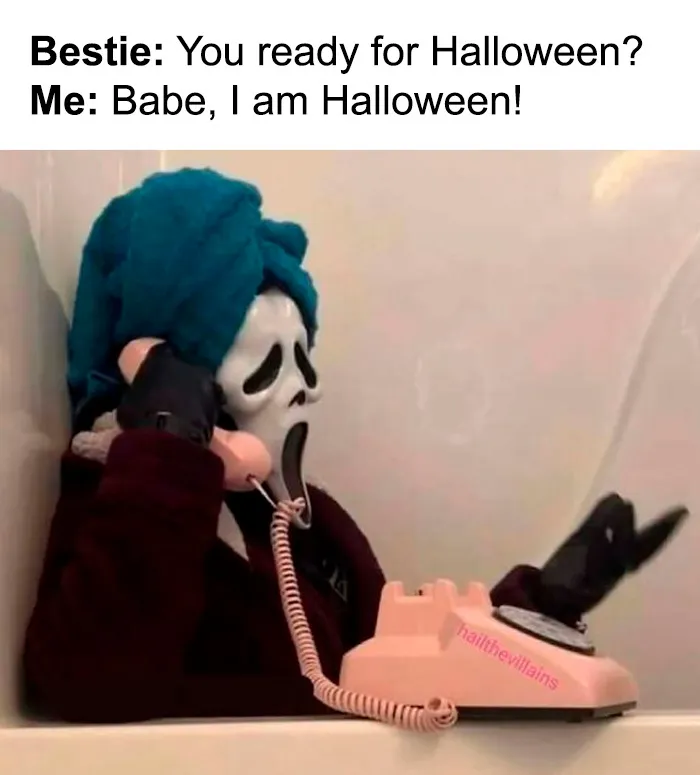
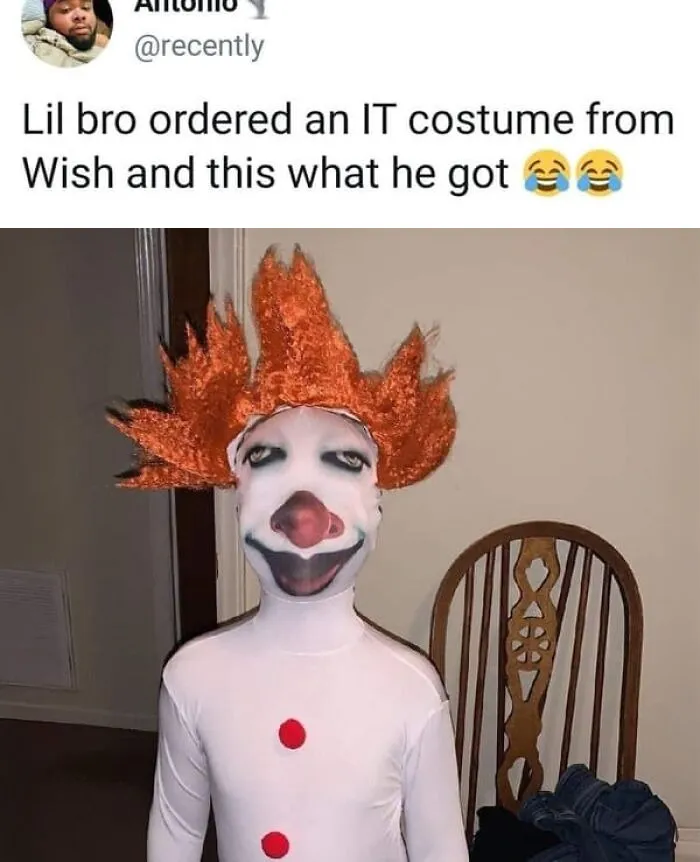
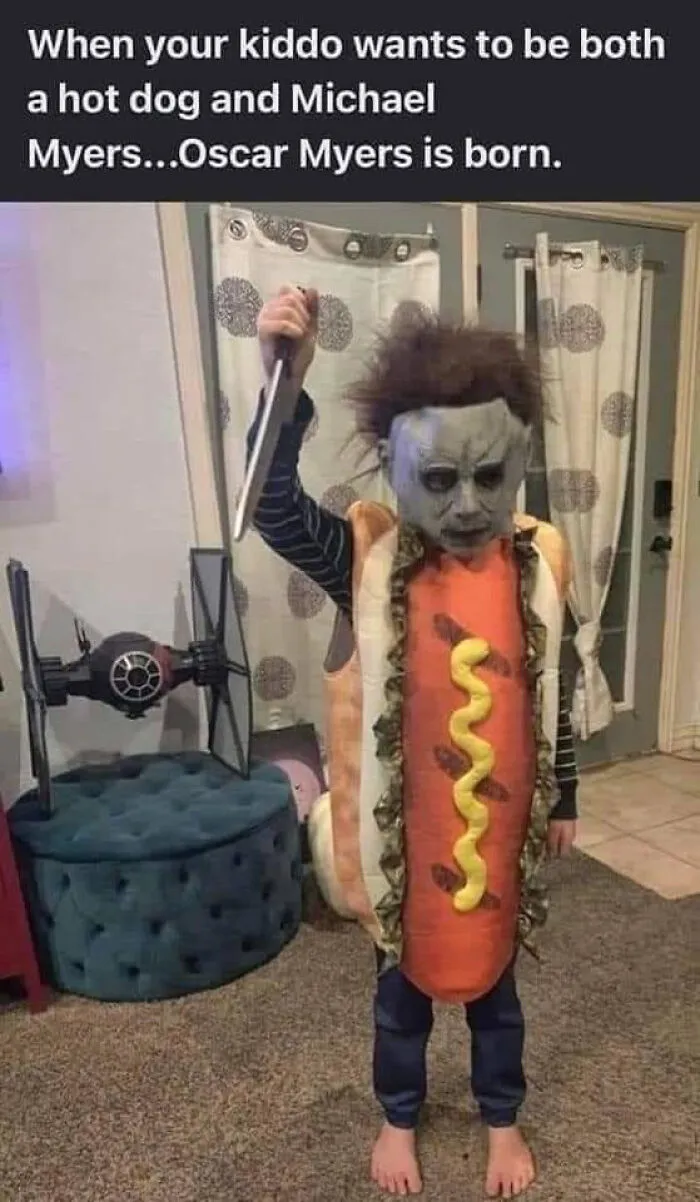
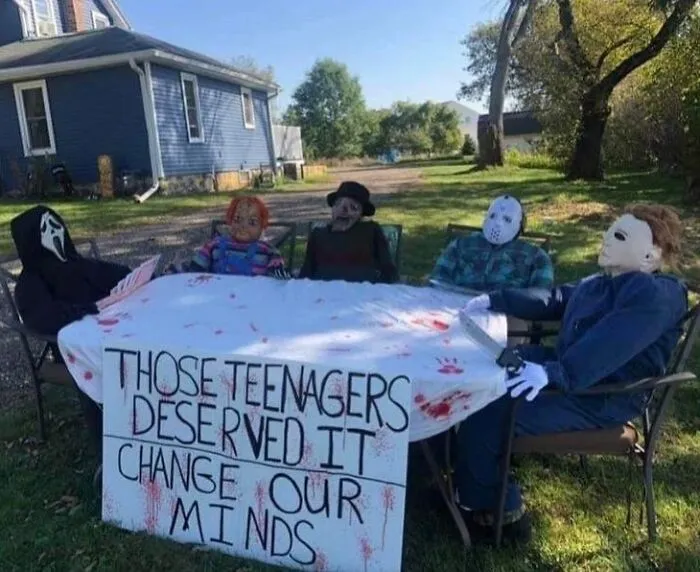
So many of these memes take what makes Halloween creepy — a spooky element — and turn it into something sweet. But why do we laugh when something macabre is made wholesome? Funnily enough, some research has actually looked into this.
Dr. Peter McGraw and Dr. Caleb Warren found that humor often arises when a situation is perceived as dark or taboo but also as harmless and safe. So, seeing a terrifying costume doing something completely mundane in public is a perfect example of this psychological explanation.
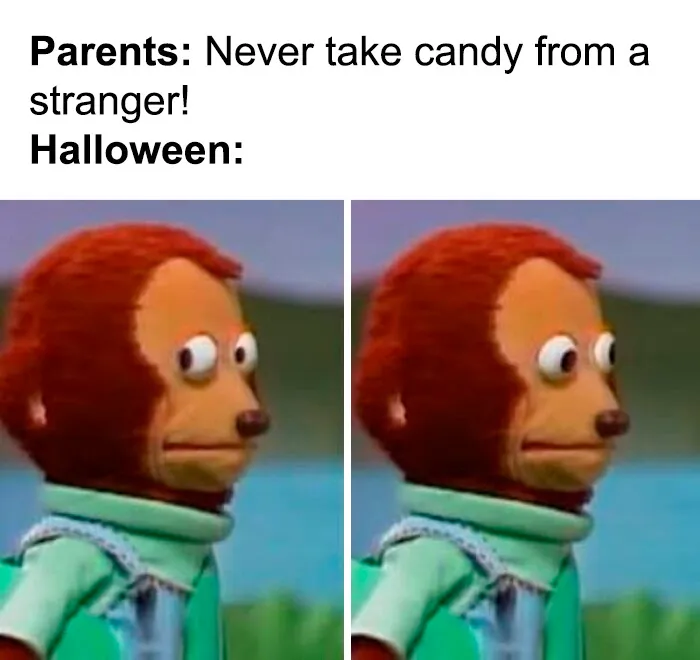
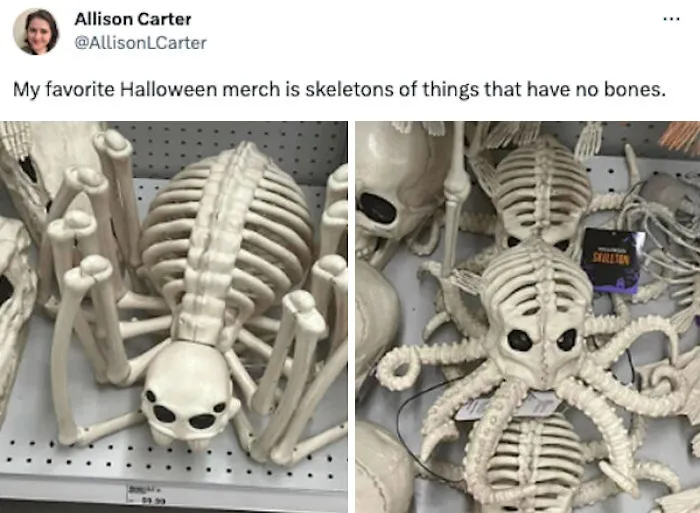
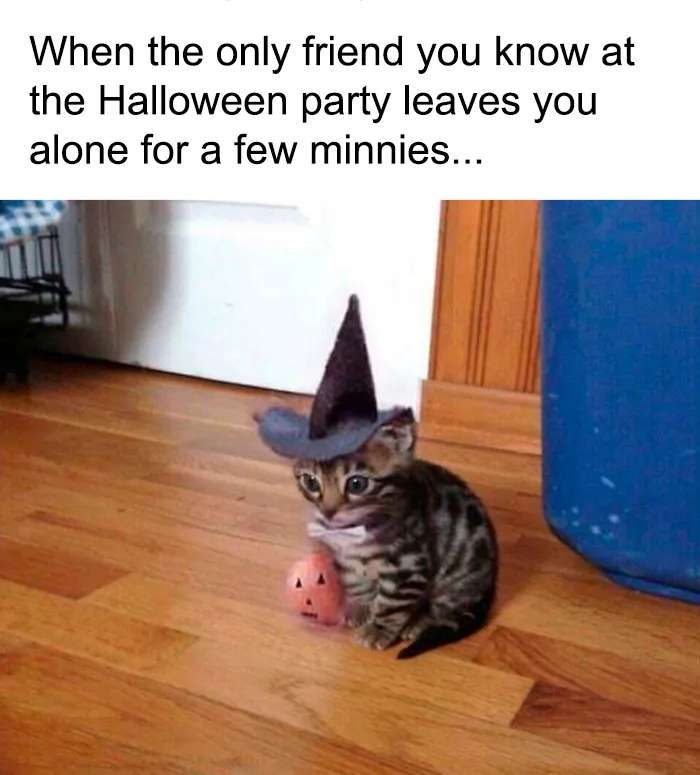
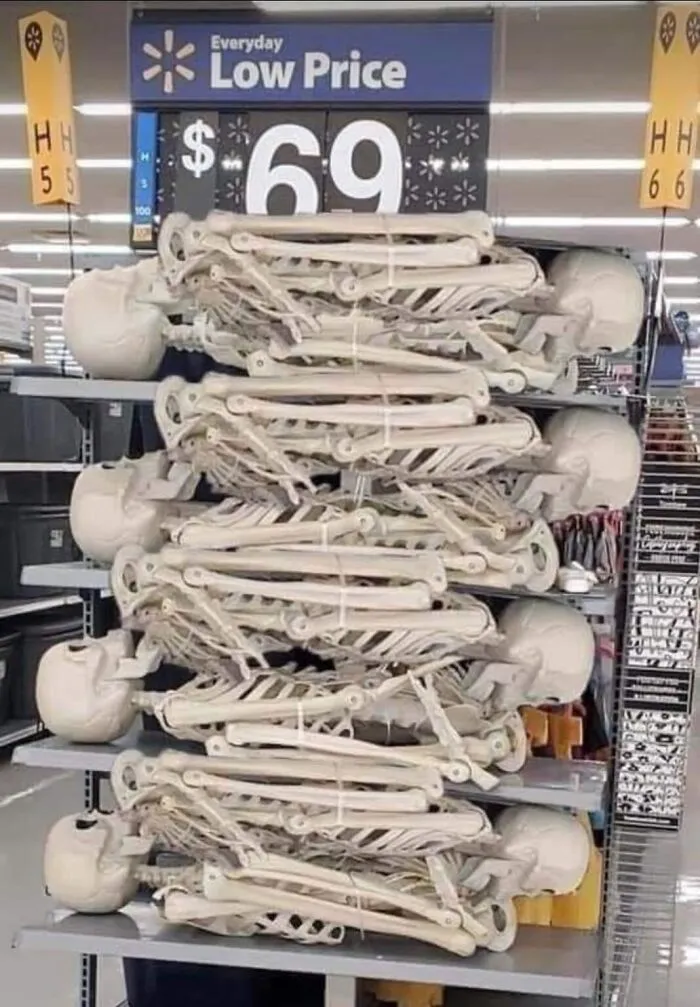
Generally, though, humans seem to love dark humor, and psychology has explored that extensively. Research published in the journal Cognitive Processing actually found that an appreciation of dark comedy correlates with higher verbal and non-verbal intelligence.
And that's not all. The researchers also linked it to lower levels of aggression and emotional disturbance. Ultimately, finding humor in scary things can release the tension that comes with life's existential dread. How reassuring.
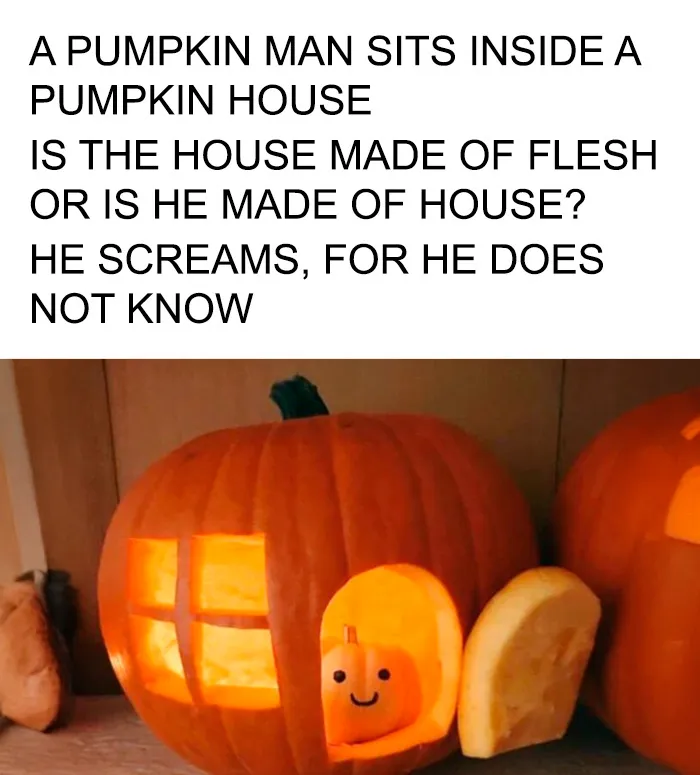
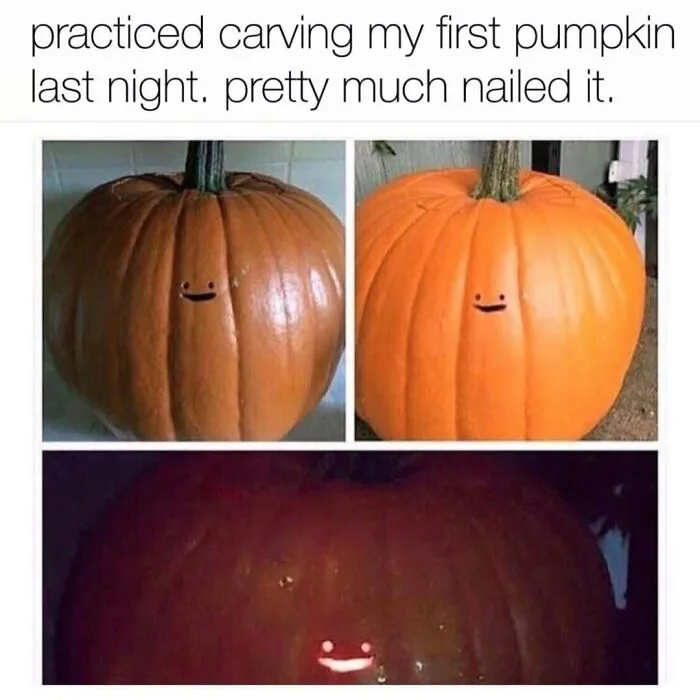
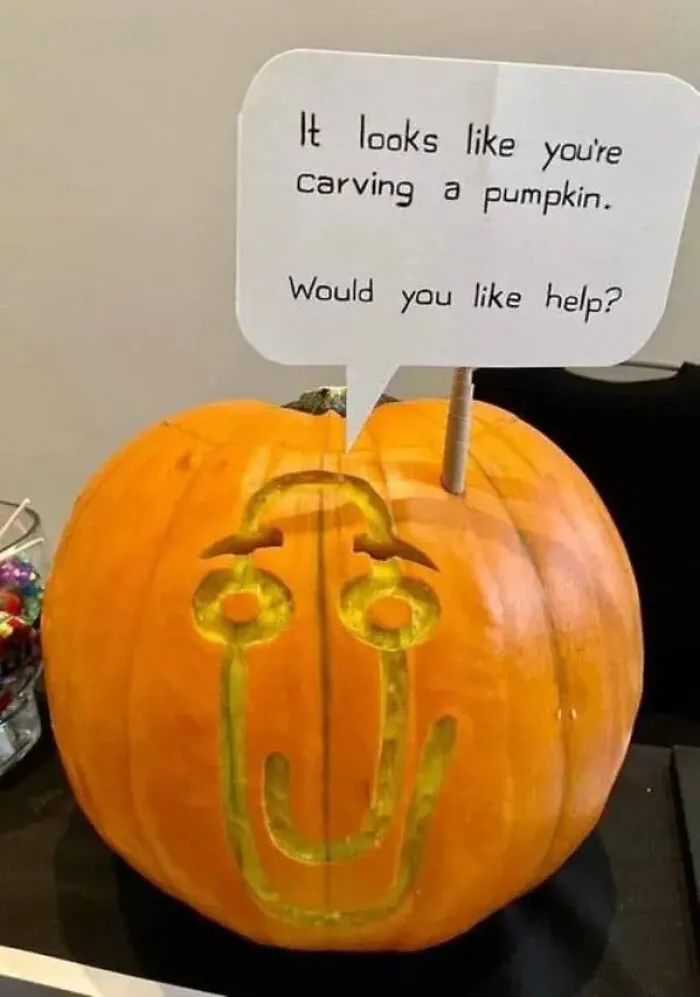
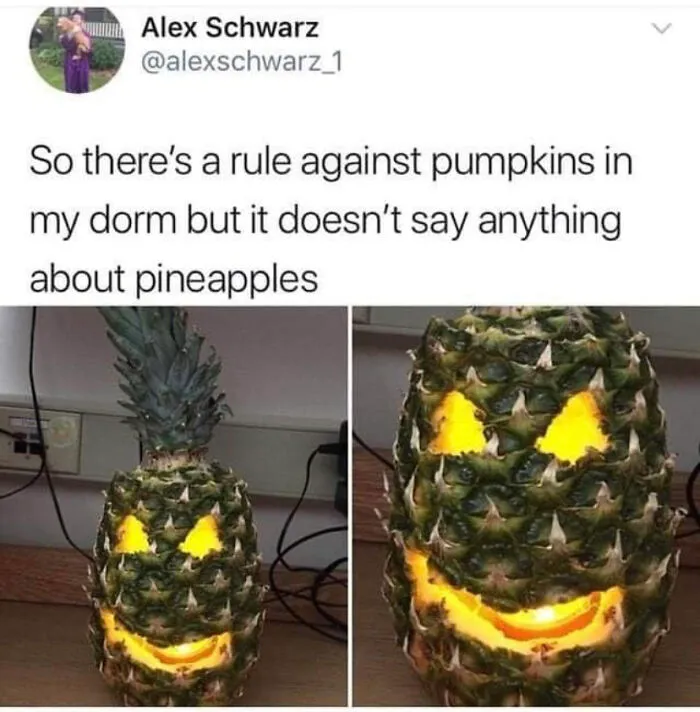
Halloween, though, is a tradition filled with creepy and wholesome elements that coexist. In fact, he origins of the Jack-o’-lantern tradition trace back to the Irish Celtic festival of Samhain, when people carved grotesque, demonic faces into tough root vegetables like turnips and beets.
But when Irish immigrants arrived in North America during the 19th-century potato famine, they eventually swapped turnips for native pumpkins, which were much easier to carve. This transformed what was once a protective totem meant to frighten away malevolent spirits into festive home decor. And today, we see all kinds of carved pumpkins that bring a smile to our faces.
Similarly, the tradition of trick-or-treating also began in a much darker environment. Historical accounts trace its origins back to the Middle Ages, when it was known as “souling.” This took place on All Souls’ Day, when poor citizens and children went door to door, offering prayers for homeowners’ ancestors and hoping to receive small pastries called “soul cakes.”
However, during the 1930s and 1940s, American communities deliberately reshaped these traditions into organized, wholesome trick-or-treating events to stop vandalism. Even the tricks themselves were fairly harmless, often involving things like throwing toilet paper over a tree in someone's yard or scattering flour across a porch, both of which were relatively easy to clean up.