







We all seek knowledge. Aristotle said, “All humans by nature desire to know.” However, not everyone pursues knowledge in the same way.
More than a dozen knowledge types exist, including how to bake bread, play a musical instrument, remember historical events, and understand scientific theories, meaning knowledge can take many forms.
Today, we have a list of declarative knowledge and interesting facts to feed your hunger for informational wisdom. Scroll down to find fascinating and strange information about our world, and don’t forget to upvote your favorites!
#41

A massive megalodon tooth was recently uncovered along the coast of South Carolina, exciting paleontologists and fossil enthusiasts alike. This impressive find, notable for its extraordinary size, offers a rare glimpse into the prehistoric world of the megalodon—one of the largest predators ever to dominate the oceans.
The megalodon, which lived approximately 23 to 3.6 million years ago, is believed to have grown up to 60 feet long, with teeth exceeding seven inches in length. This particular tooth, likely from one of these colossal sharks, stands as a powerful testament to the immense scale and strength of the species. Fossilized megalodon teeth are highly prized, not only for their size but also for their rarity and their direct link to a legendary apex predator from Earth’s distant past.
South Carolina’s coastline is renowned for its abundant prehistoric fossil deposits, and this discovery further cements the state’s status as a prime location for uncovering ancient remains. As researchers study the tooth, it yields valuable insights into the megalodon’s size, diet, and the marine environment it inhabited millions of years ago. This extraordinary find continues to fuel fascination with extinct marine giants and the primeval oceans they once ruled.
Report
23points
#42

In 1902, a remarkable photograph captured men posing atop a massive log raft along the Columbia River in Oregon. The raft was constructed from large, tree-length logs, all meticulously lashed together using enormous chains to create a floating platform.
This incredible feat of engineering was typical of the lumber industry at the time, where logs were often transported down rivers for processing. The image showcases the scale and strength required to build such a raft, a testament to the hard work and ingenuity of the era.
According to the description on the back of the photo, the raft contained millions of feet of timber—an enormous amount of wood that represented a full year's worth of labor for the camp workers. The value of the raft, once completed, was estimated at $8,000, highlighting the profitability of the logging industry during this period.
The Columbia River, with its swift currents and strategic location, served as a major route for transporting timber, and these massive log rafts were an essential part of the process.
This photograph, preserved by the Multnomah County Library, offers a fascinating glimpse into the early 20th-century logging practices in Oregon. It’s a vivid reminder of the human labor and resourcefulness that drove the lumber industry, and the scale of the operations that transformed the landscape of the Pacific Northwest. The raft, both a product of necessity and a symbol of the era, represents a bygone time when logs were floated across rivers to fuel the growth of America’s industries.
Report
21points
#43
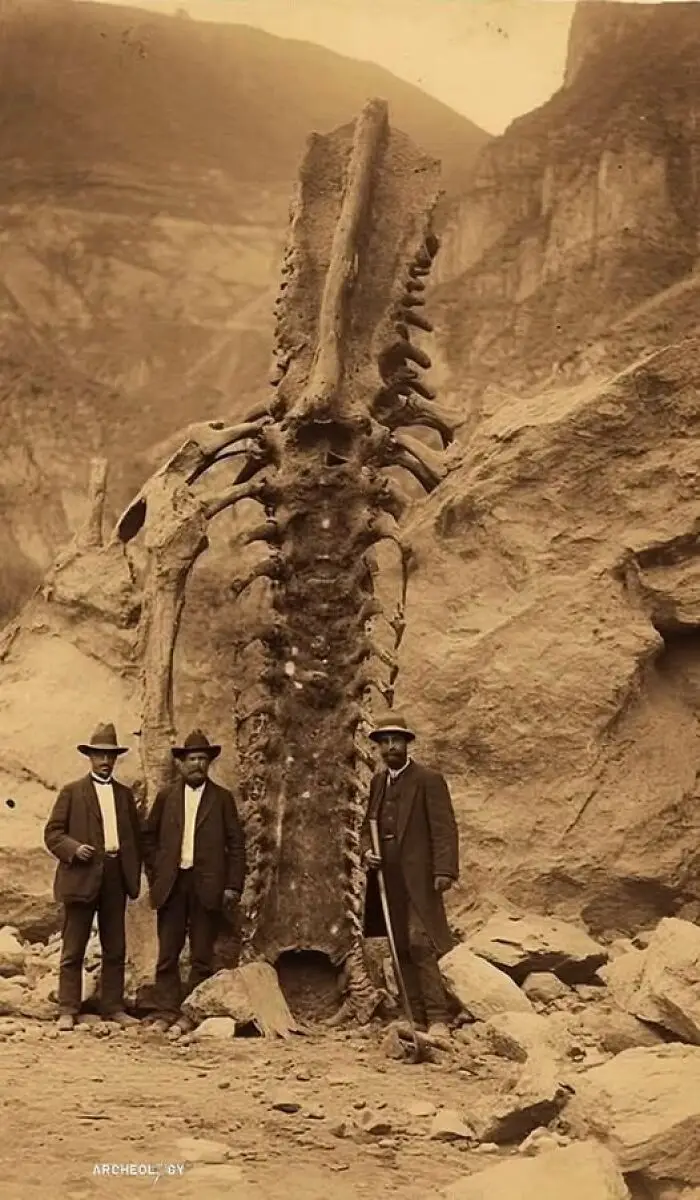
Standing like a fossilized monument between the canyons of the American West, this towering vertebral column belonged to a long-extinct marine giant—most likely a Late Jurassic Sauropod or a colossal Elasmosaur, discovered in the late 19th or early 20th century during the golden age of paleontology. The sepia-toned image captures early fossil hunters beside the massive spine, dwarfed by its size, at a time when the mysteries of prehistoric Earth were just beginning to be unearthed from stone.
Report
21points
#44
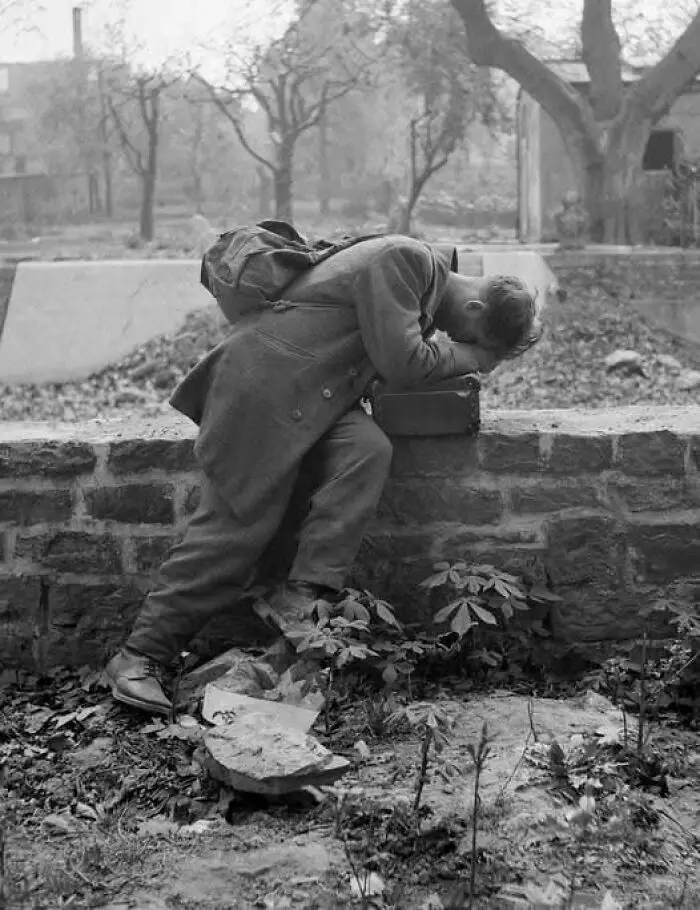
In 1947, a defeated German soldier returned home to Frankfurt after the end of World War II, only to find his once-familiar surroundings reduced to rubble. The devastation of the war had torn apart not just the city but his own personal life. His home, once a place of comfort and security, was now a pile of debris, a stark reminder of the destruction that had swept across Europe during the war years.
As he stood amidst the ruins, the soldier's heart sank as he realized that his family was gone. His wife and children, who he had hoped to return to, were no longer there. The uncertainty of their fate left him with a deep sense of loss and grief, compounded by the isolation and despair of post-war Germany. Many families had been separated or torn apart by the war, and for this soldier, the hope of reunion was now a painful memory.
The emotional and physical scars of war were everywhere in Frankfurt and across Germany at the time. People returned to find their homes destroyed, their loved ones lost, and their world upended. For the soldier, like many others, the journey home was not one of joy but of profound sorrow and the harsh reality of rebuilding a life from the ashes of a world that had been forever changed.
Report
20points
#45
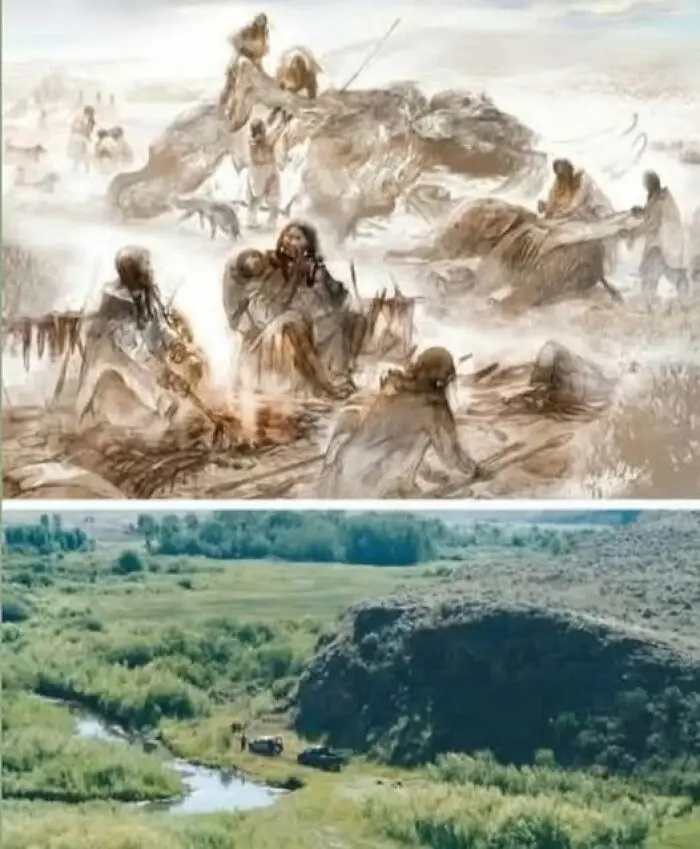
In 1968, the Anzick-1 site in Montana unearthed the remains of an 18-month-old child, buried with a collection of Clovis tools that linked it to one of the earliest known cultures of prehistoric America. Over fifty years later, advanced isotopic analysis has provided new insights into the dietary habits of the Clovis people, offering a fascinating look at their relationship with the megafauna of the Ice Age.
By analyzing the isotopic signatures in the child's bones, researchers were able to trace the mother's diet, revealing a striking revelation: nearly 40% of her diet consisted of mammoth meat, with additional contributions from large animals like elk and bison. The findings also revealed little reliance on smaller animals or plant-based foods.
This discovery paints a vivid picture of how the Clovis people, known for their skilled hunting practices, likely relied on energy-dense megafauna such as mammoths to support their nomadic, hunter-gatherer lifestyle. The study underscores their intimate knowledge of the Ice Age ecosystem and how they adapted to their environment, utilizing large game as a primary source of sustenance. This newfound information sheds light on the sophisticated, strategic practices that sustained the Clovis culture during its time.
Report
20points
#46
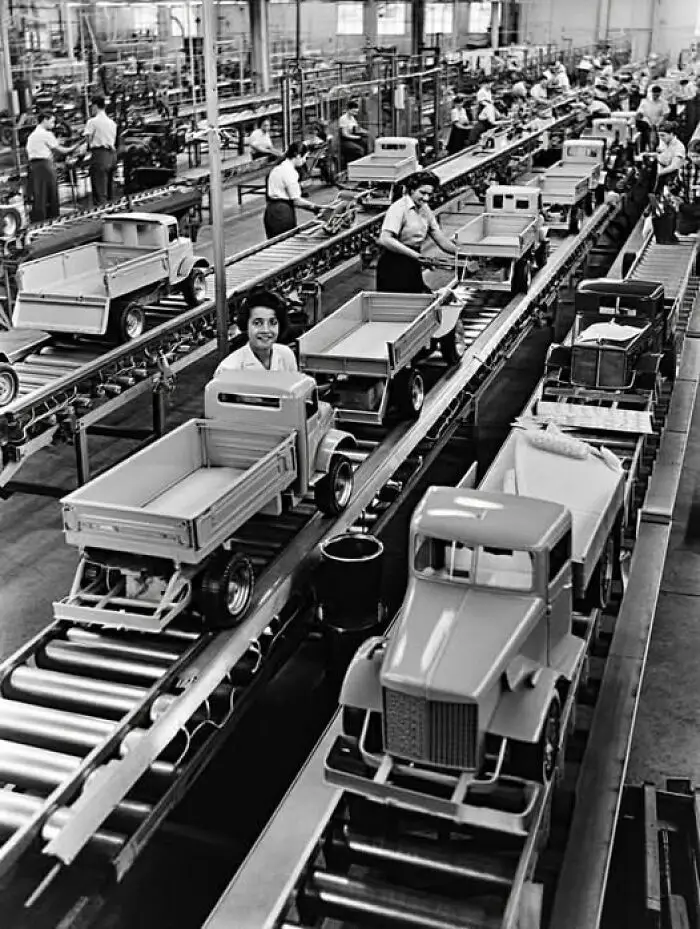
In 1965, the Tonka Toys manufacturing plant in Minneapolis, Minnesota, stood as a vibrant symbol of American industry and childhood imagination. Renowned for their rugged, all-steel construction, Tonka trucks had become fixtures in households across the country—emblems of durability, creativity, and hands-on play.
Inside the plant, the assembly line embodied the precision and energy of mid-century American manufacturing. Photographs from the era reveal rows of focused workers, each performing a specific task in the truck-building process. Brightly painted chassis, wheels, and dump beds moved steadily along conveyor belts, slowly transforming into the iconic yellow construction vehicles beloved by generations.
Founded in 1946, Tonka had swiftly risen to become a global leader in toy production. By the mid-1960s, its name was nearly synonymous with American childhood. The Minneapolis factory was more than a site of mass production—it was a place where craftsmanship met mechanical efficiency, where pride and play went hand in hand.
The images of Tonka’s assembly line remain powerful reminders of a time when toys were built to last—and often did. They capture not only the making of toys, but the making of memories that would endure for decades.
Report
19points
#47

The Horse Manure Problem of 1894 The 15 to 30 pounds of manure produced daily by each beast multiplied by the 150,000+ horses in New York city resulted in more than three million pounds of horse manure per day that somehow needed to be disposed of. That’s not to mention the daily 40,000 gallons of horse urine.
In other words, cities reeked. As Morris says, the “stench was omnipresent.” Here are some fun bits from his article: Urban streets were minefields that needed to be navigated with the greatest care. “Crossing sweepers” stood on street corners; for a fee they would clear a path through the mire for pedestrians. Wet weather turned the streets into swamps and rivers of muck, but dry weather brought little improvement; the manure turned to dust, which was then whipped up by the wind, choking pedestrians and coating buildings.
. . . even when it had been removed from the streets the manure piled up faster than it could be disposed of
. . . early in the century farmers were happy to pay good money for the manure, by the end of the 1800s stable owners had to pay to have it carted off. As a result of this glut . . . vacant lots in cities across America became piled high with manure; in New York these sometimes rose to forty and even sixty feet.
We need to remind ourselves that horse manure is an ideal breeding ground for flies, which spread disease. Morris reports that deadly outbreaks of typhoid and “infant diarrheal diseases can be traced to spikes in the fly population.” Comparing fatalities associated with horse-related accidents in 1916 Chicago versus automobile accidents in 1997, he concludes that people were k**led nearly seven times more often back in the good old days.
The reasons for this are straightforward: . . . horse-drawn vehicles have an engine with a mind of its own. The skittishness of horses added a dangerous level of unpredictability to nineteenth-century transportation. This was particularly true in a bustling urban environment, full of surprises that could shock and spook the animals. Horses often stampeded, but a more common danger came from horses kicking, biting, or trampling bystanders. Children were particularly at risk.
Falls, injuries, and maltreatment also took a toll on the horses themselves. Data cited by Morris indicates that, in 1880, more than 3 dozen dead horses were cleared from New York streets each day (nearly 15,000 a year).
Report
18points
#48
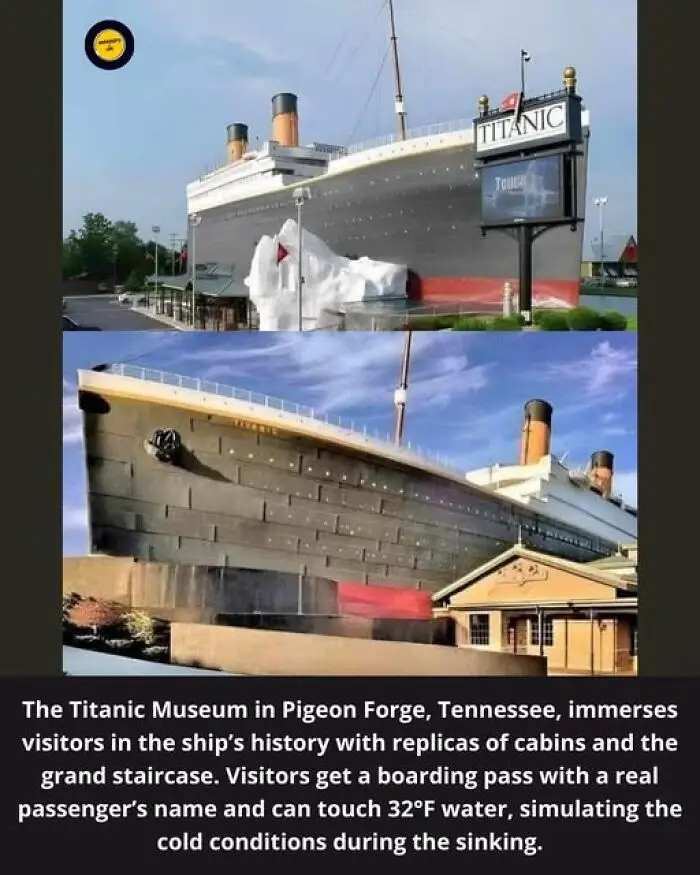
Did you know that The Titanic Museum in Pigeon Forge, Tennessee, United States, is an attraction dedicated to telling the story of the famous ocean liner RMS Titanic, which sank in 1912 during its maiden voyage.
The museum is designed to resemble the shape of the Titanic, giving visitors an immersive experience. Upon entry, you are often given a boarding pass with the name of a real passenger who was on the Titanic. During the tour, visitors can explore replicas of the ship's cabins, bridge and famous grand staircase.
The museum houses an extensive collection of authentic objects recovered from or related to the Titanic, including furniture, documents and passengers' personal belongings. Additionally, exhibits detail the history of the ship's construction, its tragic sinking, and the personal stories of survivors and victims.
A fun fact about the Titanic Museum is that visitors can experience what the water temperature felt like the night the Titanic sank. There is an interactive exhibit where you can immerse your hand in 32°F (0°C) water, simulating the icy conditions that passengers and crew faced in the North Atlantic, adding a realistic and emotional touch to the experience.
Report
17points
#49

A lot of people drowned simply because they didn't know: If you find yourself underwater in a car, don't panic.
1. Dont waste your energy trying to push the door
2. Do not open the window, the force of the water entering the car will not allow you to get out
3. Take out the head rest
4. Use the steel sharp tip and break the back window that has kick out glass on it.
The car by engineering and design is intended to float in the water and the rear window will always be facing the exit. This could save your life. ...
Report
15points
#50
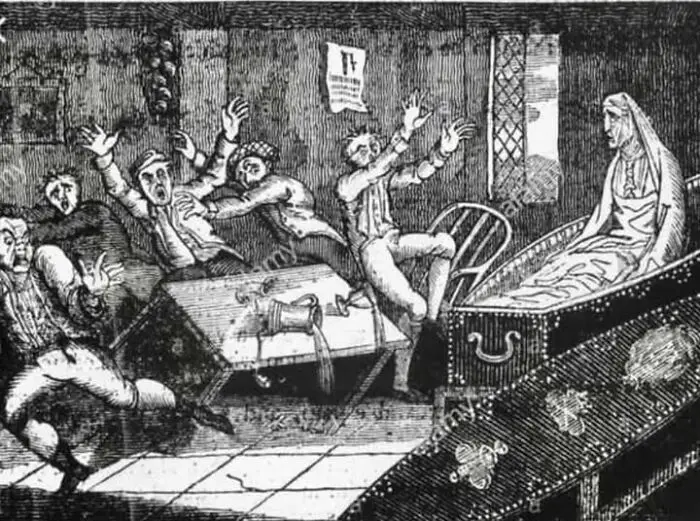
while her husband was away, probably serving in the Royal Navy, she became pregnant with an illegitimate child, whom she drowned shortly after birth. When this was discovered, she was sentenced to death and hanged in the Grassmarket in August 1724, by the hangman John Dalgliesh.
About 30 minutes after she was hanged, a doctor pronounced her dead and her body was taken to Masselburgh by cart. During the journey, her family, on their way to the wake, are said to have heard strange noises coming from the coffin, finding her still alive. Rumour has it that while in Tolbooth Prison, Maggie seduced her hangman and he loosened the rope so that she could survive.
As, under Scots law, her punishment had been carried out, she could not be executed a second time for the same crime (it was only after the sentence of hanging that the words “until dead” were added).
Her “resurrection” was seen to some extent as divine intervention, and so she was allowed to return to her old life. She remarried her husband (since death had separated them) and lived another 40 years.
She became quite famous in Edinburgh and gained the nickname Half-hangit Maggie. There is evidence that she suffered from neck problems and may have even had a broken vertebra, but the details of much of the rest of her life are obscure.
Today there is a pub in the Grassmarket called Maggie Dickson's near the site of her hanging.
Report
14points


