

Bored Panda
“An Aisle And A Half For Cereal”: 51 People Share Their Most Unforgettable Culture Clash Moment
Travel,LifestyleMAR 30, 2026

“An Aisle And A Half For Cereal”: 51 People Share Their Most Unforgettable Culture Clash Moment

37
3
Traveling the world opens your eyes to different cultures and customs. Along the way, you may experience moments of shock, some of which may remain with you for a long time. 
Here are some anecdotes from people who were surprised by what they saw during their visits to foreign countries. Some were amazed by the locals' politeness, while others were in awe of the cleanliness of the surroundings. 
Scroll through and see if you can relate to any of these stories, and feel free to share yours in the comments!

#1

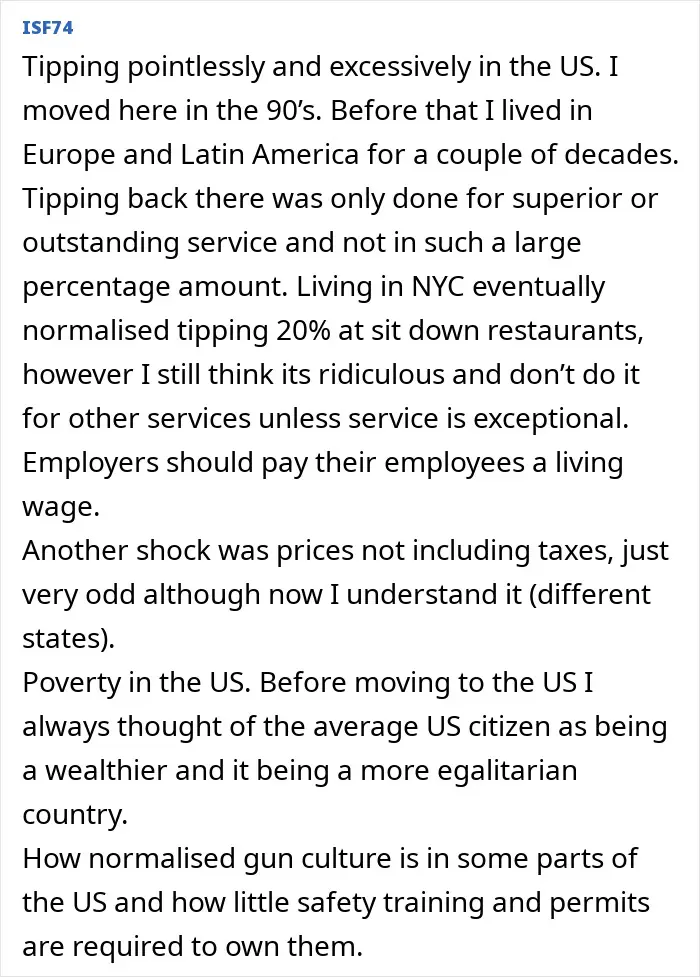
User sharing culture shocks experienced in the US including tipping, poverty, and gun culture surprises.
Report
35points

#3

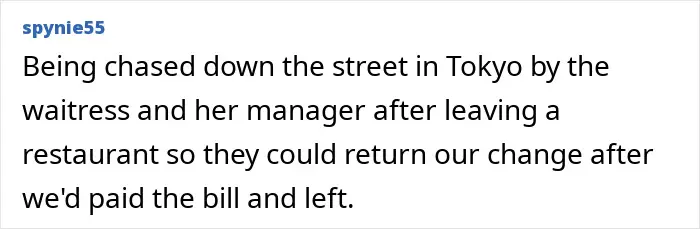
Text post about unexpected culture shocks, describing being chased in Tokyo by a waitress and manager returning change.
Report
28points

We all know about culture shock, that feeling of confusion when encountering local customs in another country. But as Now Health International explained, there are five stages, beginning with the “Honeymoon period.” 

It is described as the “euphoric stage” that may last for weeks or months, during which you can easily identify cultural similarities and find locals to be hospitable and friendly.
#4

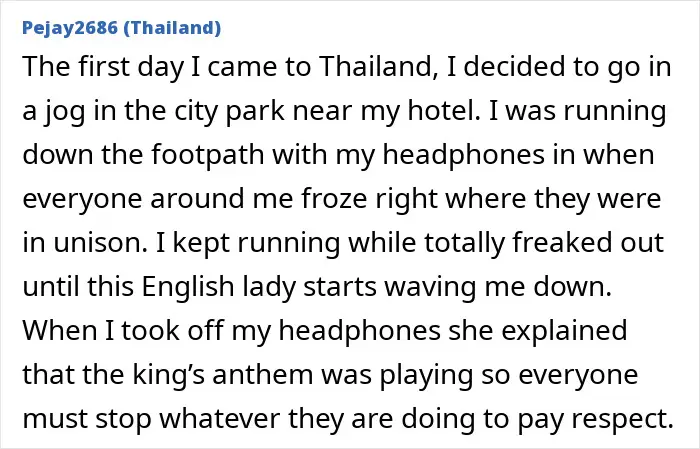
Traveler in Thailand jogs with headphones as locals freeze for king’s anthem, highlighting unexpected culture shocks abroad.
Report
24points

#5

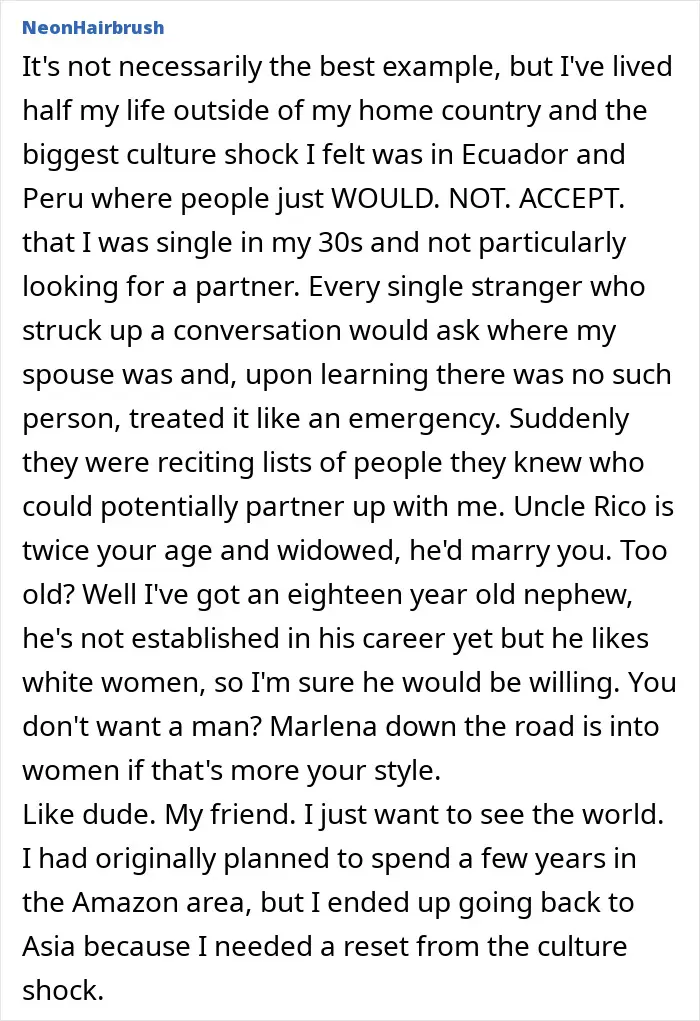
Text post describing a personal culture shock experience about relationships and social expectations abroad.
24points

#6

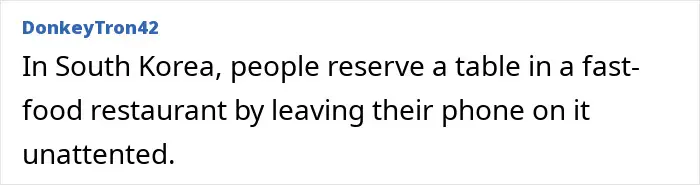
Text post explaining a South Korean culture shock where people reserve fast-food tables by leaving their phones unattended.
24points

Stage two is the negotiation stage, which is described as a point of “frustration and anxiety.” It is said to happen within month three, where the excitement slowly disappears. 

Here, small things can cause annoyance, such as street signs or ordering at restaurants, which may cause confusion. It’s also the time when you may start to miss friends and loved ones back home.
#7

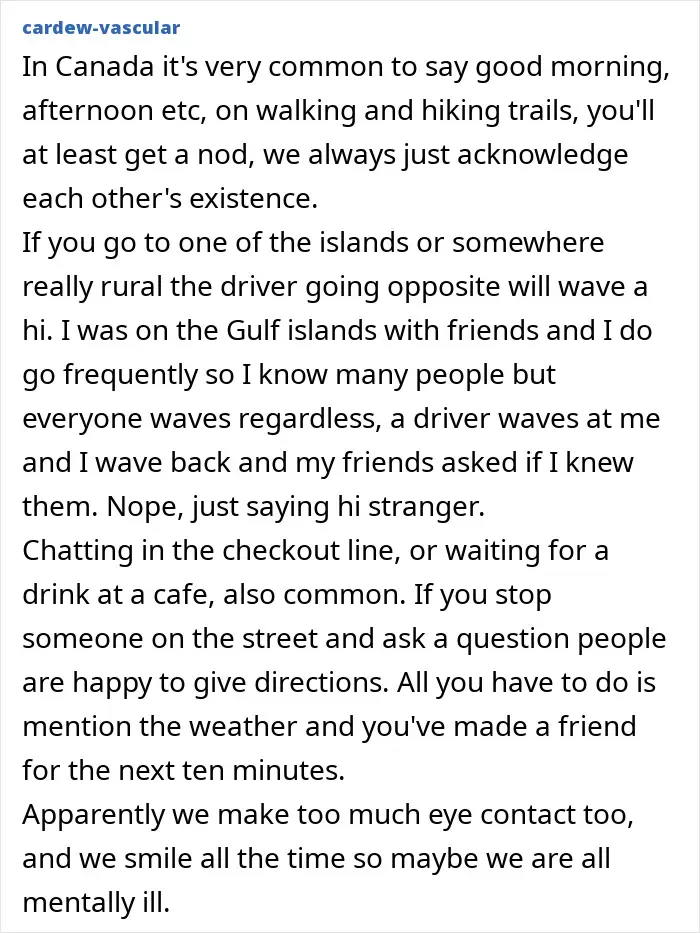
Text post describing culture shocks in Canada, highlighting social interactions and the idea of being mentally ill.
24points

#8

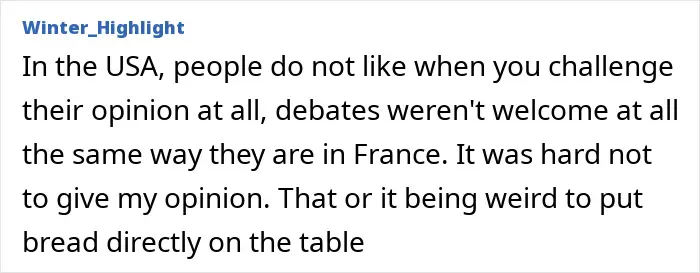
Text about culture shocks in the USA, including discomfort with challenging opinions and putting bread directly on the table.
24points

#9

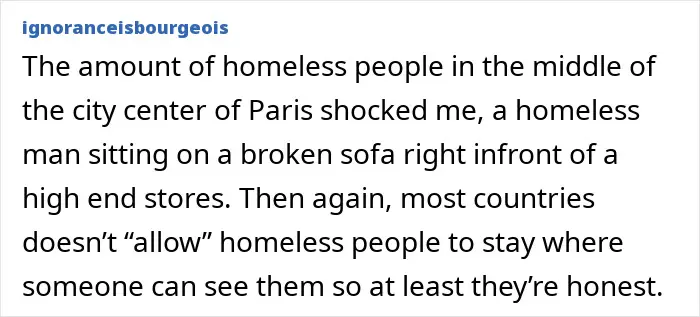
Text post discussing culture shock about the high number of homeless people visible in city centers like Paris.
23points

Stage three is when the adjustment happens, usually between the sixth and twelfth months. It is the point at which you, as the visitor, may become more comfortable and familiar with the local way of life. You may have also made a few friends or learned some of the local languages. 

Difficulties may still happen from time to time, but you are more able to handle them rationally.
#10

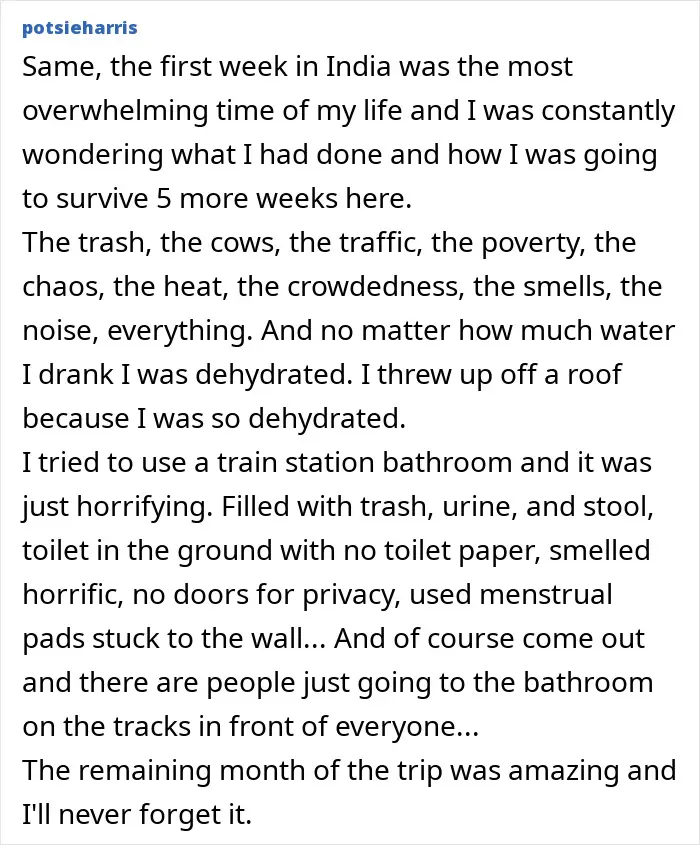
Text post about overwhelming culture shocks experienced in India, highlighting mental challenges and unexpected hardships.
22points

#11

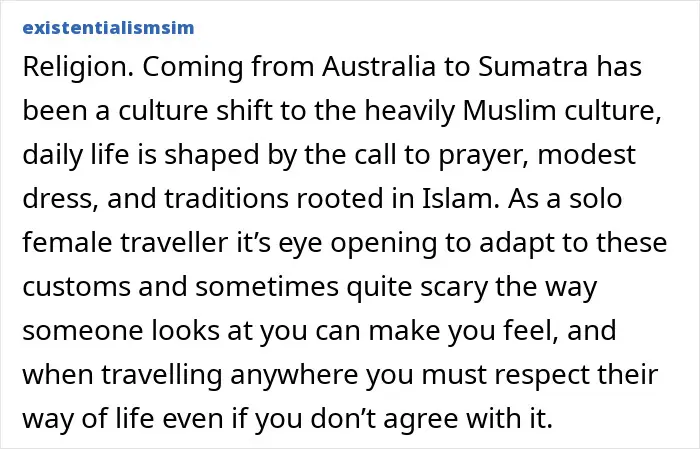
Culture shocks and mental illness perspectives from traveling solo in a heavily Muslim region with unique customs and traditions.
22points

#12

Anonymous comment describing culture shock of Italy’s midday siesta and late dinner time as a mental illness culture shock example.
22points

Stage four is when you begin to adapt. You no longer feel as isolated as you were in the first few months, and you’re now used to your daily activities with the close circle of new friends you’ve made. 

The euphoria of the honeymoon phase is no longer there because it has since been replaced by a sense of belonging.


#13

Comment about unexpected culture shocks in US Christianity compared to Latin America, highlighting mental illness and culture shocks.
21points

#14

Comment describing culture shocks like used toilet paper disposal and stray dogs, highlighting mental illness and culture shocks.
20points

#15

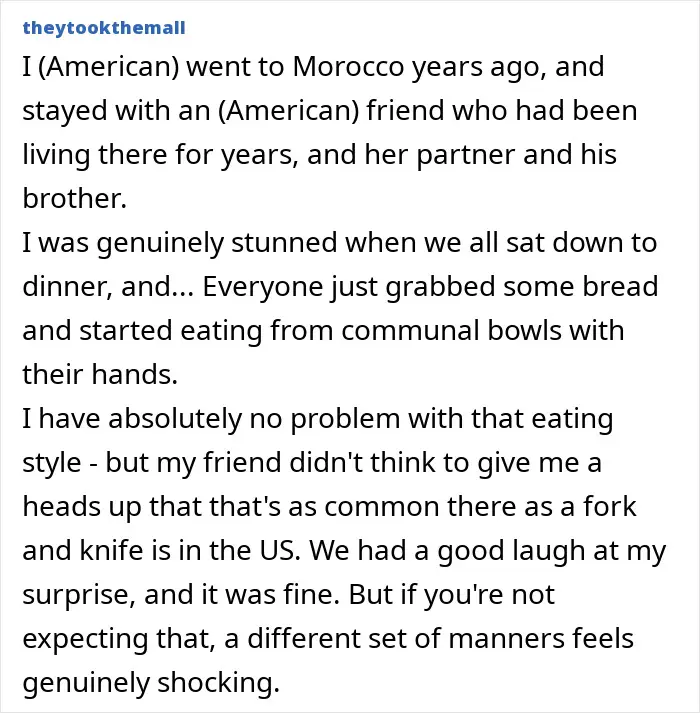
American traveler experiences culture shock eating communally with hands in Morocco, highlighting unexpected cultural differences.
20points

The fifth and final phase actually happens upon returning to your home country. This is when reverse culture shock sets in, and you realize how different everything had been. There’s a sense of feeling like an outsider, even amongst family and friends. 

#16

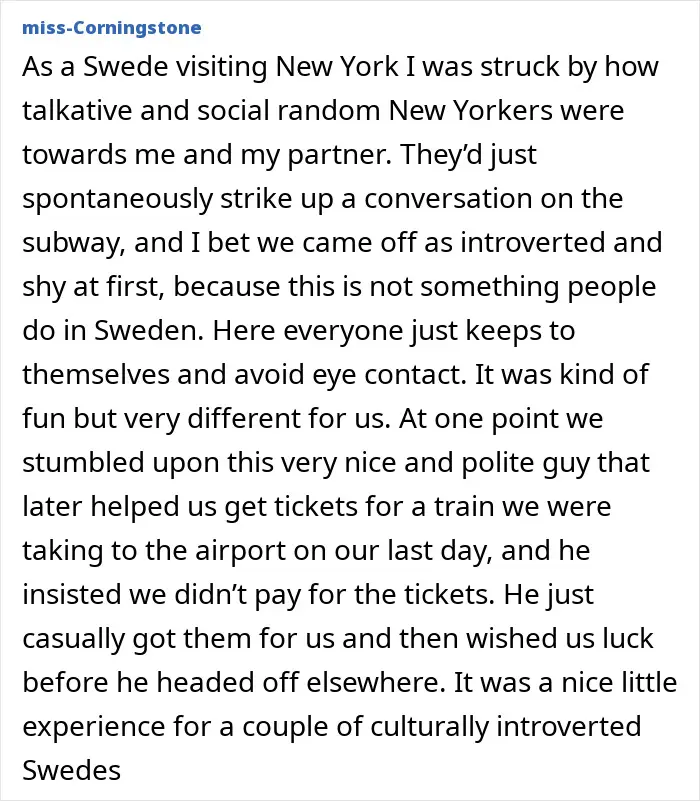
Text post about culture shocks experienced in Stockholm, reflecting on mental health and cultural differences.
20points

#17

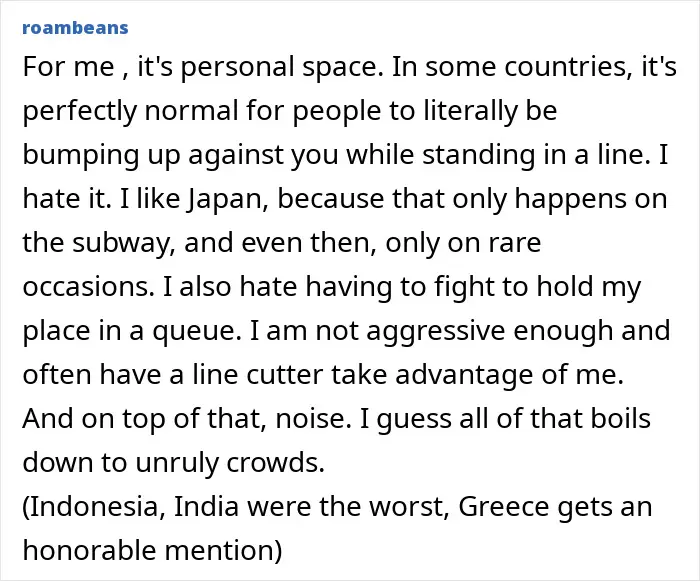
Comment about culture shocks related to personal space and queues in different countries from a culture shocks discussion.
Report
19points

#18

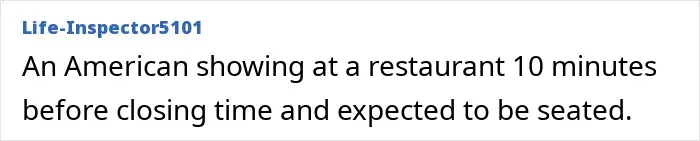
Text post describing culture shock: An American showing up at a restaurant 10 minutes before closing and expecting to be seated.
19points

So, what is the best way to cope with culture shock? According to the University of Kansas, it can be as simple as staying connected with home comforts through food, activities, and rituals. 

Staying active also helps, as does visiting public places or sporting events to observe local customs and behaviors. 
#19

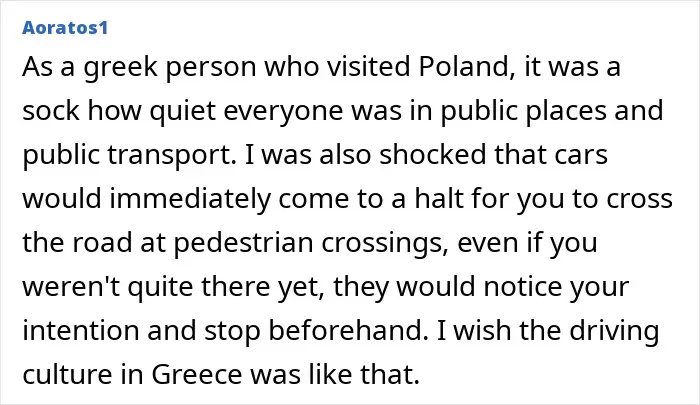
Comment about culture shocks experienced by a Greek person in Poland, highlighting unexpected driving and pedestrian behavior.
19points

#20

Comment about culture shocks experienced by people from the US regarding public restrooms and subway cleanliness.
18points
37
3