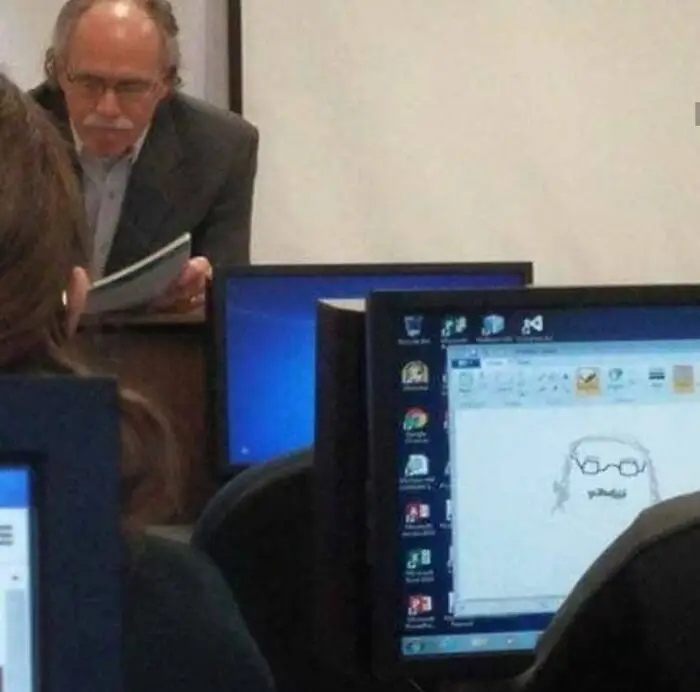




However, if you're not writing a school paper or preparing a presentation for work but instead are willingly and recreationally indulging in bizarre and absurd images, the experience can take on a different meaning.
"Absurdity, at its core, arises from the clash between our desire for meaning, order, and clarity and the universe’s inherent indifference," says Jason Shimiaie, M.D., an assistant clinical professor at Mount Sinai Hospital who researches relational psychoanalysis, trauma, and dissociation.
"This concept is most famously articulated by the existential philosopher Albert Camus, who described absurdity as the 'divorce' between human longing and the silence of the world. Imagine climbing a mountain to see the sunrise, only for heavy fog to obscure the view. The effort and expectation clash with an indifferent reality, creating a moment of absurdity."
This tension, according to Shimiaie, isn’t just philosophical; it’s deeply psychological.
"As humans, we’re wired to seek patterns, explanations, and a sense of purpose," he adds. "Absurdity challenges those instincts, confronting us with contradictions and ambiguity. While this can provoke discomfort, it also invites us to think creatively, embrace humor, and redefine what matters most."